
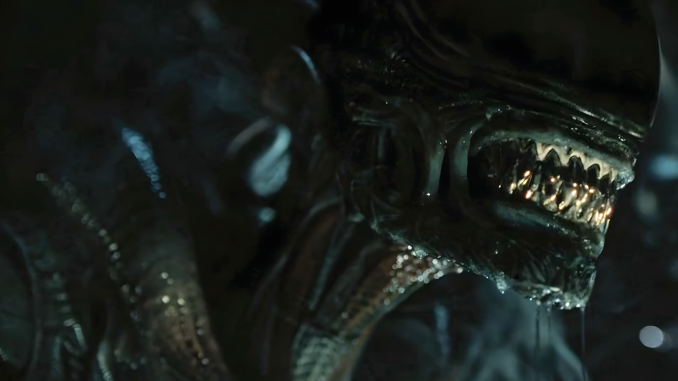
Aliens Eleven
Alien: Romulus (2024): 8 out of 10: Before I talk about Alien: Romulus I want to talk about a young lass named Destene Sudduth. Now Destene is an influencer and recently she was invited by the fine folks at the Shein Corporation for an all expenses paid tour of their innovation center. To quote, “I expected this facility to just be so filled with people slaving away.” and on the physical conditions inside the factory: “They weren’t even sweating. We were the ones sweating walking through the whole facility.”
Now Destene may be unfamiliar with the Red Cross visit to Theresienstadt. You see, the Nazis invited the Red Cross to visit one of their concentration camps to counter rumors that they were not the nicest of places. So the Nazis, being Nazis, started a Verschönerung (Beautification) program.

Tragically, the deception was largely successful. The Red Cross delegation, guided tightly by SS officers, fell for the hoax and issued a report stating that the conditions in the camp were relatively satisfactory.
Following the visit, the Nazis exploited the situation further by forcing the inmates to take part in a propaganda film to show the world how “well” they were treating the Jewish population. Once the filming was complete, the vast majority of the prisoners who took part, including most of the children who performed in an opera for the film (Brundibár), were deported to the gas chambers at Auschwitz.

What does this have to do with Alien: Romulus? Well, during the first act, I thought that Weyland-Yutani Corporation could really use an influencer as dense as Destene Sudduth. Somebody who cannot tell the difference between a corporate office park and a sweatshop. Someone who is unfamiliar with forced labor, concentration camps, and possibly World War 2. Someone who will happily tell the world that Weyland-Yutani Corporation has the workers’ best interests at heart.
Alien: Romulus is a movie with two very different missions. The first is to remind you why Alien became one of the great science-fiction horror films of all time. The second is to remind you that Weyland-Yutani remains one of cinema’s all-time great evil corporations, the kind of company that would probably put “people first” on a recruitment poster while quietly changing your contract so you can never leave the mine where the sun never shines. Alien: Romulus is much better at the second mission than the first, but it does enough of the first to make for a very solid evening at the movies.
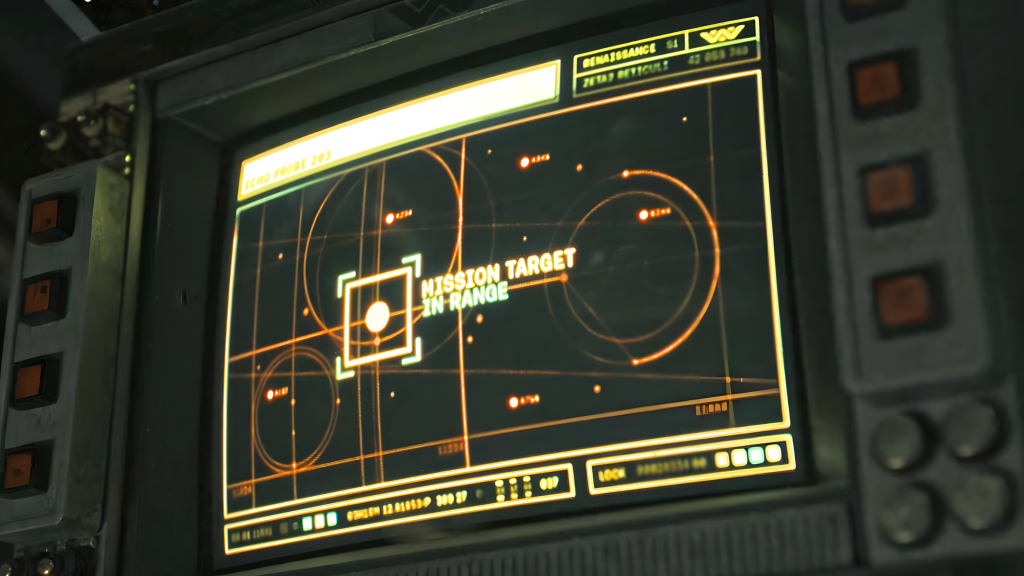
What struck me immediately was the setting. This is one of the bleakest versions of the Alien universe we’ve seen in a while, a company town in space where the workers are trapped, the labor is deadly, and “freedom” is less a legal right than a rumor about some distant beach planet with sunshine and clean air. It is wonderfully dystopian in exactly the right way. Weyland-Yutani has always been evil, but Romulus gives that evil a nice, modern corporate makeover. These aren’t just villains in suits who want an alien specimen. These are the kinds of people who would absolutely strand workers under ever-shifting contracts and then act confused when anyone calls it slavery with extra paperwork.
Into this mess steps a small group of young people with a plan that is either desperate or idiotic, which in an Alien movie is usually the same thing. A young orphan, along with a few friends, her boyfriend, his pregnant sister, and an android salvaged from the junk pile by her father, decides to break into an abandoned space station in orbit. The goal is simple enough: steal the life pods and escape. The complication, of course, is that the movie is called Alien: Romulus, which suggests that the abandoned station may not be technically abandoned.
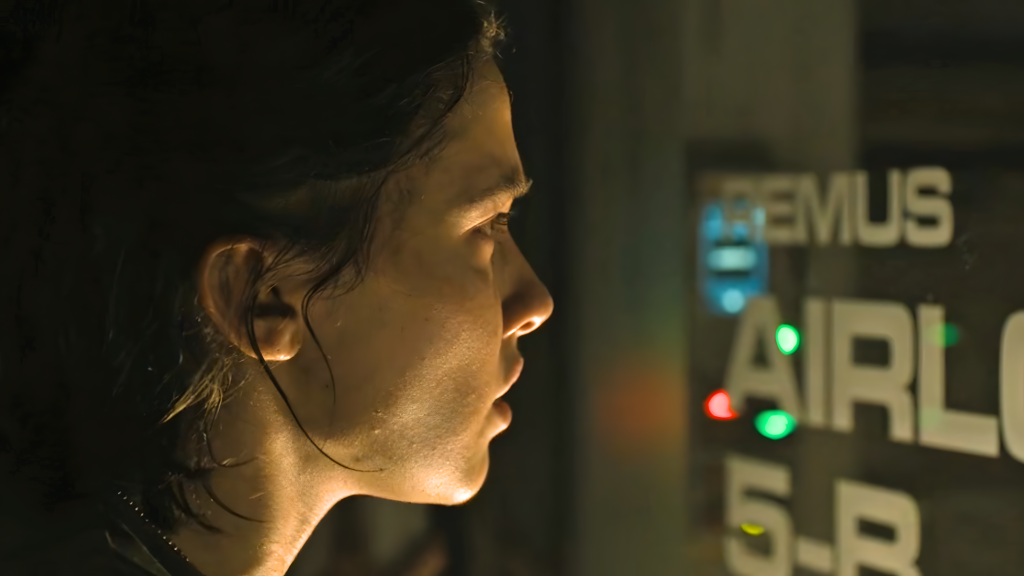
The setup works very well. There’s a nice little heist-movie engine under the horror, and for a while that gives the film a fresh pulse. The lead actress (Cailee Spaeny) is terrific, immediately sympathetic, grounded, and very easy to root for.
She has that quality where she feels less like a Hollywood action heroine and more like everybody’s kid sister forced into an impossible situation. The supporting cast is good too, though I kept wishing the movie had given me more bodies to throw into the grinder. This is a fairly light crew for an Alien film, and while the characters are more sketched in than I expected, I still wanted more cannon fodder. One pleasure of this franchise is watching a larger group slowly realize they are all spectacularly doomed, and Romulus is a little stingy on that front.
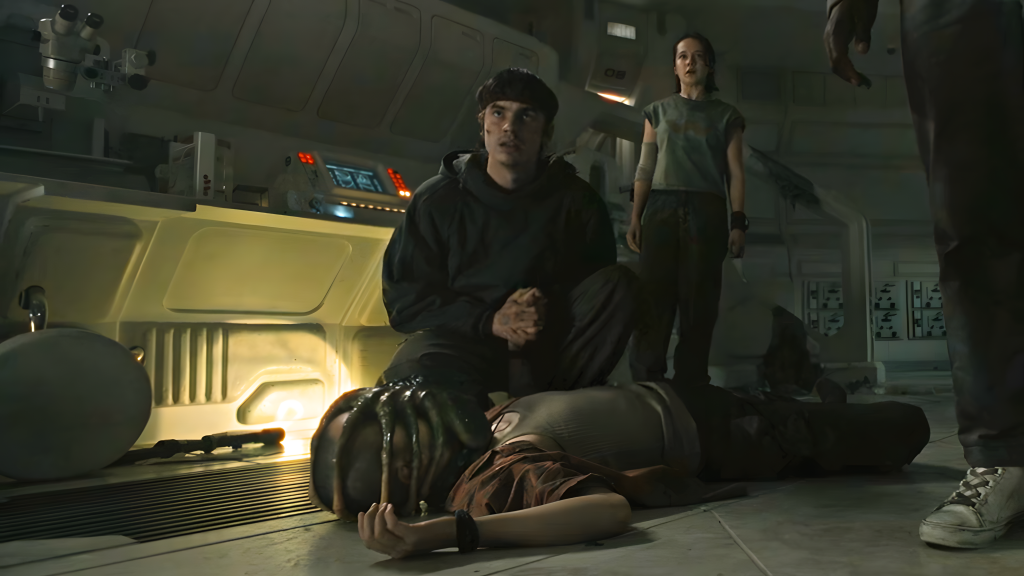
The film’s smartest idea, by far, involves the android (David Jonsson). Early on, he comes across as damaged, awkward, and coded in a way that reads autistic, complete with odd rhythms and dad-joke energy. Then the movie pulls a genuinely good twist: in order to open a sealed door, they transfer a chip from a broken android into him, and suddenly he becomes polished, articulate, confident, and fully functional.
It’s a great beat because it solves an immediate plot problem while creating an even bigger emotional one. The android is now useful, but he may no longer be safe. When he was the lovable, broken companion, he wasn’t a threat. When he becomes competent, he also becomes less trustworthy. He is also not the brother/protector Cailee Spaeny’s father programmed him to be.
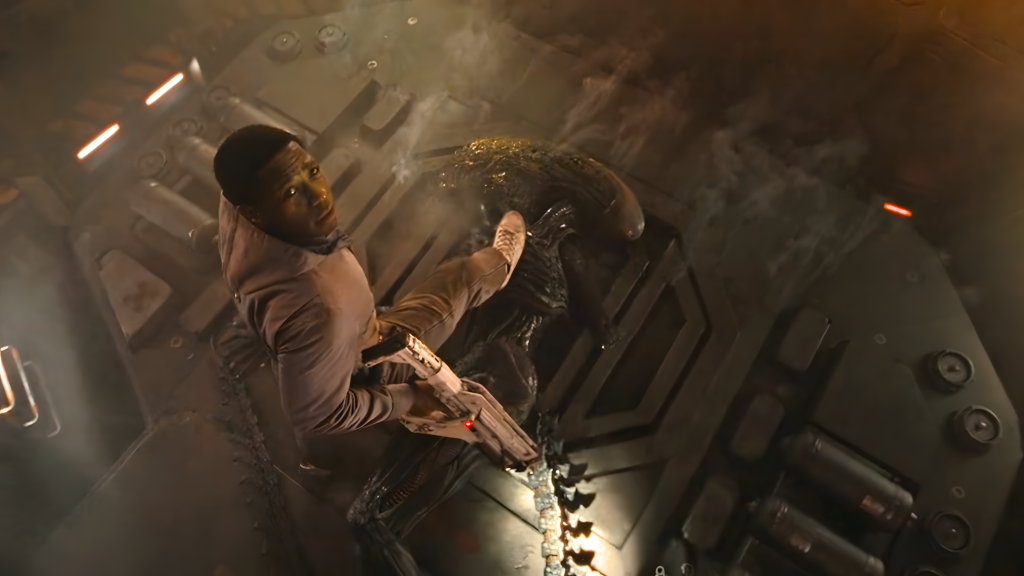
That is exactly the kind of nasty little moral problem an Alien movie should be playing with, and the actors sell it beautifully. You really buy the relationship between him and his “sister”, and the movie gets real mileage out of the question: do you want him self-aware and dangerous, or harmless and limited?
That’s the good stuff. Unfortunately, Romulus also has a bad habit of feeling less like Alien and more like a haunted house attraction based on Alien. There are a lot of corridor scenes staged with very deliberate camera angles, semi-telegraphed scares, and “here comes the spooky beat” energy. It’s not that the movie is incompetent. Far from it. It is well-made, well-acted, and often handsome to look at. But too often it feels arranged rather than lived-in. One thing that made the original Alien so effective was that the danger felt like it emerged from the physical reality of the ship and the crew’s decisions. Here, a number of sequences feel like set pieces first and situations second. That haunted-house quality undercuts the realism and robs the tension of some of its bite.
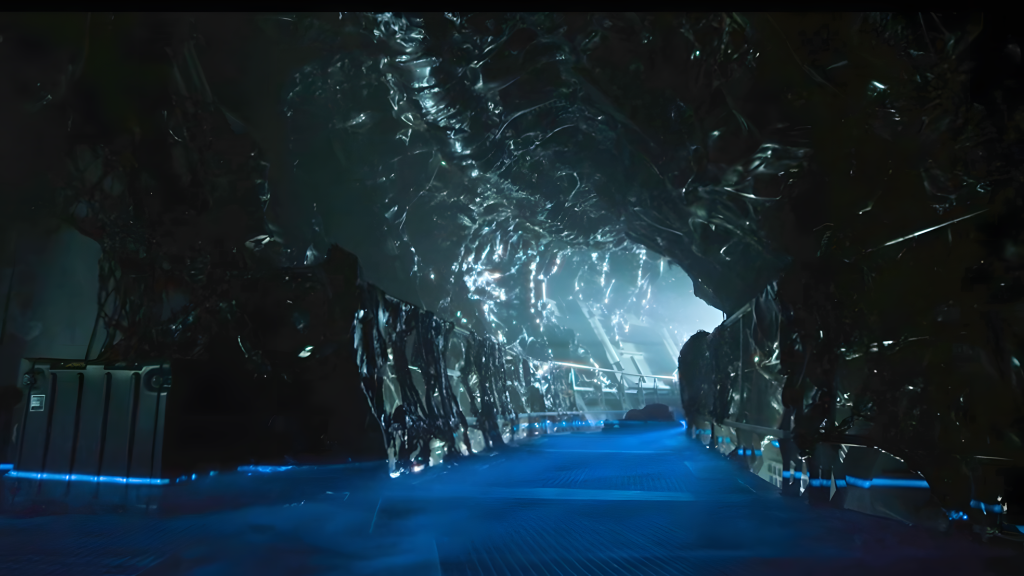
This is also a movie that really wants to tap back into the original Alien, and that creates a problem it can’t solve. One of the reasons Alien worked so brilliantly in 1979 is that audiences didn’t know Ripley was going to be the survivor. Sigourney Weaver was not yet Sigourney Weaver, and the movie didn’t put a giant flashing sign over her head saying MAIN CHARACTER. Romulus does not have that luxury. The lead here is very clearly the Ripley figure from the moment the movie starts, so some of the uncertainty is gone before the first facehugger has even uncurled.
Speaking of facehuggers, yes, the film has them, and yes, it has aliens, plural. Perhaps too many, depending on your taste. I also had some continuity grumbling. At one point, the alien growth cycle feels absurdly fast. In the original Alien, the creature did eventually reach full size, but it took a little time. Here, one of them seems to go from chest burster to fully grown murder machine in roughly the time it takes to microwave a Hot Pocket. That struck me as weak sauce. I will allow some biological hand-waving in a franchise about acid-blooded space horrors, but you still have to sell me on the internal rhythm of the thing.

Then there’s the fan service. Ah yes, fan service, the spice that improves some dishes and ruins others. Romulus occasionally crosses the line into “hey, they said that thing!” territory. There is a callback involving the heroine in her underwear, because of course there is, and there is one truly embarrassing moment where the android blasts an alien and says, “Get away from her, you bitch.” That line lands with all the grace of a dropped refrigerator. It is wildly out of character and feels less like something the movie earned than something the screenplay stapled in because a producer thought the audience would clap.
Plus, since the film takes place between Alien and Aliens, I found the Aliens callbacks particularly offputting. I know that does not actually make sense, so we are going to go with that is how I feel. I normally go absolutely guns blazing on this kind of nonsense.
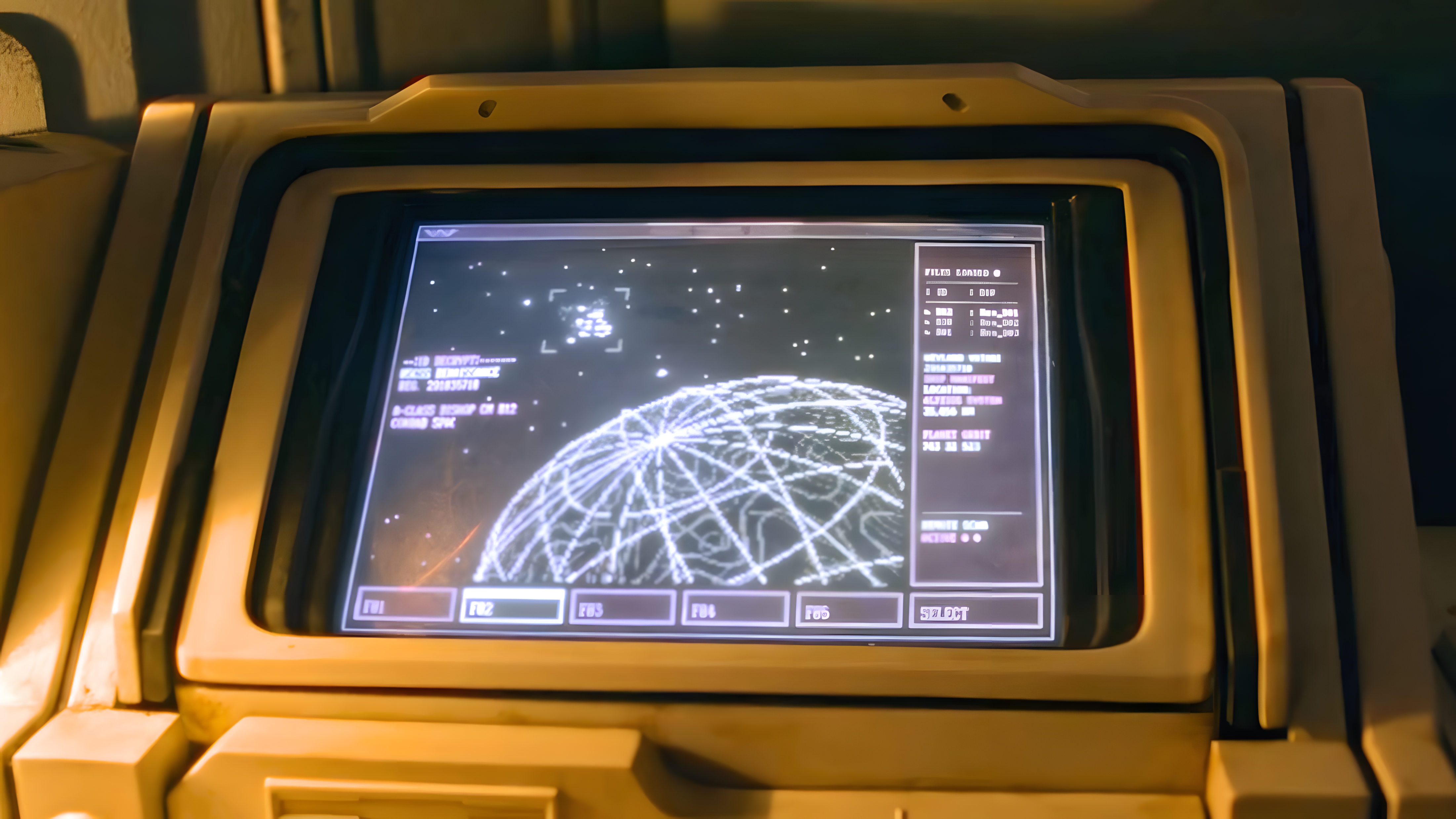
And yet, in fairness, there is a line on the other side too. If Romulus occasionally indulges in too much fan service (and it certainly does), let us not forget that Alien 3 came out of the gate with what may be the least fan-service opening in the history of cinema. There is such a thing as anti-fan service, and the Alien franchise has experience with both extremes.
So while I rolled my eyes at some callbacks here, the series has earned a little leeway after spending decades alternately pandering to fans and punching them in the throat. I mean, it’s not like they resurrected a dead actor with dogy CGI like some lame Disney Star Wars film…

So a CGI Ian Holm makes an appearance. It is not the worst digital resurrection I’ve ever seen. We live in terrible times, and I have seen far, far worse. But it still feels unnecessary, slightly gimmicky, and a bit distracting. And he is surprisingly in the movie quite a bit. This is not a Tarkin on the bridge, blink and you miss it scene. More importantly, I never felt the movie truly needed him. It plays as a reference rather than a dramatic necessity, and references are not the same thing as storytelling.
Where Romulus really rebounds is in the last stretch. The last quarter of the movie is strong. The action pops in a much more satisfying way; the film leans into dramatic irony by showing the audience key information the characters do not have, and it gets real tension out of that old Hitchcock bomb-under-the-table trick. In particular, a scene involving the pregnant character making a catastrophically stupid medical decision is handled very well from a suspense standpoint.
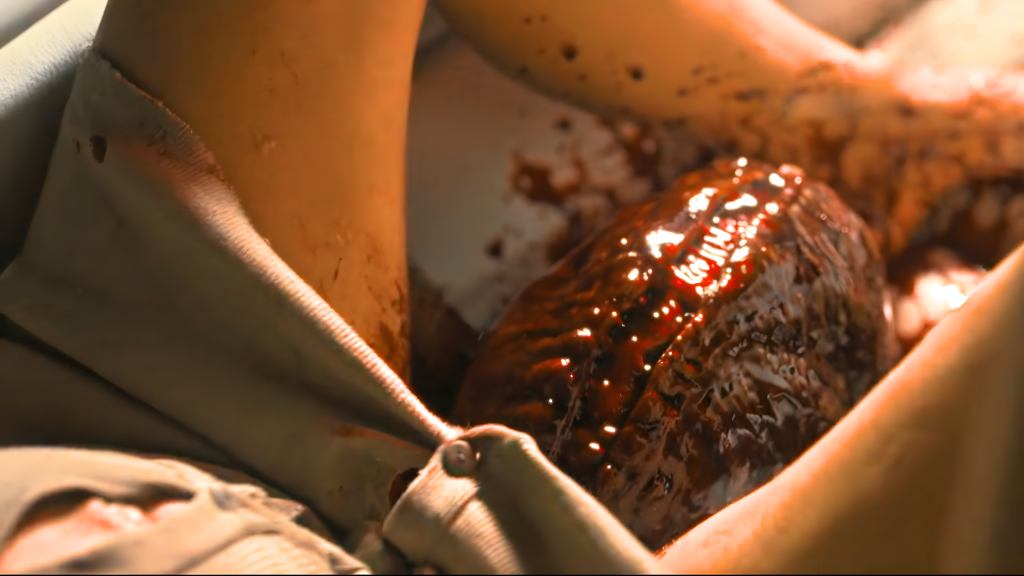
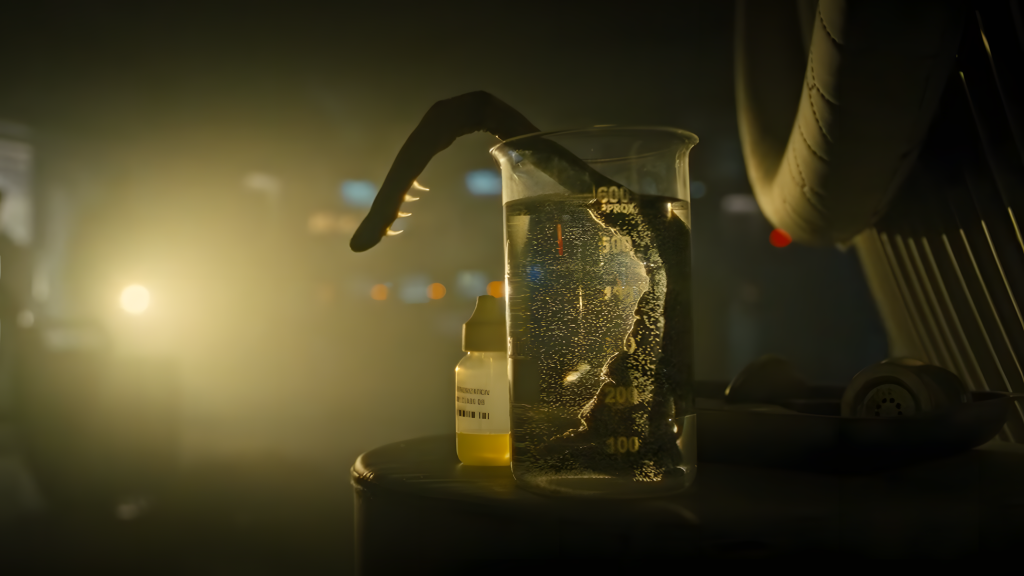
I spent part of this sequence thinking, “Surely no one would inject themselves with a black, swirling alien goo,” and then remembering that horror movies exist because people will, in fact, inject themselves with black, swirling alien goo.
That storyline also leads the movie into some gloriously nasty territory. I was not expecting to think about It’s Alive while watching Alien: Romulus, but here we are. The film introduces some new monsters, gets weird in a way I appreciated, and finds a few nice twists late in the game.

It also improves its action staging considerably. Earlier I complained about the haunted-house feel, and I stand by that, but the climax largely ditches that mode in favor of cleaner action beats involving guns, gravity, and the station itself spiraling toward destruction. Once the movie plays with space, momentum, and the terrifying fact that the whole place is about to smash into the planet’s rings, it gets a lot more exciting.
So where does that leave us? Alien: Romulus is not Alien. It is not Aliens. It was never going to be Alien, because the first Alien only happens once, and it would never be Aliens, because James Cameron already made the James Cameron version. But it is also not the worst Alien movie by a long shot. In fact, it’s a solid effort: well acted, well mounted, occasionally brilliant, sometimes frustrating, sometimes gimmicky, but overall quite enjoyable.
Most importantly, it has a fantastic lead actress, and in a franchise built on memorable women staring down impossible horrors, that counts for a lot.

The Good
The dystopian mining-world setup is terrific; the Weyland-Yutani evil feels both classic and freshly nasty, and the heist premise gives the story a nice hook. The android storyline is the best material in the film (there is a nice Of Mice and Men undercurrent), with a clever twist and real emotional tension. The performances are strong across the board, especially from Cailee Spaeny, who absolutely carries the movie. The final act delivers good twists, strong suspense, and some genuinely effective action.
I also thought the CGI and the space scenes were beautifully realised. The special effects are top-notch, and the aliens look great. The production design also perfectly captures the technology and look of the Alien universe.

The Bad
The movie often feels like a haunted house version of Alien rather than a lived-in horror scenario. Some of the setup is too telegraphed, the cast is too small, and the creature growth mechanics feel rushed to the point of nonsense. The CGI Ian Holm material is unnecessary, and several callbacks are too on-the-nose.
The Ugly
“Get away from her, you bitch.”
No. Absolutely not. Sit down, movie.

In Conclusion
Alien: Romulus doesn’t dethrone the classics, but it does enough right to earn its place as a respectable middle-tier entry in the franchise. It has brains, atmosphere, a genuinely strong lead, and a few ideas good enough to make you wish the whole movie had trusted itself more and the audience less.
Still, in a series that has given us both greatness and absolute nonsense, “very solid effort with a great heroine and a smart android subplot” is nothing to sneeze at. Not a masterpiece, not a disaster, and certainly not a waste of time. For modern franchise filmmaking, that’s practically a miracle.