
I have Dunaway with the wire hangers
With Love, Mommie Dearest: The Making of an Unintentional Camp Classic by A. Ashley Hoff (2024): 7 out of 10: There is something to be said for a book that has a very good beginning and a very good ending. As I said about Ready Player One, that covers a lot of sins in the middle. With Love, Mommie Dearest: The Making of an Unintentional Camp Classic is not a perfect book. In fact, there are whole stretches where it feels less like a finished book and more like the author’s research notes arranged in roughly chronological order. But when it finally gets to what we are all here for, the release of Mommie Dearest, the public reaction, the transformation into camp, and the ongoing Faye Dunaway fallout; The book pulls itself together beautifully.
A. Ashley Hoff’s book tells the story of the making of Mommie Dearest, the 1981 film based on Christina Crawford’s infamous memoir about her adoptive mother, Joan Crawford. What began as a prestige drama about abuse, stardom, Hollywood mythology, and mother-daughter trauma somehow became one of the great unintentional camp classics. The movie gave the world “No wire hangers ever!” and, perhaps even more impressively, helped turn Faye Dunaway’s already difficult reputation into something approaching a Hollywood cautionary tale.

The book begins very well. Hoff clearly knows the territory. He understands old Hollywood, studio politics, actors’ egos, the difference between Broadway people and film people, and the way Hollywood is both a glamour factory and a very small town where everyone knows everyone else. He also did the work. He interviewed numerous people, dug through their backgrounds, and assembled a genuinely entertaining behind-the-scenes account.
At first, this is exactly what one wants from this sort of book. It is not a dense academic study, nor should it be. We are not here to discuss mitochondria. This is a gossip book, a Hollywood war-stories book, and a making-of book about a movie that accidentally became more famous than many better movies. On that level, it often works very well.

It also helps if you are in the right demographic sweet spot. I was alive when Mommie Dearest came out. I was a teenager. I remember the reaction to the movie and the whole question of whether Christina Crawford was exposing a terrible truth, getting revenge on her dead mother, or some complicated combination of both. I also know who Joan Crawford, Barry Diller, Michael Eisner, Anne Bancroft, Mel Brooks, and Faye Dunaway are without needing a lot of explanatory handholding. The book seems to assume that its readers have at least some familiarity with these people, which worked for me but may leave younger readers wandering around looking for a map.
The early material is full of good stories. Anne Bancroft was originally attached to the project, but the script and director issues never lined up. Mel Brooks apparently read the material and saw what many people had not yet seen: this thing was playing a lot closer to comedy than drama. So Mel gets some credit for calling the turn early and helping get his more dramatically minded wife off the hook.

Then, of course, there is Faye Dunaway.The book is almost painfully even-handed about Dunaway for much of its run. For every story about her behaving like a monster on the set, there is another paragraph about how she was a perfectionist who demanded the best. For every complaint about her attacking crew members, there is another quote about how wonderful she could be. Some of this is fair. Some crew members and craftspeople clearly continued working with her, so she was not universally hated. Some of her complaints were apparently correct, including details about Joan Crawford’s look and costuming. Perfectionists are sometimes right. That is one of the things that makes them so exhausting.
But there is a difference between difficult and impossible. There is also a difference between being demanding and leaving decades of scorched earth behind you.
The book eventually seems to accept the weight of evidence. By the final third, Hoff essentially takes the gloves off, and the Dunaway stories become numerous, specific, and extremely believable. They come from different decades, different productions, different states, different countries, and different types of people. After a while, this is not smoke. It is a forest fire.
One of the most striking stories involves a man who had once seen Faye Dunaway with her parents in New York and remembered it fondly. Years later, he found himself seated next to her at the Hollywood Bowl and mentioned what a pleasant memory it was. Dunaway reportedly responded by screaming at him for bringing up her parents. That is not merely diva behavior. That is something closer to a total failure of social calibration.

And the stories keep coming. Dunaway screaming at the crew. Dunaway threatening jobs. Dunaway accusing people of being in her eyeline. Dunaway’s theater behavior becoming fodder for gossip columns. In one stage production, the situation apparently became so unbearable that the play was canceled just before curtain because the crew fled as if Godzilla had come out of the harbor.
Having worked with and adjacent to people with this sort of personality, I found much of this painfully believable. There is a type of “perfectionist” whose perfectionism always seems to require someone else’s humiliation. Method acting often becomes an excuse to be an asshole, and while Faye Dunaway was undeniably a great actress in many roles, one has to ask whether the juice was worth the squeeze.

The book is also good on the film’s release and afterlife. This is where With Love, Mommie Dearest finally becomes the book it always should have been. Hoff covers the initial reaction, the audience laughter, the gay community embracing the movie as camp, and Paramount’s surprisingly deft decision to lean into the madness with advertising like “No wire hangers ever!” and “The mother of all movies.” Naturally, the producers were furious and sued or threatened legal action, and Paramount backed away after the damage, or rather the successful marketing, had already been done.
This is the fun stuff. This is the reason to read the book. It is also interesting to be reminded that Mommie Dearest was not a financial disaster. It made money. It became culturally famous. It was mocked, yes, and became one of the early Razzies’ punching bags, but Dunaway’s performance also had defenders. Some critics thought she was doing serious work. The New York Film Critics reportedly had her as a runner-up. The comparison to Patty Duke in Valley of the Dolls comes up, with the idea that a single camp performance can do major damage to an actress’s career until she learns to embrace it.

I am not sure I entirely buy the Patty Duke comparison. After seeing Duke in that Amityville Horror movie with the haunted lamp, I would think that would be the career killer if anything was. But the larger point stands: sometimes a performance escapes the movie it is in and becomes something else entirely.
The later material also has a certain melancholy. Dunaway’s career after Mommie Dearest did not recover in the way one might have expected from an actress of her stature. She did Supergirl, which bombed, though not because of her. She did theater. She continued working, but the aura changed. The book makes a compelling case that Mommie Dearest did damage, but it also makes an equally compelling case that Dunaway herself kept making the same bed and then lying in it.

America loves a redemption story. Val Kilmer was once almost as notorious as Dunaway as someone you did not want to work with, and then illness, age, and Top Gun: Maverick softened the public view of him. Dunaway may yet get some similar late reassessment. You never know. But the book leaves the impression that, if her story is tragic, it is at least partly a tragedy she helped write.

The Good
The best thing about With Love, Mommie Dearest is that Hoff has the right instincts for Hollywood gossip. He knows the players, he knows the business, and he knows a good war story when he hears one. The book is filled with memorable bits: Bette Davis declaring on The Tonight Show that Faye Dunaway was the one actor she would never work with again; Mel Brooks recognizing the comic absurdity of the project early; the competing visions of Christina Crawford’s husband wanting more child abuse while Dunaway’s boyfriend wanted more glamorous 1950s Hollywood; and Paramount realizing that the movie’s accidental camp value might be its strongest selling point.
The book also benefits from its willingness to complicate Joan Crawford. It does not simply present Joan as a mustache-twirling monster. There are moments that suggest she could be maternal, gracious, helpful, and beloved by fans. The story of Joan stepping into Christina’s soap-opera role when Christina was ill is genuinely touching, even if the book also makes it very easy to believe Joan was drunk while doing it.
That grayness matters. Abuse stories are often forced into simple shapes: monster and victim, liar and saint, good parent and wicked child. Real life is rarely that neat. A parent can be abusive and still be occasionally loving. A parent can do actual damage and still not be evil every minute of the day. Alcohol, blackouts, denial, image management, and old Hollywood discipline all muddy the waters. Hoff is strongest when he lets that complexity breathe.
The final third is excellent. Once the film is released and audiences begin reacting to it as camp, the book finds its subject. The marketing pivot, the lawsuits, the laughter, the gay audience embrace, the critical divide, the Razzies, and the long afterlife of “No wire hangers” are all exactly the material the book was born to cover.

The Bad
The middle of the book has a serious “Oops, All Potatoes” problem. There is a great deal of background. Then there is more background. Then there is background about the background. At a certain point, we are not merely learning about the making of Mommie Dearest; we are learning what restaurant the crew liked, which restaurant was easier to film in, which restaurant was across town, and where that nice Mexican place was. This is the point where a troubled Hollywood production history sounds like an old lady talking to you on a municipal bus.
The problem is not that Hoff failed to research the book. Quite the opposite. The problem is that he seems reluctant to leave anything out. If he interviewed someone, found an article, or located a production detail, it often appears to go into the book whether or not it belongs there.

There is a difference between “Mr. or Mrs. X has a story about something that happened on set” and “Mr. or Mrs. X has an interesting story about something that happened on set.” The book sometimes treats these as the same thing. They are not.
The clearest example is the material on an actor hired for a minor role involving the Pepsi boardroom sequence. He was hired, moved around, possibly upgraded in the scene, then apparently not used much or not used at all. It is the sort of story that might be perfectly pleasant if a man told it to you three beers into a conversation at a bar. But in the book, at that length, one starts asking why it is here.
The same goes for some of the scene-by-scene breakdowns. The movie is available. One does not necessarily need a prose version of every scene that was filmed or cut. A making-of book should not just be a DVD commentary with better punctuation.

The Ugly
The ugly part is that the book sometimes reads less like a finished book than like the author’s research notes.
The story of the actress playing the older Christina (Diana Scarwid), for example, is genuinely pleasant. She had been in Hollywood for years, was homesick for Savannah, and was thinking about going home, marrying a local boy, having children, and maybe acting once in a while. It is a nice story. I enjoyed it. I am just not entirely sure what it is doing in this book at that length.
That is the recurring issue. There is nothing wrong with tangents in nonfiction. Without tangents, most self-help books would collapse into a long email. But a tangent needs a purpose. Too often here, the tangent seems to exist because Hoff found it, liked it, and put it in.

The Dunaway material also suffers early from a lack of evidentiary sorting. Public press-tour quotes praising her do not mean very much, especially when she is sitting next to the person being quoted. People are not going to badmouth the star of a movie while promoting the movie. People are also not always going to speak ill of the dead, and in Dunaway’s case, some people may not want to speak ill of the vindictive living either.
A nonfiction writer does not have to force every fact into a thesis, but he does need to weigh the facts. Who was speaking publicly? Who was speaking privately? Who had a paycheck to protect? Who was afraid of being sued, screamed at, or socially punished? Who was simply being polite? The book eventually gets there, but it takes longer than it should.
In Conclusion
With Love, Mommie Dearest is an entertaining, well-researched, overstuffed book that finally figures out what it wants to be in the last third. When it is about old Hollywood, Faye Dunaway, Joan Crawford, Christina Crawford, studio panic, camp audiences, and the strange cultural afterlife of Mommie Dearest, it is terrific. When it is about which restaurant was easier to film in and what an extra remembers about standing near a Pepsi boardroom scene, it is less compelling.
The book could have used a stronger content editor. Not a copy editor, the prose is clean enough, but someone willing to say, “This is interesting to you because you researched it, but it is not necessarily interesting to the reader.” There are too many pages where that distinction matters.

Still, I recommend it. The good parts are very good, and the ending is strong enough to redeem a lot of the middle. Like the movie it covers, With Love, Mommie Dearest is messy, excessive, fascinating, and occasionally much more entertaining than it probably meant to be.
No wire hangers. Some extra trimming, though, would have been appreciated.
Random Notes from reading
Initially, this account of Mommie Dearest commands a remarkably favorable impression. Between a stellar prologue and an exceptional opening synopsis, it is evident that the author actively pursued surviving witnesses, gathering a wealth of fascinating background material.
More importantly, the narrative functions as an absolute juggernaut of a Hollywood chronicle; the author demonstrates an innate literacy regarding studio mechanics, effortlessly delivering historical context without over-encumbering the prose. It remains a breezy, accessible endeavor, we are not here to discuss mitochondria.

It certainly benefits a reader to occupy the ideal demographic sweet spot for this particular history. Having lived through its release as a teenager, I vividly recall the cultural shockwaves and the fierce debates over whether Christina Crawford was unearthing a genuine horror or merely executing a vindictive post-mortem betrayal.
Remarkably, the sheer profitability of the literary and cinematic rights remains staggering; Christina secured an absolute fortune, vastly eclipsing any potential inheritance from her mother. While Joan was hardly destitute, her late-career earnings were modest, leaving one with the distinct impression that her daughter extracted more wealth from a single manuscript about wardrobe hardware than Joan accumulated across her final two decades in cinema.
Possessing this generational context means industry titans like Barry Diller and Michael Eisner require no introductory handholding. This is fortunate, as the text operates under the explicit assumption that its audience possesses an inherent familiarity with old Hollywood royalty, offering minimal explanatory signposts. While this fast-paced approach suited me perfectly, younger generations may find themselves adrift without a historical map.
Fortunately, the author possesses an undeniable gift for anecdotal theatricality, populating the pages with marvelous vignettes. We are treated, naturally, to the legendary moment on The Tonight Show where Bette Davis proclaimed Faye Dunaway the singular performer she would permanently refuse to share a set with ever again; an extraordinary condemnation considering Davis’s own formidable temperament and extensive filmography.

The surrounding chapters primarily revolve around the enigma of Dunaway, with brief diversions into Anne Bancroft’s near-involvement. Bancroft originally held the reins but backed away due to creative friction regarding directors and scripts, until her husband, Mel Brooks, intervened. Brooks recognized early what others missed: the text functioned far better as an unintended comedy than a prestige drama, earning him immense credit for rescuing his dramatically inclined spouse from an impending disaster.
The narrative astutely details the stratified hierarchies of show business. The open disdain film veterans held for television actors, the mutual snobbery between Broadway purists and West Coast cinematic talent, and the inescapable reality that Hollywood is merely a hyper-connected hamlet where everyone is intimately acquainted. It is an insular dynamic common to many professions, though frequently underestimated by outsiders.

While the modern reckoning of the MeToo movement justly purged genuine predators from the industry, it also birthed a reactionary strain of neo-puritanism preoccupied with onscreen nudity and ordinary age gaps between consenting adults. Furthermore, it popularized the reductive notion that labeling an actress “difficult” is invariably code for resisting misconduct. While that corruption certainly existed, it shouldn’t obscure the fact that certain performers are genuinely, profoundly impossible.
The late Val Kilmer left a notorious trail of such testimonies, and Dunaway undeniably occupied that same rarefied atmosphere. To be fair, the text maintains a degree of equilibrium, noting that a dedicated cadre of craftspeople, makeup artists, and costume designers routinely migrated with her from project to project, indicating she wasn’t universally loathed.

Her relentless demands often stemmed from an accurate instinct; she correctly identified that the wardrobe department had blundered the historic shoulder pads crucial to replicating Joan Crawford’s era-defining silhouette. a stylistic innovation that permanently altered global fashion history.
Yet, the truest indicator of her formidable reputation is the lingering anxiety of the book’s contemporary sources; even forty years later, they speak with a cautious trepidation, fully aware that Dunaway remains alive and might very well materialize on their doorsteps or phones.

Interspersed throughout are corporate skirmishes over contracts, exploited writers, and the fierce executive rivalry between Barry Diller and the film’s producer during their tumultuous tenures at Paramount. For anyone raised a stone’s throw from the Westport Country Playhouse, it offers a delightful, nostalgic excursion.
Ultimately, this remains a wonderfully light, deeply researched chronicle of cinematic hearsay. A magnificent compilation of industry war stories delivered with infectious enthusiasm before the cameras have even begun to roll.

After several evenings of uninterrupted reading, a single striking anecdote remains indelible: an actress cast as a domestic aide underwent successive days in the cosmetics chair, deliberately rendered increasingly unappealing until she was deemed sufficiently plain to avoid being terminated by an insecure star who refused to share the frame with anyone attractive.
The text also navigates Dunaway’s romantic entanglement with her partner, whom she successfully installed as a producer despite his rampant alcoholism creating an absolute nightmare on set. This was further complicated by a profound ideological divide: the adopted daughter’s spouse demanded a relentless parade of child-abuse sequences, whereas Dunaway’s companion envisioned a glossy celebration of mid-century Hollywood opulence.

Amidst these polar opposites, a legendary lighting dispute emerged; nudged by her personal hairstylist, Dunaway demanded the immediate dismissal of the cinematographer. The producer, Frank Yablans, allegedly countered with an ultimatum to halt the entire production and replace the leading lady entirely; a refreshing display of executive fortitude, if true. This obsession with aesthetic supremacy evokes memories of the obscure Ginger exploitation sequels, where a stunning co-star completely upstaged the lead in the second installment, prompting the third film to populate its cast exclusively with elderly matriarchs, a hilarious detail for a low-budget B-Movie filled with helicopter-riding villains.
Yet, despite these entertaining diversions, the midsection suffers from a severe “Oops, All Potatoes” structural flaw. For all the rich historical data and individual insights, it remains an unrefined deluge of context devoid of a unifying perspective.

Hoff’s exhaustive interviewing process backfires slightly; by presenting a dizzying array of contradictory recollections for every single incident, the text loses its narrative compass. While a non-fiction work shouldn’t resort to dogmatic bias, the complete absence of a thematic through-line becomes exhausting across nearly eight chapters of pure background trivia.
One hopes the upcoming theatrical release and Paramount’s brilliant decision to pivot from prestigious award-bait to unadulterated camp will finally provide the book with its missing spine. This overstuffed quality suggests the author simply emptied his research binders onto the page, an indulgence typically reserved for doorstop fantasy epics.
We are subjected to meticulous geographic details regarding the real-estate choices for the mansion’s exterior versus its interior, alongside extensive commentary from Roger Ebert’s private studio tour detailing the quality of the marble plumbing. I hold Ebert in the highest esteem, but my appetite for his critiques of interior decorating is finite, particularly when stretched across multiple pages. It leaves a persistent impression that if a fact was uncovered during research, it simply had to be included.
We have certainly traversed a significant amount of territory, eventually descending into what can only be described as the absolute nadir of superfluous narrative rambling. A remarkably tedious chapter is dedicated entirely to the geography of restaurant locations, debating why one establishment was selected over Chasen’s, analyzing the camera angles of an alternative venue, and explaining why the production staff avoided both options due to cross-town transit.

For heaven’s sake, the text then detours into an elaborate description of a charming Mexican eatery around the corner where the crew actually dined. At this juncture, the tone shifts dramatically from a chronicle of a troubled Hollywood production to an elderly passenger monopolizing your attention on a municipal transit bus.
Amidst this fluff, we learn that the child performers generally enjoyed their experience and found Dunaway remarkably maternal, which is admittedly comforting. However, the Dunaway analysis suffers from a severe lack of critical curation.

There is zero historical value in reproducing promotional junket quotes where co-stars praise her genius while seated directly beside her; even an adolescent could deduce the insincerity of such mandatory adulation. Having personally operated within professional spheres adjacent to these exact toxic temperaments, accounts of Dunaway berating technicians for invading her eyeline and threatening crew members’ livelihoods ring painfully true. A reputation, it must be noted, firmly established long before Mommie Dearest commenced.
The fundamental flaw is the author’s reluctance to sort his evidence, mixing genuine insights with public relations fluff. Individuals do not jeopardize their financial security by disparaging the star who commands their paycheck; it is a basic matter of professional self-preservation. Others remain bound by a reluctance to speak ill of the dead, or for that matter, a terrifyingly healthy living presence. A biographer must synthesize these conflicting testimonies into a coherent thesis rather than deploying an indiscriminate firehose of perspectives and leaving the audience to navigate the wreckage.

While “trudging” might carry an excessively pejorative connotation, we are undeniably laboring through a scene-by-scene breakdown that details various deleted sequences. The methodology remains a chaotic accumulation of data; for every three anecdotes painting Dunaway as a monstrous diva, there are two insisting she was a saintly professional, interspersed with compliments regarding Joan Collins’s graciousness with admirers and hushed rumors of onset cruelty toward the children.
Even a reductive description of Christina Crawford as a frigid Scandinavian type is tossed into the mix. This forensic examination of every frame feels redundant when the feature is readily accessible on streaming platforms. If one were to pinpoint the primary editorial failure, it is the author’s inability to distinguish between someone possessing a memory of a production and someone possessing an engaging memory worthy of publication. Curation should prioritize the latter. Yet, the true reward lies just beyond this narrative thicket, specifically, the public fallout and Paramount’s brilliantly nimble marketing transformation.

Much like navigating Shattered, the definitive chronicle of Hillary Clinton’s failed presidential bid, one must simply endure the dry, localized caucus chapters to finally reach the spectacular entertainment awaiting at the conclusion.
A surprising amount of real estate is granted to the actress portraying the mature Christina. It is an endearingly human interest story, detailing her six-year Hollywood struggle, a collapsing marriage, and a profound homesickness for Savannah, Georgia, where she simply longed to return, marry a local suitor, raise a family, and pursue occasional acting roles. Though its relevance to the core narrative remains highly questionable, as far as self-indulgent detours go, it is a thoroughly pleasant excursion.

The text similarly provides compelling historical context regarding Christina’s adult years, specifically her stint as a soap opera actress. When a severe illness hospitalized her, threatening her employment, Joan Crawford famously stepped in to perform her daughter’s daytime role.
Before anyone interprets this as a calculated act of maternal sabotage, the consensus indicates it was a genuinely protective, motherly gesture, even if Joan was notoriously intoxicated throughout the entire broadcast.
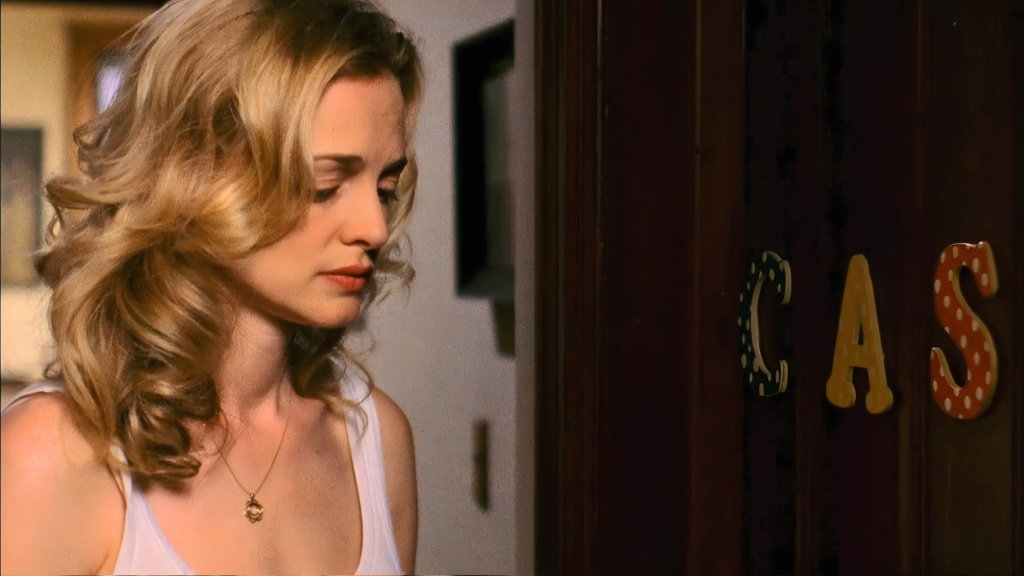
Rather than merely muddying the historical waters, this anecdote introduces a mature appreciation of moral grayness to a narrative often reduced to binary extremes.
Real-world trauma is rarely black and white; an abusive parent can harbor genuine affection amidst catastrophic outbursts, which many contributors attribute to alcohol-induced blackouts that erased or distorted her own recollections.

Furthermore, Christina’s disinheritance is hardly unprecedented; affluent parents routinely expunge adult children from their wills simply because they are independently established.
The exploration of Joan’s tenure on the Pepsi-Cola corporate board feels undisciplined. We waste extensive space on an anecdote involving an extra originally hired as a tour guide who unexpectedly found himself cast as an executive, only to be completely obscured by the director’s camera choices, prompting him to abandon the set entirely. It is precisely the sort of harmless trivia an individual might share over a few drinks at a local tavern, but its inclusion here is baffling.

Dedicating multiple pages to an uncredited extra to demonstrate that major productions are disorganized and directors frequently alter their minds, perhaps due to Dunaway’s influence, perhaps not, is an editorial failure. While not quite as egregious as detailing the crew’s culinary preferences, it highlights a fundamental flaw: the author failed to realize that discovering a fact does not automatically mandate its publication.
Non-fiction thrives on tangents. Without them, the entire self-help genre would dissolve into a single email. But the curation in this volume has completely vanished. The narrative ostensibly maintains a chronological trajectory toward the film’s wrap and subsequent debut, yet it routinely stumbles over unedited transcript blocks where sources casually mention attending the premiere out of sequence.

While it technically advances the historical timeline of both Joan’s twilight years and the production’s evolution, it remains plagued by these unabridged, three-page tangents, ranging from stunt-performer padding techniques to the logistical comedy of verifying which actresses possessed genuine equestrian skills before filming.
When publishing literary critiques, I post these reading journals, partly to display associated artwork and partly to demonstrate a thorough engagement with the text. I am fully aware that these raw impressions are rarely compelling to a general audience. (Thank you for reading this far)

This volume consistently reads more like those unrefined research journals than a structured biography. It is a severe critique, and perhaps slightly uncharitable, but there are far too many pages where one is left demanding to know why this material was permitted to survive the edit.
In my evaluation of Ready Player One, I observed that an impressive opening and a strong conclusion can absolve a multitude of intervening narrative sins. Fortunately, With Love, Mommie Dearest eventually discovers its true purpose, rallying magnificently in its final act to deliver an outstanding final thirty percent.

Before diving into the finer points, a brief digression is warranted: I recently encountered a commentary from a Broadway producer who, completely unprompted, unleashed a vitriolic tirade regarding the utter nightmare of collaborating with Faye Dunaway. It is a bit like purchasing a Volkswagen Beetle and suddenly noticing them everywhere on the road, yet the sheer ubiquity of her reputation still managed to surprise me.
Until that last section, the volume remains almost frustratingly charitable toward Dunaway; for every agonizing account of her onset hostility, the author inserts a paragraph or two defending her as an unappreciated perfectionist who simply expected the absolute best. However, whether due to the sheer accumulation of testimony or a shift in focus, the diplomatic gloves eventually come off.

What follows is an avalanche of magnificent behind-the-scenes accounts detailing the precise reality of sharing a space with her. Having personally navigated professional spheres adjacent to individuals afflicted with this particular brand of toxic perfectionism, I found these testimonies intensely credible.
They span multiple decades, various states, separate countries, and emerge from a diverse chorus of witnesses. The narrative truly hits its stride when detailing the film’s theatrical debut, the theatrical laughter, the enthusiastic embrace by the gay community transforming it into a camp masterpiece, and Paramount’s inspired marketing pivot to taglines like “No wire hangers ever!” and “The mother of all movies.”

Naturally, the producers reacted with litigious fury, shouting over phone lines until the studio capitulated, reverting to a mundane promotional image of Dunaway in an elegant gown, though only after the brilliant marketing damage had already been achieved. The film was undeniably a commercial success, generating substantial profits despite its legacy as an early favorite of the Razzie Awards.
Yet, Dunaway’s performance was not without its prestigious defenders; the New York Film Critics even recognized her as a runner-up. Some commentators have likened her trajectory to Patty Duke’s stint in Valley of the Dolls, suggesting a performer must learn to tolerate a camp legacy before their career can recover. I am not entirely persuaded by the comparison to Duke; if anything was a career-ending catastrophe, it was surely her appearance in that particular Amityville Horror sequel centered around a possessed lamp.

Tracking Dunaway’s subsequent professional path reveals an undeniable decline; she assumed a villainous role in the disastrous Supergirl, which collapsed financially through no fault of her own, and migrated toward the stage, where her volatile behavior became regular fuel for the gossip columns.
In one particularly egregious theatrical incident, her verbal and physical hostility toward the stage crew grew so intolerable that the production was abruptly aborted mere moments before the curtain rose, as the terrified staff fled the building as though Godzilla had emerged from the harbor.

These monstrous anecdotes are so abundant that summarizing them here is an impossibility; one simply must experience the book firsthand. Yet, one specific incident stands out: a man recalled observing Dunaway alongside her parents in New York years prior: a fond, distant memory from a cinema queue. Decades later, finding himself seated near her at the Hollywood Bowl, he politely mentioned this pleasant reminiscence, only for Dunaway to erupt into a horrific, screaming rage at the mere mention of her parents.
Such behavior suggests a total collapse of standard social calibration. I have long maintained that method acting serves primarily as an entitlement to behave like an absolute scoundrel. While certain practitioners undeniably deliver compelling work on screen, as Dunaway did across several exceptional roles, one must ultimately question whether the artistic juice is worth the exhausting squeeze.

In this regard, the book mirrors Shattered, the chronicle of Hillary Clinton’s presidential bid; where that text required wading through meticulously detailed but numbing caucus chapters, this volume forces the reader through disorganized trivia and relentless segments about the crew’s culinary preferences before reaching the rewarding climax. It earns a solid seven out of ten.
Yet, unlike Shattered, which suffered from an abrupt conclusion after its subjects retreated into silence following their political defeat, this book benefits from a distance of forty years. Its contributors are perfectly delighted to share their vivid war stories from the moment Mommie Dearest graced the screen and the public realized its star had truly lost her mind.

This four-decade buffer also lends a mature, grounded perspective to the history; Joan Crawford is viewed with greater nuance, and Christina Crawford has clearly softened, allowing wisdom to supplant old wounds. Had Dunaway chosen to contribute, she might have attempted to smooth over these sharp edges, though her recent public legacy, most notably misidentifying the Best Picture winner at the Academy Awards, leaves her current state a mystery.
While her life possesses the hallmarks of a grand tragedy, it is a predicament she continually constructed and inhabited over the decades. Fortunately, the American public remains obsessed with redemption; Val Kilmer’s reputation was once as notorious as Dunaway’s, yet a harrowing battle with cancer and a humbled, poignant return in the Top Gun sequel completely restored his standing.

Perhaps a similar grace awaits her. Ultimately, the book would have benefited from an assertive content editor: not to remedy the prose, which remains perfectly clean, but to excise the unrefined research notes that clutter the midsection. When the film finally premieres, the narrative regains its sharp focus, rendering this messy, bloated chronicle an entertaining, if occasionally sluggish, recommendation.
