
The Artisanal L-Train
Adrift in Manhattan (2007): 3 out of 10: There are certain terrible movies I will sit through because there is a promise, however faint, of a decent sex scene somewhere toward the end. Longtime readers are well aware of this weakness.
I have sat through absolute dreck because the movie dangled a little skin like a carrot in front of an exhausted donkey. There are many examples. Some involve lesbians and driftwood. Some involving Masters of Horror. And some of them, like Disobedience, were simply movies where the juice was not worth the squeeze. Adrift in Manhattan fits comfortably in that last category.

Adrift in Manhattan presents itself as one of those gloomy, arty, festival-circuit character studies where everyone is damaged, everyone is lonely, everyone is impossibly cultured, and Heather Graham is somewhere in the cast. I understood the assignment. I may not have respected the assignment, but I understood it.
Unfortunately, Adrift in Manhattan is the kind of movie that makes you ask a terrible question: Is even a Heather Graham sex scene worth this? (The answer, by the way, is no.)

The film follows a collection of depressed, eccentric New Yorkers whose lives intersect through grief, loneliness, blindness, stalking, romantic desperation, and the sort of cosmic screenwriting that suggests everyone in Manhattan lives either on the same block or near the same subway stop.
Heather Graham plays a separated optometrist grieving the death of her two-year-old son. Her estranged husband is an angry poetry teacher who blames her because the child died while in her care. There is also an older mailroom worker who paints and is going blind, a woman in his office who wants some kind of relationship with him, and a photographer who lives with his mother, has apparently never kissed a girl, and is obsessed with Heather Graham.

To be fair, being obsessed with Heather Graham is not the most unbelievable thing in the movie.
What is unbelievable is that this photographer stalks her, takes pictures of her from afar, tells her he has been doing this, and she reacts not by calling the police, buying pepper spray, or asking her husband to come back. Instead, she becomes attracted to him.
Sure. Okay, movie.

Grief makes us do strange things. Loneliness makes us do strange things. But bad screenwriting makes us do very strange things.
A few years after Adrift in Manhattan made its way through the festival circuit, Woody Allen made Crimes and Misdemeanors, and on the surface there are some curious overlaps. Blindness. Moral despair. New York intellectual misery. People moving through a world where God may or may not be paying attention. An older man facing the loss of sight. Educated people failing each other in tastefully miserable rooms.

But watching Adrift in Manhattan does not make me think, “Aha! Woody Allen stole from this.” It makes me think, “Wow, Crimes and Misdemeanors really was a superb movie.” That may be the best insight I got from watching Adrift in Manhattan.

The Good
There is the skeleton of a compelling drama here. A grieving mother. A separated husband who cannot forgive her. A dead child. A man losing his sight. A lonely woman trying to attach herself to him. A damaged photographer confusing obsession with intimacy. A city full of people who should be close together geographically but are emotionally sealed off from one another.
Those are not bad ingredients. In fact, they are potentially very strong ingredients. You could make a devastating film out of this material. You could make something about grief turning people into strangers. You could make something about vision, blindness, observation, and moral perception. You could make something about people looking at each other constantly and still never seeing one another.
That is, more or less, what Crimes and Misdemeanors does with some adjacent thematic material.

Crimes and Misdemeanors has a theme. Maybe the theme is that God does not necessarily punish the wicked or save the good. Maybe it is that people are moral or immoral in a universe that does not reliably intervene. Maybe it is that guilt is not the same thing as justice. It has been a long time since I have seen it, so forgive me if I am sanding down some of the theological edges here, but the point is that the movie is about something.
Adrift in Manhattan is about people being sad in expensive rooms.
The other thing Adrift in Manhattan has going for it is that Heather Graham remains Heather Graham. She has a presence. She has that strange combination of fragility, beauty, and slightly dreamy detachment that can work very well when the surrounding material knows what it is doing. (As much praise as I am giving Heather Graham, I can’t help but think an actress like Jennifer Jason Leigh would have taken the character to the next level.)

The film also has New York, and there are worse things to point a camera at than New York. Even a bad New York drama usually has a little borrowed gravity just from the streets, apartments, cultural spaces, and general urban loneliness.
But borrowed gravity is still borrowed. Eventually, the movie has to do something with it. This one does not.

The Bad
The problem with Adrift in Manhattan is not that it lacks drama. The problem is that it has drama and somehow cannot turn it into a story.
Everyone is miserable. Everyone is isolated. Everyone is damaged. No one communicates. Characters drift into each other, bounce off each other, and then drift away again. The film seems to believe this is profound because everyone looks unhappy and nobody says anything useful.

The Heather Graham storyline should be the emotional center of the movie. She and her husband lost a child. He blames her. She is grieving. He is angry. They are separated but still connected by the worst possible wound two people can share. That is heavy material. That should hurt.
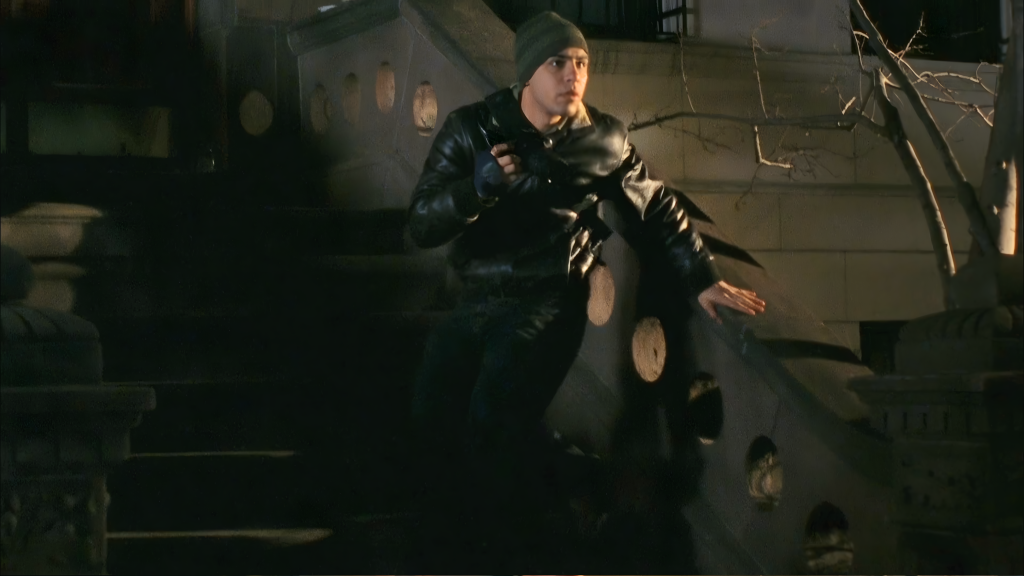
Instead, the movie wanders away from it to spend time with a photographer who is basically Norman Bates if Norman Bates had skipped the motel business and gone into photography. He is Norman Bates but his mother is still alive, sexually aggressive with her son, and he masturbates in a room with her while she sleeps topless.

Somehow Adrift in Manhattan does not know what to do with this. Drama, farce, even a perverted eroticism are all sitting at the table. Part of the issue is that Victor Rasuk manages to play our stalker Norman Bates photographer without the smoldering sexuality of, say, Anthony Perkins.
This man stalks Heather Graham’s character, photographs her, reveals this to her, and the film somehow decides this is romantic, erotic, tragic, or maybe all three. The movie seems to think his damaged awkwardness makes the stalking more soulful. It does not. It makes him seem like someone whose mail should be checked by law enforcement.

There is also the old man who works in the mailroom, paints, and is going blind. This is where the Crimes and Misdemeanors comparison becomes impossible to ignore, because blindness in a serious New York moral drama is not exactly subtle material.
Again, there is something here. A man losing his sight who paints. A man who has never been married. A woman who wants to care for him. A life of loneliness closing in. But the movie never shapes it. It never develops into anything with force. It is just another sad person added to the sad-person stew.
The film keeps presenting potential themes and then walking away from them as if it forgot where it parked.

The Ugly
The ugly is that Adrift in Manhattan appears to confuse misery with meaning.
This is one of those films where everyone is depressed, underlit, emotionally constipated, and culturally refined. Because this is a New York art drama, no one simply watches a ballgame, eats a sandwich, or goes to work and complains about the copier.

No, the blind mailroom guy goes to Lincoln Center for opera. Heather Graham lives in a gorgeous multi-story brownstone near Lincoln Center that would now cost somewhere between twenty million dollars and the GDP of a modest island nation. Everyone is either an artist, a poet, a photographer, an optometrist, a psychic, or a person who can look meaningfully out a window.
This is Movie New York, where even the damaged loners seem to have better real estate than successful surgeons.

And all of that might be fine if the film had a pulse. But after the first third, you start wondering whether this is going anywhere. After the second third, you realize it is not. Whether you make it through the final third depends entirely on how invested you are in a poorly lit Heather Graham sex scene. I made my choice. And as the Grail Knight says, “He chose… poorly,”
But the real ugliness is not that the movie is slow. Slow is fine. Slow can be beautiful. Slow can be devastating. Slow can be hypnotic. Adrift in Manhattan is not slow in that way. Adrift in Manhattan is slow in the way a conversation with a stranger at a bus station can be slow.

The movie’s characters barely have characterization, yet somehow still manage to act out of character. The film wants them to be complicated, but they mostly come across as unfinished. It wants them to be haunted, but they mostly seem underwritten. It wants their intersecting lives to suggest a grand urban tapestry of loneliness and longing, but it plays more like several drafts accidentally stapled together.
The movie wants us to understand that pain creates need and that need can make people reach toward dangerous or inappropriate connections. Fine. That is a valid dramatic idea. But there is a difference between portraying damaged attraction and expecting the audience to nod along while a woman responds to being stalked by deciding the virgin stalker might be a good bondage partner.
At a certain point, “grief makes people do strange things” becomes less of an explanation and more of a hostage note from the screenplay.

In Conclusion
Adrift in Manhattan is a film with serious ingredients, respectable ambitions, and almost no idea how to turn either into a meaningful movie. (The idea of just being entertaining seems alien to the filmmaker.)
It has grief without catharsis, loneliness without insight, sexuality without heat, New York without much life, and characters who seem less adrift than misplaced. The movie keeps circling themes that better films have handled with intelligence, wit, pain, and purpose. In comparison, this one just sits there, staring moodily into the middle distance and waiting for the audience to mistake gloom for depth.

The great irony is that the film’s apparent thematic cousin, Crimes and Misdemeanors, does nearly everything this movie seems to want to do and does it brilliantly. That film uses blindness, guilt, morality, faith, and consequence to ask whether the universe punishes the wicked or saves the good.
Adrift in Manhattan uses some of the same raw materials to ask whether four or five depressed people can avoid having a useful conversation for ninety minutes. The answer is yes. Unfortunately, I was there to see it.



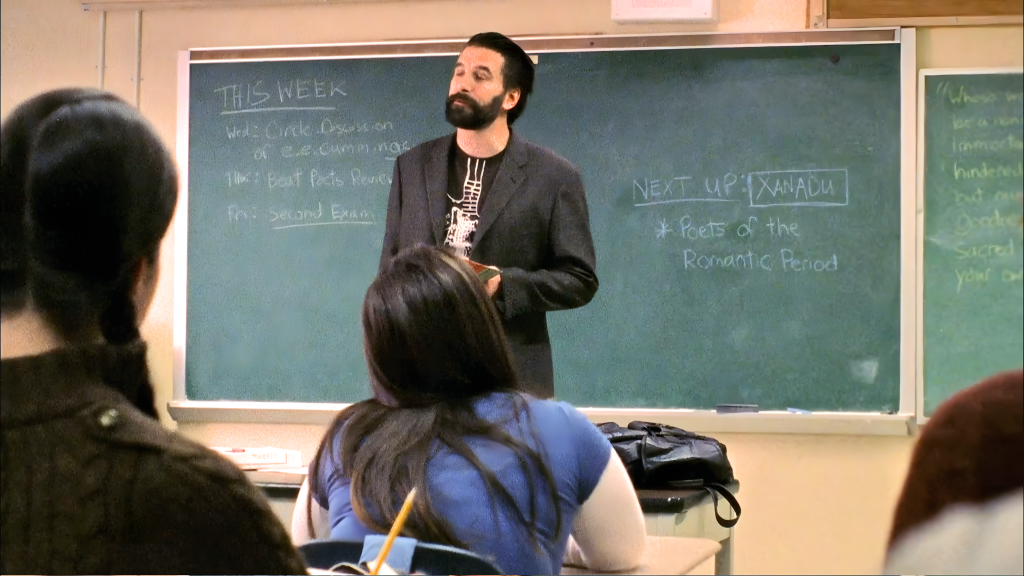
“A place where nobody dared to go
The love that we came to know
They call it Xanadu”