
Mythbusters
Mythos – The Greek Myths Retold by Stephen Fry (2017): 10 out of 10: There are books you read because you want to learn something, and there are books you read because you want someone entertaining to sit beside you on a long walk and tell you stories. Mythos somehow manages to be both at the same time.
Now, to be clear, this is not a dry scholarly text where a tweed-coated academic drones on about agricultural fertility rites while you slowly lose the will to live. Stephen Fry’s approach is much simpler and much smarter. He wants to tell the stories. That’s it. He wants to tell them well, tell them enthusiastically, and tell them with enough context and humor that a modern audience can understand why these tales survived thousands of years.

Stephen Fry is perfectly capable of breaking down each tale to its component parts and doing an autopsy on the page until all the magic and entertainment is successfully removed. He simply does not want to. He just wants to tell his favorite stories (and in many cases his favorite versions of the stories) in all its gory detail to an audience who could use a good yarn.
Listening to the audiobook version of Mythos over walks I came away realizing something important: Greek mythology is basically humanity’s first cinematic universe. You’ve got recurring characters, continuity errors, reboots, contradictory origin stories, wildly inconsistent power levels, sex scandals, family betrayals, monsters, heroes, and a fanbase arguing about canon for literally three thousand years.
And at the center of it all is Zeus, who spends approximately 92% of the book disguising himself as livestock in order to impregnate somebody.

The Good
The obvious star of the show is Fry himself. There may well be academics more knowledgeable about Greek mythology, but I genuinely cannot imagine a better narrator for this material. Fry understands instinctively that myths are supposed to feel alive. He gives the gods personality without turning them into Marvel characters, and he understands that humor and horror often exist side by side in these stories.
One moment you are laughing at Zeus turning himself into a bull because apparently ancient Greece ran entirely on the logic of a particularly disturbed episode of Looney Tunes. The next moment someone is serving their own child as stew to an unsuspecting king in revenge for rape and mutilation.
The tonal balancing act is genuinely impressive.

Fry also excels at drawing connections between myths and modern language without becoming smug or lecture-heavy. “Narcissism,” “arachnid,” “swan song,” “echoes”, “the Gordian Knot”; Mythos is filled with those wonderful little “oh that’s where that comes from” moments that make mythology feel connected to everyday life instead of dusty and remote.
Some stories genuinely surprised me with how interesting they were. Sisyphus in particular is far more entertaining than the famous “rock rolling uphill forever” image suggests. The actual man is clever, petty, manipulative, funny, and endlessly human. Likewise, the story of Arachne and Athena becomes unexpectedly sharp commentary on power, ego, and artistic truth.

And then there’s Fry’s willingness to leave the uglier edges intact. He specifically complains in the afterward that modern retellings often sanitize Greek myths into safe children’s stories. Having now listened to the originals in something approaching full form… he’s absolutely right.
These myths are weird. They are cruel. They are violent. They are deeply sexual. They are emotionally chaotic. Sanding that away doesn’t improve them; it removes the point.

The Bad
There is simply too much book here.Now that sounds absurd as a criticism. Complaining that a mythology compilation contains too many myths is a bit like complaining that the ocean contains excessive water, but around the final third I definitely began to feel the strain.
The problem is not quality. Fry remains engaging throughout. The issue is accumulation. After a while, the stories begin to blur together.

Zeus lusts after someone. Hera punishes the wrong person. Somebody gets transformed into an animal. A mortal displays hubris. A god throws a tantrum. Repeat for eleven thousand years.
The repetition is thematically interesting but dramatically exhausting. I increasingly listened out of completist instinct rather than urgency to discover what happened next.

This is probably less a flaw in Fry’s writing than a flaw in trying to consume Greek mythology as one continuous narrative experience. These stories were originally encountered over generations, not binged like a Netflix series while wandering around the neighborhood trying to hit your step count.
Still, at nearly the end, I definitely hit a wall where another transformed shepherd or cursed princess began to feel less like revelation and more like administrative paperwork.

The Ugly
Well… Zeus. Look, there is no elegant way around this: Greek mythology is extremely rapey.
I’m not remotely prudish about difficult material in fiction or mythology, and Fry handles the subject matter honestly without wallowing in it, but there comes a point where you begin to understand why Hera wakes up every morning already furious. Zeus is less a king of the gods and more of an unstoppable natural disaster powered entirely by catastrophic libido and poor impulse control.
If you see: an eagle, a swan, a bull,a shower of gold, or honestly any unusually charismatic farm animal… run.
The myths themselves are endlessly fascinating, but there is no denying that a huge percentage of them are built around abuse, revenge, punishment, and collateral damage inflicted on women unfortunate enough to attract divine attention. Fry wisely refuses to excuse this or modernize it into something more palatable. The ugliness is part of the mythology’s DNA. That honesty is part of what makes the book work.

In Conclusion
Mythos is one of the most enjoyable audiobook experiences I’ve had in a long time. Stephen Fry turns what could have been an exhausting mythology textbook into something warm, theatrical, funny, disturbing, and deeply human.
Yes, it occasionally becomes overwhelming. Yes, the repetition can wear you down. And yes, if you spend enough time with Greek mythology, you eventually begin to suspect every bird in the sky is Zeus attempting another felony. But the stories endure for a reason.
They survive because they are primal and emotional, and strange. They survive because they explain language, psychology, culture, and human behavior through unforgettable images. And they survive because storytellers like Stephen Fry can still sit down thousands of years later and make them feel immediate.
What matters is the experience of listening to them. Stephen Fry proves himself the perfect guide. He is scholarly without being dry, funny without mocking the material, theatrical without becoming exhausting, and deeply aware that myths survive because they are fundamentally good stories.
Now, if you’ll excuse me, I’m off to avoid suspiciously attractive livestock.
Random Notes from reading
Mythos–Notes (Midpoint: Psyche and Eros)
Currently in the middle of a Beauty and the Beast-style tale of Psyche and Eros. Athena, who originally tried to get her son Eros to make Psyche fall in love with a pig, has had her plan go spectacularly sideways. Eros fell in love with Psyche himself, got injured, and now we’ve reached the part where Psyche, after killing her two jealous sisters in revenge, is in despair and ready to kill herself because she can’t be with him.
Athena, being the meddling goddess she is, has assigned Psyche impossible tasks, the usual divine punishment routine. Through a combination of luck, magic, and fate, Psyche has somehow completed two of them so far and is now on her way to the Underworld.

Stephen Fry’s narration is brilliant; his timing and tone make the myth sparkle with both humor and tragedy. What’s striking is just how much of modern fairy tales (the Grimm-type stories from a few hundred years ago) are directly lifted from Greek myth. Listening to this, you can trace Beauty and the Beast, Cinderella, Snow White, all of them, to these ancient tales.
I saw a video game review for Hades II recently, and the reviewer mentioned something insightful: with the death of omniculture in the 21st century, Greek myths might be the closest thing we have left to a shared cultural baseline. And honestly, I have to agree.

———————————————————————————————————–
Mythos – Notes (The Tale of Io)
We’re into the chapter about Io, a beautiful maiden and priestess of Hera. Naturally, Zeus, being Zeus, takes an interest. As Stephen Fry puts it, this is Zeus in full Bill Clinton mode, and what Zeus wants, Zeus gets.
To keep his wife Hera in the dark, Zeus turns Io into a beautiful cow. Unfortunately for him, Hera is no fool and immediately suspects something. In full Hillary Clinton mode, she sends Argus, a watchman with a hundred eyes, to keep an eye (or a hundred) on both the cow and on the lookout for Zeus.

Zeus, not to be outdone, dispatches Hermes (if memory serves) to deal with the situation. Hermes lulls Argus to sleep with his flute and then stabs him to death. Hera, furious but classy in her own divine way, turns Argus into the first peacock, his many eyes immortalized on its feathers. She then sends a gadfly to torment poor Io, driving the transformed maiden all the way to Turkey, where she encounters Prometheus, still chained to his mountain and being pecked at by vultures.
Eventually, as these myths tend to go, things “work out.” Zeus has his way with Io, and she bears him two children. Along the way, Fry points out that a number of place names and geographic features originate from this myth; a nice touch of etymological world-building.
Two bits from Fry’s narration stand out:
- First, he mentions that while some scholars claim the “hundred eyes” of Argus were metaphorical (a poetic way to describe a very observant guard), Fry rejects this with delightful finality: Argus literally had a hundred eyes, and that’s that.
- Second, he notes how Zeus thinks himself a master schemer, but like anyone acting out of lust, he mistakes idiotic improvisation for cunning. As Fry wryly observes, nothing turns a person into a complete idiot faster than being lustful, or, for that matter, in love.

———————————————————————————————————————–
Mythos – Notes (The Birth of Athens and a Boarding School of Gods)
We start with a brisk (and very Greek) account of how Athens was founded, which, as is so often the case in myth, traces back to an attempted divine assault. One of the gods or Titans (Stephen Fry gives us several possibilities, but the key detail is that the God/Titan is not great at consent) becomes aroused by Athena, who, as always, is a devoted virgin goddess. She is utterly uninterested, but that doesn’t stop him. In his excitement, he ends up discharging onto Athena’s “creamy white thigh.”
Athena, unimpressed and thoroughly disgusted, wipes it off with a rag and tosses it off Mount Olympus. Where it lands, the Earth itself becomes pregnant, and from this bizarre act, a being is born is the one who will find Athens. The child, swaddled in a snake, is entrusted to some local women who are instructed not to look inside the basket. Naturally, they look, go mad at the sight, and throw themselves off a cliff, which is why the Acropolis sits where it does today. Just your standard wholesome bedtime story from the Greeks.

Then we pivot to a much longer and more engaging tale. One that Fry performs with relish. It’s the story of a boy who might be the son of a god, though it’s never clear whether his mother’s story is true or just wishful thinking. The boy attends school with the son of Zeus, who is predictably a snob, and Fry has immense fun voicing the characters.
Particularly amusing is the dynamic between the boy and his pining, clearly gay school chum, which Fry narrates with both empathy and theatrical flair, his years of performing Wilde and Wodehouse shining through. The result is equal parts comic and nostalgic.

Fry also highlights how Greek myths come in endless versions. In this case, the boy’s mother might be the Titaness Asia, or perhaps simply a mortal woman with the same name. The father might be Apollo, or perhaps the sun god Helios. The details shift depending on the teller.
What’s unmistakable is that Fry is drawing deeply on his memories of English boarding school life. The kind of upper-crust institution that had butlers and prefects. As a result Fry gives the myth a comic, very British flavor. The teasing, bullying, and quiet crushes among schoolboys are rendered with wry affection, turning ancient Greece into something halfway between Eton and Olympus.

——————————————————————————————————————————-
Mythos – Notes (Phaethon, the Chariot, and the Accidental Sahara)
Now we arrive at the chapters on Phaethon. Phaethon is the demigod son of Apollo, best known for that one time he insisted on driving the Sun Chariot and, in the process, accidentally created the Sahara Desert. As one does. Zeus eventually has to intervene with a thunderbolt, which kills Phaethon mid-disaster and restores cosmic order.
What surprised me is that this tale is much richer and much more interesting than the basic outline I remembered. Stephen Fry pulls out all sorts of wonderful details.

For example, Phaethon ends up being mocked by a man, Clymenus, I believe, who jeers at him before his death. But instead of punishing the mocker, the fates more or less let him go about his business… and he becomes the patriarch of all Egypt. He marries Memphis, has a daughter named Libya, and his descendants ultimately found the Egyptian people. The blending of Greek myth into near-Eastern history is both ridiculous and delightful.
Another fantastic detail: Phaethon’s schoolboy lover, whose mourning was so excessive and so ear-splittingly horrible, is silenced by Apollo. The god transforms him into a mute swan, which Fry emphasizes is a real species, an animal that makes no sound until its final cry at death. Hence the term: “swan song.”
This is the kind of revelation that keeps popping up in Mythos: you’re listening along, thinking you know where the story is going, and suddenly Fry drops another “oh by the way, here’s the origin of a phrase you’ve used your whole life” moment. Absolutely fascinating.
One more wonderful touch: after Phaethon’s death, Apollo refuses to drive the chariot anymore, despite not caring all that much for the boy while he was alive. Helios eventually steps in, taking over the job of moving the sun across the sky. Words shifting, gods merging, versions blending; Fry revels in it, and the entire story becomes a warm, wry meditation on how myths mutate across time.
Overall, the tale is much better than expected, and Fry clearly has a ball performing it.
————————————————————————————————————
Mythos – Notes (Cadmus, Europa, and the White Bull)
I’m now in the middle of the tale of Cadmus, Europa, and the White Bull, though I haven’t yet reached the end. It begins with four siblings; Cadmus being one of them (I’m almost certain, though the audiobook pronunciation can throw things off), three boys and one young woman, Europa. The four of them are playing in a field when Europa spots a beautiful bull. Naturally, she climbs onto its back… and the bull immediately carries her off to Crete.
Europa ends up bearing three children there, sons who, according to Fry, eventually work in Hades after their deaths (which feels very on-brand for Greek myth: promotions come in strange forms). Europa herself is half-human, the daughter of Titans, and of course the bull turns out to be exactly who we all assumed the moment he appeared.
Yes it is Zeus in disguise. Zeus, champion of bad decisions and master of the costume change. Honestly, Zeus gets around Greek mythology like your Sims 4 protagonist on a particularly spicy save file.
Meanwhile, her three brothers are ordered by their parents to go find their sister, which they do, everywhere but Crete. The irony is practically mythological in itself.

One of the brothers, who Fry makes clear is considered the first hero, is married to an exquisite woman. They go to the Delphi Oracle and get one of those delightfully cryptic instructions: “Start a new kingdom where the cow with the moon on its flank stops.”
They continue wandering, technically still “looking” for Europa, but clearly destiny has hijacked the itinerary. There’s a competition, Olympic-style, and a drunk old man insists that Cadmus enter. He does, he wins, and the prize is… you guessed it: a cow with a moon on it.
Which means the moment the cow stops is going to matter enormously. That’s where my listening left off.
What strikes me again is how delightfully Fry tells these stories. They really are fairy tales; dark, messy, interesting, and sometimes hilariously absurd. I’m only halfway through Mythos, but Fry’s narration makes the book feel like sitting around a campfire with a brilliant, very theatrical friend who keeps saying, “Oh, and another thing you never knew…”
Even when I don’t know how the story will unfold next, I often know the shape of it. For instance, I absolutely knew the moment that bull walked into the field that it was Zeus. Of course, it was Zeus. Who else in Greek mythology is going to show up as a random beautiful animal and immediately run off with a girl?

—————————————————————————————————————————-
Mythos – Notes (Cadmus and Harmonia: Serpents, Curses, and the Limits of Logic)
We’ve now finished the story of Cadmus and Harmonia, and it is every bit as strange, colorful, and emotionally tangled as any Greek myth worth its salt.
Cadmus follows the moon-marked cow until it stops, signaling the site where he must found his city. But the local spring is guarded by a serpent/dragon, a creature sacred to Ares and possibly the child or favored pet of the war god. Cadmus kills the dragon with a rock (as one does in Greek myth), which immediately puts him on divine thin ice.

From here, the story spirals into curses, transformations, and divine family drama. Cadmus marries Harmonia, who may well be the daughter of Ares, which certainly doesn’t clarify the situation. After a lifetime marked by tragedy, loss, and lingering divine resentment, Cadmus and Harmonia are eventually transformed into snakes. They slither through the remainder of their days, only becoming human again at the very end so that they can be buried together as lovers. It’s strangely sweet, in that uniquely Greek, unsettlingly reptilian way.
What stands out is Stephen Fry’s excellent aside during this tale: Greek myths are not algebra. They cannot be solved with logic or pinned down into a neat equation. They are human stories, and as such, they follow the logic of emotion, fear, pride, lust, grief… never mathematics. Trying to make perfect sense of them is like trying to diagram a dream.
Fry’s reminder feels important for the entire book: in the world of myth, emotion is the currency, not consistency. And accepting that makes the stories richer, not poorer.
——————————————————————————————————————————-
Mythos – Notes (Dionysus: Another Zeus Affair, Another Origin Story)
I got briefly interrupted in my listening, my sister called to thank me for giving Mythos to her for her birthday, which is honestly perfect timing because I was literally in the middle of listening to it when she rang. I’ve been off for an entire week on vacation and somehow managed only one walk, but that’s another matter entirely.
Back to the story:
We’ve arrived at the Dionysus chapter, and it’s very much a classic Zeus storyline. Meaning:
- Zeus impregnates a mortal woman (in this case a priestess of his wife).
- Hera gets wind of it (Hera always gets wind of it).
- Hera exacts revenge, which inevitably results in the mortal woman dying.
- Zeus saves the unborn child through some form of divine improv surgery.
- The miraculous baby grows into a major god, Dionysus, the god of wine.

Dionysus’ name, as Fry notes, wanders a bit depending on pronunciation — the audiobook makes it sound like “Die-oh-nee-sus” or “Dye-oh-nigh-sus”, but the important thing is that the structure of the myth is extremely familiar. It’s another one of those “Oh, that’s where that comes from” stories.
There isn’t much plot complexity beyond that, but Fry tells it so well that even the standard Zeus/Hera/mortal triangle feels fresh. And, as always, hearing how these myths explain everything from rituals to words to grape cultivation continues to be one of the book’s unexpected pleasures.

————————————————————————————————————————
Mythos – Notes (Short Fables: Stags, Trees, and Too Many Dog Names)
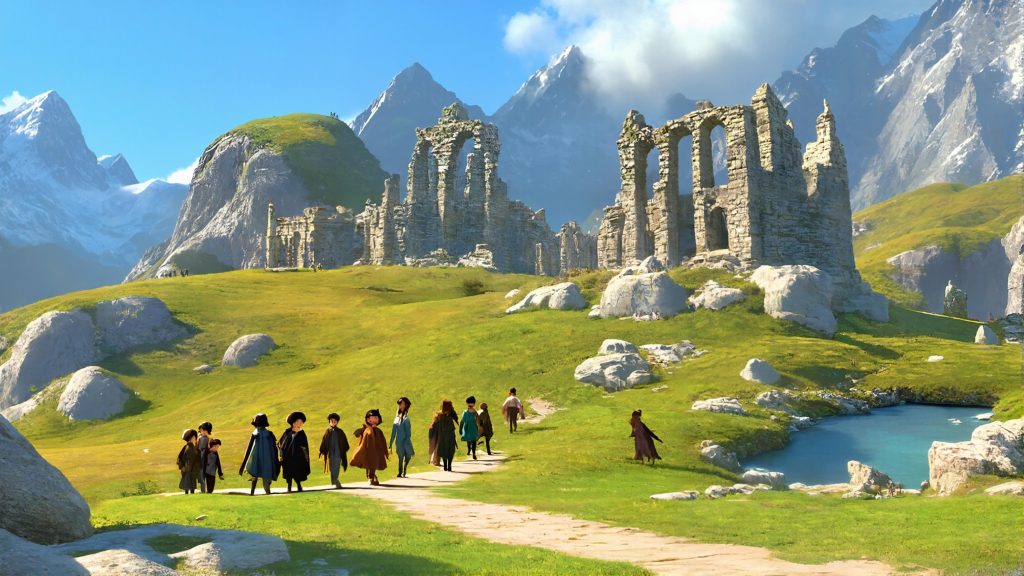
Stephen Fry gives us a couple of shorter tales here, A couple of quick, sharp moral fables that don’t require the full, sprawling treatment of the bigger myths.
The first is the story of the hunter who accidentally spies Artemis bathing, is turned into a stag, and is then torn apart by his own hunting dogs. Brutal, quick, and very Greek.

The second is the tale of the man who cuts down a sacred tree and is cursed with such ravenous, supernatural hunger that he eventually eats himself. Not exactly bedtime reading, but Fry relishes it with his usual theatrical warmth.
I’m not going into full detail here. They’re short tales, and anyone curious can easily look them up, but they were both pleasant little fables in the context of the walk I was taking. The book continues to be charming, engaging, and consistently surprising.
However, the sheer number of names Fry reads out is now approaching encyclopedic. In the stag story, he lists every single one of the dogs who tore their master apart, apparently because he had the full roster at hand and decided they’d make good computer passwords. Honestly, he’s not wrong.
Still, even when Fry veers into “appendix mode,” the narration never loses its personality or humor.
————————————————————————————————————————
Mythos – Notes (Sisyphus, Death Cheated Twice, and Zeus Being Zeus)
I know, I know. I said I was going to stop adding notes every time a new story cropped up, because at this point a lot of them follow a familiar pattern. Zeus turns into an eagle. Zeus turns into something else. Zeus rapes a beautiful woman. A father asks where his daughter went. Someone gets punished for asking. Standard Greek bedtime material.
And then Stephen Fry gets to Sisyphus.
Up until now, all I really knew about Sisyphus was the rock. You know rolling it up the hill for eternity, futility, Camus, Sisyphean tasks, all that. I had no idea how good the rest of his story is.
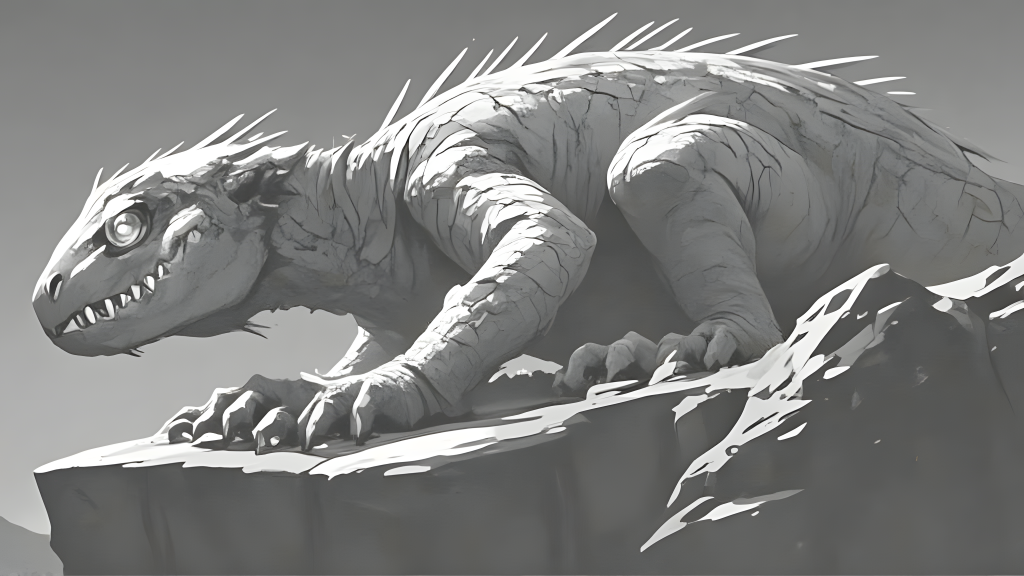
Sisyphus cheats death twice, and he does it in the most delightful ways imaginable. First, he tricks Thanatos (Charon? Fry spells it out C-H-A-R-O-N anyway, Death-adjacent figure) into putting on the unbreakable shackles, trapping Death himself. As a result, no one can die. This, understandably, causes problems.
Then, when Death finally gets his revenge, Sisyphus cheats him again, arranging things so that his wife fails to perform the proper burial rites, giving him an excuse to return to the land of the living to “correct” the injustice. Once back, he has absolutely no intention of returning to the underworld.

Stephen Fry takes immense delight in telling this story, and it shows. Listening to it, you can feel Fry grinning through the narration. And honestly, I’m shocked this story isn’t mined more often in modern films or literature. The rock is the famous metaphor, but it’s also the least interesting part of Sisyphus’ story. The man himself is clever, infuriating, arrogant, funny, and endlessly human.
At this point, about two-thirds of the way through the book, Sisyphus is easily my favorite character so far.
One final observation: for a relatively light, fun, witty book about Greek myths… wow, this thing is very rapey. To be fair, if you include Zeus, that’s basically unavoidable. Zeus is not what we would call a modern man, which is fair, given that he’s an ancient Greek god, but still. Hide your wives. Hide your daughters. Hide your sons. Hide your livestock. And if you see an eagle circling overhead, that is apparently not a good sign.
——————————————————————————————————————————-
Mythos – Notes (Arachne vs. Athena: The Weave-Off)
I’ve skipped a few stories in my notes simply because the book is long and consistently delightful and at some point, writing “Stephen Fry tells another Greek myth brilliantly” becomes redundant.
But now we arrive at Arachne and Athena, and this one feels elevated. It is sharper, more pointed, and thematically richer.
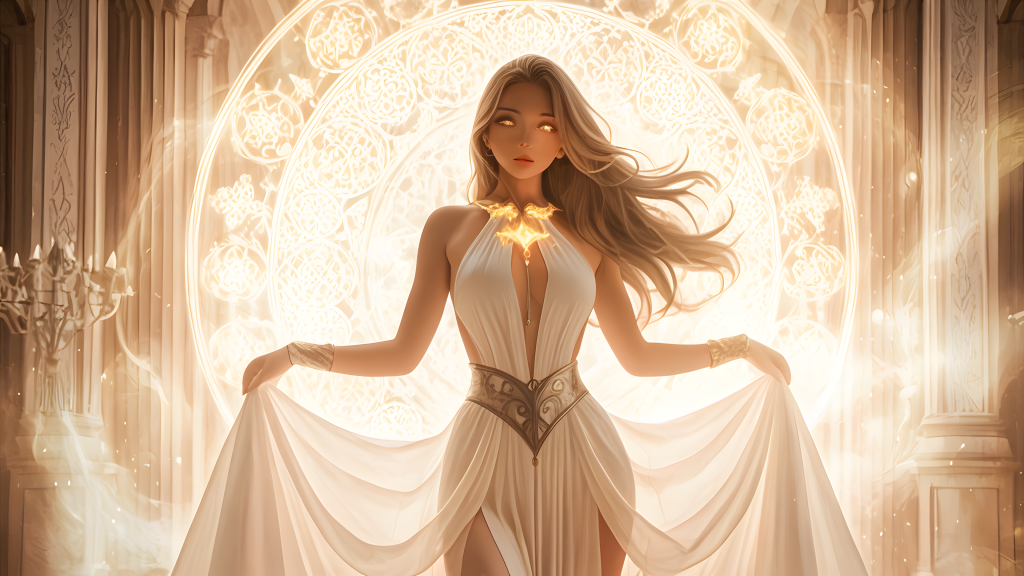
Arachne is an extraordinary weaver, arguably the best alive. She is so good that people begin whispering that her skill rivals the gods. Athena hears that Arachne has been comparing herself to the goddess and, being Athena, does not take this lightly.
Thus begins the weave-off.
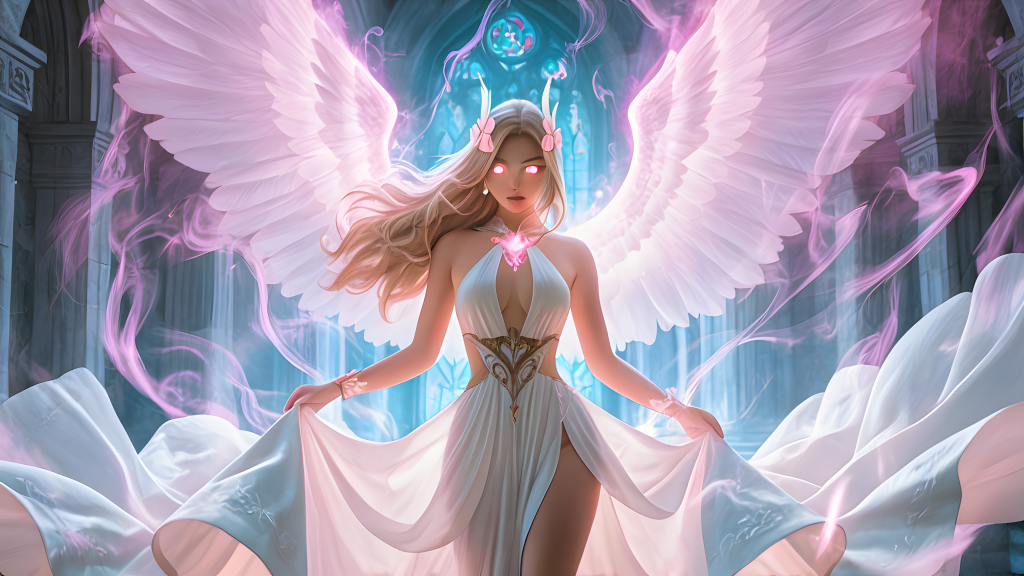
Athena’s tapestry depicts the majesty of the gods, the grand cosmic order, from the castration of the Titans to the birth of Zeus and the triumph of Olympian power. It’s mythic propaganda at its finest.
Arachne, however, takes a very different tack. Instead of glorifying Olympus, she weaves what can only be described as the “Epstein Files” version of Greek mythology. A tapestry cataloging all the times the gods abused, deceived, and raped mortals. It’s bold. It’s confrontational. And according to Fry, it’s technically flawless.

Importantly, Athena’s own tapestry also includes cautionary tales about mortals who displayed hubris. Those who dared to compare themselves to gods. Which, of course, makes Arachne’s defiance even more loaded.
When the contest ends, Athena loses her temper. She destroys Arachne’s loom and her work in a fit of divine pettiness. Arachne, humiliated and despairing, runs out and hangs herself with hemp. (The mechanics of this are… narratively swift, let’s say, especially given the crowd, but Greek myth is rarely concerned with procedural realism.)

Whether from remorse or grudging acknowledgment that Arachne’s work was superior, Athena transforms her into a creature that will weave forever: An arachnid. A spider.
And thus spiders are born. Those eternal weavers, perhaps even better than the gods.
What makes this story powerful is how it reframes Athena. She’s often portrayed as one of the more reasonable Olympians, but here she’s petty, prideful, and vindictive. The gods’ hubris mirrors the very flaw they condemn in mortals.
It’s a compact story, just two chapters in the audiobook, but it hits hard. It’s about art, ego, power, and truth. And Fry tells it with perfect tonal balance: witty, but with teeth.
We’re about 72% through the book now. It’s long, but it’s brilliant. And when I finally sit down to write a proper piece about it, there’s going to be a lot to unpack.

—————————————————————————————————————————-
Mythos – Notes (Metamorphosis: Birds, Beasts, and Bedtime Horror)
Short listening session today, but Greece apparently transformed half its population into animals while I was out walking.
Following the Arachne chapter (arachnids), we now get a string of metamorphosis stories. The pattern is familiar: Greek person does something wrong → a god intervenes → Greek person becomes an animal.
Of course, in Greek mythology, “doing something wrong” can include being raped by Zeus and becoming pregnant, as one of Artemis’s attendants tragically discovers. Hera, once again, proves that she is not what one would call emotionally regulated.
But then we get to the story that really stands out.
A king rapes his sister-in-law, who cannot read or write. To prevent her from telling his wife, he cuts out her tongue. Problem solved, one might think. Except this is a Greek myth.
The woman, unable to speak, uses a loom to weave a picture that tells her sister exactly what happened. In revenge, the wife murders her own son, the king’s favorite, cooks him into a stew, and serves him to his father. When he finishes the meal and learns the truth, chaos follows. (Shades of Shakespeare’s Titus Andronicus)
Naturally, everyone is transformed into birds.

The tongueless woman becomes a nightingale which tracks symbolically, though I understand female nightingales don’t actually sing, which adds a layer of irony. The king becomes a hoopoe, a bird with a crown-like crest fitting for royalty, I suppose, even in disgrace.
And that’s just in a 10–20 minute listening session.
In that brief span, we have:
- Multiple rapes
- Attempted matricide
- Filicide
- Cannibalism
- Tongue removal
- Divine vengeance
- Avian transformation
Stephen Fry tells it with wit and elegance, but the underlying material is undeniably brutal.

It does make one reflect: this is often packaged as “classical mythology,” something cultured and refined, marble statues and Latin mottos, but stripped of aesthetic distance, these stories are savage, primal, and deeply human.
Perhaps not ideal bedtime reading for children.

——————————————————————————————————————————-
Mythos – Notes (Echo and Narcissus: Words, Reflections, and Hera Being Hera)
We move into the intertwined stories of Echo and Narcissus, and once again, it all starts with Zeus behaving exactly as expected.
Echo, a river nymph, makes the unfortunate mistake of trying to cover for Zeus’s latest extracurricular activities when Hera comes looking. This goes about as well as you’d expect. Hera curses Echo so that she can no longer speak freely. She can only repeat the last words spoken to her.
Enter Narcissus, a young man of absurd beauty who rejects everyone who falls in love with him. Echo, now unable to express herself properly, falls for him anyway. The interaction is tragic and a little painful, She can only mirror his words, never initiate, never explain, never connect.

Narcissus, being Narcissus, rejects her. Eventually, he encounters his own reflection and, in classic myth fashion, falls in love with himself, unable to look away until he wastes away. Echo fades until only her voice remains.
And just like that, we get: The concept of an “echo” and the idea of “narcissism”
Another perfect example of what this book does so well. Tying myth directly into language and everyday concepts.
It’s a compact, elegant set of stories, and Fry tells them with his usual charm. But it’s also yet another reminder that Hera may be the most vindictive figure in the entire book. Zeus causes the problem, someone else gets punished… rinse, repeat.

Honestly, if I were married to Hera, I might also consider spending more time with river nymphs. Not defending Zeus… just saying I understand the survival instinct.

————————————————————————————————————————–
Mythos – Notes (The Weight of Myth)
We’re down to about the last hour or so of Mythos, and I think I’ve finally run into the book’s biggest problem:
There’s simply too much of it.
The stories themselves are still good. Stephen Fry is still telling them brilliantly. But after dozens and dozens of tales, they begin to blur together a bit. The themes repeat. The gods repeat themselves even more. Zeus continues to behave like Zeus. Hera continues to behave like Hera. Somebody gets transformed into an animal. Someone else displays hubris. Another mortal discovers that divine attention is the worst thing that can happen to a person.

So now we get stories like Pygmalion and Lot and his wife or at least stories adjacent enough in my exhausted audiobook brain that names are starting to blend together.
The important thing is that the stories are still well told. This isn’t a case of the book collapsing or becoming bad. It’s more like hitting the final course of a gigantic feast and realizing that even excellent food eventually becomes work.

I think I’m now pushing through partly out of completist instinct. Not because I dislike the material, but because the sheer density of it has become exhausting. There are only so many: gods, nymphs, transformations,revenge cycles, rapes, prophecies, magical births, and poetic explanations for where words come from that the brain can absorb in one sustained stretch.
And to be fair, this may actually say something interesting about mythology itself. These stories weren’t originally designed to be consumed all at once in audiobook form over a couple of weeks. They were cultural folklore accumulated over centuries, meant to be encountered gradually, separately, communally.

Still, even with the fatigue setting in, I’m very much looking forward to finishing the book and writing the final review. Because when Mythos is firing on all cylinders, it’s fascinating — witty, dark, strange, scholarly without being dry, and packed with connections between ancient stories and modern language.
It’s just… a lot of Zeus.
——————————————————————————————————————————-
Mythos – Notes (Midas, Gordias, and Alexander Cheating at Puzzles)
So naturally, right after I spend time complaining that the book is becoming repetitive, Stephen Fry immediately hits me with two genuinely delightful stories.
First up: Midas. What surprised me here is that Fry presents Midas not as a greedy fool right from the outset, but as a fundamentally humble and decent king who simply gets caught up in the unintended consequences of divine gifts.

The famous “gold touch” story is still there, of course, but Fry gives Midas a warmth and humanity that makes the tragedy work better. He isn’t portrayed as some cartoon miser; he’s a man who makes a very human mistake.
Then we get the story of Gordias and the Gordian Knot, which delighted me for an entirely different reason. Even Stephen Fry pauses long enough for me to have the exact reaction I’ve always had: Alexander the Great absolutely cheated.

The whole point of the Gordian Knot is that it’s an impossible knot that supposedly can’t be untangled. Alexander shows up, takes one look at it, and simply cuts the thing in half with a sword.
And history responds: “What brilliant out-of-the-box thinking!” No. That’s not solving the puzzle. That’s the equivalent of flipping over a Monopoly board because you’re losing and declaring yourself emperor of board games.
Fry doesn’t linger too long on it, but the absurdity of how much praise Alexander still receives for this maneuver genuinely amuses me. It’s one of those moments where mythology, history, and cultural storytelling all blend together into legend so effectively that everyone just collectively agrees: “Sure. That counts.”
Still, both stories were wonderful palate cleansers after some of the heavier, more repetitive stretches of the book. Fry’s enthusiasm remains infectious, and whenever he lands on a myth with a strong central gimmick or moral twist, the entire book comes alive again.
—————————————————————————————————————————-
Mythos – Final Notes (Stephen Fry, Greek Myth, and Why These Stories Survived)
And we’ve come to the end of Mythos. Not that Stephen Fry can quite help himself. The afterword includes two more stories, because of course it does. Once a storyteller gets hold of Greek mythology, apparently it becomes physically impossible to stop.
Overall, the book was an immense pleasure.
One thing Fry emphasizes in the afterward that I deeply appreciated is that his goal was simply to tell the stories well. He wasn’t trying to force some grand unified interpretation onto them, nor was he trying to claim these myths contained hidden historical truth or psychological certainty. He wanted to recreate the experience of hearing these tales told aloud. In all their strange, funny, violent, sexy, tragic, absurd ways passed down through generations. And he succeeds beautifully.

Fry also gives a fascinating explanation for why Greek mythology survived while so many other mythic traditions faded or fragmented. A large part of it is surprisingly practical: The Greeks wrote things down, later cultures preserved those writings, and the stories remained popular for centuries.
He discusses the ancient texts and later reinterpretations, and one of his recurring frustrations is that modern retellings often sand off the rough edges. Toning down the sex, violence, cruelty, and sheer weirdness that made the original myths feel alive.

In that sense, Greek myth resembles the history of the Grimm fairy tales. Stories originally intended for broad communal audiences, including adults, gradually become sterilized into “children’s stories” over time.
And honestly? After spending this much time with the originals, I understand Fry’s frustration. These myths are messy and disturbing, and very human. Remove that, and you remove much of what gives them power.
As for me, I undoubtedly retained maybe 8% of what I heard. There are simply too many names, too many genealogies, too many transformed nymphs and catastrophically lustful gods for the average human brain to fully catalog. But that almost doesn’t matter.
What matters is the experience of listening to them. Stephen Fry proves himself the perfect guide. He is scholarly without being dry, funny without mocking the material, theatrical without becoming exhausting, and deeply aware that myths survive because they are fundamentally good stories.
I genuinely cannot imagine a better person to tell me these tales.