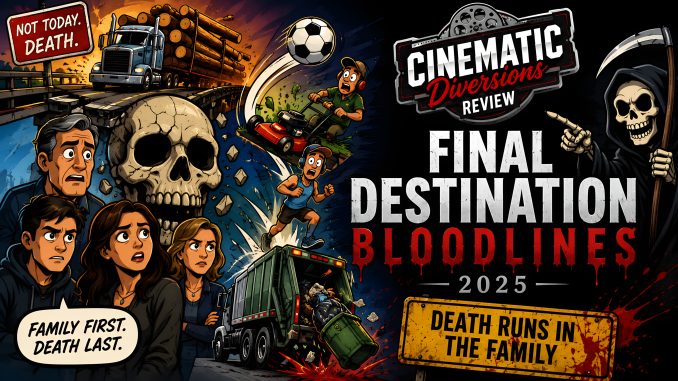
The Family that dies together.
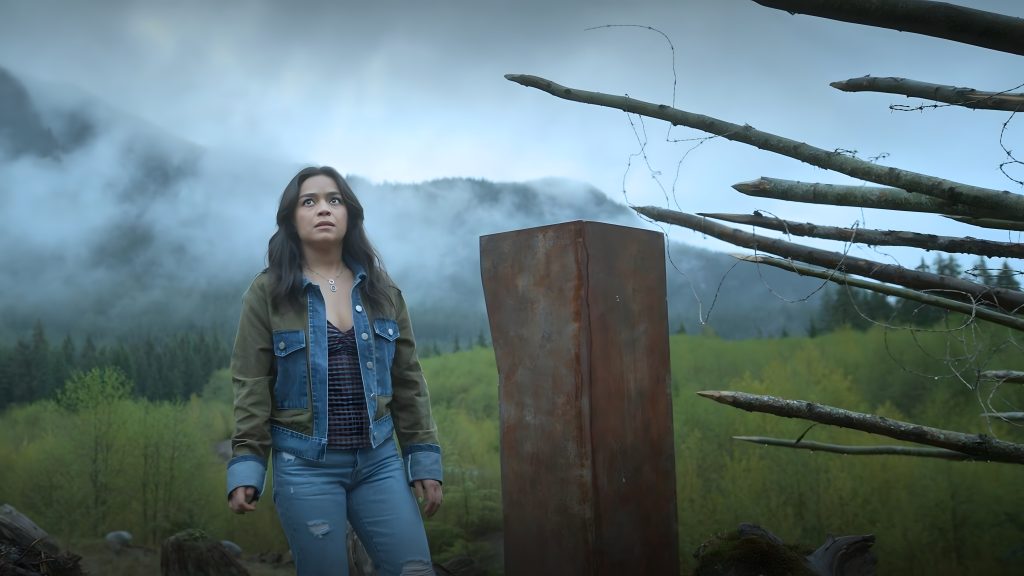
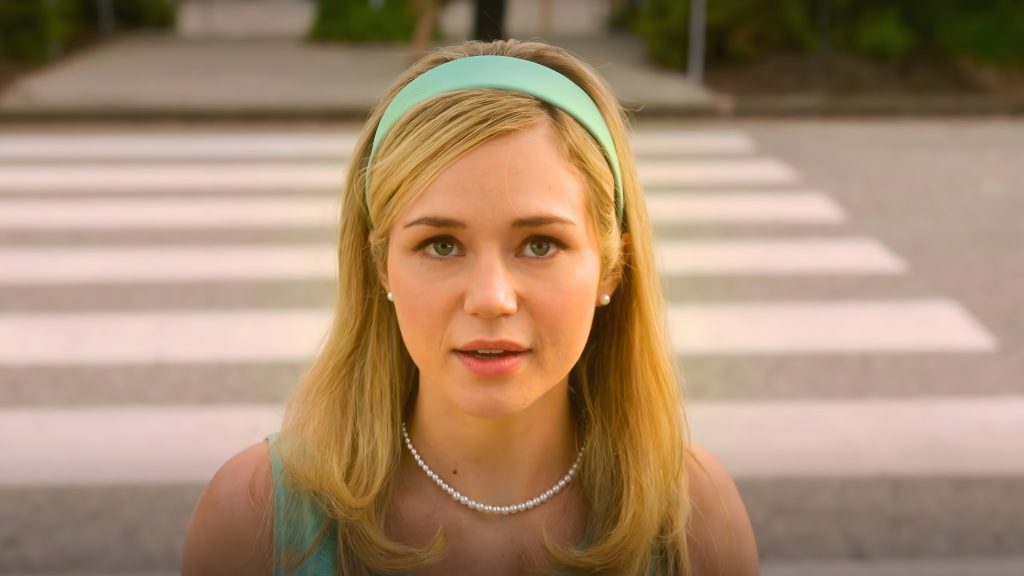
Final Destination Bloodlines (2025): 8 out of 10: College student Stefani is haunted by recurring nightmares connected to a catastrophic accident from decades earlier. Returning home in search of answers, she discovers that her family may have survived only because someone once disrupted Death’s intended order. Now Death appears ready to correct the mistake.
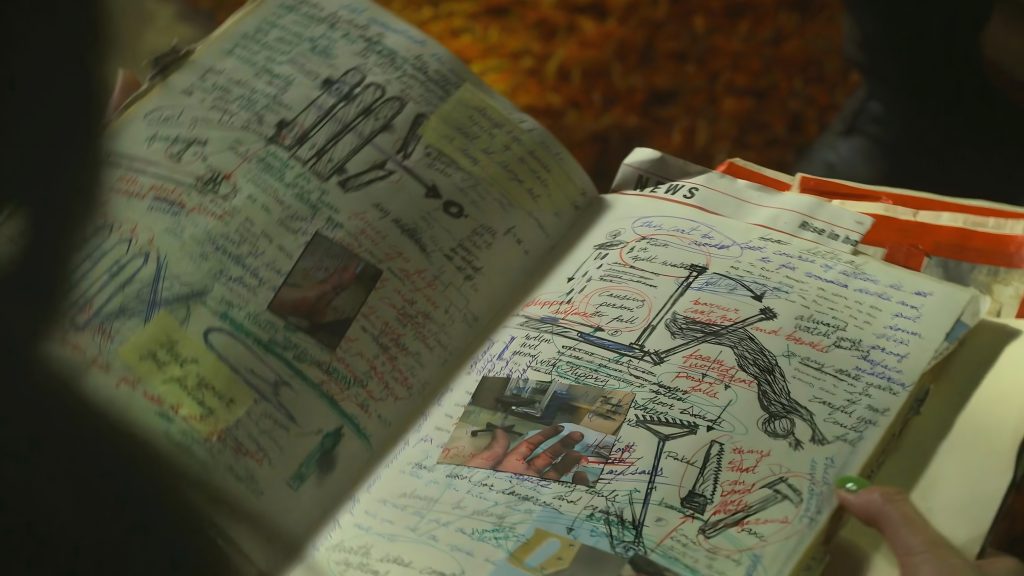
Final Destination Bloodlines returns to the franchise’s familiar structure of premonitions, elaborate chain reactions, hidden dangers, and increasingly desperate attempts to understand the rules. What separates this installment from many of its predecessors is that the people caught in Death’s design feel less like disposable horror archetypes and more like an actual family.
The Good
Before discussing Final Destination Bloodlines, it is worth bringing up Twisters. One of the major reasons Twisters worked was that its characters behaved like recognizable people. They were flawed and occasionally reckless, but they were not collections of abrasive traits designed to make the audience anticipate their deaths.
Final Destination Bloodlines improves its own franchise in much the same way. Previous Final Destination films were often filled with pseudo-teenagers who were selfish, hostile, or simply unpleasant to spend time with. In several entries, even the principal characters were written so broadly that Death’s pursuit became almost recreational. The audience was not necessarily afraid for them. It was often waiting to see how creatively they would be removed.
That approach has a long history in slasher films, particularly the Friday the 13th series, but it also places a limit on suspense. There is only so much tension in watching someone you actively dislike move toward an industrial accident.
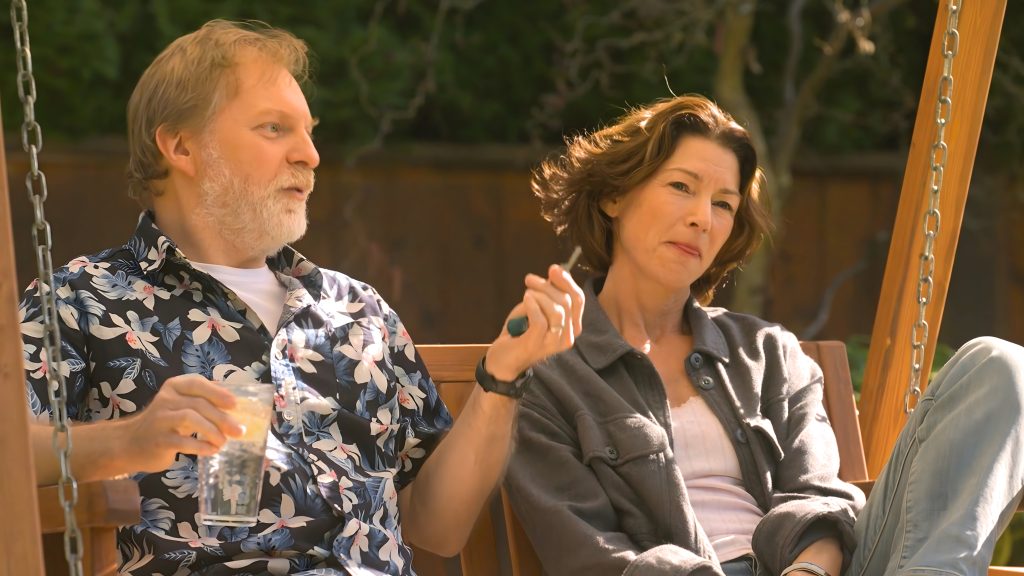
Bloodlines gives us a family of comparatively ordinary people with genuine emotional connections. They argue, hold grudges, make poor decisions, and carry old wounds, but they also care for one another. Their relationships have history and consequences. That difference immediately raises the stakes.
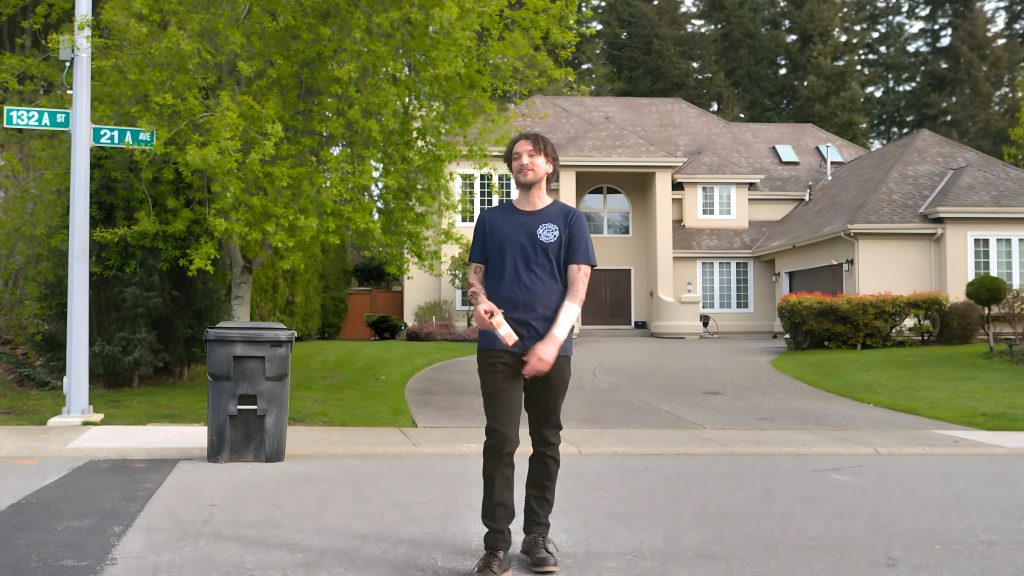
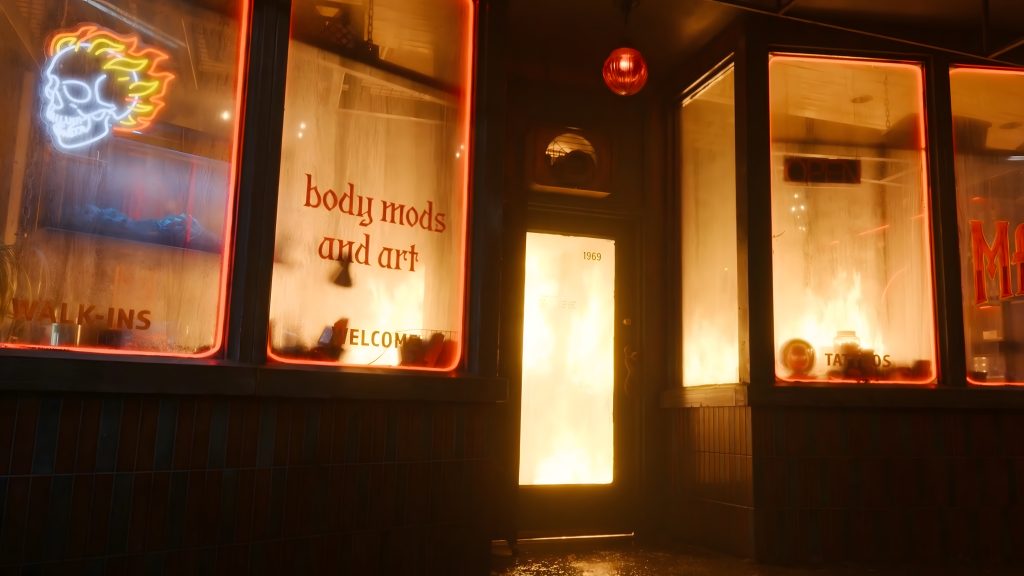
Even the hotheaded, tattooed character who initially seems positioned as the family’s designated jerk is given convincing affection for his brother. The mother who abandoned the family is also allowed to become more complicated as the film progresses. The screenplay does not excuse her past, but it permits her to move beyond a single defining mistake.
The acting is unusually strong for the franchise. Alex Zahara is excellent as the uncle, bringing warmth and credibility to the family dynamic. Teo Briones is also a standout as the final girl’s brother, giving the character a vulnerability that makes several later scenes considerably more effective.
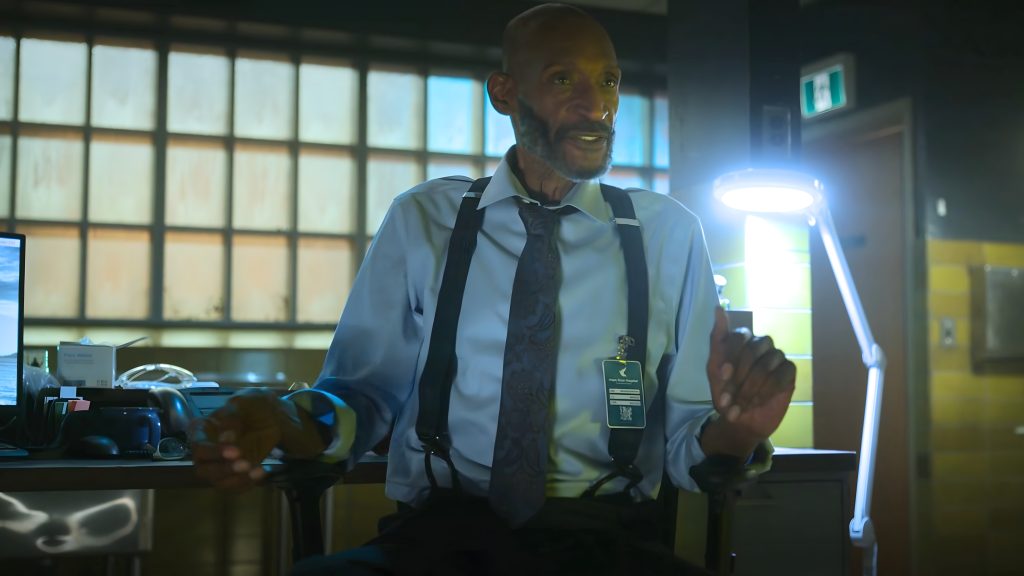
The strongest emotional moment belongs to Tony Todd. Todd’s final appearance is handled with restraint and dignity. His farewell speech is not merely another exposition scene from the franchise’s resident authority on death. It becomes a reflection on life, mortality, and the limited time people are given.
Because Todd was visibly ill during filming and died before the movie’s release, the scene carries a weight far beyond the screenplay. It is difficult to watch it as anything other than a farewell, and it is an extraordinarily moving one.
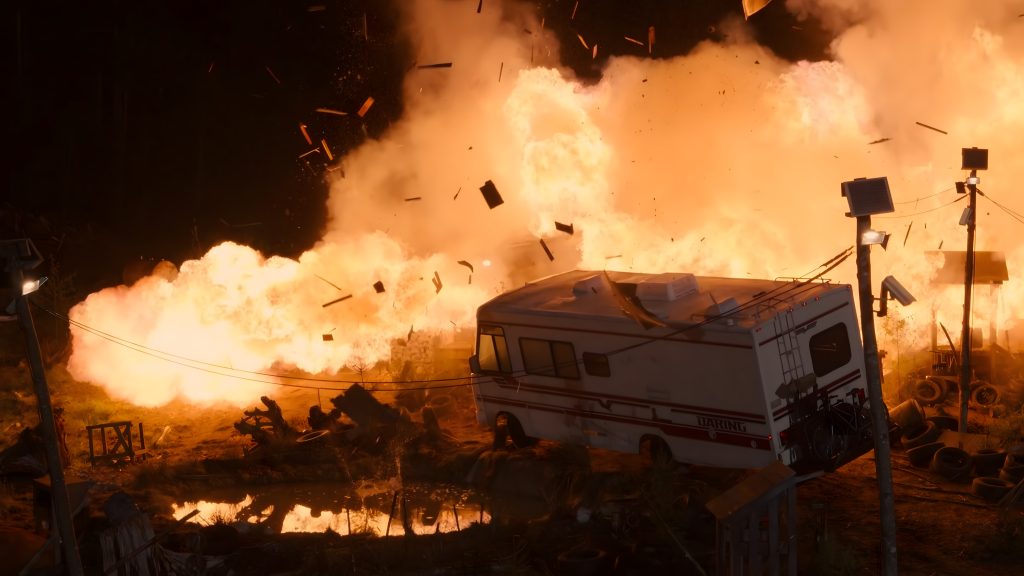
The film is also very aware that the audience already knows the rules. By the sixth installment, viewers understand how these sequences work. We notice every loose object, electrical fault, exposed blade, leaking container, and unstable surface. The camera has trained us to treat every ordinary household item as a possible murder weapon.
Bloodlines uses that familiarity well. The film repeatedly directs attention toward one threat while quietly arranging another. It understands that suspense no longer comes simply from showing danger. It comes from manipulating an audience that has spent five previous films learning how to predict the machinery.
The screenplay also plays effectively with the apparent order of Death’s list. When someone expected to die next does not, the explanation is logical rather than arbitrary. The film surprises the audience without violating its own rules.
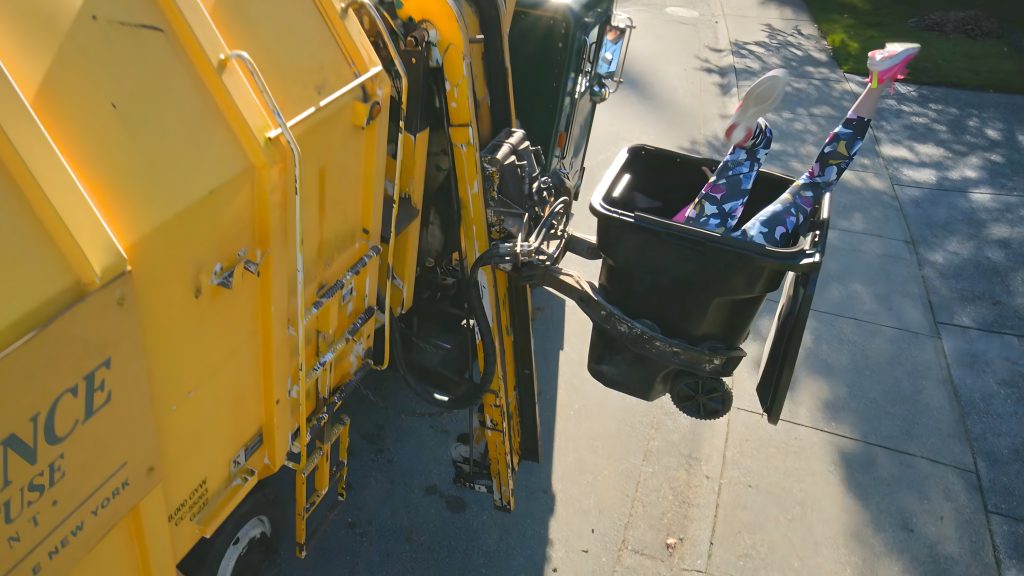
Several of the death sequences are exceptionally well constructed. The standout involves a soccer ball, a lawn-care worker, a jogger, and a garbage truck. It is an elaborate chain reaction in the classic Final Destination tradition, with each small incident leading cleanly into the next. The timing is excellent, the misdirection works, and the payoff ranks among the best kills in the franchise.
For me, it is probably the second- or third-best death sequence in the series. That is high praise in a franchise built almost entirely around the art of arranging fatal accidents.
The Bad
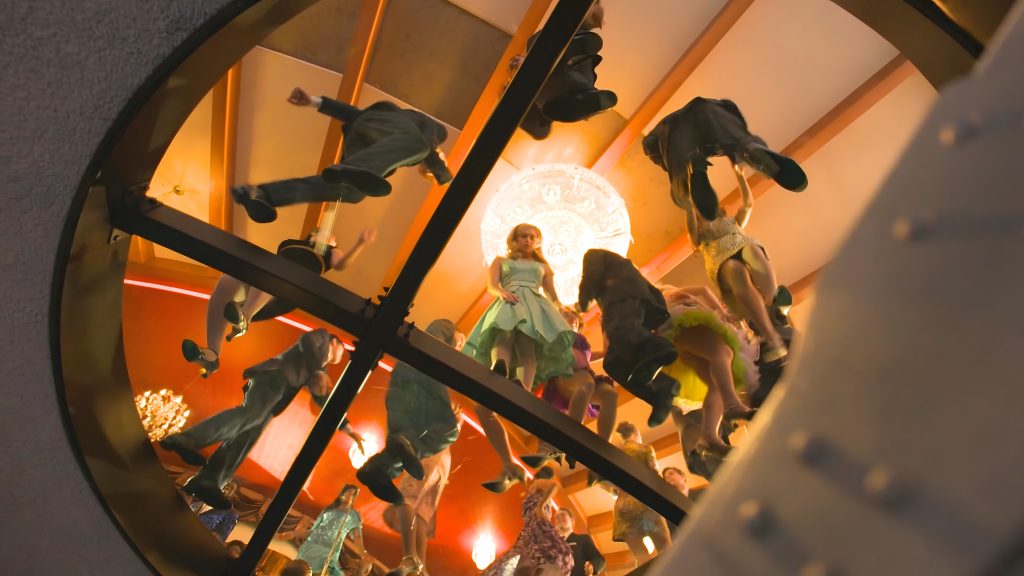
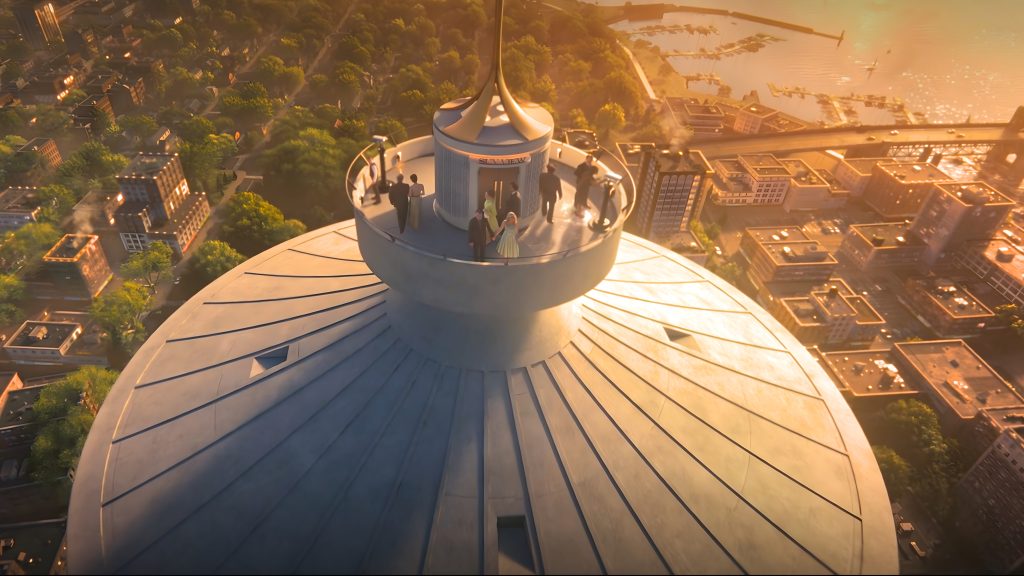
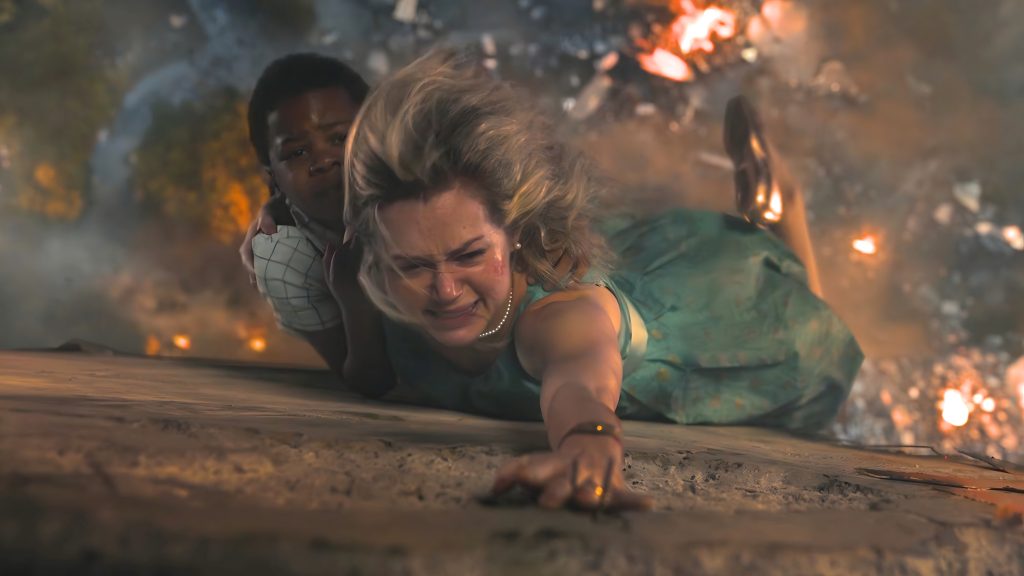
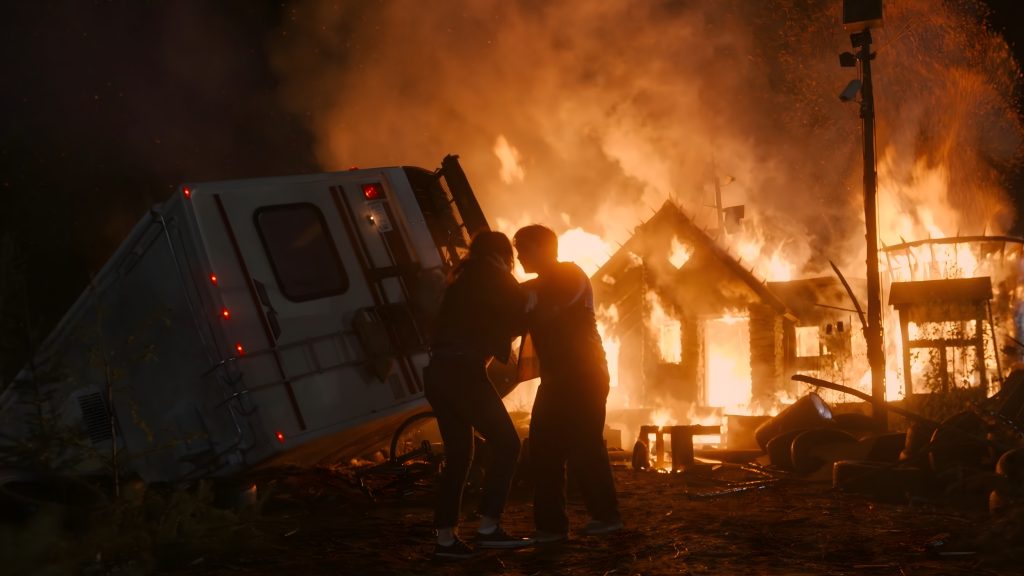
The opening disaster is not among the franchise’s best. That is a significant weakness because the opening catastrophe is traditionally the centerpiece of a Final Destination film. It establishes the scale, introduces the rules, and ideally leaves the audience permanently suspicious of an ordinary activity.
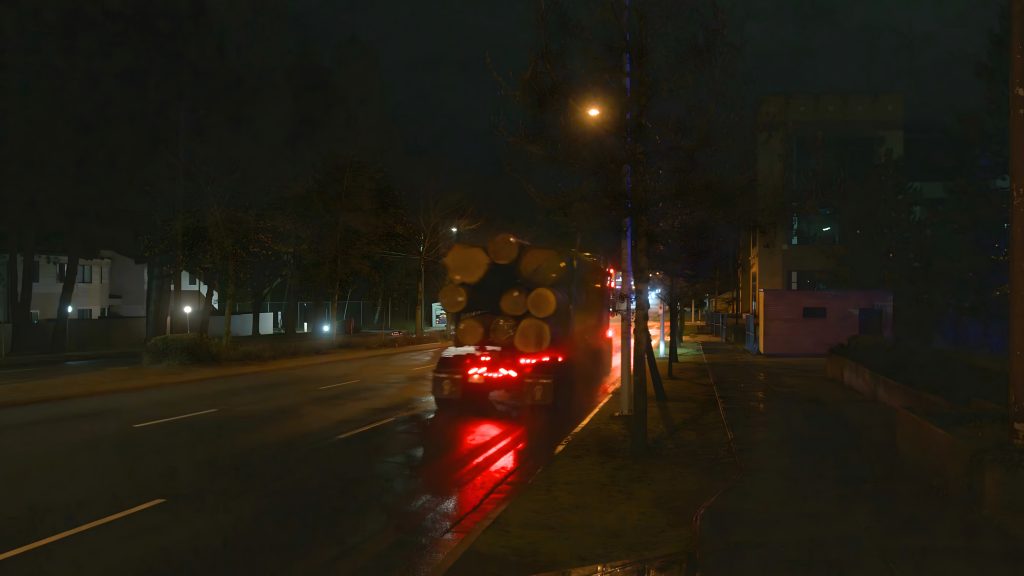
The logging-truck sequence remains the standard against which every later opening is measured. It is not merely memorable within the franchise. It has become a cultural reference point. Many people who barely remember the film still become uneasy when driving behind a truck carrying timber.
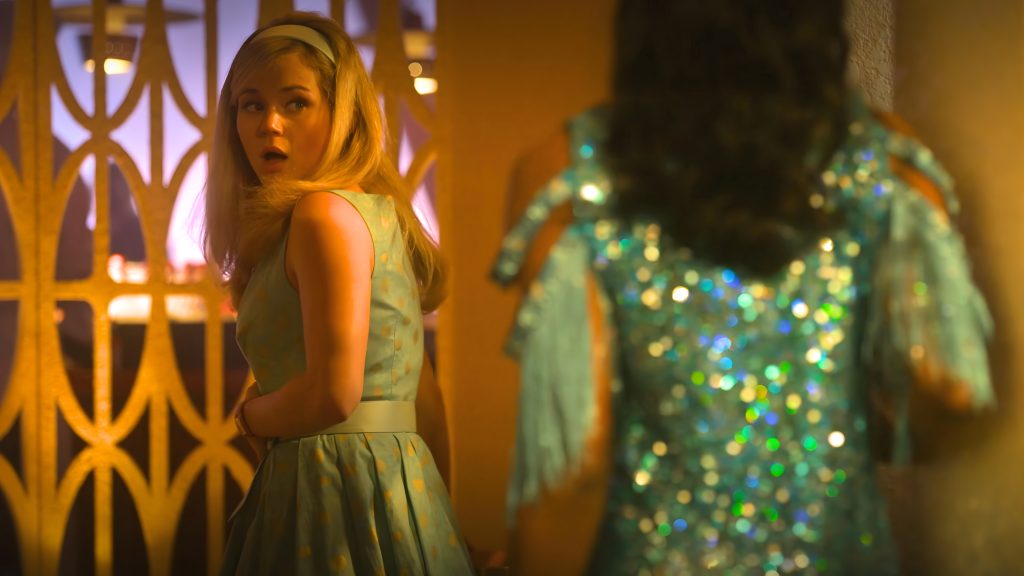
I also have a particular affection for the racetrack disaster, which is often overlooked. It has momentum, scale, and a strong sense of escalating chaos.
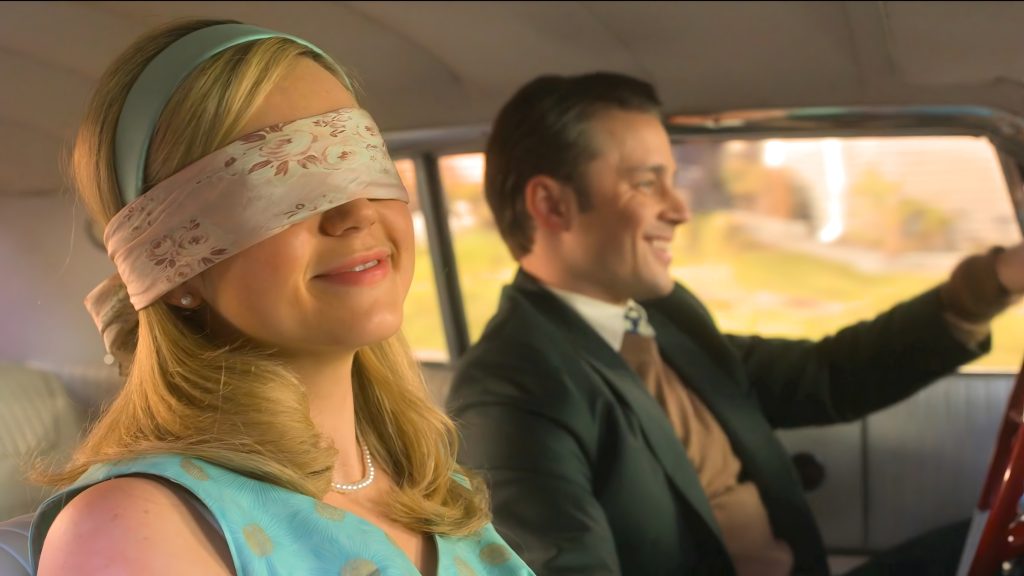
The opening sequence in Bloodlines is visually ambitious and carefully staged. It contains several clever ideas and makes good use of its setting. It is simply not as frightening or memorable as it should be.
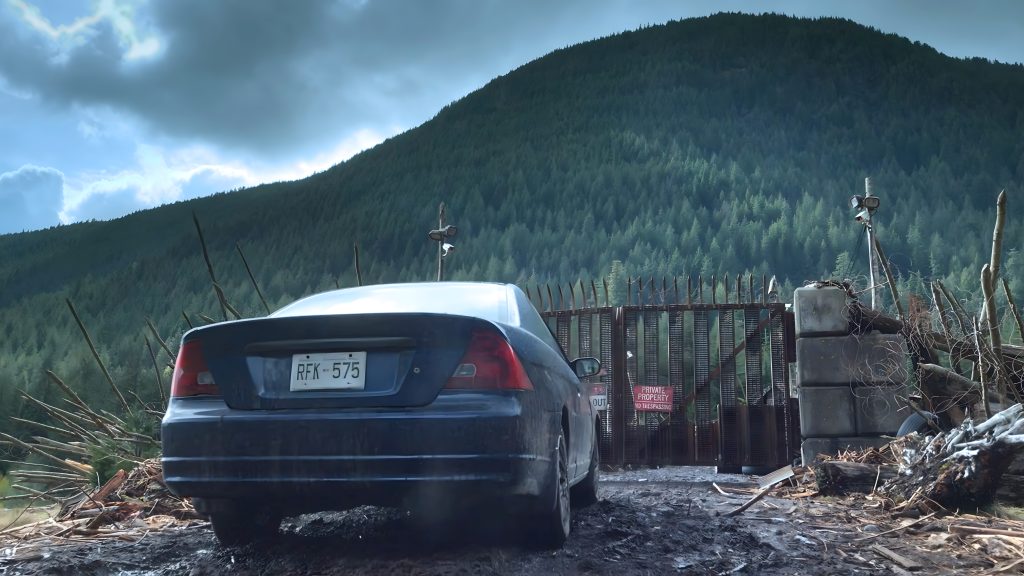
The sequence feels engineered rather than inevitable. The audience can see the individual pieces being placed, but the tension does not build with the same relentless precision as the franchise’s strongest openings. It works as a spectacle. It does not create a lasting phobia.
The film’s improved characterization also makes some of the plotting feel more artificial. Once the characters begin behaving like real people, it becomes more noticeable when the screenplay moves them into positions required for the next death sequence. There are moments when people remain in dangerous places longer than seems reasonable or overlook obvious hazards because the mechanics of the scene depend on it.
This has always been part of the franchise. The difference is that stronger writing makes weaker contrivances easier to see.

The Ugly
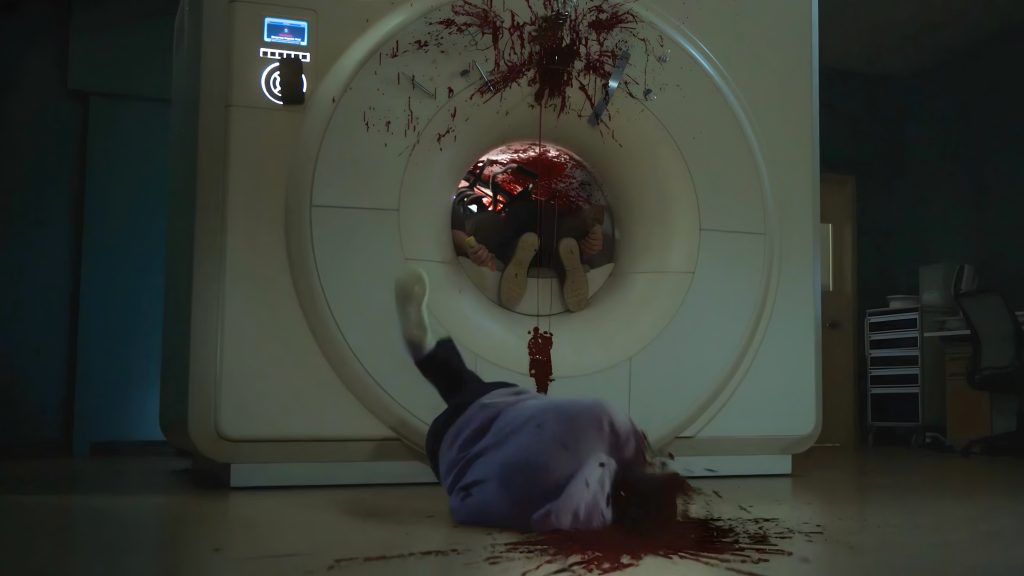
The CGI blood is the film’s most persistent technical weakness. Digital effects are not inherently inferior to practical effects. Used well, they can extend physical gore, remove safety equipment, combine separate elements, and create injuries that would be impossible to stage practically.
The problem comes when digital blood replaces physical effects rather than supporting them. The original Jurassic Park remains visually convincing over thirty years later because its effects were built from a combination of CGI, animatronics, physical sets, careful lighting, and practical interaction. The digital work was only one part of the illusion.
Final Destination Bloodlines too often asks CGI to create the entire impact. The result is frequently weightless.
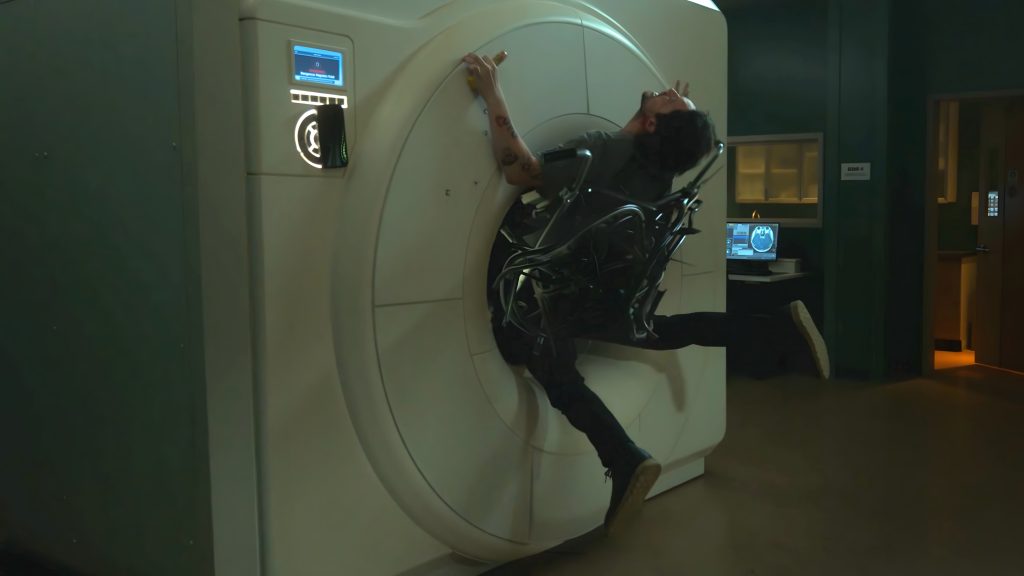
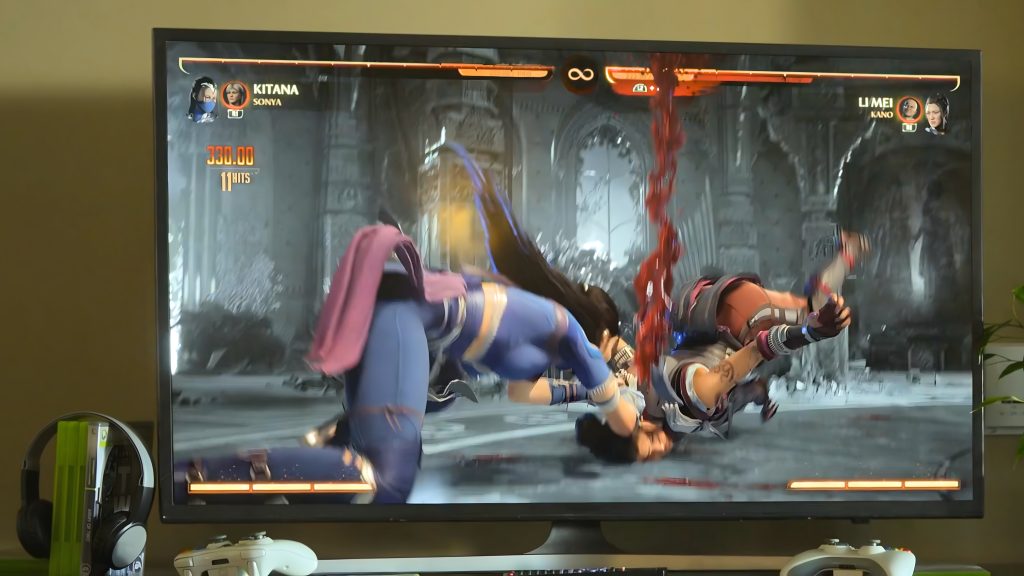
Blood sprays do not always appear to occupy the same space as the actors. Injuries sometimes resemble visual layers placed over the scene rather than damage occurring within it. Bodies break apart, but the effect lacks texture, mass, and physical presence. It is more a Mortal Kombat video game (ironically, 2021’s Mortal Kombat 1 appears in the movie) than a scene from real life.
This is particularly disappointing because the kill designs are often excellent. The filmmakers know how to build anticipation. They know how to misdirect the audience. They know how to escalate a small accident into a fatal sequence. Then the visual payoff occasionally fails to match the quality of the setup.
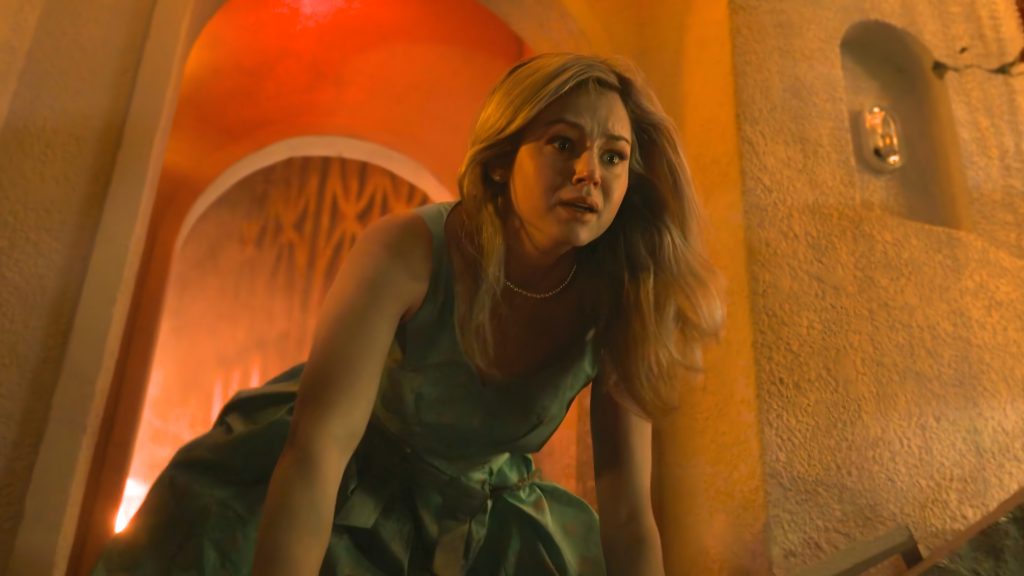
CGI gore is most effective when combined with prosthetics, makeup, practical blood, and physical debris. Digital effects can then sharpen, extend, or complete what is already present.
When used almost entirely on their own, they can make even an imaginative death feel oddly remote. For a franchise whose reputation depends heavily on elaborate bodily destruction, that matters.
In Conclusion
Final Destination Bloodlines is one of the franchise’s strongest entries because it finally understands that likable victims create better suspense than disposable jerks.
The opening disaster falls short, and the CGI gore often looks cheaper than the ideas behind it. However, the cast is excellent; the script is clever, the family dynamic works, and Tony Todd gives the series a farewell worthy of his presence.
Death remains undefeated. This time, at least, the movie makes us unhappy about it.