Murder She Adapted
The Mirror Crack’d (1980): 4 out of 10: Agatha Christie’s The Mirror Crack’d brings Miss Marple into a small English village where a Hollywood film production has arrived, along with several aging stars, old grudges, brittle egos, and eventually murder. When a local woman dies under suspicious circumstances at a party hosted by a famous actress (Elizabeth Taylor), Miss Marple begins sorting through the gossip, theatrical behavior, and show-business venom to determine who wanted whom dead, and why.
The first thing to say about The Mirror Crack’d is that until its tragic ending, and I do mean tragic in more than one sense, this is a surprisingly decent little Christie adaptation. It has a lot more going for it than I expected, especially considering the source material. I reviewed the book earlier, and on rereading that review, I noticed I had spoiled the entire mystery in the introduction, which probably was not very nice of me. ( I also used bizarre artwork of comely half dressed woman and broken mirrors which upon reflection was not really on point.) So this time I will try to keep the plot synopsis a little more spoiler-free.
The novel is not exactly top-shelf Christie. In fact, if The Mirror Crack’d from Side to Side were the only Agatha Christie novel you had ever read, you might wonder how she became Agatha Christie in the first place, let alone one of the bestselling authors of the twentieth century. This immediately raises the question: why this one? Why pick The Mirror Crack’d for a glossy movie adaptation?
The answer, I suppose, is that it is at least cinematic in concept. It is partly about Hollywood, and there is nothing Hollywood loves more than making a movie about itself. To the film’s credit, it understands that advantage and leans into it. For about three-quarters of its runtime, it actually does a pretty good job of turning a lesser Christie into an entertaining, star-heavy murder mystery.
Then the last ten minutes happen.
But we will get there.
The Good
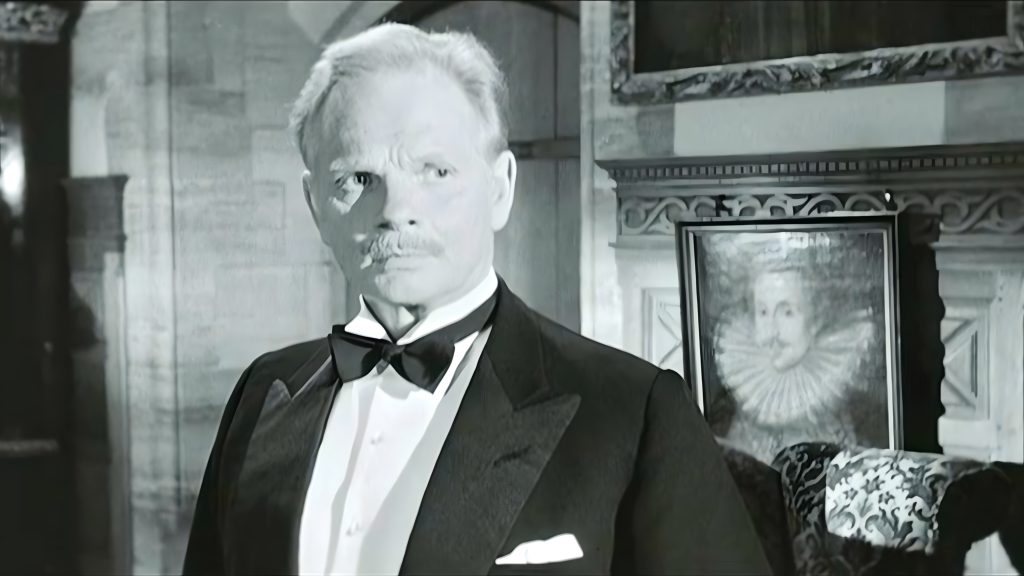
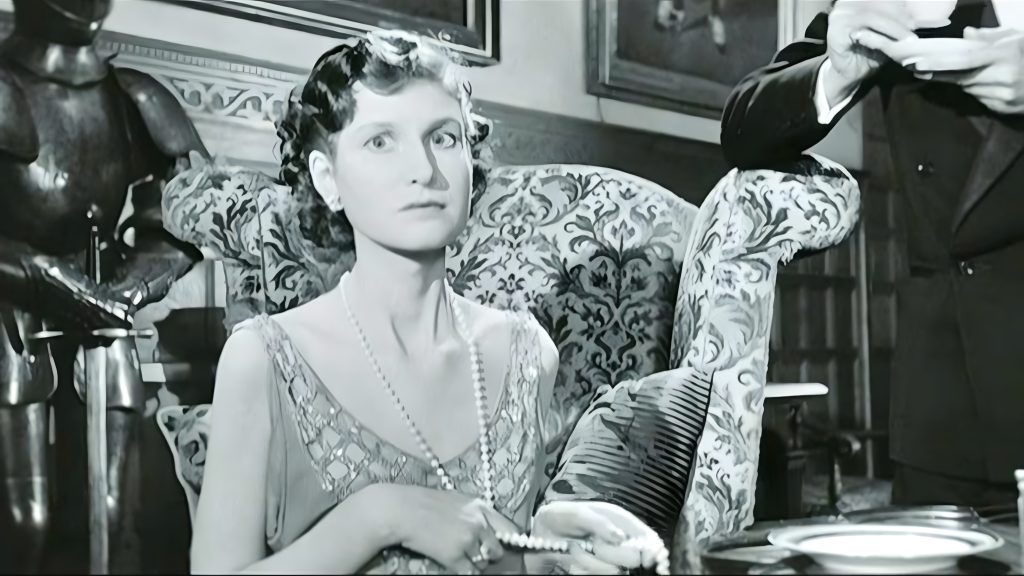
The movie opens with a real banger. We begin with what appears to be a black-and-white Agatha Christie-style murder mystery. Everyone is gathered around the fireplace; the butler is there, the detective (a brilliantly cast Nigel Stock) is making his deductions, and the whole thing is delightfully artificial in that old-fashioned country house way. Then, just before the denouement, the film breaks. We discover that the villagers have all been watching this movie together, and Miss Marple is sitting in the audience with them.
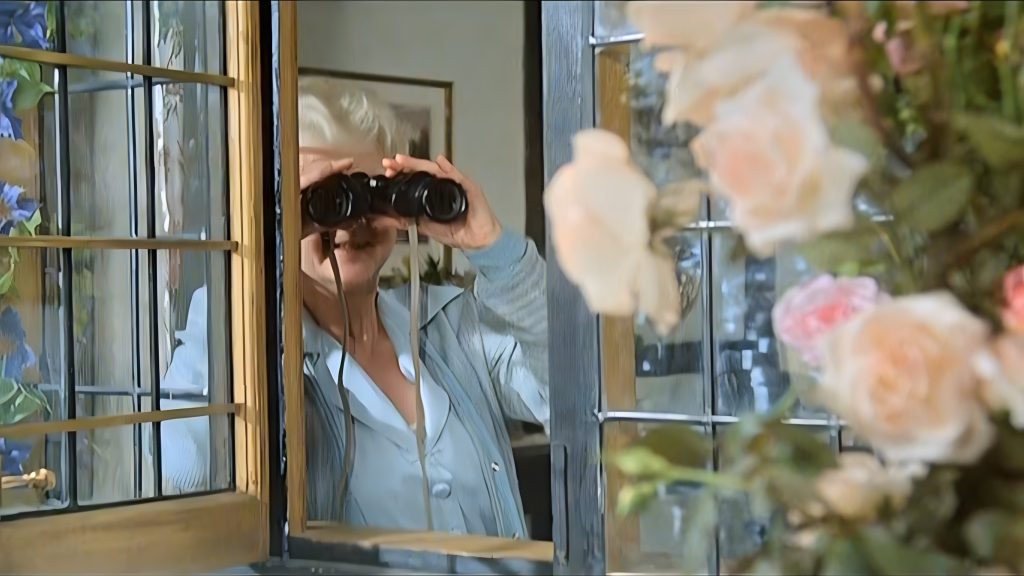
This is a brilliant way to introduce the character. Rather than having someone explain that Miss Marple is an amateur detective with a gift for human nature, the movie simply lets her solve the film-within-the-film for the assembled village. She tells everyone who the killer was and how she figured it out, and it immediately establishes both her intelligence and her place in this community. It is charming, economical, and much better than it needed to be.
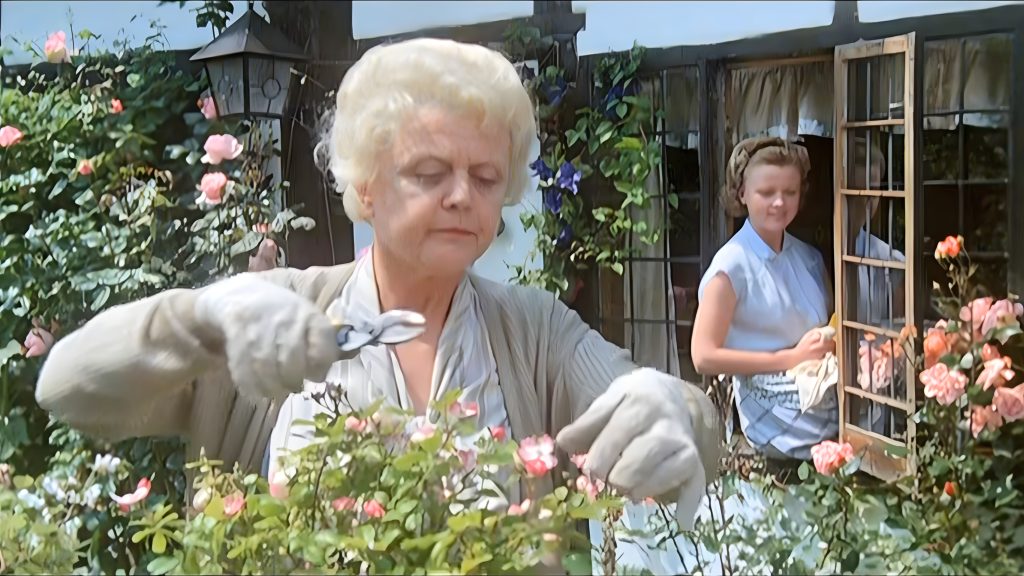
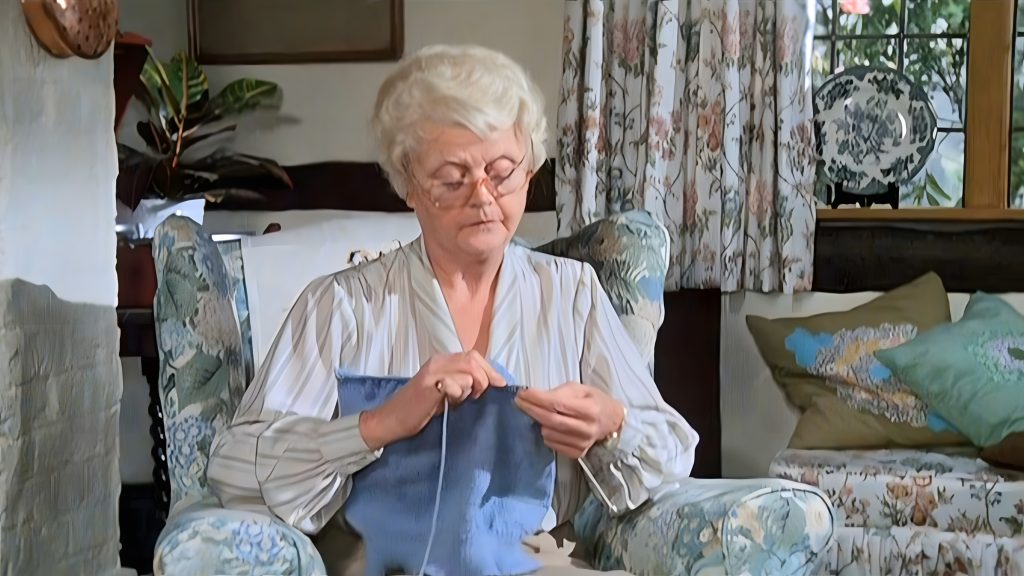
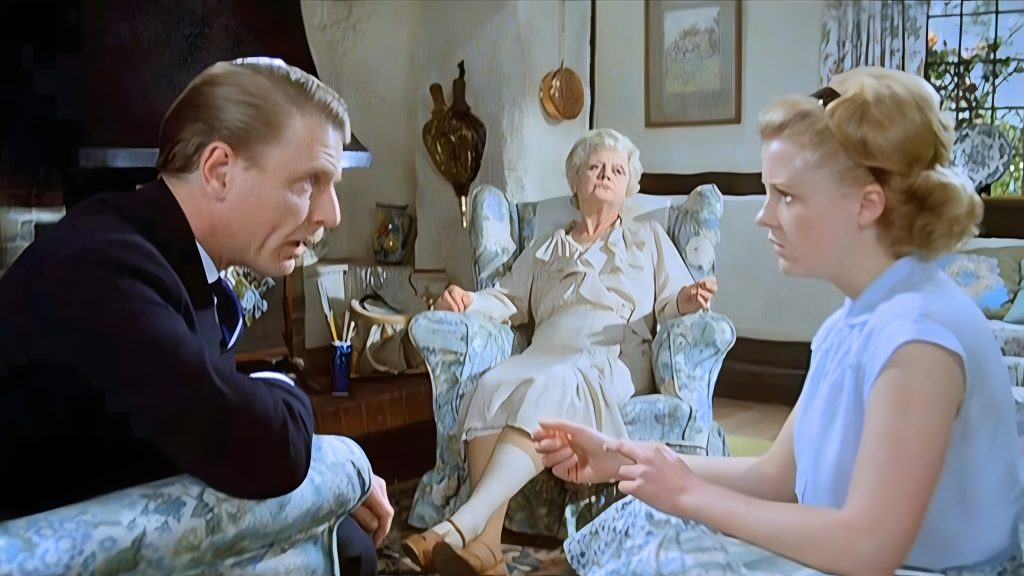
Angela Lansbury plays Miss Marple, which is both a good idea and yet a slightly strange one. The good idea is obvious. Lansbury has the warmth, intelligence, comic timing, and steeliness for the part. She knows exactly how to make Miss Marple sharp without making her smug, and kind without making her useless.
The strange part is that the movie ages her up with old-age makeup that makes her look older than she would look years later on Murder, She Wrote. It is the exact opposite of the problem in The Irishman, where digital effects could de-age Robert De Niro’s face but could not hide the fact that he still moved like an elderly man, especially during the scene where he tries to kick someone to death and accidentally creates one of the funniest moments in modern cinema.
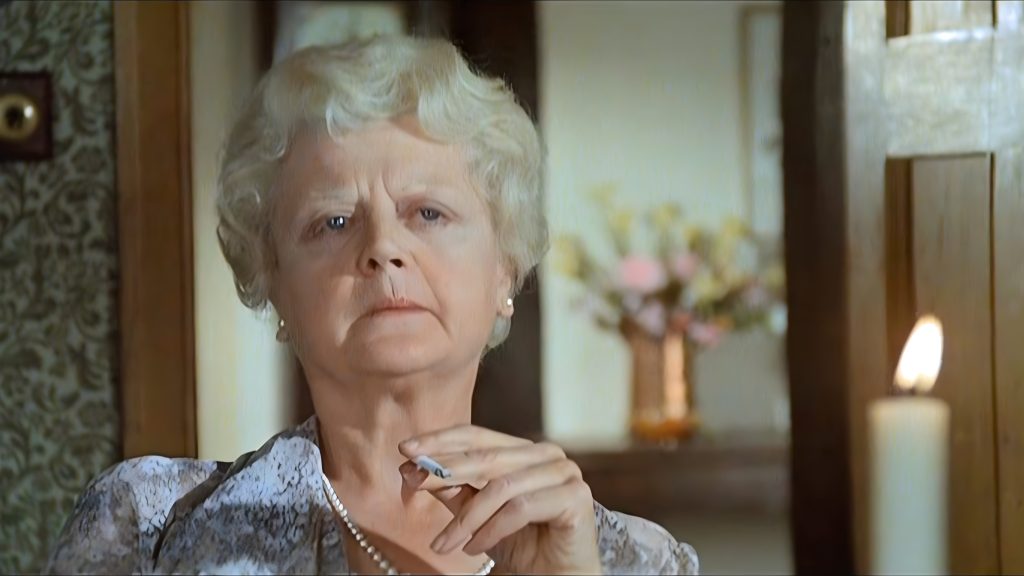
Here, all the Crypt Keeper makeup in the world cannot hide the fact that Angela Lansbury is surprisingly tall, physically deft, and still carries herself very well. They give Miss Marple a bad leg and a cane, but Lansbury’s body seems to forget she is supposed to be playing a frail elderly lady in about half the scenes. She looks old in close-up and then moves like someone who could easily beat half the village to the taxi stand. Still, she is good. She is Angela Lansbury. There is only so much damage makeup can do.
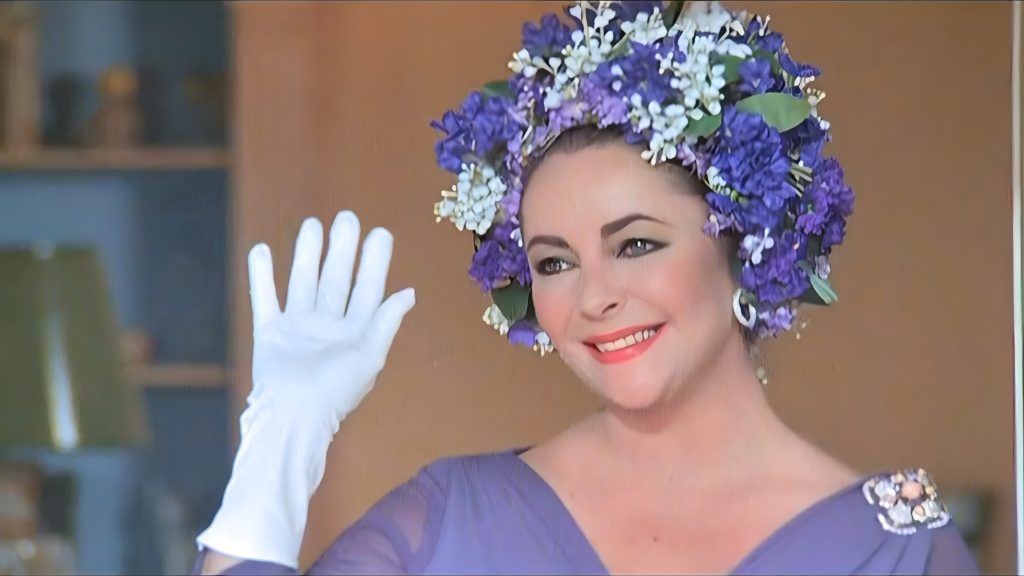
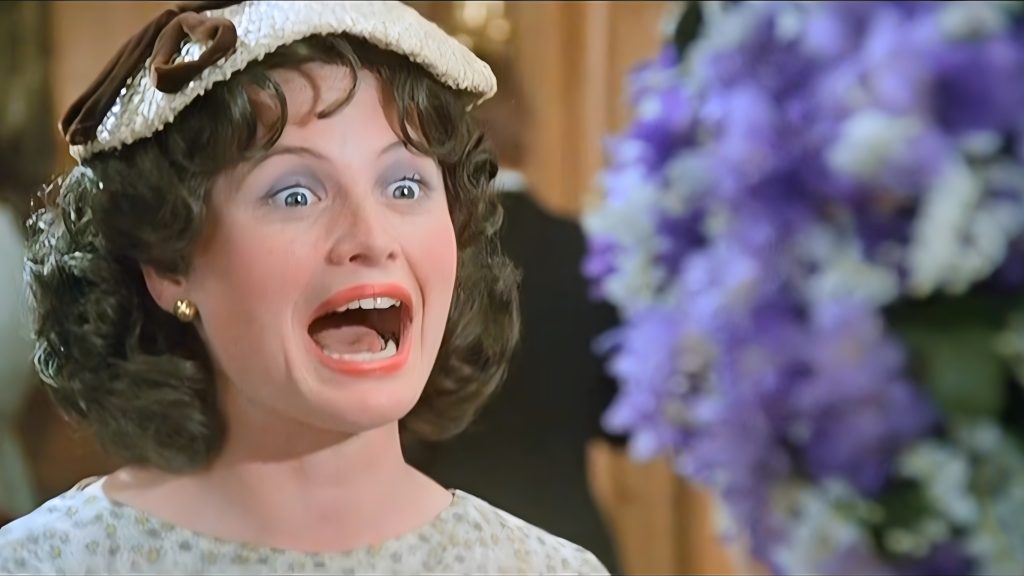
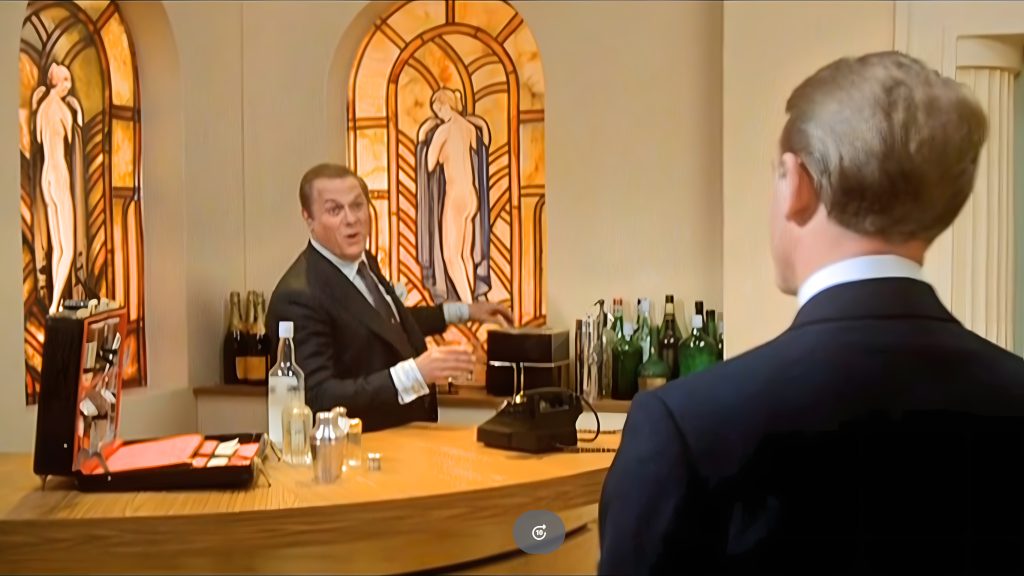
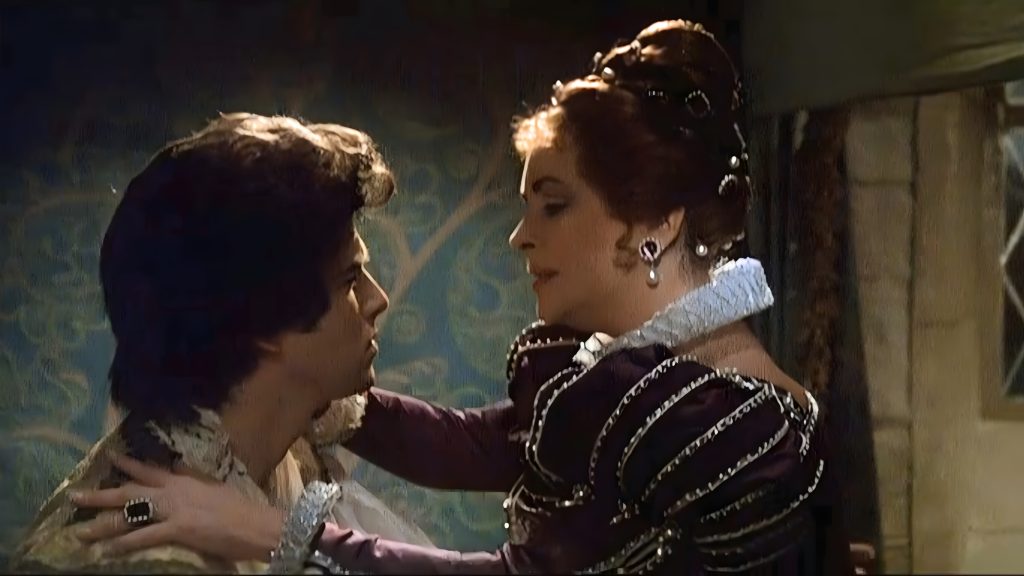
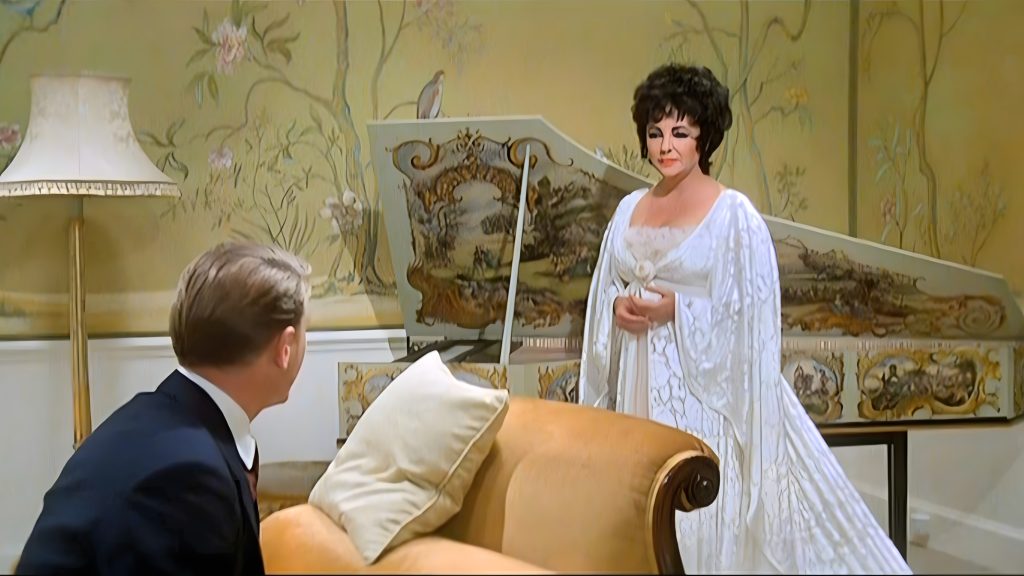
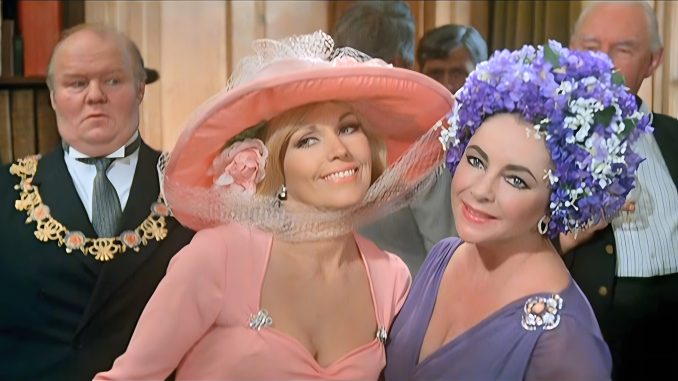
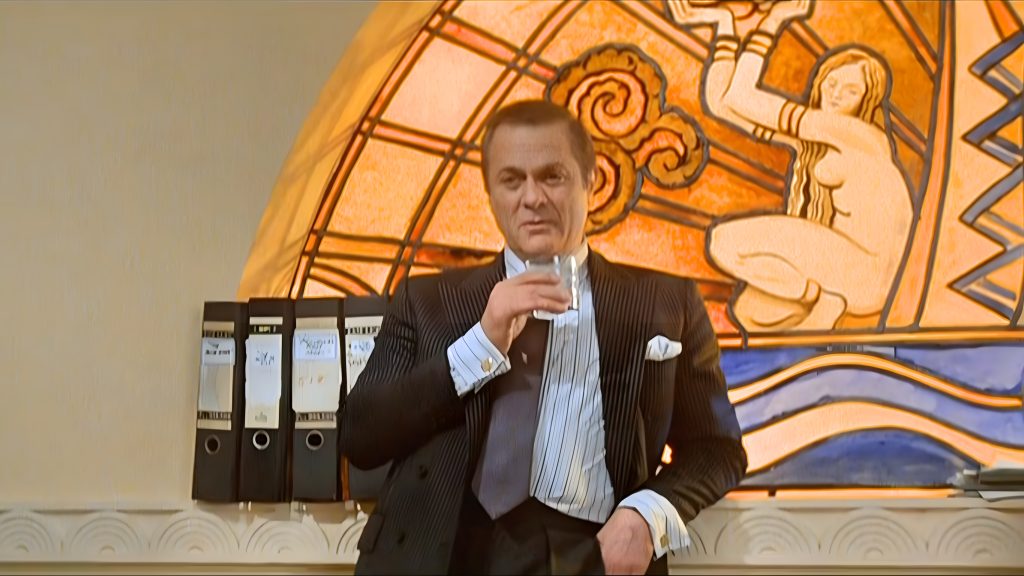
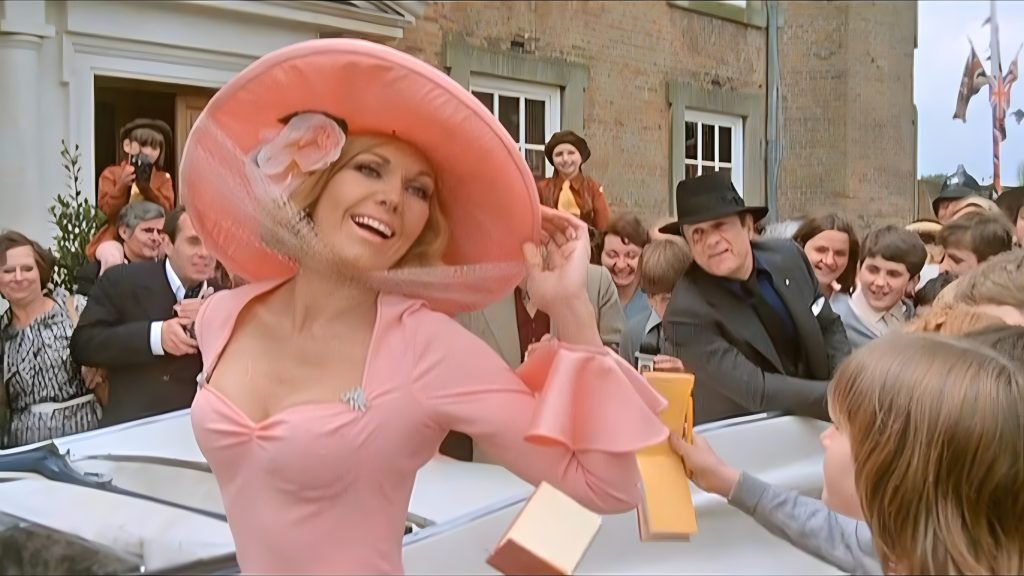
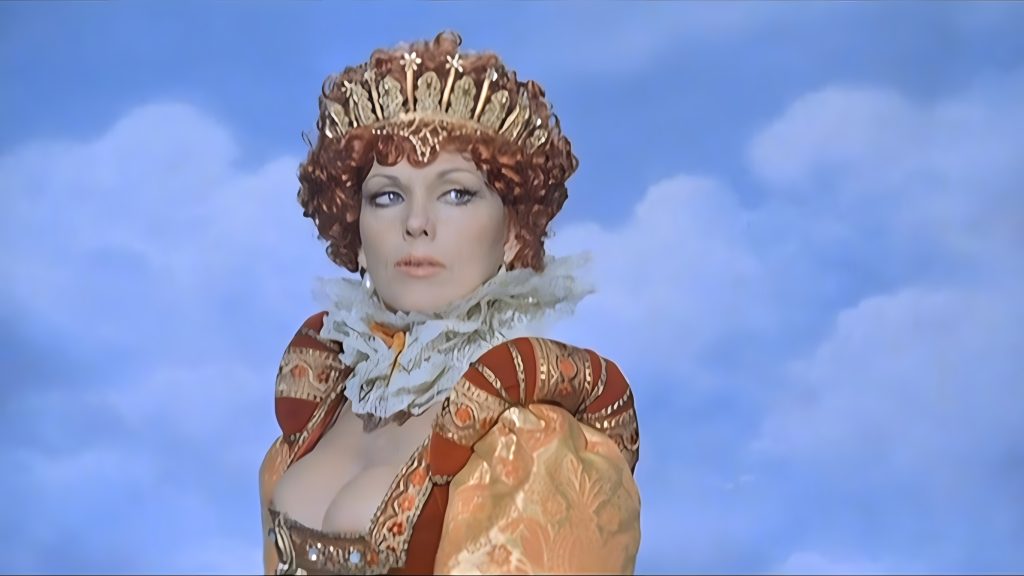
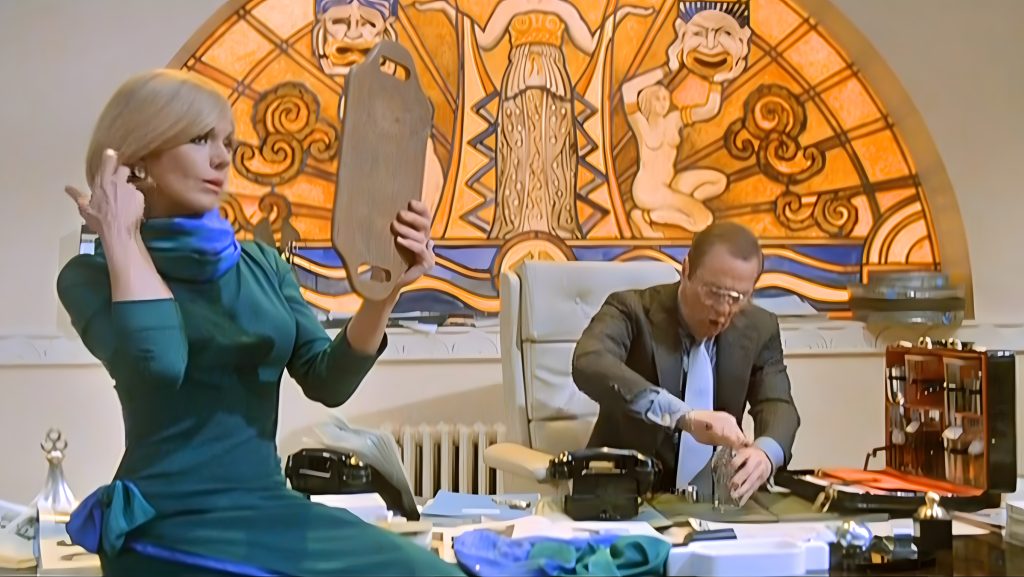
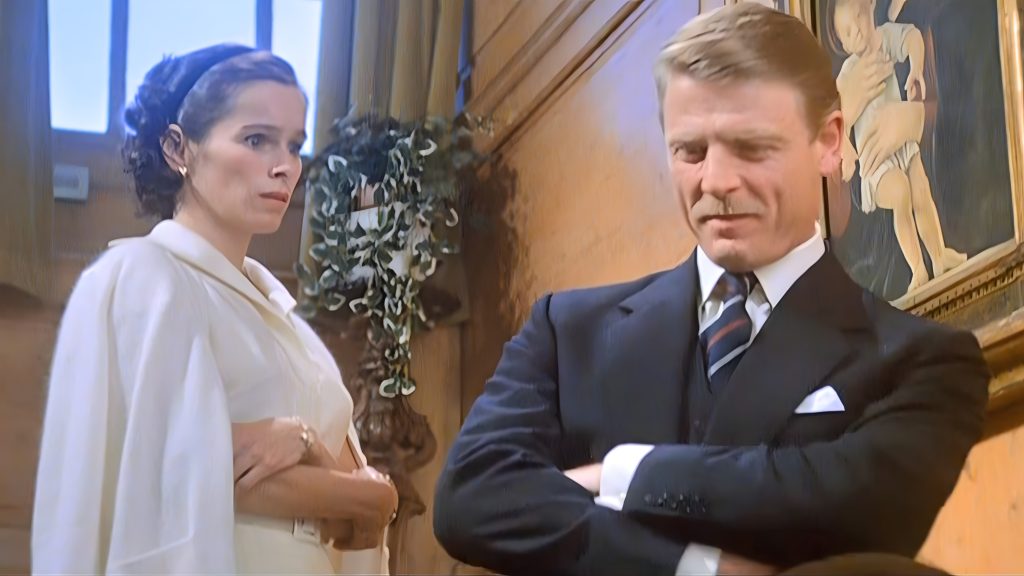
The supporting cast is where the movie really sells its Hollywood angle. Kim Novak and Elizabeth Taylor play two actresses at each other’s throats, Rock Hudson is the romantic lead, and Tony Curtis plays the sleazy producer figure. This is where the adaptation makes one of its smarter changes from the book. Instead of merely gesturing toward Hollywood glamour, the film fully brings the movie business into the story.
There is a lot of old-star wattage here, and the film has fun with it. Some of the jokes are a little silly, but the actresses’ insults toward each other are often quite enjoyable. At one point Kim Novak tells Elizabeth Taylor, “I absolutely love your figure. You’ve added so much to it.” That is the sort of line you either laugh at, or you have no soul.
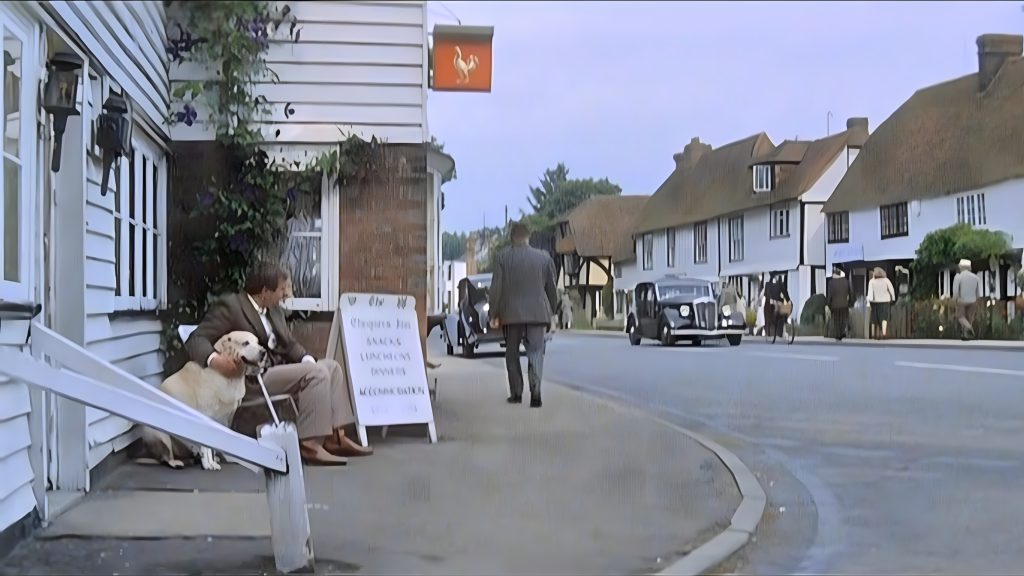
The movie also wisely trims some of the book’s clutter. Several of the novel’s side concerns, particularly Miss Marple’s anxiety about modernization, new housing estates, and fancy taxis, are simply gone. This is not really the England of 1963. This is English Village as done by Hollywood. You half expect to see hobbits wandering through the background. In fact, I am fairly certain the vicar was a hobbit.
The film also streamlines the body count. The book, to its credit, kills off a surprising number of extra people. The movie reduces the actual murders considerably, which makes the story cleaner and more manageable. Whether this ultimately helps the mystery is another question, but from a pacing standpoint, it is understandable.
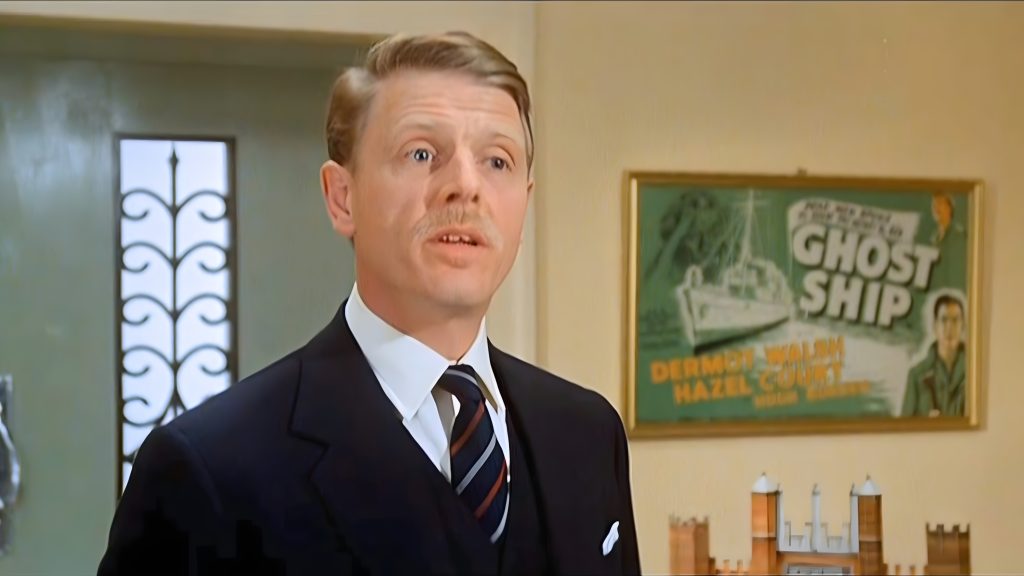
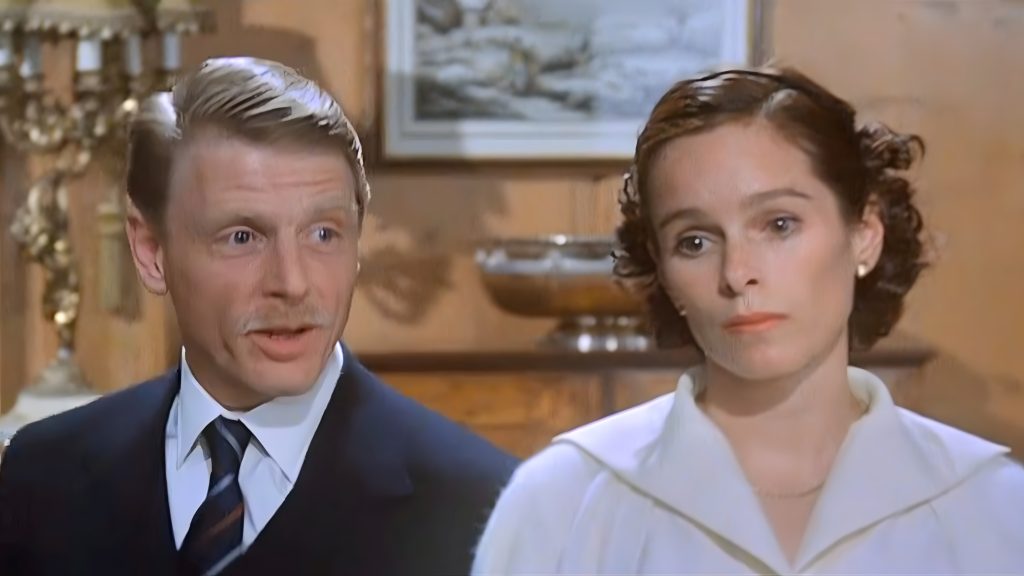
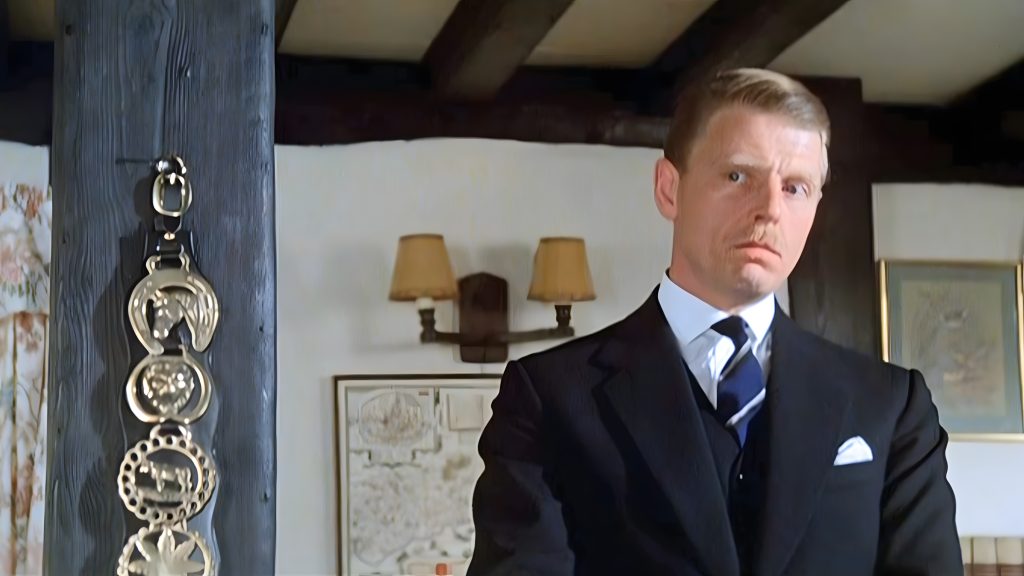
I also have to give credit to Miss Marple’s nephew, played by Edward Fox, as Scotland Yard inspector. In the book, I found the character as dry as toast. In the movie, he is actually quite delightful. He has a nice rapport with Lansbury, and their scenes give the film some needed lightness.
Scene by scene, the movie is often well put together. It looks pleasant. The cast is game. The extra Hollywood material gives it a stronger hook than the book had. For a while, it feels like the filmmakers might have pulled off a minor miracle: making a pretty watchable movie out of a pretty weak Christie.
The Bad
The central problem is that even before the ending collapses, the mystery is not especially strong.
Now I will not explain the solution here. If you want to know the answer, you can watch the movie, read the book, or apparently read the first couple paragraphs of my last review. But putting it kindly, I have absolutely no idea how anyone in the audience is supposed to figure this out.
Even knowing the answer, it is difficult to pick up on the clues in any satisfying way. The same problem exists in the movie that existed in the book: the solution is more tragic explanation than fair-play deduction. Christie often specialized in hiding the truth in plain sight, but here it feels less like the audience missed the clues and more like the story did not really give us the proper tools.

I am also not entirely clear how Miss Marple figures it out. The movie gives the impression that she has somehow been watching the daily rushes of scenes that did not make the final cut. She appears to know things the film has not adequately shown us or at the very least did not show her.
Anyone who has watched a Pushing Up Roses review of Murder, She Wrote will be familiar with the occasional mystery plot where the solution comes sailing in from left field with two minutes left. A newly discovered clue appears, or someone reveals a crucial piece of information that probably should have shown up before the final commercial break. The Mirror Crack’d sometimes feels like the feature-length version of that.
The movie’s reduction of characters and murders also creates a suspect problem. There are fewer people in play than in the book, which makes the story cleaner but also thinner. There is not quite enough misdirection to make the mystery feel rich, and not quite enough character depth to make the solution feel inevitable.
The humor is also a mixed bag. I keep wanting to call it “chuckle-worthy,” but that may be too generous or too imprecise. It is more like nursing home humor. These are the kinds of jokes you would expect from a comedian entertaining at a retirement home, or from someone reading out of a 1974 issue of Reader’s Digest. There is a Doris Day/Rock Hudson gag that slightly breaks the fourth wall, and that is about the level of the show-business comedy.
It is not unpleasant. It is not painful. Some of it is genuinely amusing. But it is all very safe, very dusty, and very much aimed at an audience that considers “Hollywood stars insulting each other while wearing expensive clothes” the height of adult wit.
The Ugly
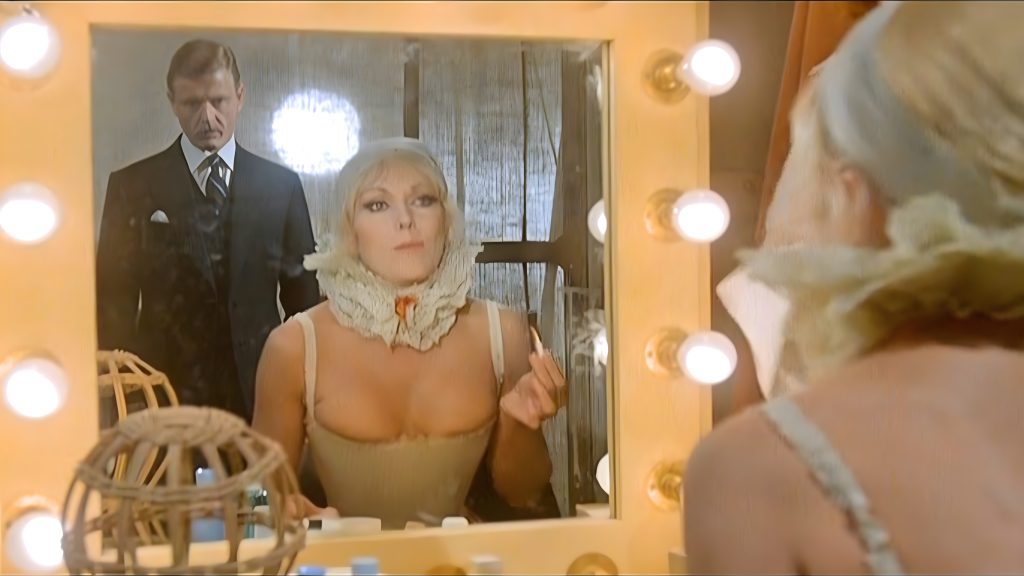
And then there is the ending. My goodness, the ending. For most of its runtime, The Mirror Crack’d is cruising along as a not bad, maybe even recommendable Christie adaptation. It has a clever opening, a strong cast, some good insults, and a workable old Hollywood murder-mystery atmosphere.
Then the last ten minutes push it directly off a cliff like a kid in a wheelchair. There is a scene near the end where an actress is found in her bedroom, and for a moment I thought the movie had suddenly turned into a horror film about the discovery of a bloated, decaying corpse.
Checking my notes, I understand that this was not the intention. She was not supposed to look as if she had been dragged out of a lake after going missing for three days. I mean she did… but she was not supposed to.
Elizabeth Taylor needed to fire someone immediately. The lighting, makeup, staging, or possibly all three betray her in spectacular fashion.
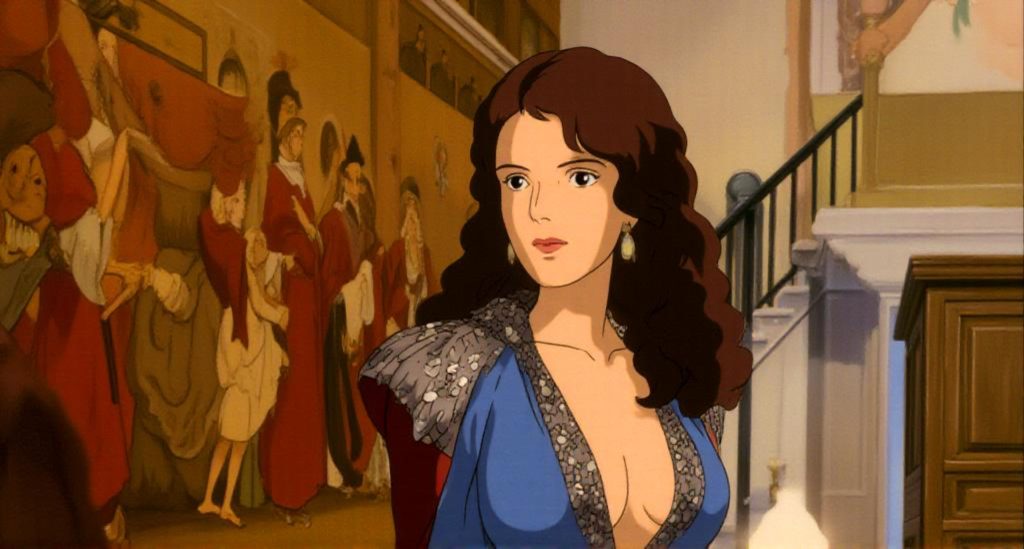
The tonal problem is even worse. The ending is somehow both confusing and saccharine. That is not an easy combination to achieve. It explains too little and feels too sentimental about what it does explain. The movie appears to want tragedy, poetic justice, romantic melancholy, and detective-story closure all at the same time, and it does not successfully deliver any of them.
Rock Hudson’s character suddenly seems to have emotional depths and romantic attachments that the previous ninety minutes did not exactly let us in on. The film wants us to feel the heartbreak, but it has not done enough groundwork.

Even worse, the movie seems to forget that there is more than one crime. One murder is more or less addressed. (Confession by suicide? I mean, we are still taking a leap here). The second murder, however, along with the attempted murders, appears to be treated with an enormous shrug. The movie solves what it wants to solve and then wanders off, apparently satisfied that a yellow flower and a dead body are all the moral accounting anyone could require.
This is where the film truly damages itself. A weak ending can hurt any movie, but a weak ending is fatal to a murder mystery. The whole genre is built around the final turn. The audience can forgive a slow middle, a few thin suspects, Gal Gadot’s acting, or even some contrivance if the reveal lands. But if the reveal is muddled, under-explained, and emotionally soggy, the entire structure retroactively weakens.
That happens here. The movie does a pretty good job for about three-quarters of the film, then reminds you at the worst possible moment that the underlying mystery was never very good.
In Conclusion
Doing The Mirror Crack’d as a movie was probably not a very good idea, though I admire the attempt. I can see why Hollywood was tempted. It has movie stars, old rivalries, production gossip, glamour, bitterness, and murder. It is a Christie story about performers, and performers love nothing more than performing stories about performers.
I also admire the casting of Angela Lansbury as Miss Marple, even if I would have simply let her play the part closer to her actual age. You can still give Miss Marple a bad ankle for plot purposes without encasing Lansbury in old-age makeup and then asking us not to notice that she moves better than half the cast.
For much of the film, The Mirror Crack’d works better than it has any right to. The opening is terrific. The cast is fun. The Hollywood setting gives the material a better engine than the book had. The insults can be amusing. The nephew inspector is much better on screen. Even the rest of the broad, dusty comedy has a certain harmless charm (cough, Tony Curtis, cough).
But the ending is a disaster. It is confusing, sentimental, visually unfortunate, and dramatically incomplete. It does not just fail to stick the landing; it lands in a deep lake in the land of Narm.
I give the film credit. I do not know how I would have made a movie out of that book either. For a while, the filmmakers nearly pulled it off. Then the mirror crack’d from side to side; ‘The curse is come upon me,’ cried the reviewer of Cinematic Diversions, giving the film the same four out of ten he gave the book.