The OG (Original Godzilla)
Godzilla (Gojira) (1954): 9 out of 10: The granddaddy. The big one. The one that started it all. Before Godzilla became a professional wrestler, an occasional superhero, and the source of the constant search to find out which streaming service has which movie, he was just a starlet with a dream. Now, of course, he is Japan’s biggest movie star (by pretty much any measurement, height or box office.)
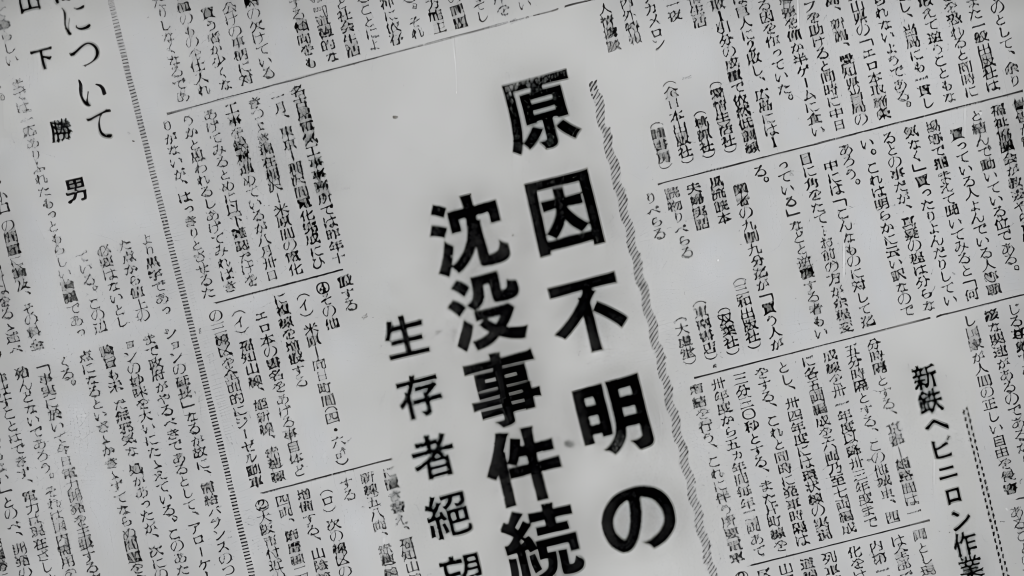
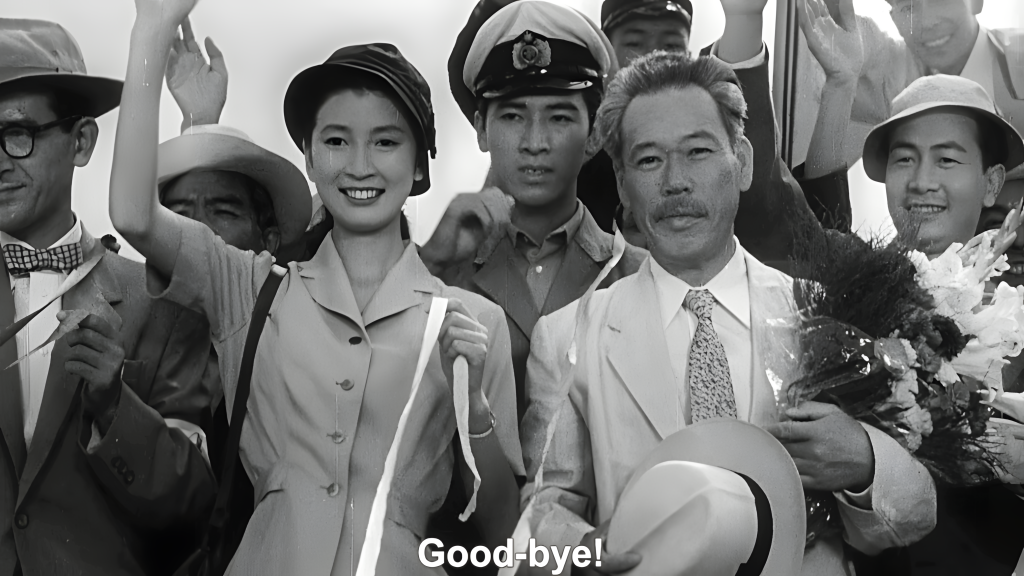
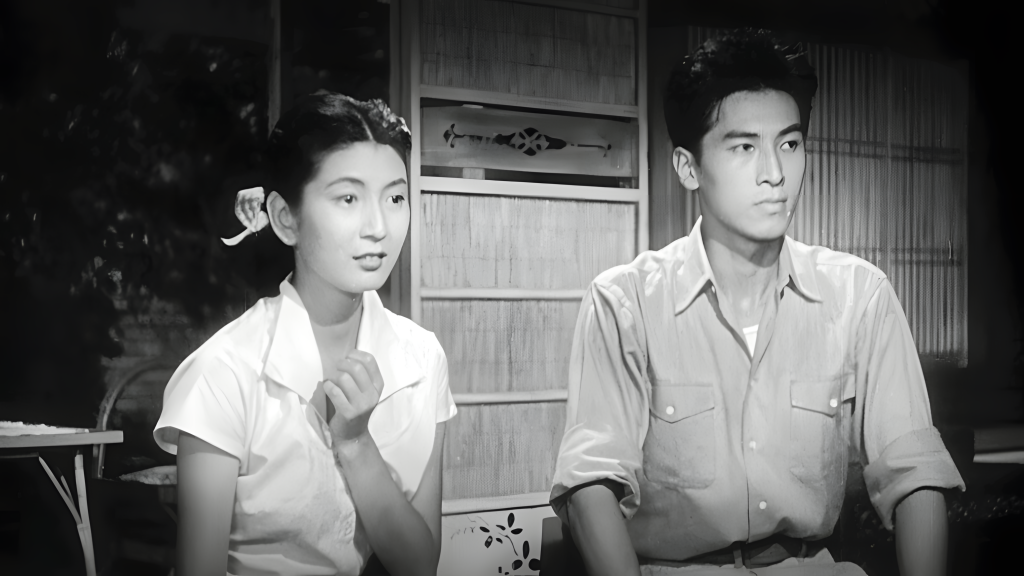
After ships mysteriously disappear off Japan, an investigation reveals a prehistoric creature whose arrival threatens a country still recovering from war. Scientists debate what he represents, officials argue about what to tell the public, and the military prepares to demonstrate the limitations of shooting a giant radioactive dinosaur. Meanwhile, a young woman finds herself caught between two men. No, really, there is a love triangle in this thing, just like Pearl Harbor.
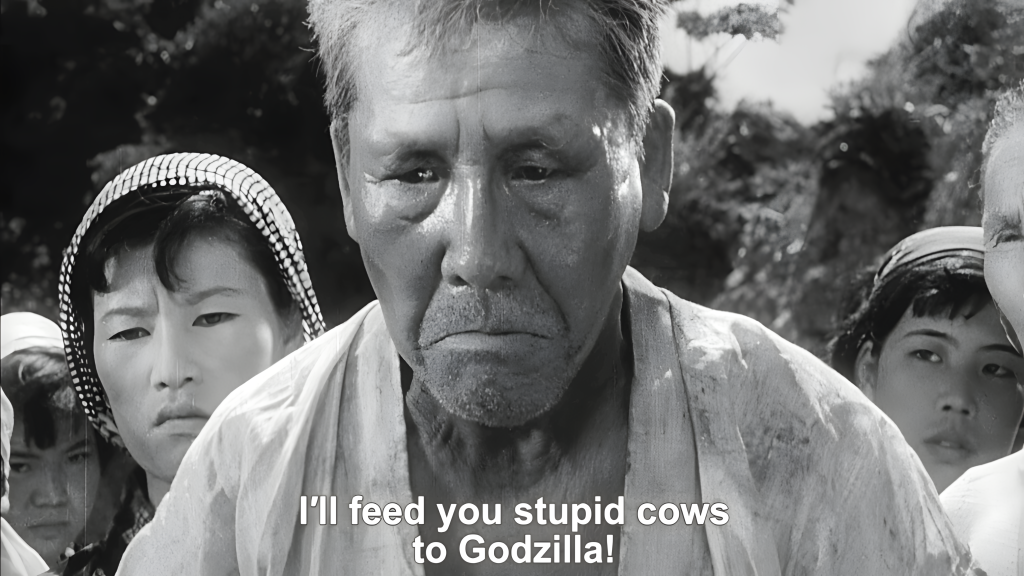
For this viewing, I watched the beautifully restored Criterion presentation on HBO Max, in Japanese with subtitles. This is the Steve Martin-free version. Steve Martin, of course, being the reporter played by Raymond Burr in the American reworking, rather than the wild and crazy guy with the banjo. An understandable distinction, though I would probably watch that one as well, as long as he left Martin Short at home.
And let me get something out of the way: I like the Raymond Burr version. I am not one of those people who insists you cannot appreciate Hamlet unless you experience it in the original Klingon. Or was that Elcor? Either way, enjoying the American cut does not require you to surrender your film enthusiast credentials at the door.
But revisiting the Japanese original makes it clear just how much was already here.
The Good
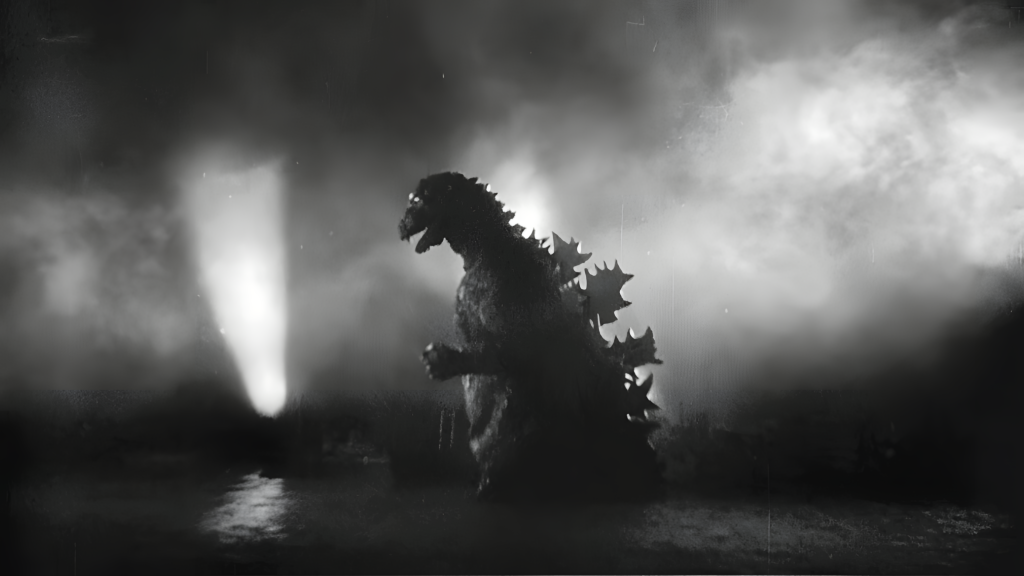
The first surprise is how effective Godzilla is at keeping things from us.
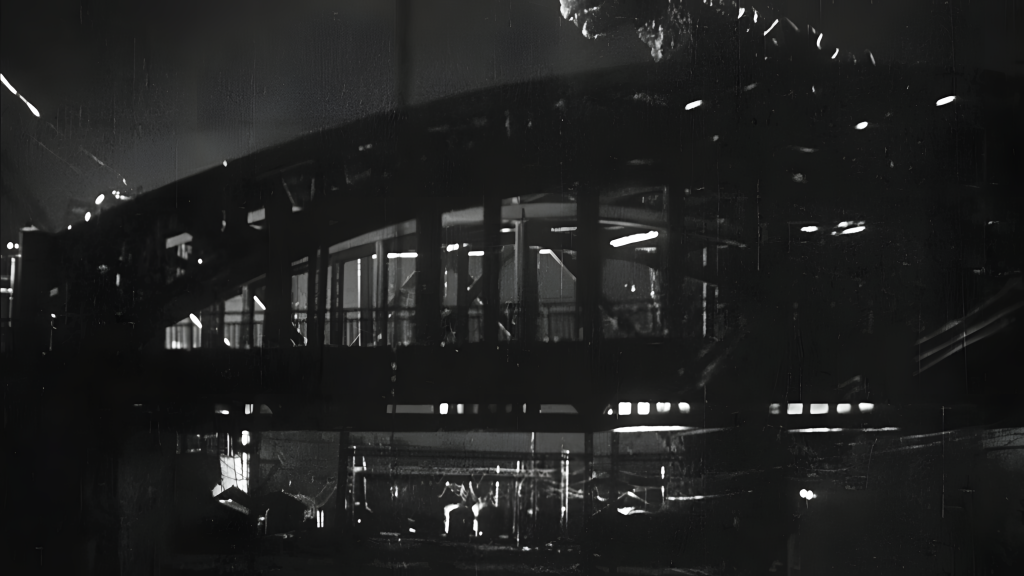
We see ships destroyed. We see frightened people and the aftermath of something terrible. What we do not immediately get is a well-lit monster posing for his action figure packaging. Director Ishirō Honda understands that the consequences of a creature’s arrival can sell the creature before he has properly appeared. (Think Jaws.)
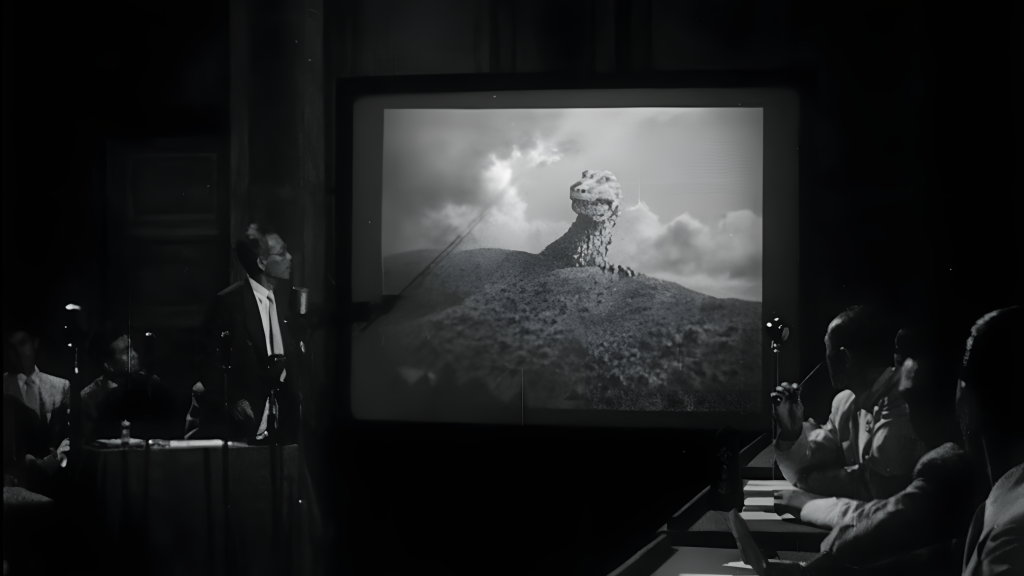
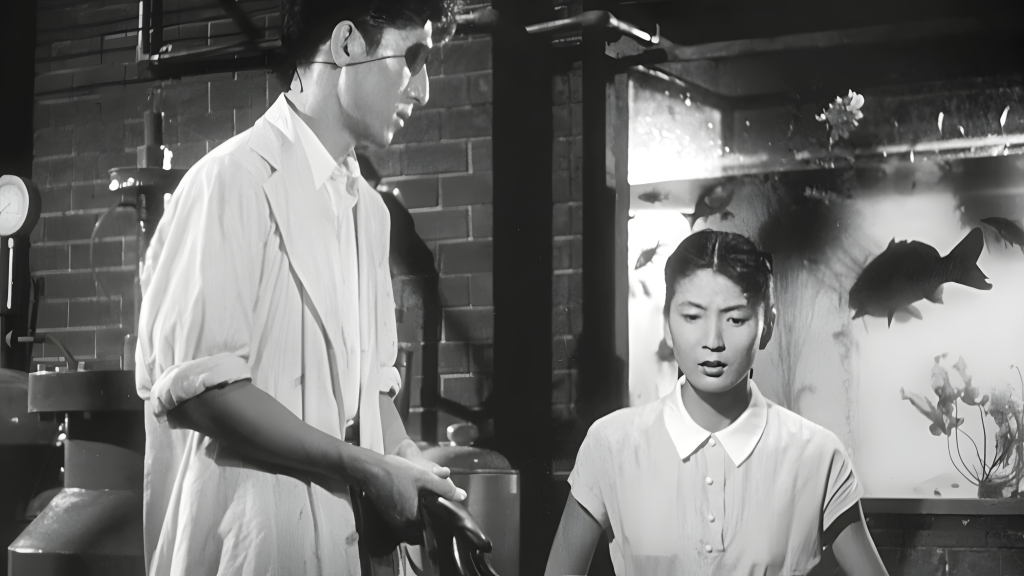
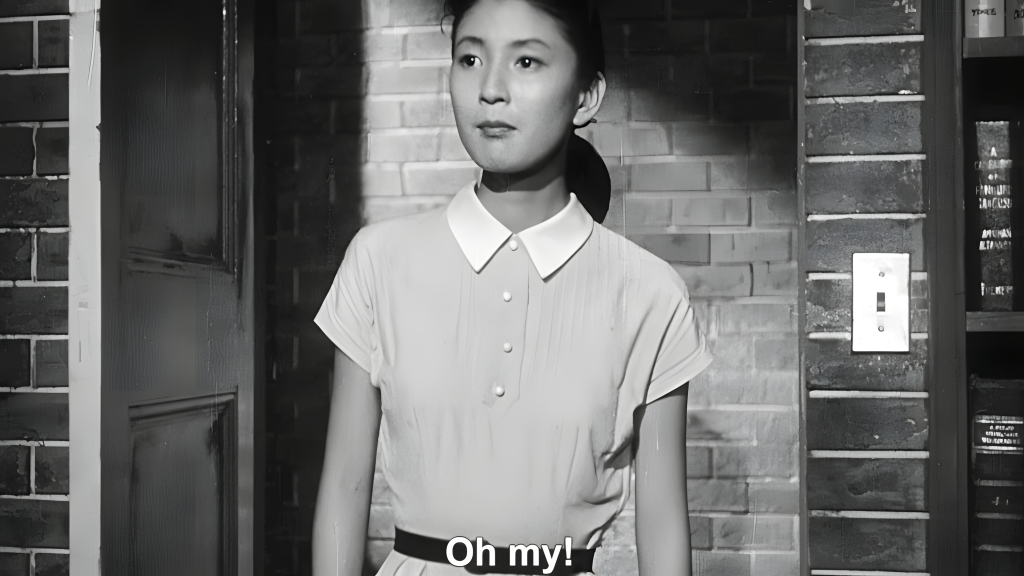
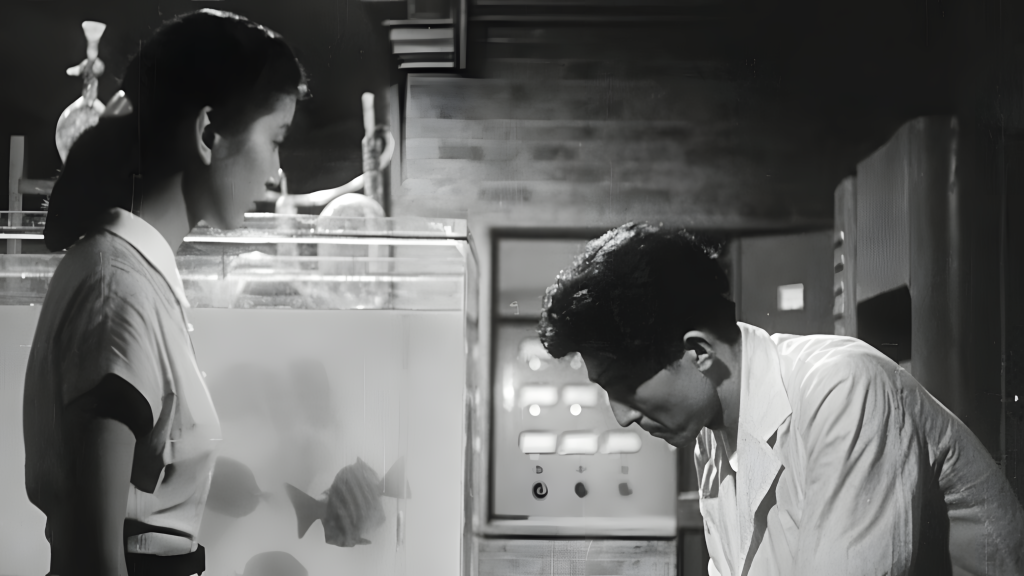
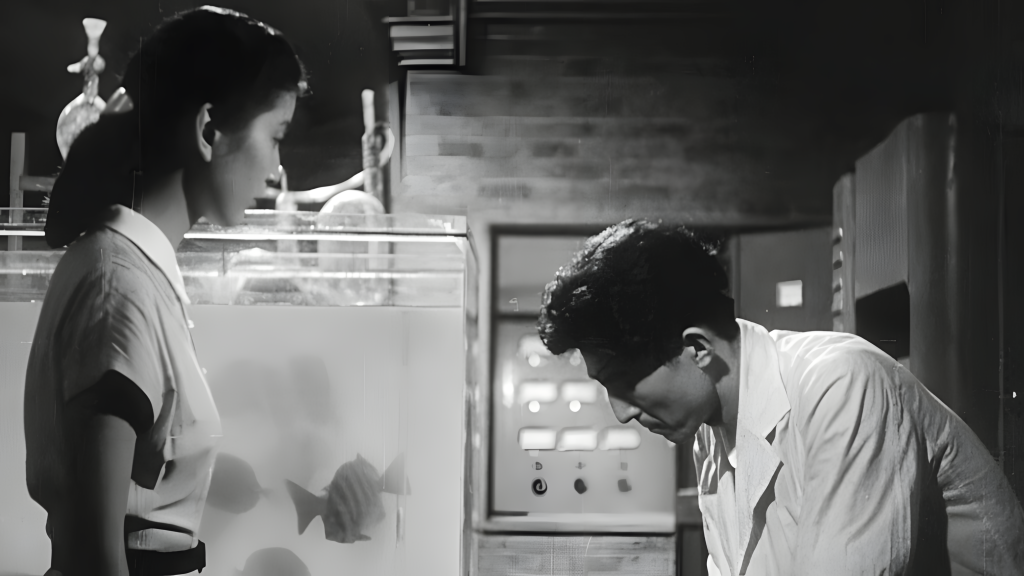
The same approach works beautifully when Emiko witnesses a demonstration of Dr. Serizawa’s Oxygen Destroyer. We see her reaction before we see what has horrified her. Her face does the work. Pointing the camera straight at the experiment would give us information. Watching someone recoil from it gives us dread.
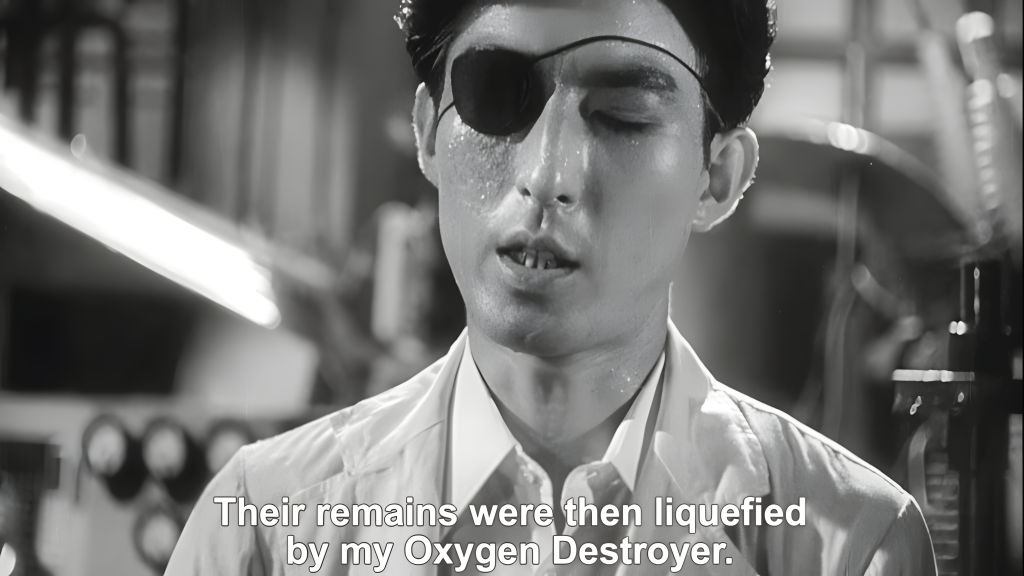
For a movie remembered primarily for a fellow in a monster suit stepping on buildings, there is some excellent filmmaking going on here.
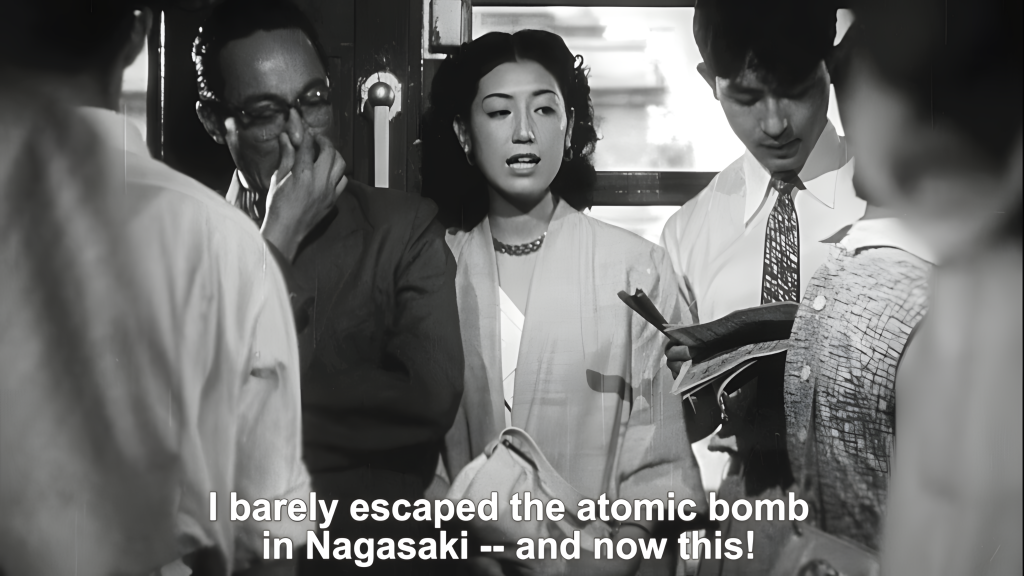
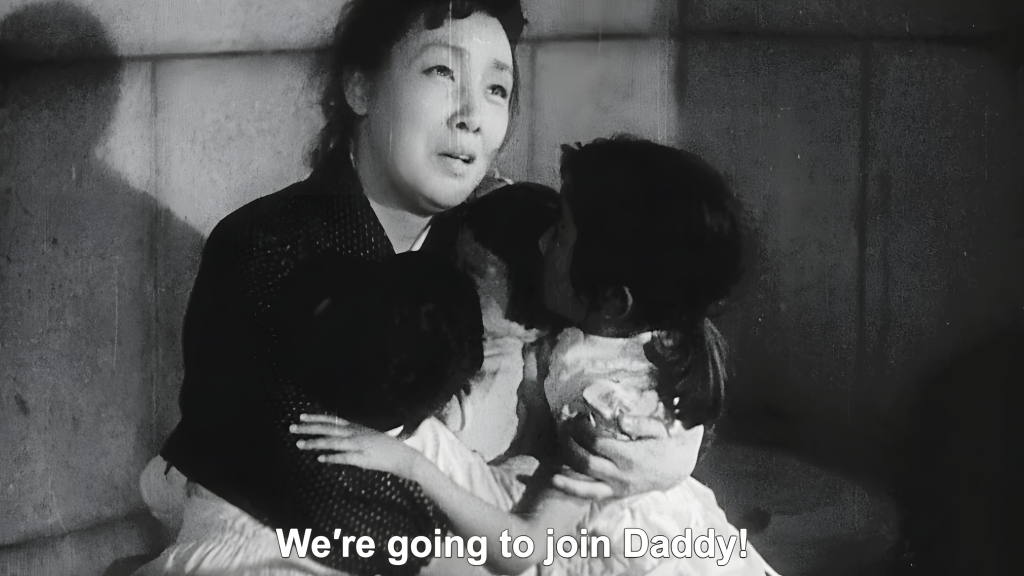
There is also considerably more historical weight than the franchise’s later adventures might lead you to expect. This film arrived less than ten years after the end of World War II. When characters mention Nagasaki or the bombing of Tokyo, these are recent experiences. The audience did not need a flashback explaining why a burning city might be upsetting.
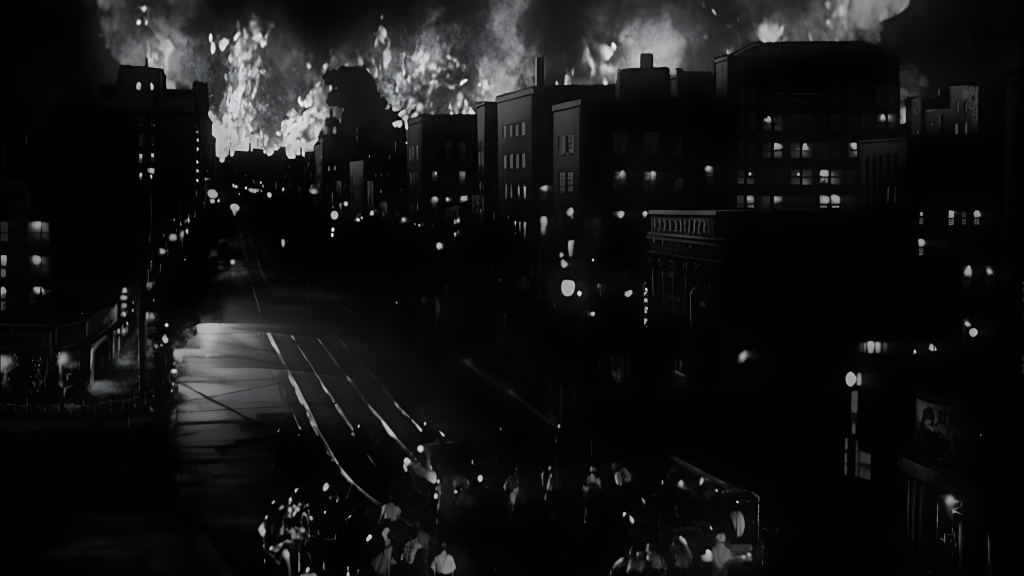
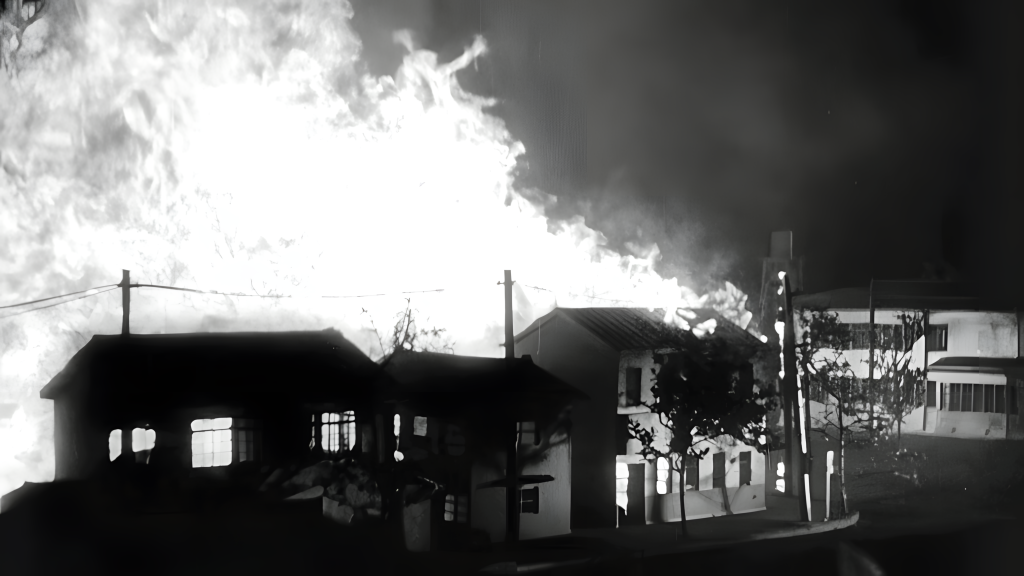
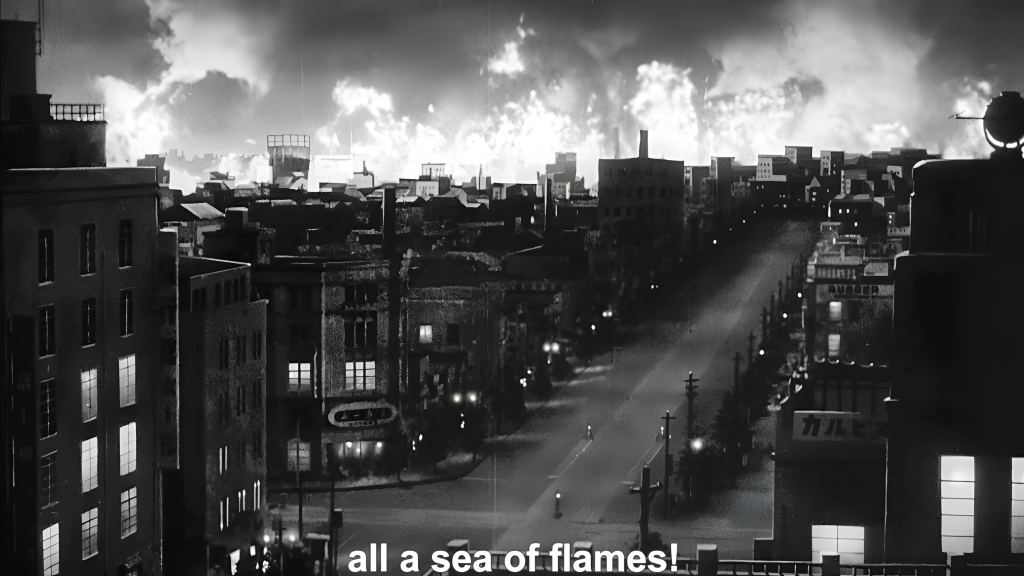
Godzilla’s nuclear associations are obvious, but the images of Tokyo ablaze also bring to mind the firebombing of March 9–10, 1945, which killed an estimated 100,000 people. Watching the destruction here, I kept thinking about how many people making and watching this film had experienced the real thing. Those flames carried memories.
That gives the movie a gravity you cannot manufacture simply by having an actor stare solemnly at a computer-generated skyline.
It also makes the connections to the modern Japanese films fascinating. Godzilla Minus One recalls the original’s imagery and sense of a population enduring another catastrophe when it has barely recovered from the last one. But what really struck me was how much Shin Godzilla inherited from this film’s bureaucracy.
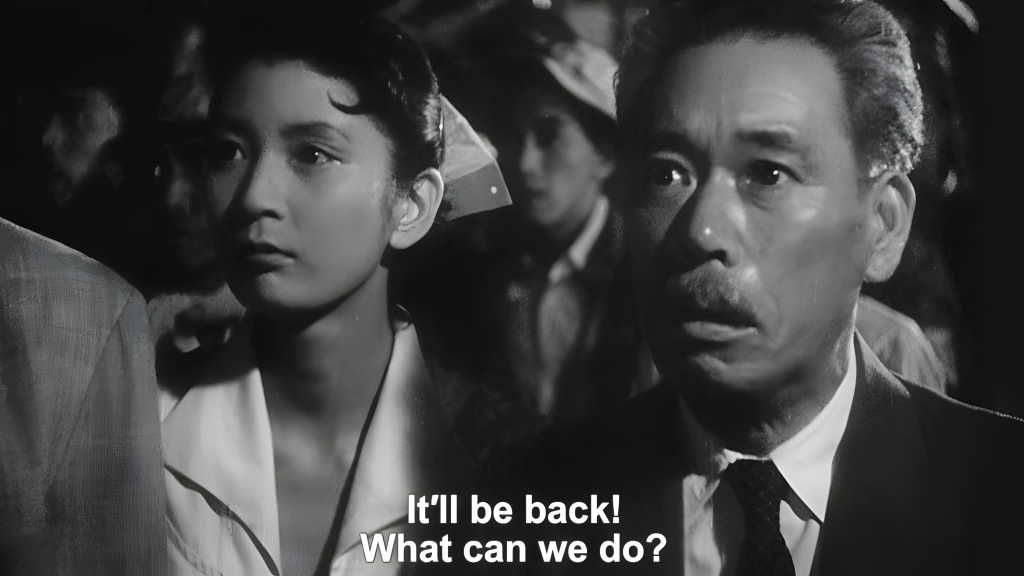
The meetings. The arguments. The politicians, scientists, and citizens all talking past one another. Shin Godzilla turns that machinery into wonderfully bleak satire. Here, much of it is played straight, and it feels entirely plausible. Outside of the enormous radioactive reptile, naturally. Though I suspect the meetings would be much the same without him.
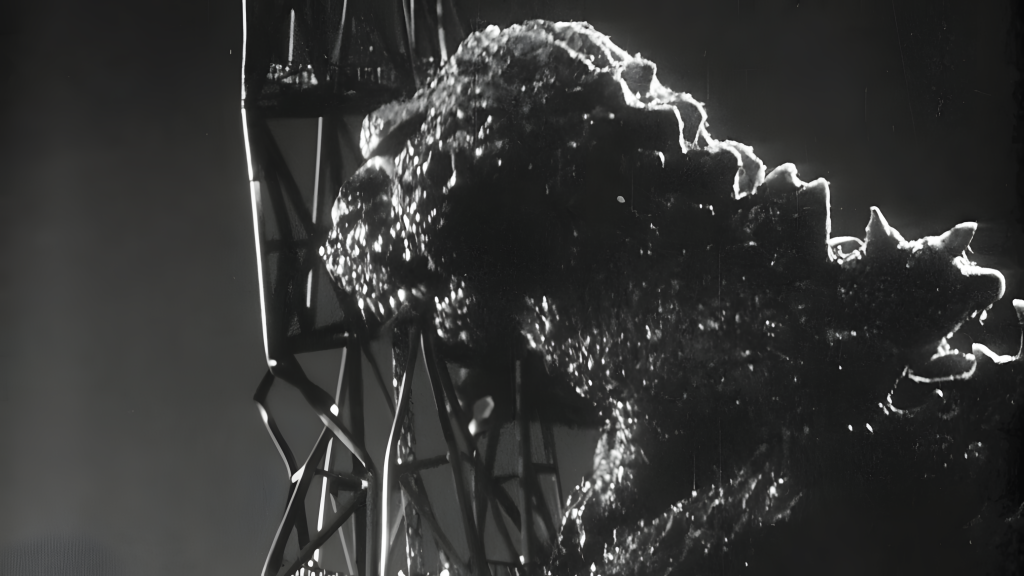
And when Godzilla finally gets down to business, he puts in a proper shift.
This is sustained urban destruction. Buildings fall. Fires spread. Tanks fire away with admirable optimism. Trains discover an unexpected service interruption. An electrical barrier gets its opportunity to disappoint everyone.
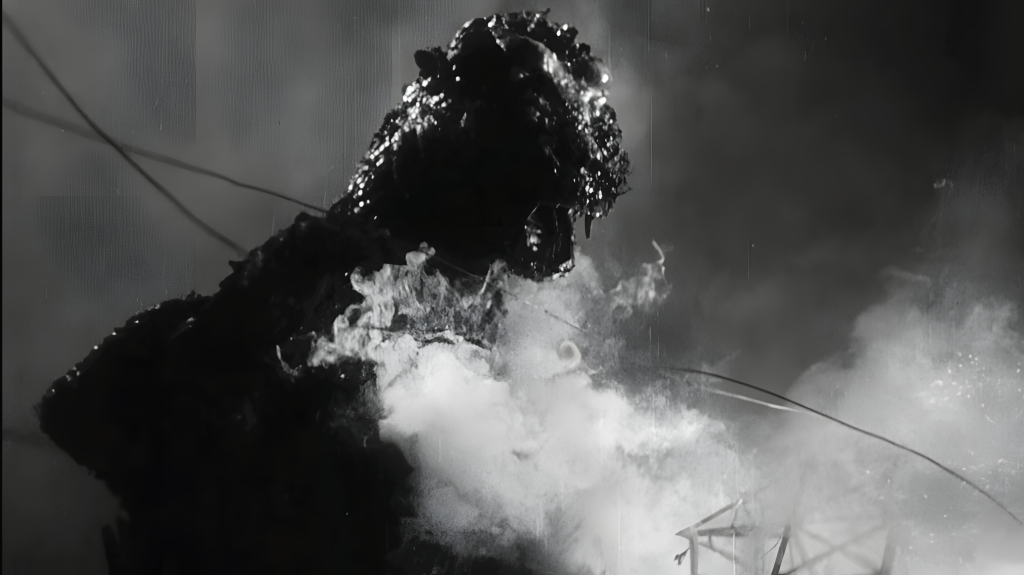
We are not watching two monsters meet in a field and spend twenty minutes settling a disagreement. Godzilla is wandering through Tokyo, systematically making it a much less desirable place to own property.
I also appreciate the relative simplicity of his abilities. He is huge. He is hard to kill. He has destructive radioactive breath. That will do nicely. He does not need to teleport through time, fly into space, or drain your bank account with his mind. The basic package provides more than enough trouble.
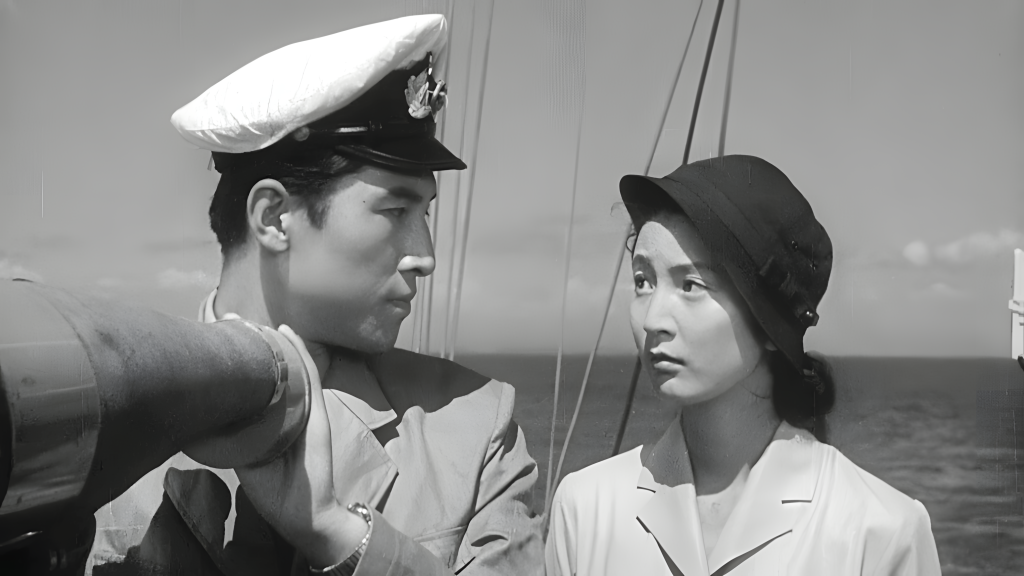
And then there is the music.
Akira Ifukube’s score belongs in the conversation with Raiders of the Lost Ark, Conan the Barbarian, and Rocky. This is one of those soundtracks that seems to have arrived already immortal. The menace, the marching rhythms, the pounding percussion: it all works. The thunderous beats announcing Godzilla give him weight before you even have a chance to examine the costume.
Some aspects of Godzilla would take a few films to settle into place. The music needed no such adjustment.
The Bad
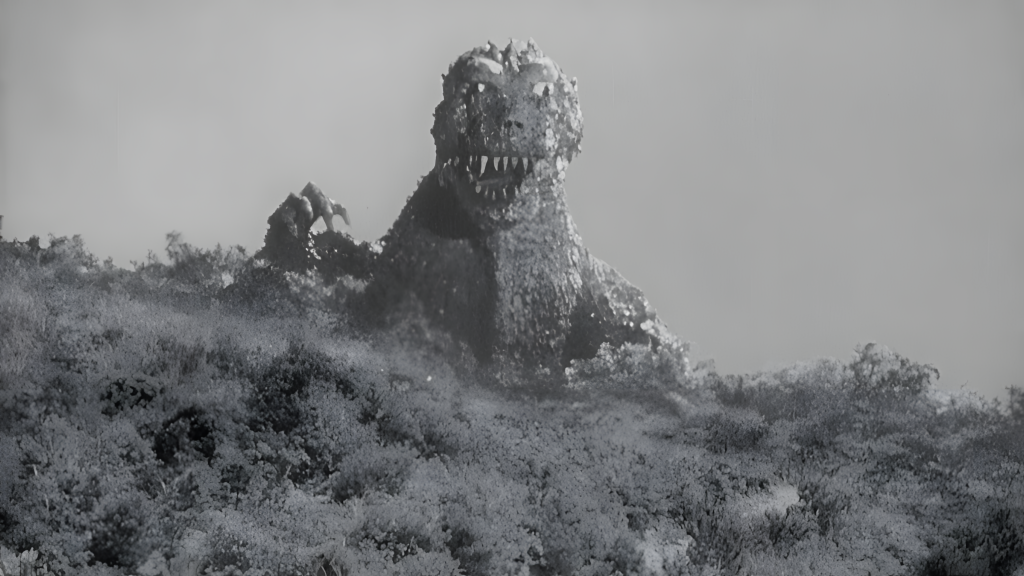
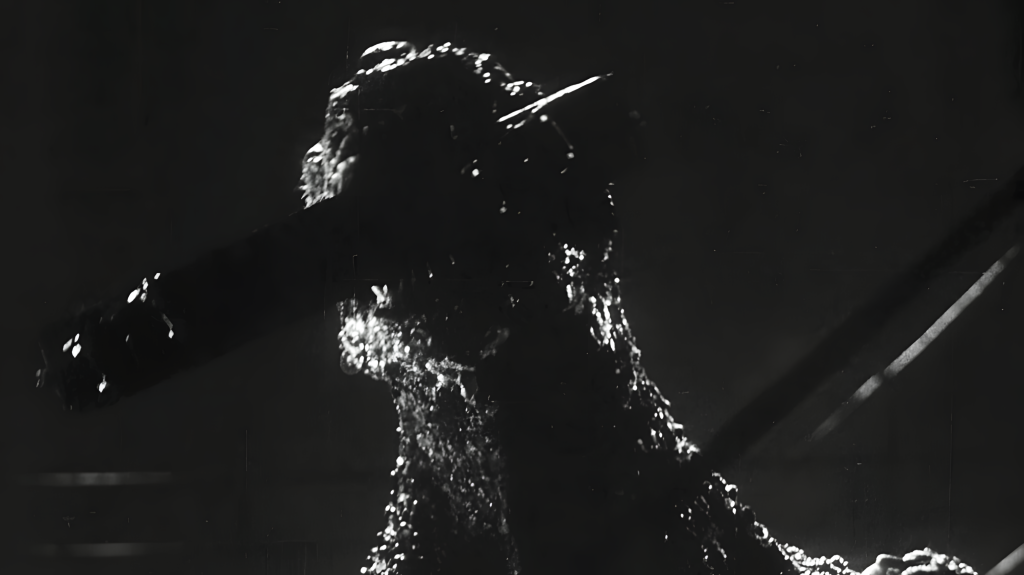
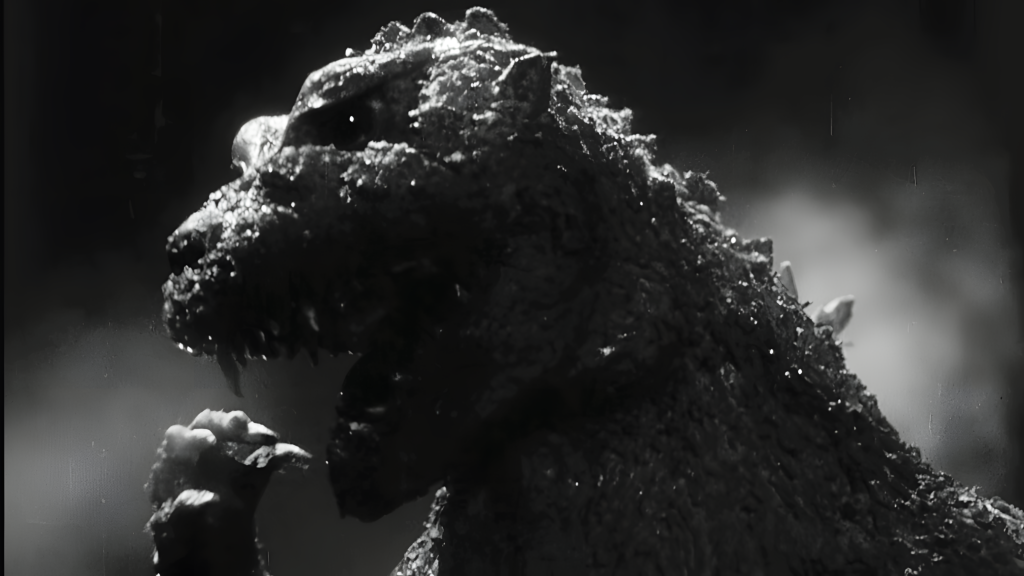
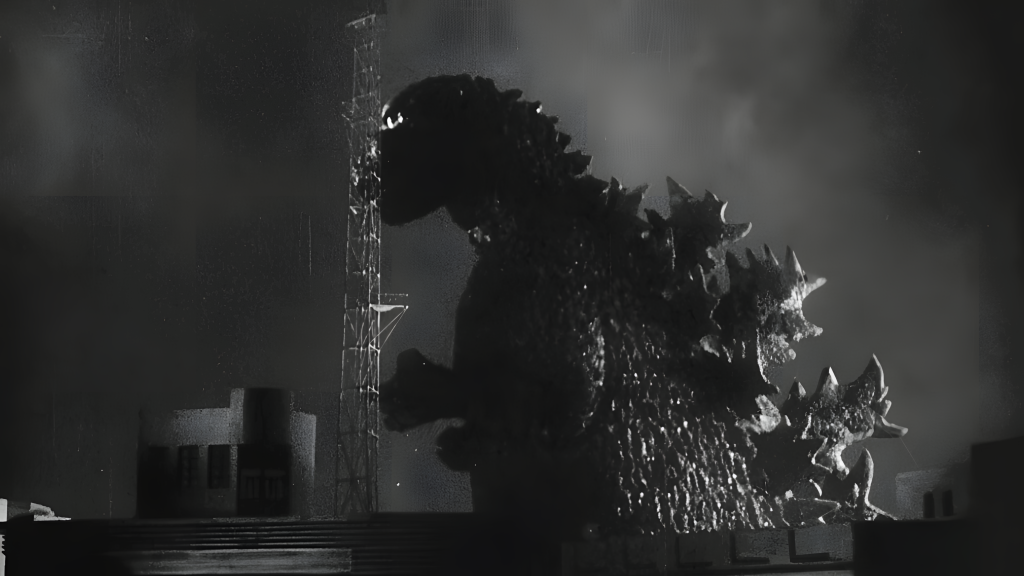
Godzilla himself looks a little off.
Yes, I recognize the absurdity of suggesting that the original Godzilla does not quite look like Godzilla. He got here first. Technically, everyone else is doing an impression.
Nevertheless, when you have spent decades watching the later versions, his debut takes some getting used to. The expression is occasionally strange. His arms seem reluctant to participate. His movement can be awkward in ways that suggest less “unstoppable prehistoric nightmare” and more “someone has made this doorway narrower since I came in.”
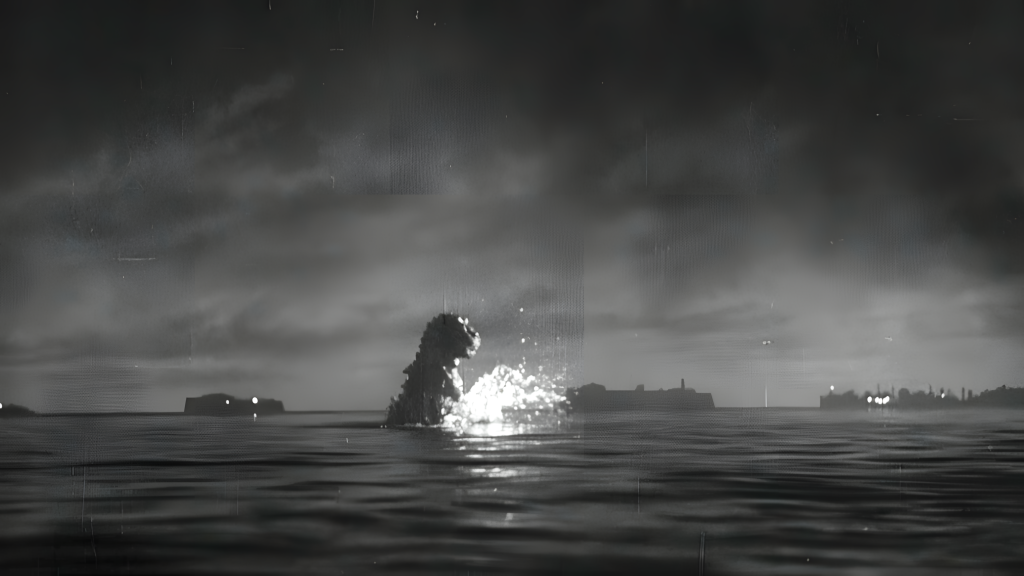
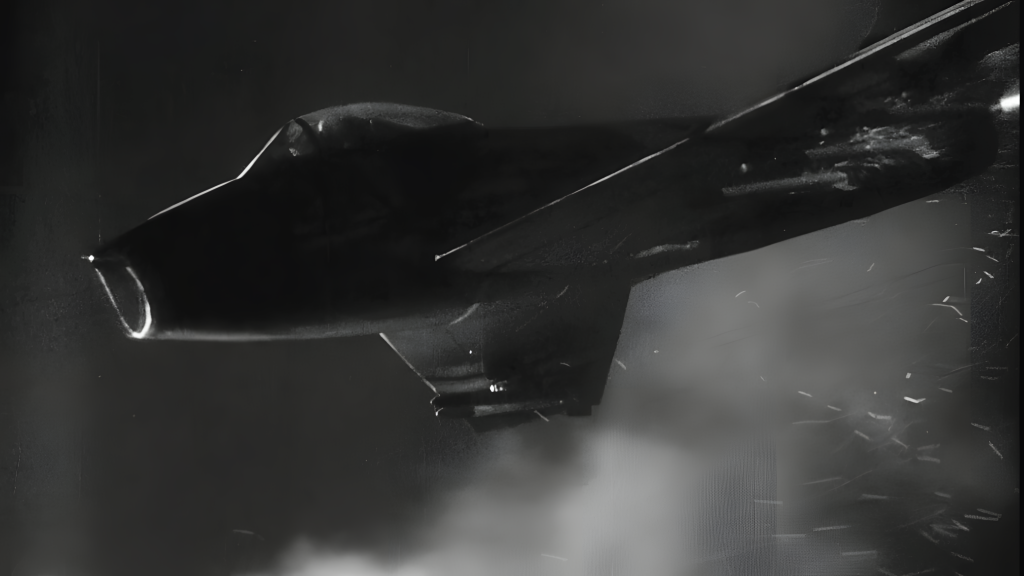
The effects are a mixed bag. Some of the miniature destruction is excellent, especially when the lighting, smoke, and scale all cooperate. Other shots feature aircraft that appear rather more dependent on strings than aerodynamics.
There is plenty of grace available here. It is 1954, and these people are establishing the visual language of an entire franchise. Still, acknowledging the achievement does not require pretending you cannot see the occasional wobble.
At least this version does not come with Matthew Broderick.
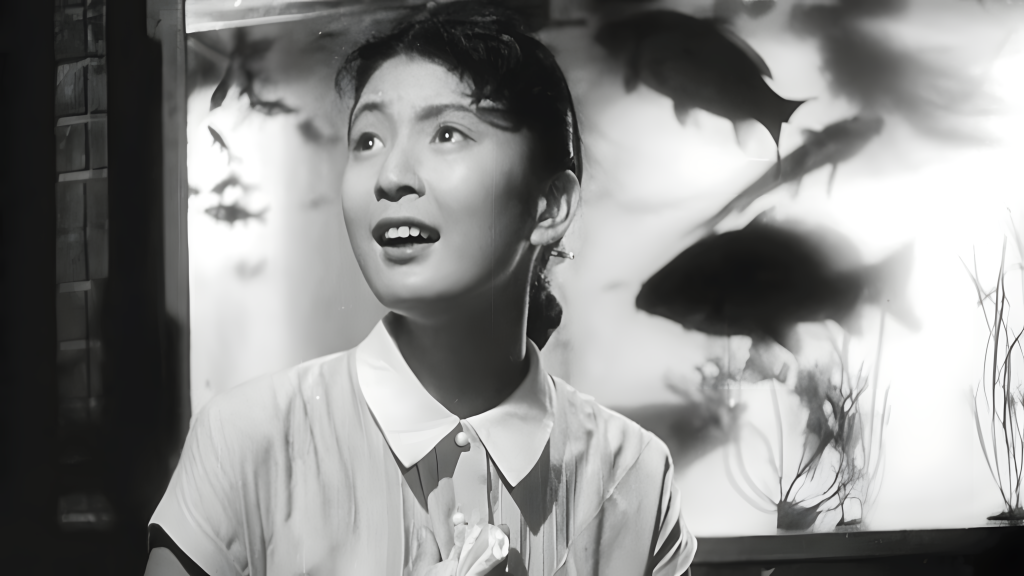
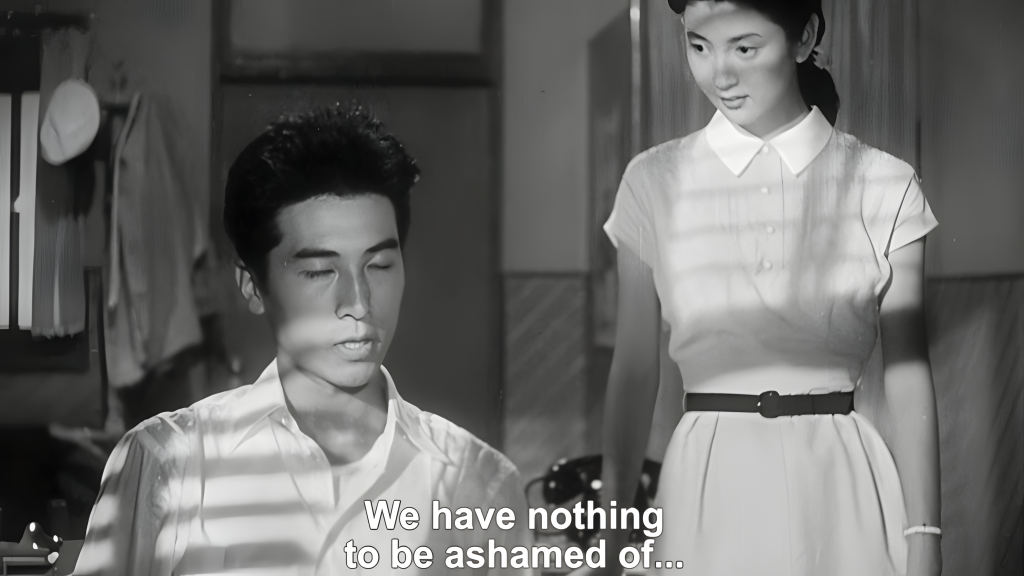
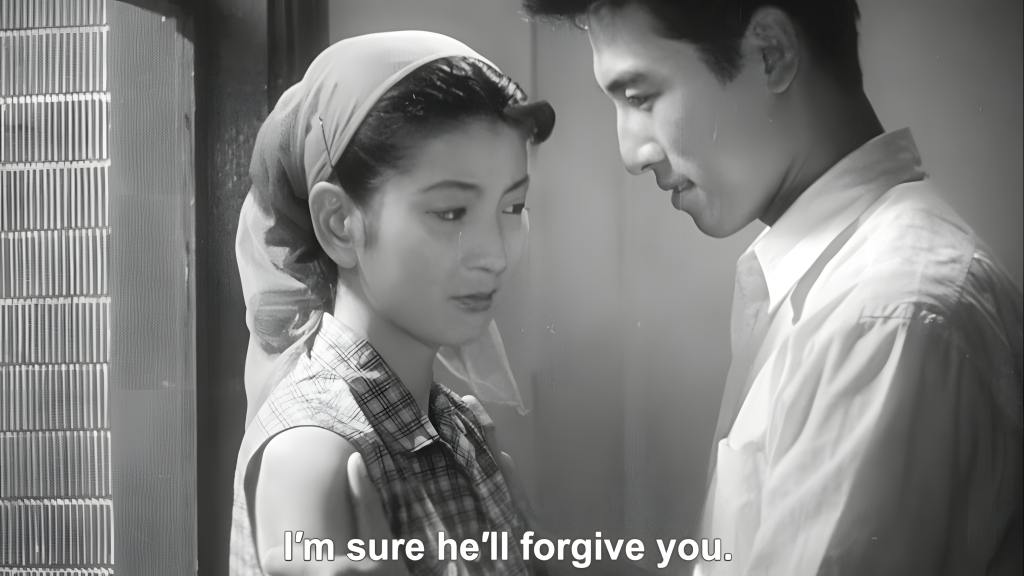
The human melodrama also has its more overwrought moments. Emiko (the female of our love triangle) spends a fair amount of time looking distressed, although, to be fair, she has a giant monster, a complicated engagement, and a horrifying scientific secret competing for her attention. I become irritable when two appliances break in the same week.
The love triangle works better than I expected, but I did occasionally wish everyone could sit down and finish a conversation before the next emergency.
The Ugly
The real romantic mystery is why the man with the eyepatch and the Frankenstein laboratory is losing this competition.
Ogata, Emiko’s preferred fellow, is a likable, solid character. Unfortunately, his plan to ask her father for permission to marry her involves first getting into an argument with him. An interesting strategy. Most men at least wait until Thanksgiving.

Serizawa, meanwhile, has an eyepatch, a tortured conscience, and a private laboratory containing a discovery that could change the world. I am not saying those are the foundations of a healthy relationship. I am saying that he has made an effort.
Her scientist father seems disappointed with the direction things are going, and I understand. You raise a daughter, introduce her to a perfectly respectable brooding scientific genius, and she runs off with the diving enthusiast.
A spoiler for the ending follows.
Of course, Serizawa’s final decision is a tragic sacrifice rooted in his fear of what humanity would do with his discovery. The film earns the moment.
But somewhere in the back of my terrible mind is the thought that having a man cut his own oxygen line rather than return to the boat to the woman who betrayed him has to do something to a woman’s self-esteem. That is going to come up in therapy.

In Conclusion
Godzilla is an absolute, stone-dead classic. Its monster occasionally looks awkward, and some effects announce their construction methods a little too enthusiastically, but the suspense, destruction, historical weight, and magnificent music remain remarkably effective.
What surprised me most was how complete the foundation already was. The bureaucracy of Shin Godzilla. The wounded humanity of Godzilla Minus One. The spectacle of a city being dismantled by something that does not care how much your building cost. So much of what makes Godzilla work is present from the beginning.
And if you end up watching the Raymond Burr version, relax. You have not committed a crime against cinema. The Japanese version has plenty of reporters standing around explaining the destruction, too. They just have subtitles.