
Archaeology He Wrote
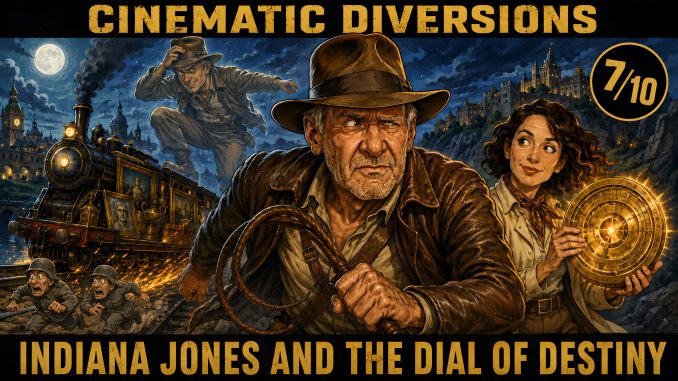
Indiana Jones and the Dial of Destiny (2023): 7 out of 10: I saw Indiana Jones and the Dial of Destiny while I was on vacation, largely because I remembered the impressive amount of flak it received when it first came out. It was disappointing. It was unnecessary. The de-aging was horrible. Phoebe Waller-Bridge was going to replace Indiana Jones, possibly before the end credits and certainly before lunch. After hearing all this for a while, I became curious enough to see the catastrophe for myself. And I have to admit something that may get me thrown out of the torch-wielding Internet mob: I rather enjoyed it.
Before going further, we should establish where the film fits within the Indiana Jones cinematic universe. Raiders of the Lost Ark remains essentially perfect. It is not only the best Indiana Jones movie but one of Steven Spielberg’s best films, full stop. Indiana Jones and the Temple of Doom never worked quite as well for me, although it has improved considerably with age. Indiana Jones and the Last Crusade has Sean Connery, Nazis and a proper sense of finality. Neither sequel reaches the heights of Raiders, but they make a satisfying trilogy, and Last Crusade gives Indiana Jones the ending he deserved.

Then came Indiana Jones and the Kingdom of the Crystal Skull, which I saw theatrically with genuine excitement and left as a broken shell of a man. Unlike Alien 3, a movie I initially hated but could at least imagine reassessing, Crystal Skull has not improved with time or distance. It remains hot trash. Between Indy’s son, the CGI monkeys and the final half hour of alien-skull nonsense, I am ready to phone that entire movie home. One day I may revisit it for a proper review, but only after fueling the critical chainsaw.
This brings us to Dial of Destiny, a film that is comfortably better than Crystal Skull while remaining comfortably below the original trilogy. The story finds an elderly Indiana Jones approaching retirement as the world moves on without him. When Helena Shaw (Phoebe Waller-Bridge), the daughter of an old friend, reappears in his life searching for an ancient device created by Archimedes, Indy is dragged into one more international chase. Naturally, former Nazis are involved.
The biggest surprise is the de-aging. I am a card-carrying member of the torch-wielding club that chases The Irishman through the village whenever digital de-aging comes up, because God, it was awful in that movie. Here, however, it works.
The first twenty minutes, with a younger Indiana Jones fighting Nazis aboard a train loaded with stolen artwork, are easily the best part of the film. I half expected my buddies from The Monuments Men to show up and lend a hand. In fact, the sequence works so well that I found myself wishing they had simply de-aged Harrison Ford and made the entire movie that way. It probably would have been a better film.
Ford, who is now approximately 100 years old, remains game for the material. There are decent action scenes, some fun stunt work, and enough flashes of the old Indiana Jones charm to keep the adventure moving. The sets look terrific, the locations are handsome, and the money is clearly visible on the screen. This does not feel like a cheap cash-in (cough Matrix 4 cough), even if it occasionally feels like a very expensive attempt to justify a sequel nobody particularly needed.
Some viewers objected to finding Indiana Jones as a drunken, miserable loner near the end of his career. It is certainly downbeat, but it also feels oddly plausible, and perhaps more accurate to Harrison Ford than to Indiana Jones. Ford sells the weariness without completely losing the spark that made the character appealing.
Karen Allen’s return as Marion concerned me after her performance in Crystal Skull. Fortunately, Marion appears only briefly, and the film does not ask her to carry much of its emotional or comic weight.
It does ask Phoebe Waller-Bridge to carry quite a bit, and that is where we run into trouble. Waller-Bridge is not a bad actress, and she has some decent moments with Ford. The problem is the character she plays Helena Shaw, who is less a fully developed character than a collection of plot requirements wearing a hat.
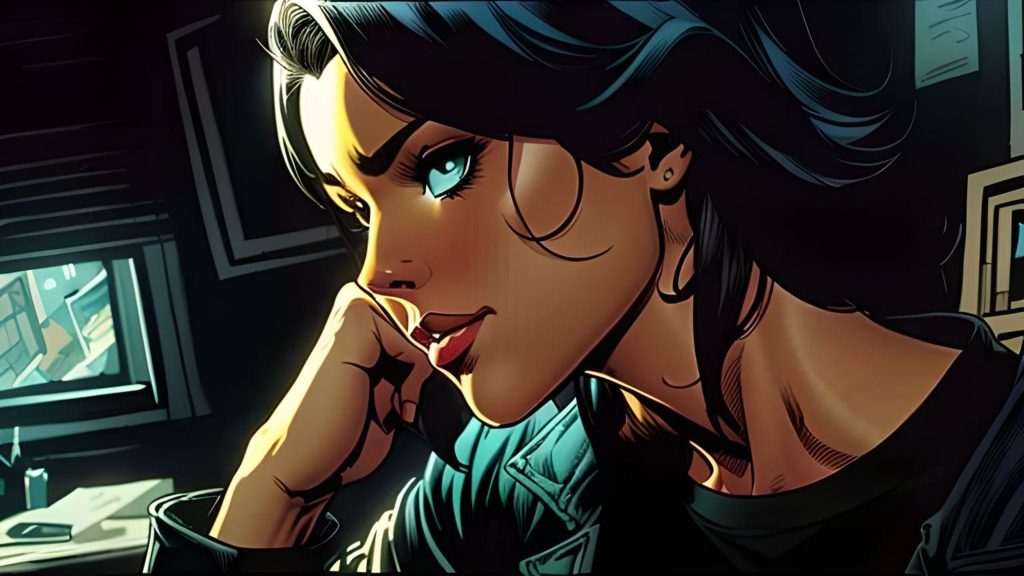
She is abrasive, selfish and relentlessly one-note, yet the film keeps insisting that we should find her charming. She never develops enough emotional depth to justify her importance, and there are long stretches where the movie would function perfectly well without her. I understand where much of the hostility toward Dial of Destiny came from, because Helena is irritating enough to become the face of everything people already feared about the film.
The action also suffers from the increasingly digital nature of modern blockbusters. There are chases, fights and stunts, but too many of them carry the weightless sheen of actors performing in front of computers. Some of this is understandable. Harrison Ford has reached an age where he probably should not be allowed near a motor vehicle, whether it flies or drives, even under ordinary circumstances.
But the original Indiana Jones movies made danger feel physical. You believed the truck was there, the horse was there and the stuntman being dragged across the ground was reconsidering every decision that had led him to that afternoon. Dial of Destiny can be exciting, but it rarely produces that same visceral thrill. At its weakest, it begins drifting toward the dreaded CGI-monkey district of Crystal Skull.
Then there is the title. Indiana Jones and the Dial of Destiny is a terrible title. What the hell is a Dial of Destiny? It sounds like a soap sold at a Renaissance fair. Crystal Skull may also have been a silly title, but at least people know what a crystal skull is. Earlier Indiana Jones went looking for the Ark of the Covenant and the Holy Grail. Now it feels as if the filmmakers ran out of recognizable historical and religious artifacts and simply started making shit up. Even the Antikythera mechanism, the genuine historical inspiration, sounds more interesting than the Dial of Destiny.
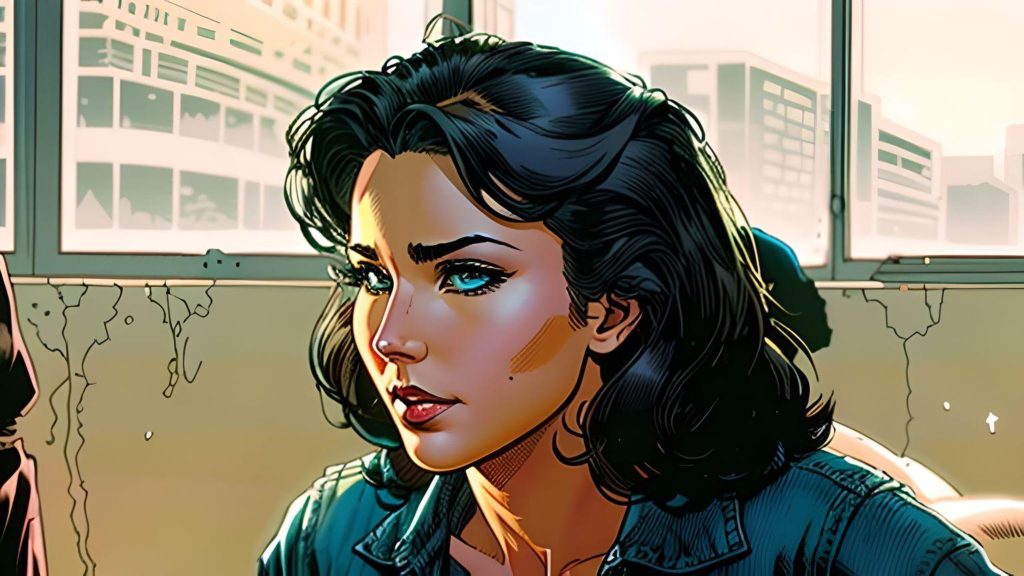
And yet, the movie works more often than it fails. That excellent opening carried enough goodwill to last throughout the adventure, while Ford’s performance, the period production design and the general pleasure of watching Nazis receive corrective archaeology kept me entertained. It is too long, too digital and saddled with a supporting character who never becomes as interesting as the screenplay thinks she is. It is also far better than its reputation suggested.
Should Indiana Jones have ridden into the sunset at the end of Last Crusade? Absolutely. Since he did not, however, Dial of Destiny provides a respectable last adventure. It is not as good as the original trilogy, but it is worlds better than Kingdom of the Crystal Skull. After the CGI monkeys and interdimensional aliens, “respectable” feels almost like a triumph.