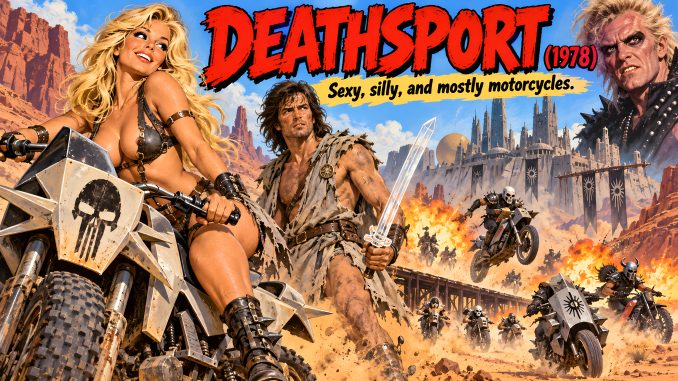
Still better than Olympic Breakdancing.
Deathsport (1978): 4 out of 10: A thousand years after the Neutron Wars, civilization has collapsed into scattered city-states surrounded by a wasteland populated by mutants, cannibals, and people who apparently shop exclusively at those post-apocalyptic Renaissance fairs. Among the survivors are the Range Guides, wandering warriors who ride horses, wield transparent swords, and speak as though every conversation might eventually become a philosophical treatise.
One such warrior, Kaz Oshay (David Carradine), finds himself captured by the authorities of Helix City, where the ruling class has developed an unusual approach to public entertainment. Rather than curling or pickleball, the citizens enjoy Deathsport, a gladiatorial competition involving heavily armed motorcycles, explosions, and an exceptionally relaxed attitude toward occupational safety.

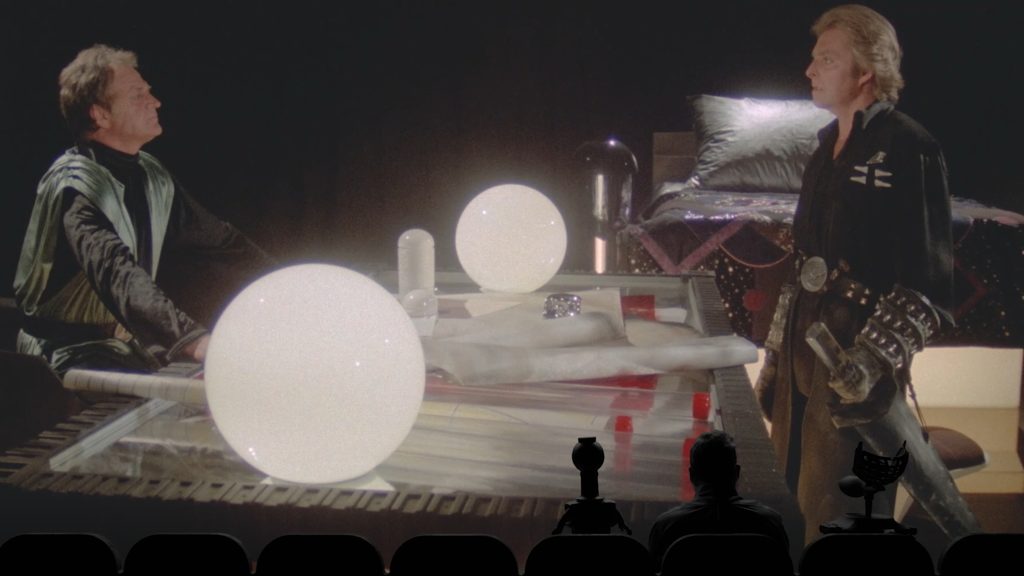
Joining Kaz is fellow Range Guide Deneer (Claudia Jennings), while the sinister Ankar Moor (Richard Lynch) has his own reasons for wanting Kaz dead, which he at no point shares with anyone watching the movie.
With political intrigue, personal vendettas, and deadly competitions on the horizon, survival will require considerable skill with a sword and the ability to avoid being run over by what appears to be a Kawasaki wearing a Halloween costume.
The Good
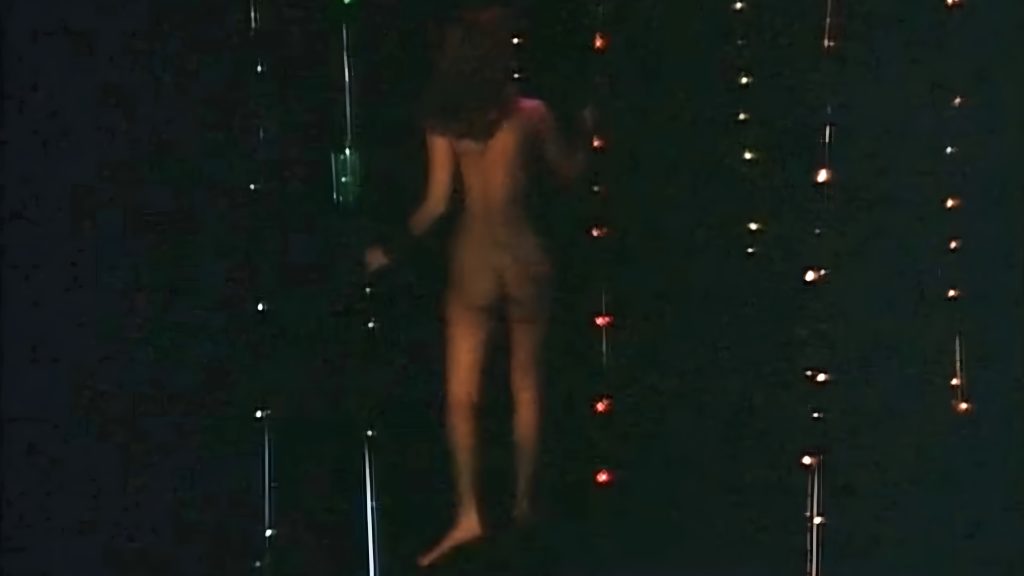
The Good: Claudia Jennings is naked in it.

The not Awful
The not Awful: Claudia Jennings has some entertaining dialogue. Richard Lynch shows up.
One might reasonably wonder why this isn’t already my film of the year. Well, you may have noticed that Claudia Jennings being naked and Richard Lynch occasionally showing up to chew the scenery isn’t necessarily enough to sustain an hour-and-a-half movie. You keen observers, you.
But let’s begin with the positives.

I have often said on the pages of Cinematic Diversions that nudity cannot necessarily make a terrible film good, but it rarely makes it worse.
Roger Corman certainly seems to have subscribed to this philosophy. Deathsport features an impressive collection of attractive women, many of whom find reasons to remove their clothing despite living in a world where protective equipment would presumably be rather important.

The nudity is plentiful, well-lit, and features genuinely attractive actresses. Unfortunately, it is also largely disconnected from the movie. Occasionally, the plot simply stops so that a woman can perform a naked dance for a couple of minutes. Then, we return to whatever the characters were doing before the impromptu visit to the gentlemen’s club.
Under normal circumstances, I would consider this an acceptable arrangement. Indeed, there have been episodes of Masters of Horror where the appearance of a naked Vancouver real estate agent significantly improved my opinion of the proceedings. Unfortunately, Deathsport may become my standard example of a movie that even plentiful, high-quality nudity cannot save.
There are, however, some genuinely okay performances and interesting creative decisions.
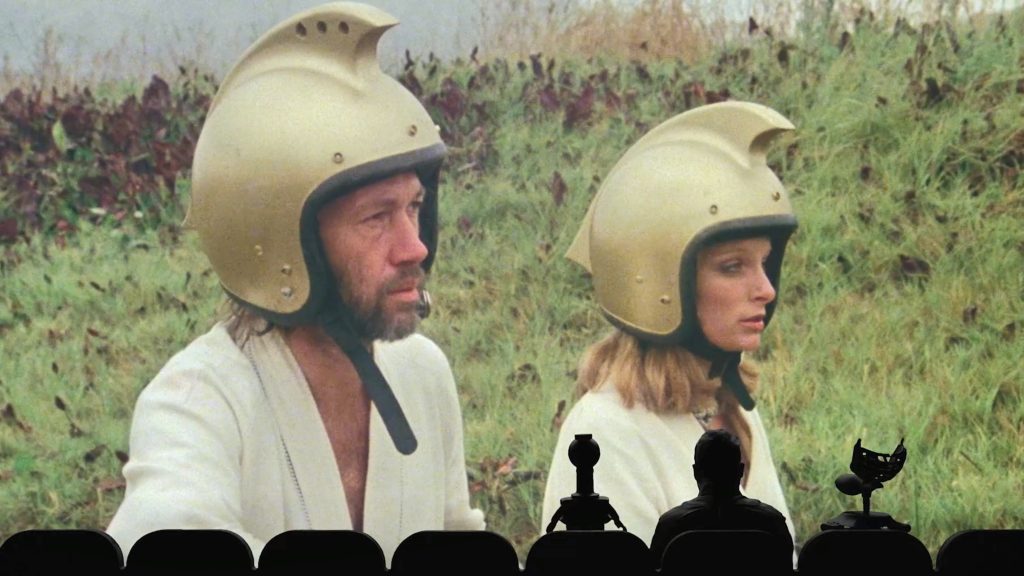
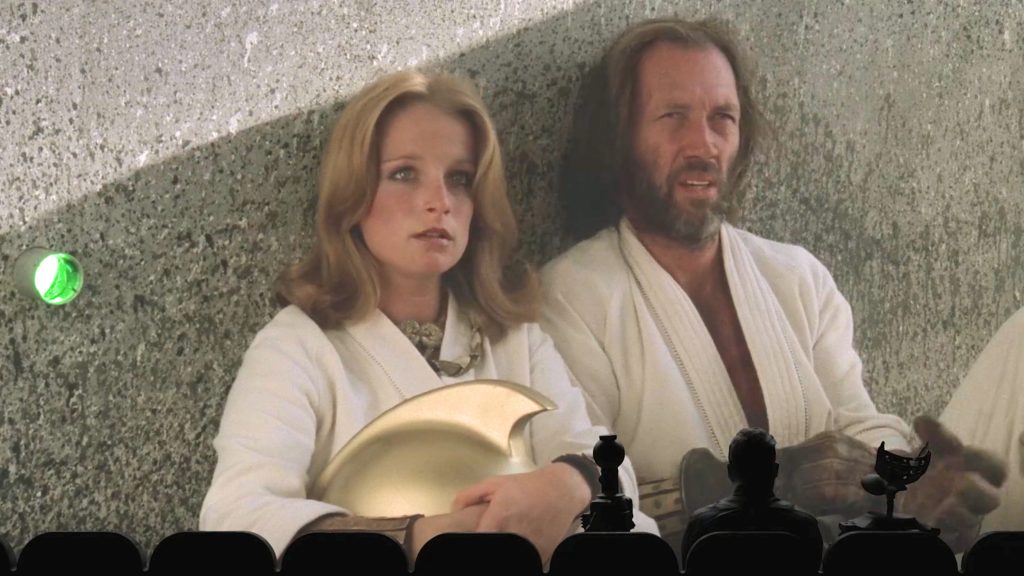
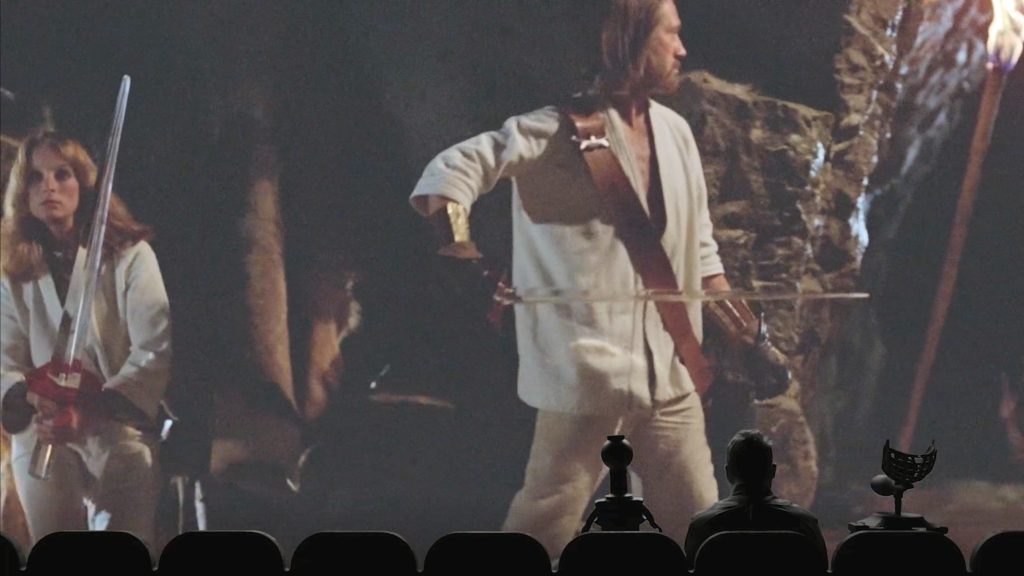
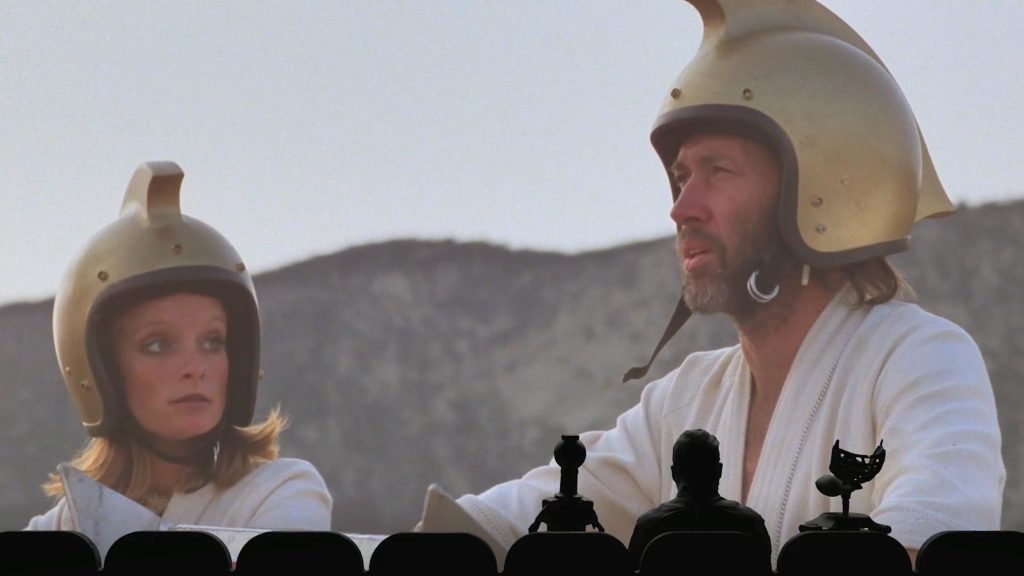
I particularly enjoy the dialogue between David Carradine and Claudia Jennings. Their characters are essentially hippie samurai wandering around the wasteland with enormous plastic swords. They speak to one another in an excessively formal manner, with a strange cadence that sounds like a cross between a martial arts philosophy lecture and a particularly earnest conversation at a Renaissance fair. And somehow, it works.
Both performers commit completely to this peculiar style of communication. Nobody winks at the audience or seems embarrassed by the material. They inhabit these characters convincingly, and I found their exchanges surprisingly refreshing. There is an interesting little movie hiding in these conversations, and I wouldn’t have minded spending considerably more time with these two characters discussing the mysteries of the universe.
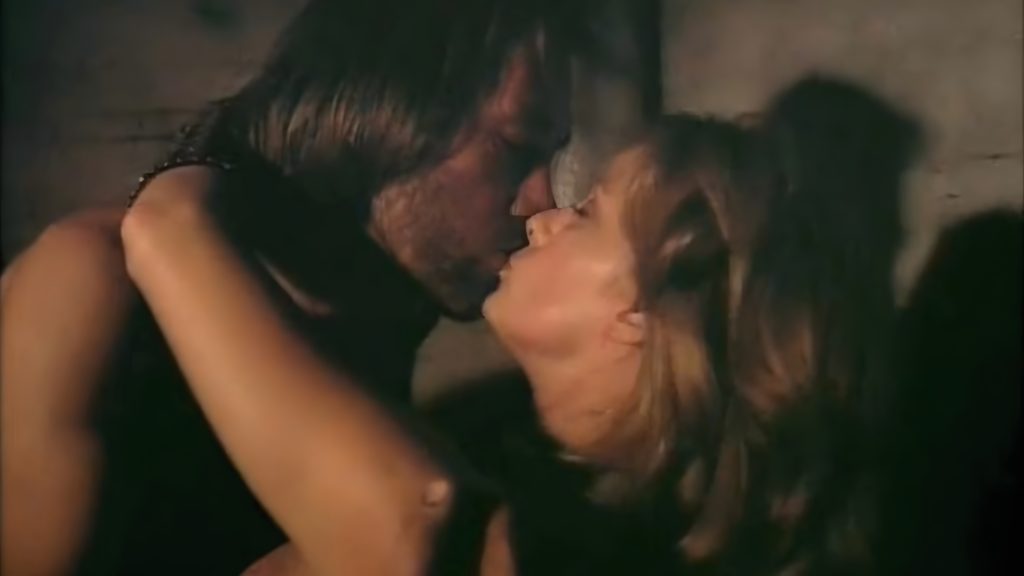
I also have a soft spot for Richard Lynch. He is something of a Temu Rutger Hauer, but I mean that affectionately. I always mix up Richard Lynch and Rutger Hauer, much like I always mix up Kurtwood Smith and John Saxon.
Lynch is one of those character actors whose appearance immediately increases my interest in a movie. He has an unusual face, a commanding presence, and the ability to make even ridiculous dialogue sound vaguely threatening.
He is enjoyable here as Ankar Moor, although the movie never provides him with material worthy of his talents.

And I would be remiss if I didn’t mention professional wrestler turned character actor H.B. Haggerty, who makes an enjoyable brief appearance as the jailer.
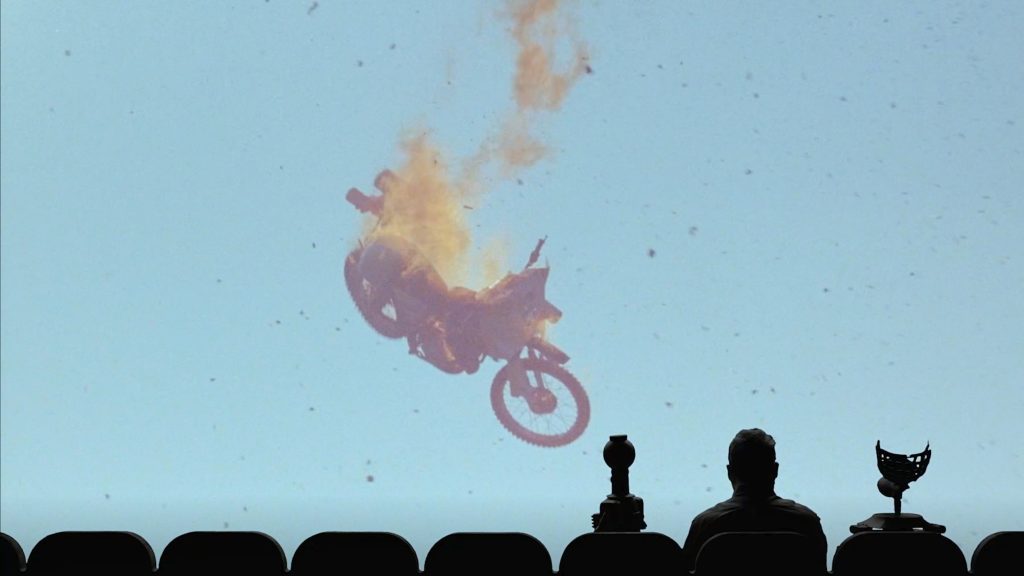
Plus, I would be remiss not to point out there is some good stunt work on display here. There are plenty of orange fireballs to complement the nudity, and the ye olde fire suited stuntmen get quite a workout in Deathsport.
The Bad
The Bad: Deathsport was conceived as a follow-up to Roger Corman’s Death Race 2000, which is one of my favorite movies of the 1970s. That film was imaginative, funny, violent, subversive, and entertaining from beginning to end.
Deathsport is none of those things. Indeed, this may be one of the most disappointing follow-ups in cinema history. We’re talking Caddyshack II compared to Caddyshack levels of disappointment.
Which perhaps shouldn’t surprise anyone since Allan Arkush, who co-directed Deathsport, subsequently directed Caddyshack II.
The man belongs in The Hague.
And before anyone accuses me of being excessively harsh with the war crimes allegations, allow me to explain what watching Deathsport actually entails.
Motorcycles. Lots and lots of motorcycles.
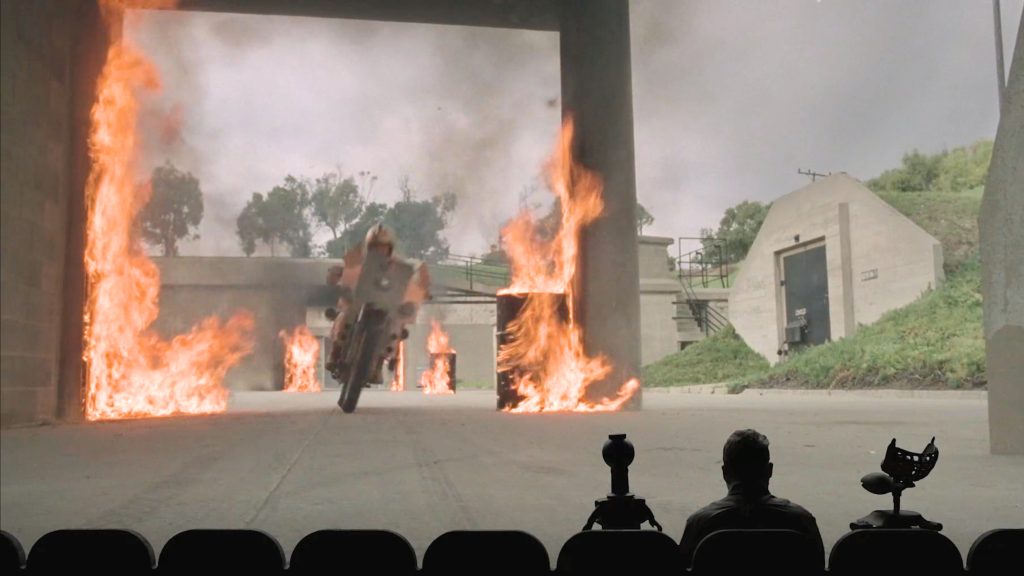
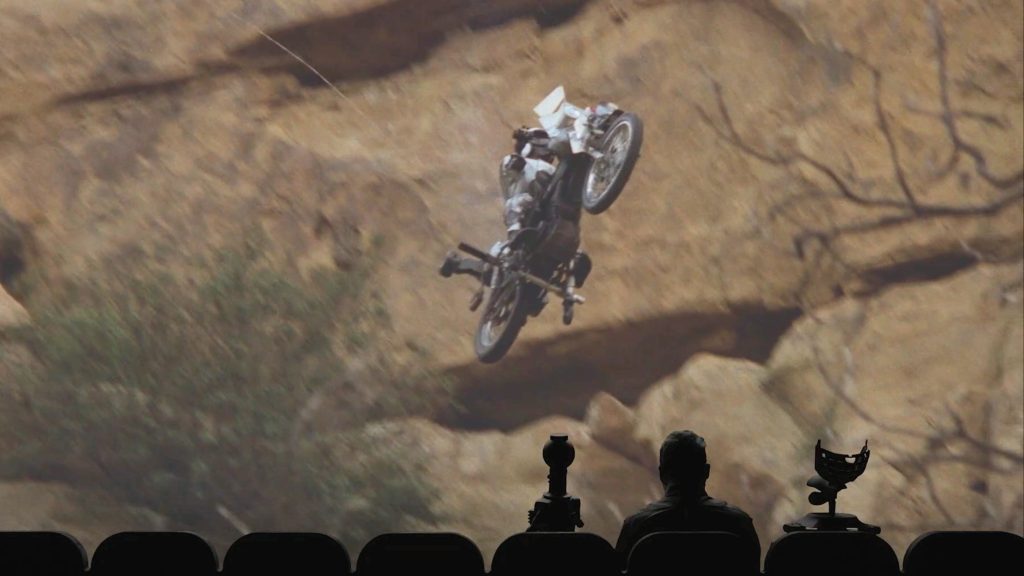
Motorcycles driving across the desert. Motorcycles driving through canyons. Motorcycles driving around in circles. Motorcycles jumping over other motorcycles. Motorcycles driving toward the camera. Motorcycles driving away from the camera.
At least thirty to forty minutes of this eighty-something-minute movie seem to consist of people riding motorcycles around in the desert.

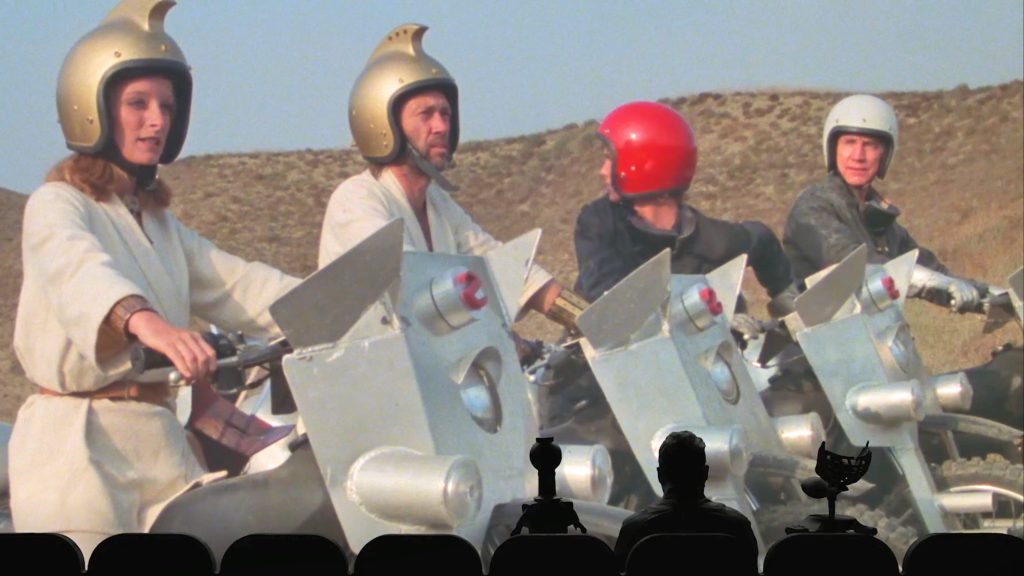
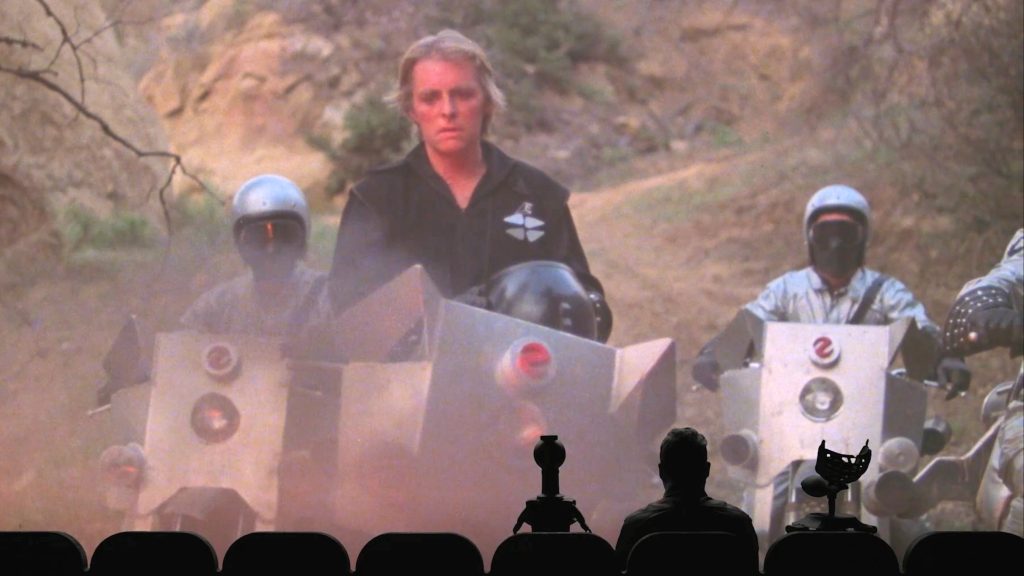
And these aren’t particularly impressive motorcycles. They’re essentially mopeds and dirt bikes that somebody has covered with enormous plastic accessories in an attempt to make them look futuristic.
I suppose the filmmakers imagined that audiences would be awestruck by these extraordinary machines of destruction. Unfortunately, the effect is closer to watching a particularly enthusiastic community theater production of Mad Max.

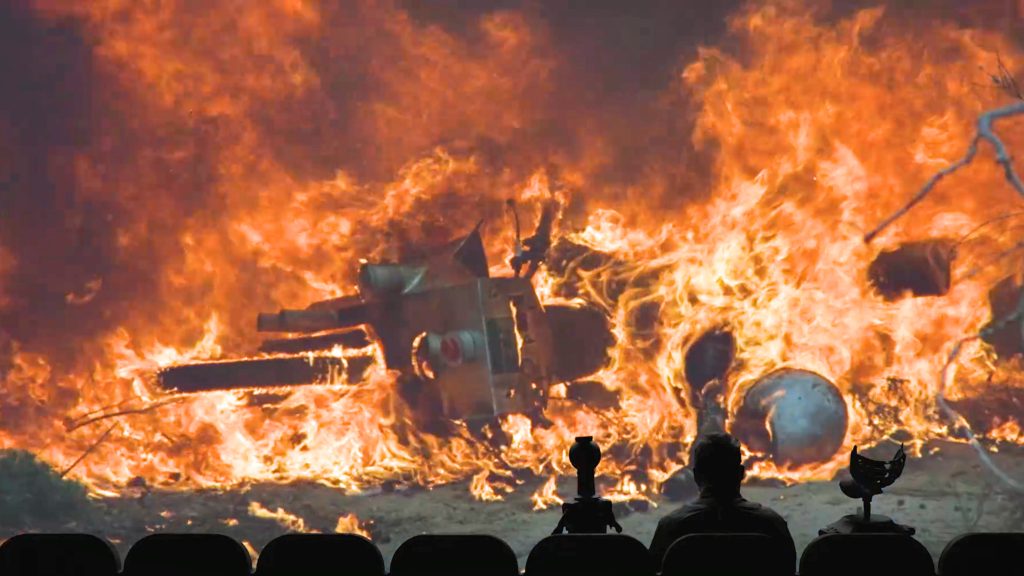
Don’t misunderstand me. Occasionally, something explodes. People fly through the air. There are plenty of orange fireballs. The stunt riders are certainly putting in the effort.
But eventually, you find yourself wondering whether the movie has an actual destination in mind or whether we’re simply watching footage of somebody’s weekend motorcycle club.
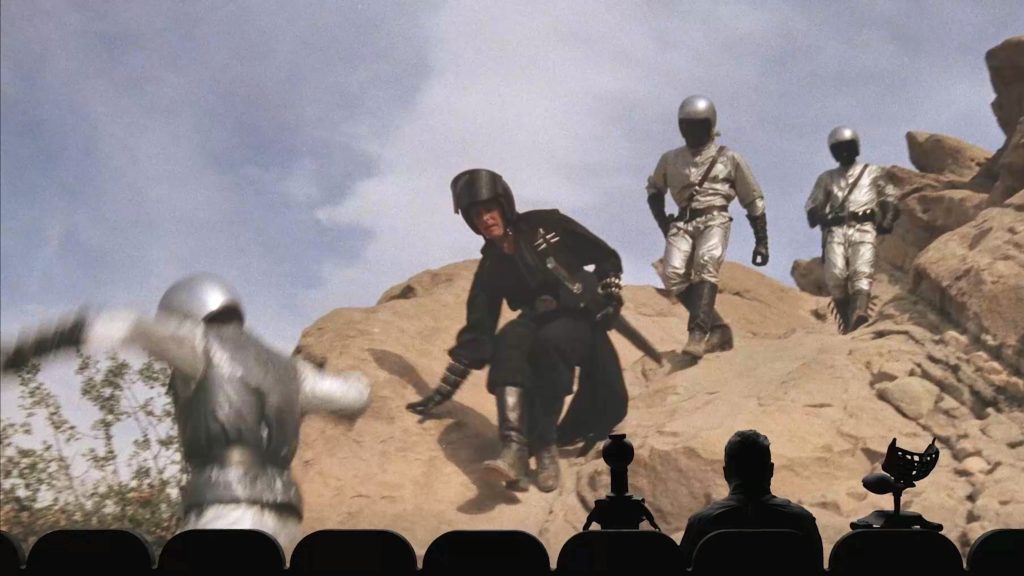
It’s astonishingly boring. I originally watched the edited version presented by Mystery Science Theater 3000, and the movie was sufficiently terrible that I decided to watch the complete, uncut version to give it a proper review. (Mainly because it was a Roger Corman film starring Claudia Jennings. You don’t have to be a USC film school graduate to know what was missing from the edited cut.)
Still, even with that substantial enhancement, I found myself dozing off.
At seven o’clock in the evening. On a Friday. This was not some late-night viewing session where I was struggling to remain conscious after a long day. The movie simply lulled me into unconsciousness through sheer repetition.

The soundtrack doesn’t help matters. Jerry Garcia of all people is credited, and somehow the result includes extended stretches of motorcycle riding accompanied by music that sounds suspiciously like soft jazz being played through a synthesizer.
Motorcycles race through Bronson Canyon. Explosions erupt. People face imminent death. And the soundtrack seems convinced we’re enjoying a relaxing afternoon at the dentist’s office. It’s almost impressive.
The Ugly
The Ugly: Let’s begin with the production design.
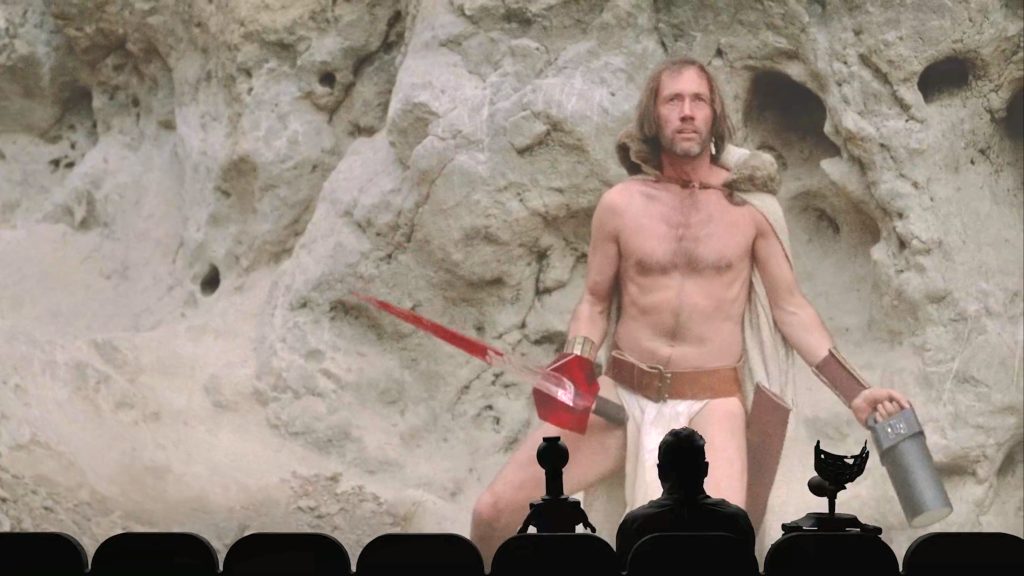
The costumes are dreadful. I understand that this is a post-apocalyptic world where traditional manufacturing has collapsed, but apparently somebody has discovered a warehouse full of plastic, leather scraps, and exceptionally unfortunate fashion accessories. David Carradine’s costume is a jockstrap with a tablecloth wrapped around his shoulders.
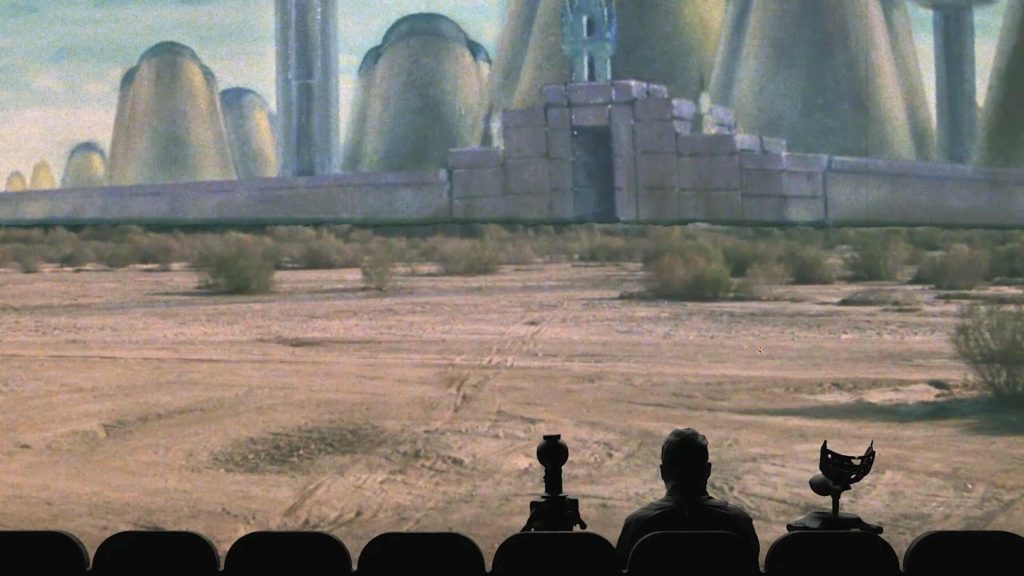
The matte paintings belong on the refrigerator of a household with a particularly talentless four-year-old.
And then there’s the matter of personal hygiene. My girlfriend watched the movie with me and eventually observed that David Carradine desperately needed a bath. And well, she has a point.
Carradine spends much of the movie looking like he hasn’t encountered soap or running water since before the Neutron Wars. The women, naturally, are attractive, clean, and frequently naked.
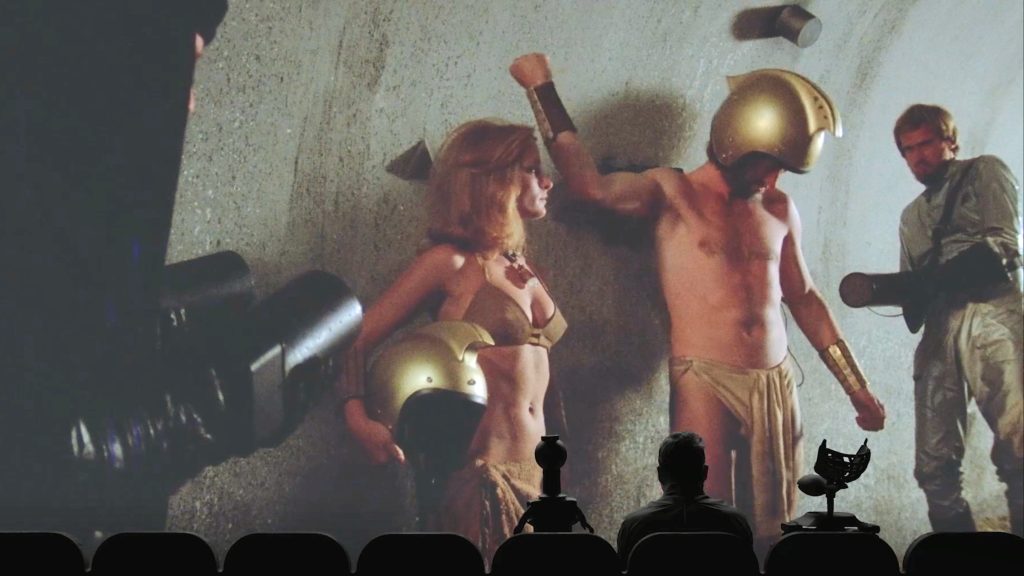
The gentlemen in the audience are certainly being catered to. The ladies are rather less fortunate. Aside from Carradine and Lynch, the principal remaining possibility for the ladies is Will Walker as Marcus Karl, the doctor’s son.
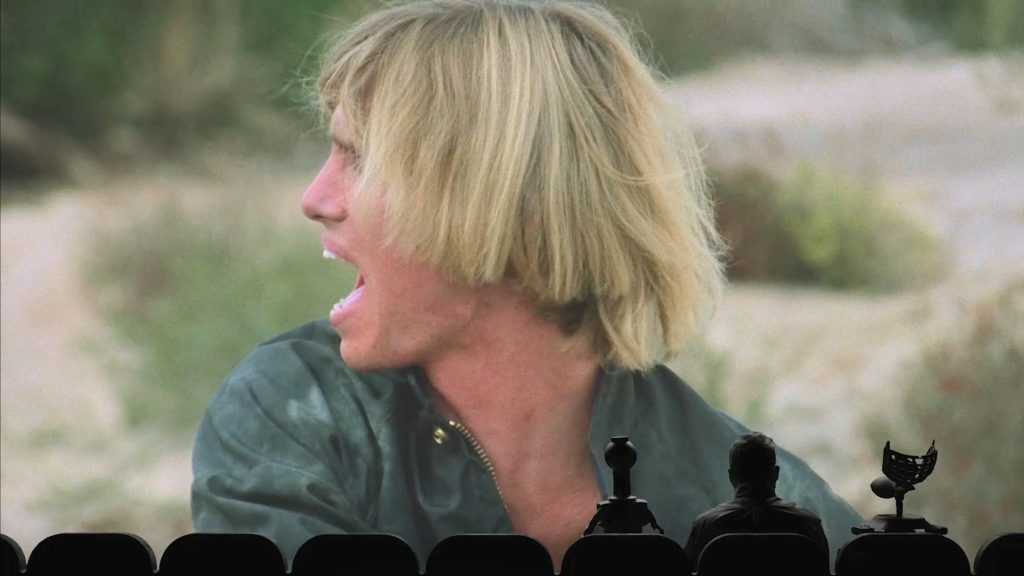
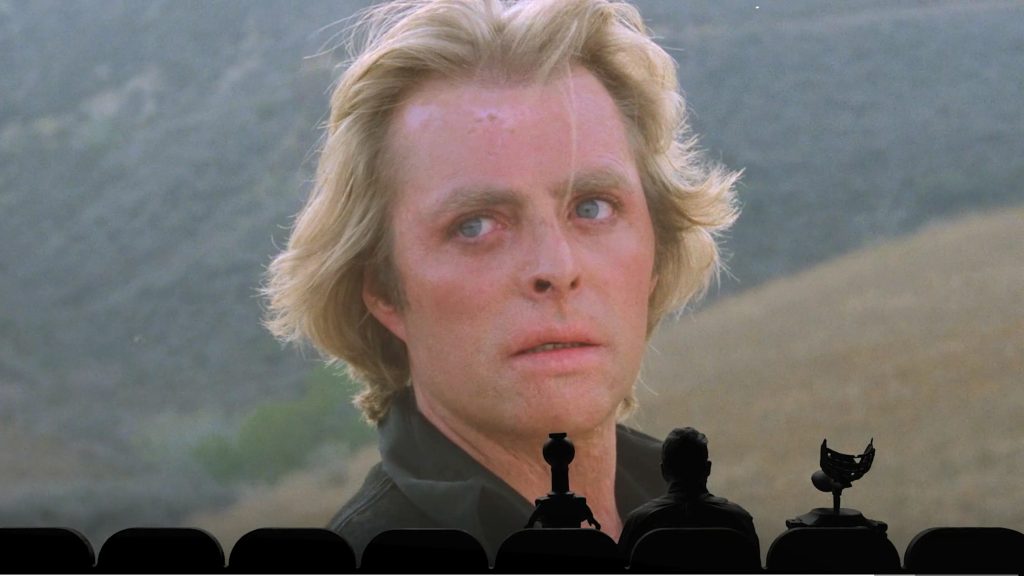
Unfortunately, Walker sports a Prince Valiant haircut and delivers what may be the worst performance I’ve ever encountered in a Roger Corman production. I don’t think I need to emphasize just how terrible an actor’s line delivery must be to distinguish itself as the worst I’ve ever seen in a Roger Corman movie.

That is an extraordinarily competitive field. Walker nevertheless manages to stand out.
Between the costumes, the performances, the cheap effects, and the endless desert motorcycle sequences, Deathsport frequently resembles an endurance test rather than entertainment.
In Conclusion
In Conclusion: Deathsport should have been a reasonably entertaining piece of drive-in science fiction nonsense.
It has David Carradine, Claudia Jennings, Richard Lynch, a post-apocalyptic setting, futuristic motorcycles, sword fights, mutants, explosions, and more attractive naked women than one would reasonably expect to encounter after the collapse of civilization.
The film has plenty of fireballs, plastic swords, and attractive actresses. What it desperately needs is a plot, a better editor, and somebody willing to give David Carradine a shower.
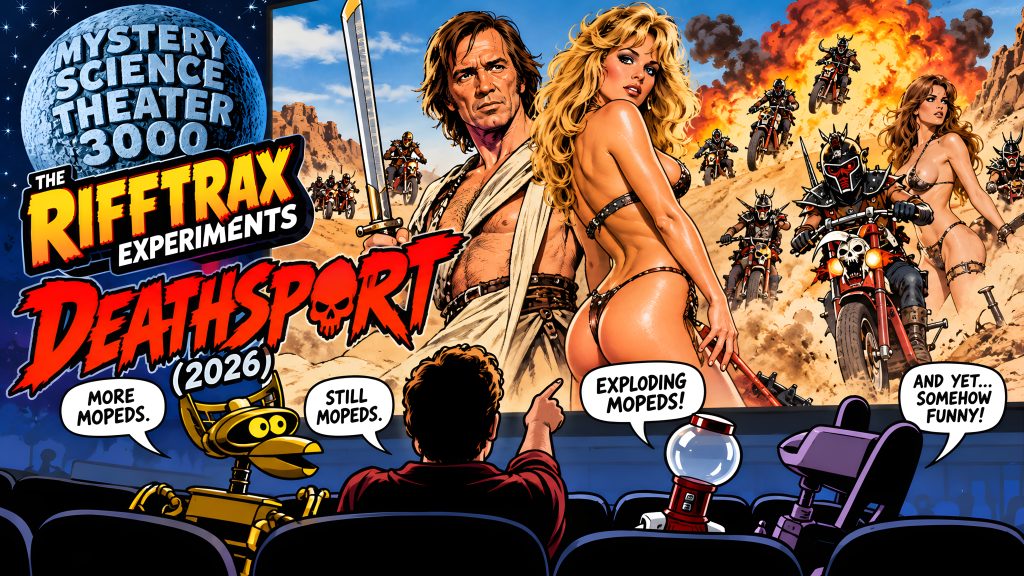
Mystery Science Theater 3000: The RiffTrax Experiments — Deathsport (2026)
Mystery Science Theater 3000: The RiffTrax Experiments Episode #2 Deathsport (2026): 8 out of 10: The second experiment in the new Mystery Science Theater 3000: The RiffTrax Experiments is upon us, and naturally, some comparisons with the first experiment are inevitable.
Our first experiment, Sting of Death, was an entertaining return for Mike Nelson, Tom Servo, Crow T. Robot, and Pearl Forrester. I gave that episode a seven out of ten. The hosts were in good form, the presentation was excellent, and the riffs were enjoyable, although I had some reservations about the humor. In particular, the jokes seemed somewhat trapped in the 1980s, with surprisingly few references to anything that had happened during the subsequent forty years.

The second experiment gives us Roger Corman’s Deathsport, a 1978 science fiction disaster starring David Carradine, Claudia Jennings, and Richard Lynch.
And here’s the interesting thing.
Sting of Death is a considerably less tedious film than Deathsport. Indeed, having watched the complete, uncut version of Deathsport, I can confirm that it’s an extraordinarily boring film that manages to squander attractive actresses, reasonably talented actors, explosions, and an interesting premise on endless footage of motorcycles driving around in the desert.

You would think that would make it a less promising candidate for an entertaining episode of Mystery Science Theater 3000. You would be wrong. Because this second experiment is better than the first.
The difference isn’t really the host segments. Mike, Crow, and Tom Servo were all excellent in Sting of Death, and they’re excellent again here. The production is professional; the performers are clearly comfortable with one another, and the whole enterprise feels like a welcome return to familiar territory.
No, the difference is the riffing. The riffs in Deathsport are simply much better.

One of my complaints about the previous episode was that the jokes seemed aimed almost exclusively at people who had been watching television during the Reagan administration. Now, don’t misunderstand me. I was watching television during the Reagan administration, and I certainly appreciate an obscure cultural reference that requires the audience to remember something from 1983.
But there’s a difference between nostalgic humor and humor that seems unaware that the twenty-first century has arrived. Deathsport strikes a much better balance.
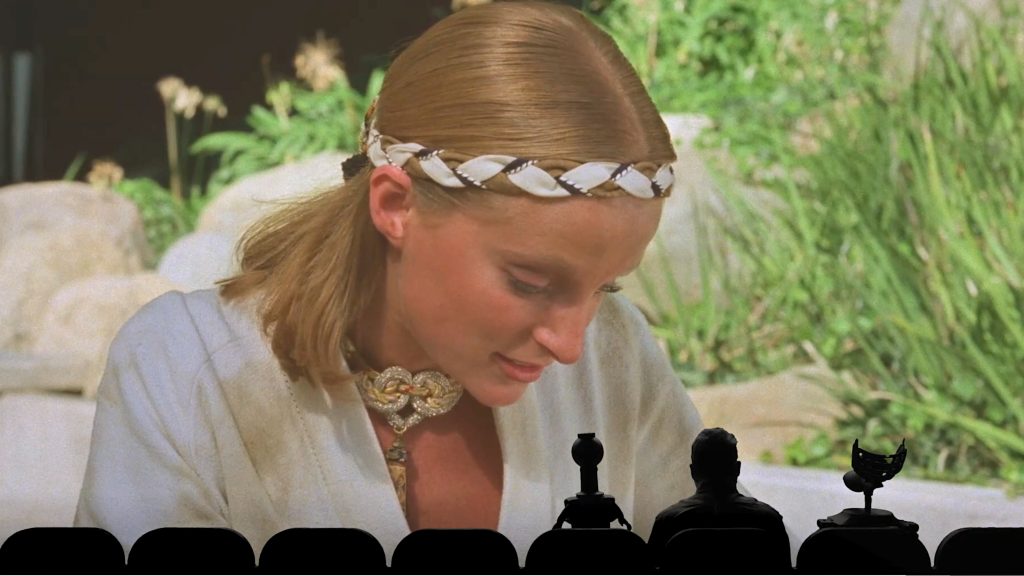
There are still plenty of references that reward those of us who remember the peculiarities of television advertising in the 1970s and 1980s. One particular joke about only needing the edge of your seat is an obvious callback to those wonderfully obnoxious monster truck commercials that used to interrupt Saturday morning television.
SUNDAY! SUNDAY! SUNDAY!
I’m not entirely sure when those commercials disappeared, but I miss them.

The important difference is that the older references aren’t doing all the work this time. There are contemporary jokes, unexpected observations, and plenty of riffs that work simply because they’re funny rather than because you happen to remember a commercial for a defunct chain of electronics stores.
The humor feels more focused, more varied, and considerably more energetic. And then there’s David Carradine.
Anyone familiar with the unfortunate circumstances surrounding Carradine’s death might reasonably wonder whether Mike and the robots are going to go there. Oh, they go there. Repeatedly.

In fact, they go there so often that, by the third or fourth reference, the joke has somehow transcended the original subject and become a piece of performance art.
It’s almost as though they decided that simply making the joke once would be too obvious, so instead they would keep returning to it until the repetition itself became the punchline. And somehow, it works. I found myself applauding the sheer commitment to the bit.
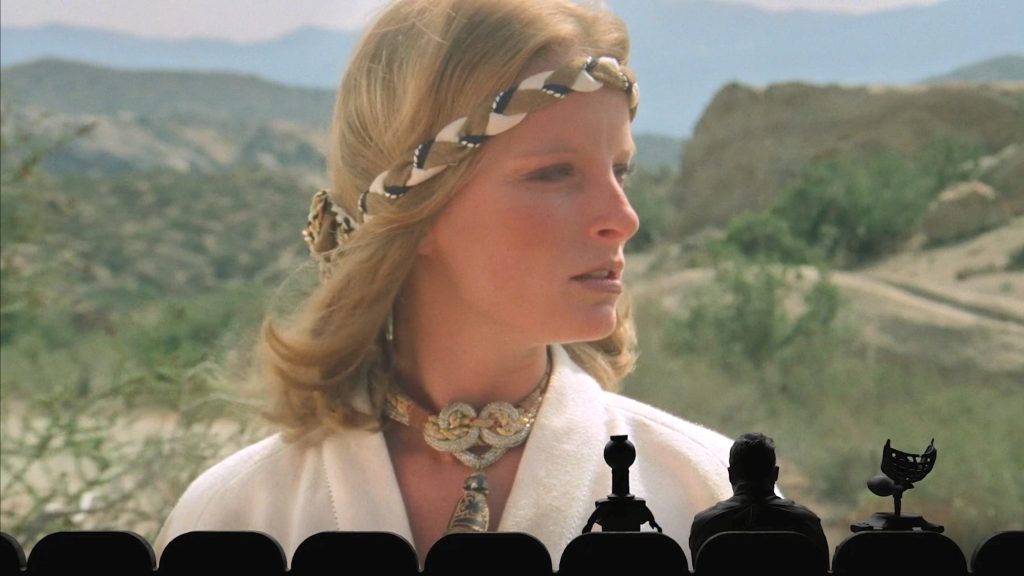
There are some enjoyable running gags throughout the episode, although nothing that immediately strikes me as an all-time classic. What matters is the consistency. The riffs keep coming, and they’re remarkably good at finding new ways to make fun of a movie that spends an extraordinary amount of its running time showing us essentially the same thing.
Motorcycles driving around.
Motorcycles driving somewhere else.
Motorcycles jumping over other motorcycles.
Motorcycles exploding.
More motorcycles driving around.

There is only so much one can say about a parade of elaborately decorated mopeds wandering through Bronson Canyon, and yet Mike and the robots somehow manage to find fresh material.
Indeed, the sheer awfulness of the movie may have forced the writers to work harder. The first experiment had a silly but reasonably entertaining monster movie to play with. This time they’re confronted with long stretches where absolutely nothing of interest is happening on screen.
So they create the entertainment themselves. And they do a terrific job.

There are plenty of genuine laugh-out-loud moments, and even when an individual joke doesn’t quite land, another comes along almost immediately. The episode establishes a strong comedic rhythm and maintains it throughout.
The filmmakers of Deathsport couldn’t manage to keep me awake during an eighty-minute movie. Mike and the robots kept me laughing through their version. That’s quite an accomplishment.

The movie itself has been heavily edited for the Mystery Science Theater 3000 presentation, which should surprise absolutely nobody who has seen the original. Roger Corman’s production features a substantial amount of nudity, including numerous appearances by attractive women who seem to exist primarily to provide the audience with a break from watching motorcycles.
The television-friendly version eliminates that material, along with what appears to be some of the violence. This leaves additional room for an educational short, which concerns the importance of teenage boys getting naked and washing themselves.

I could probably have done without this particular short. I honestly recommend fast forwarding through it even with the riffing. Though a how to shower short might be quite helpful with a certain subset of MST3K fans.
I don’t think the host material represents a significant improvement over Sting of Death, but it doesn’t need to. The performances were already strong, and the cast clearly understands how to make this particular format work.

Sting of Death was good. I enjoyed it. But I thought the riffing could have been sharper, and the reliance on dated cultural references suggested that the writers hadn’t quite found their rhythm.
With Deathsport, they’ve found it. The jokes are better. The pacing is stronger, and the material feels much more varied. Most importantly, the episode is consistently funny, which is really the only standard that ultimately matters for this kind of entertainment.
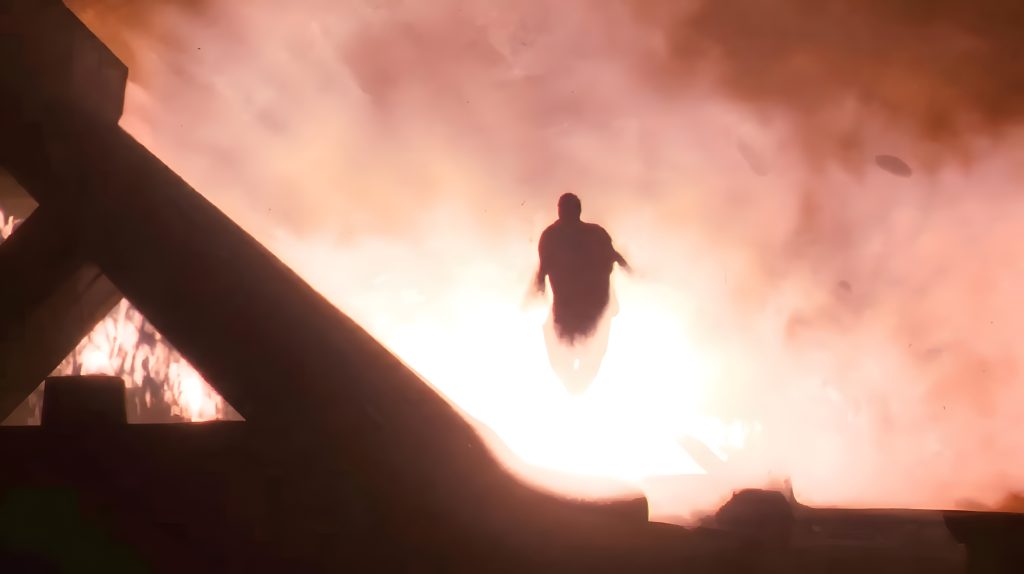
There is also something rather wonderful about the contrast between the movie and the presentation.
The first experiment demonstrated that the new incarnation of Mystery Science Theater 3000 could successfully recapture the look and feel of the original series.
The second demonstrates that it can still deliver the laughs. And considering the material they’re working with, that’s an impressive accomplishment.