If You Love Somebody Set Them Free
Sting of Death (1966): 4 out of 10: A scientist living at a “secluded” Florida waterfront home finds his research complicated by his visiting daughter, her girlfriends, and a boatload of college students invited over by his non-mutant assistant. Unfortunately, the local wildlife includes a homicidal jellyfish man, and the weekend’s swimming, dancing, and romantic misunderstandings soon become considerably more hazardous than advertised. Getting away from it all has its drawbacks, particularly when “it all” apparently includes a working telephone and competent supervision.

The Good
The Good: The best way to describe Sting of Death is as a PG-13 version of Blood Feast. You have the amateur acting, the sunny Florida locations, the generous attention paid to the actresses, and a plot that occasionally seems distracted by something happening across the street. The extreme gore is absent, but the atmosphere is unmistakable. Somewhere nearby, another poorly supervised young woman is probably accepting a dinner invitation she should reconsider.
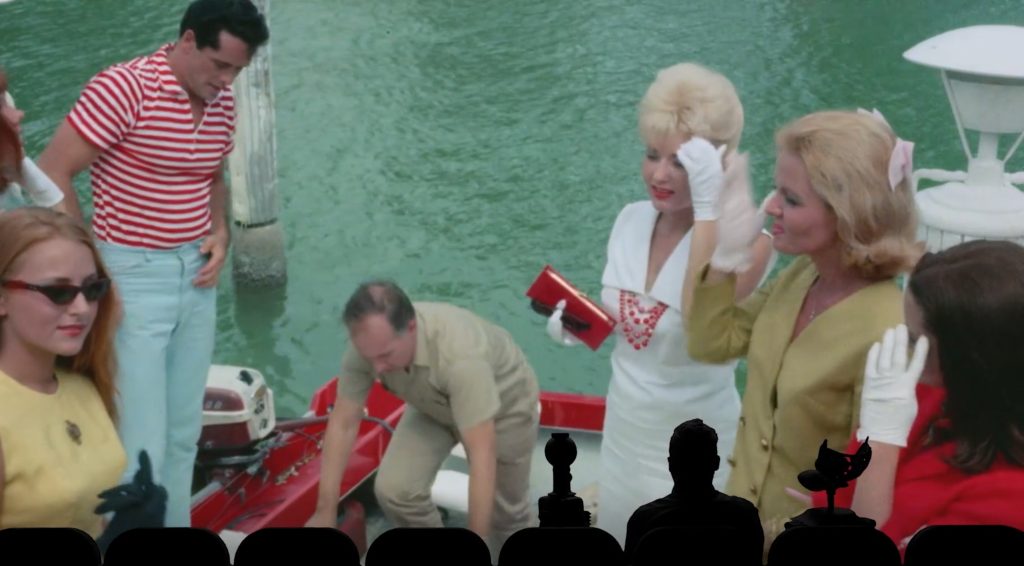
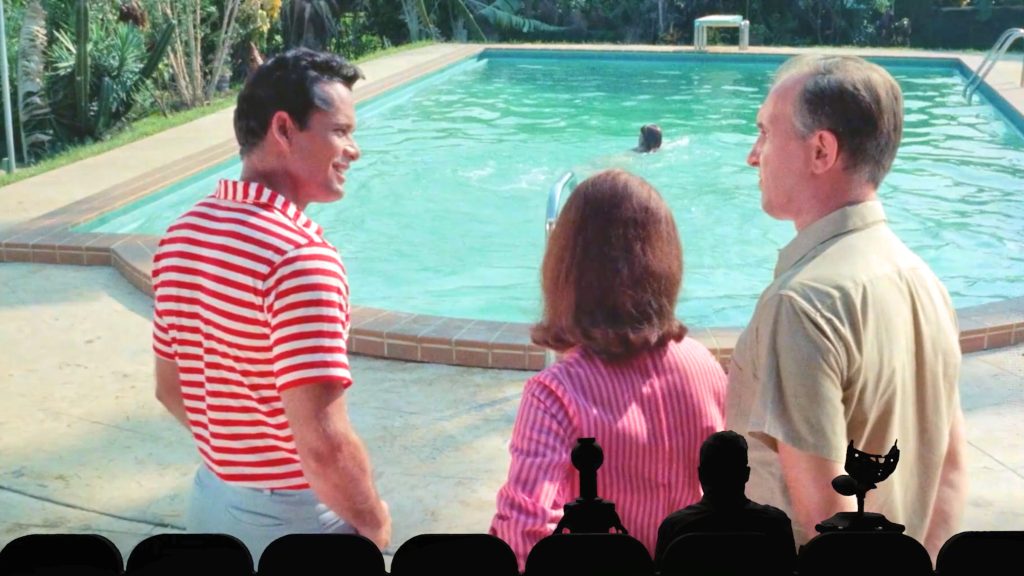
And I like that atmosphere. There is something appealing about this particular vision of 1960s Florida: waterfront homes, swimming pools, boats, sunshine, and people dressing as though the invention of color had occurred earlier that morning. Even when the movie is accomplishing very little, it provides somewhere pleasant to look.

Credit must also go to the body count. Sting of Death introduces enough young people to populate several lesser monster movies and then demonstrates surprisingly little interest in retaining their services. Normally, when a film throws a party this large, most of the guests disappear once the screenplay has selected its designated victims. Here, attending the party represents a substantial commitment.
There is also an honest-to-goodness shower scene. Between that and the enthusiastic thinning of the supporting cast, the filmmakers clearly understood at least some of their responsibilities.
The Bad
The Bad: Alas, the director does not, however, understand water. This becomes a recurring problem in a movie about a jellyfish monster.
An early attack takes place in an ordinary swimming pool beside an active party. A young woman enters the pool without noticing the six-foot jellyfish man already occupying it. Neither does anybody standing nearby. This is not a murky swamp or the Atlantic Ocean. It is a swimming pool. Presumably, someone would eventually glance over and wonder why a six-foot jellyfish headed monster is hanging with the skimmer.

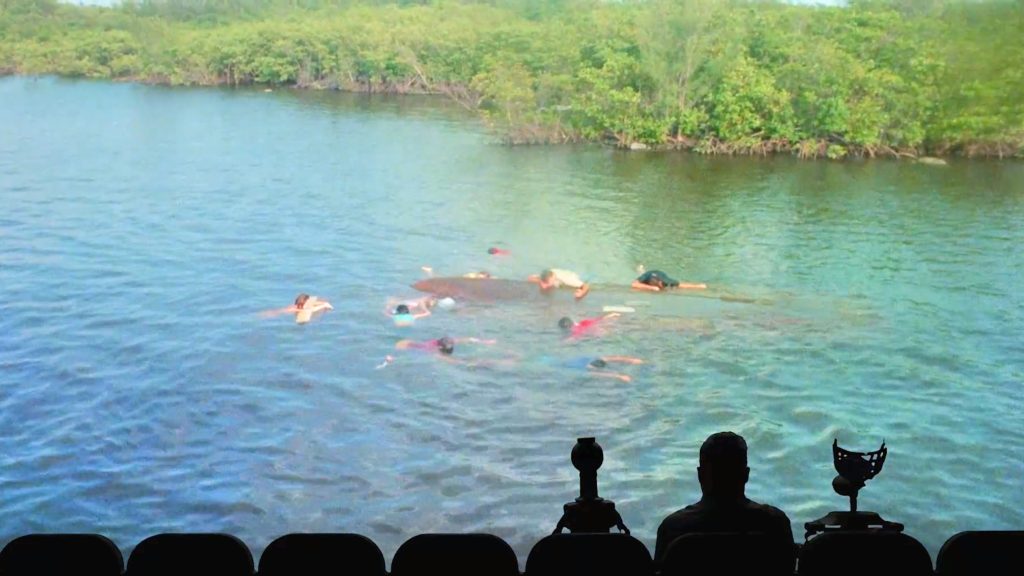
Later, a boatload of reasonably fit college students encounters deadly jellyfish within what appears to be an easy swimming distance of shore. (They are literally in the intercostal). The resulting catastrophe requires everyone involved to treat twenty or thirty feet of water as an insurmountable geographic obstacle. Perhaps swimming was an elective none of them took.
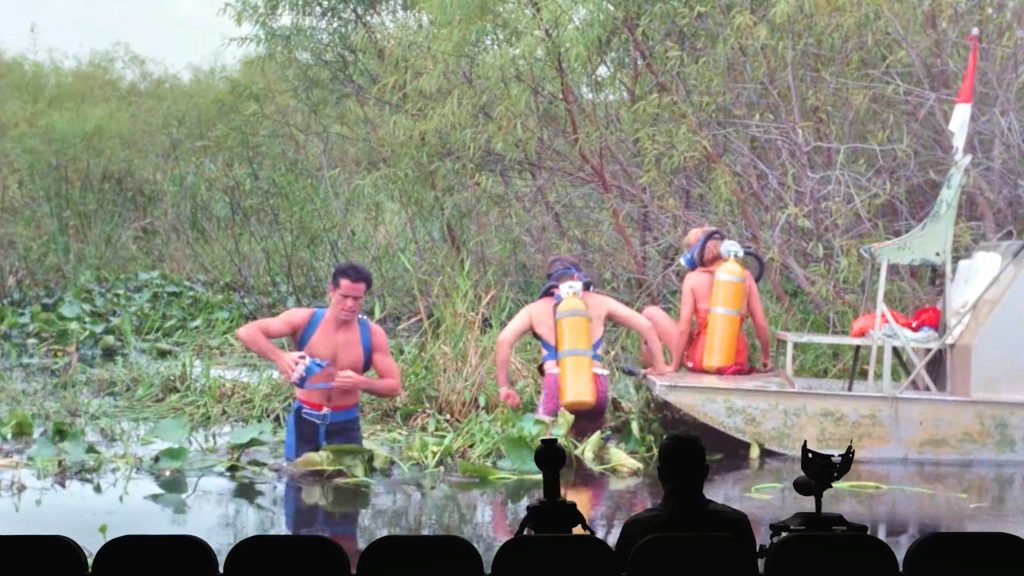
Then we head into the Everglades for some scuba diving. Characters stand in shallow swamp water before underwater footage introduces what appears to be an entirely different Florida vacation, complete with tropical fish and a coral reef. I live in Florida. We have many attractions. Reef diving in the middle of the Everglades is not one of them.

The film’s understanding of isolation is equally peculiar. We are supposed to accept that these people are stranded beyond the reach of civilization, but their waterfront retreat looks suspiciously like a house whose neighbors might object to the noise. When the radio stops working, nobody appears to consider knocking on another door. There is probably a Farm Store within a reasonable walk.
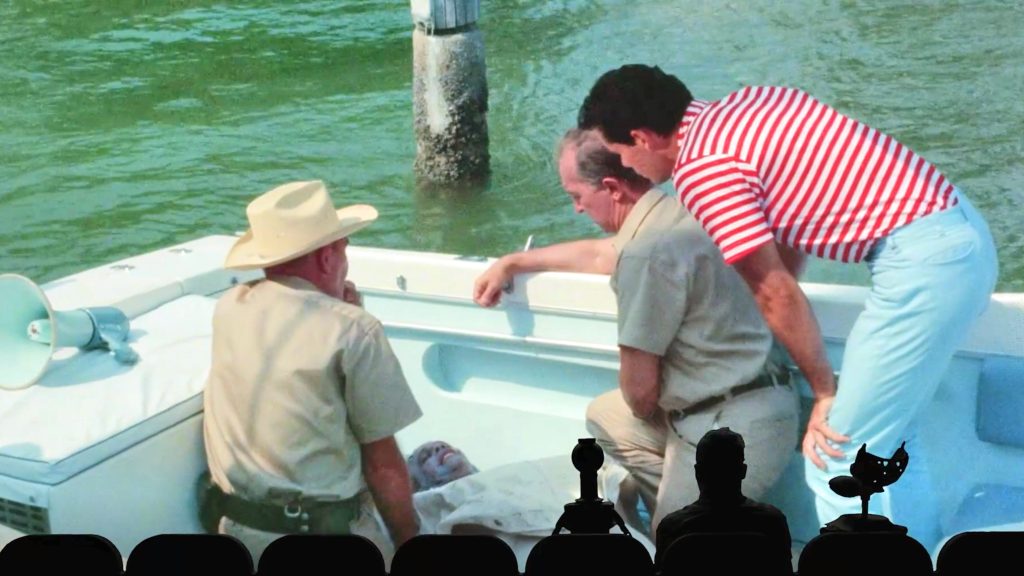
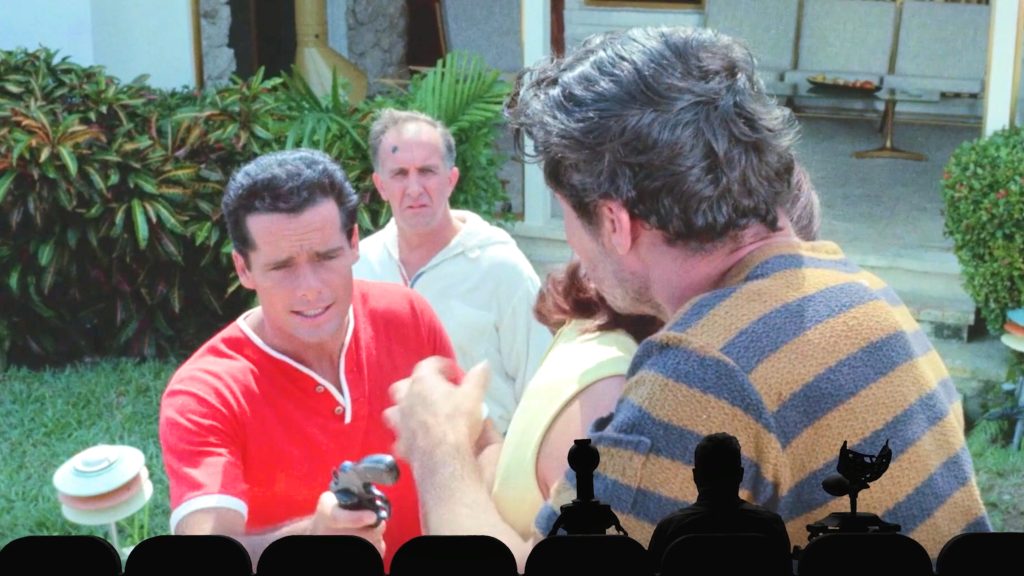
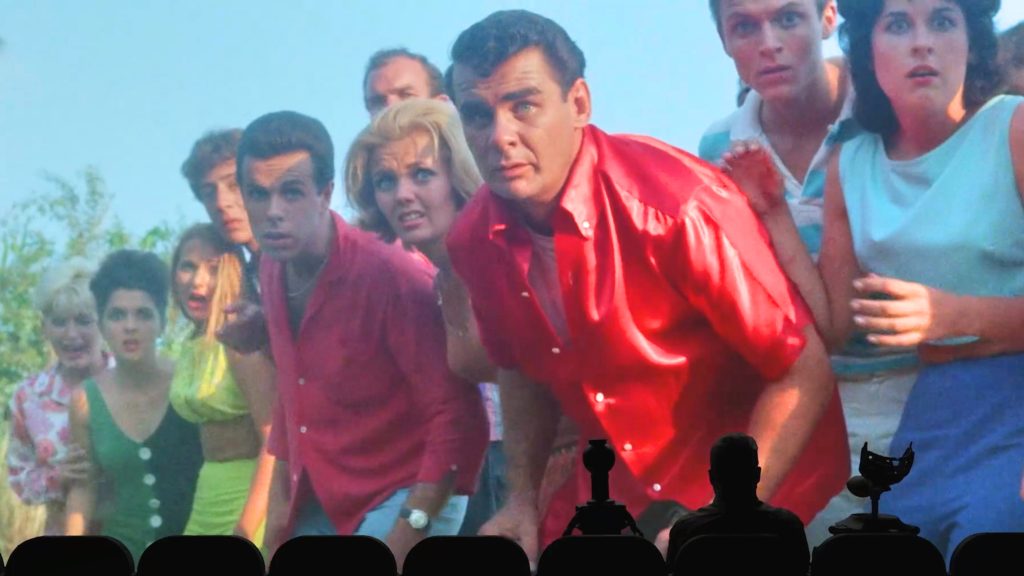
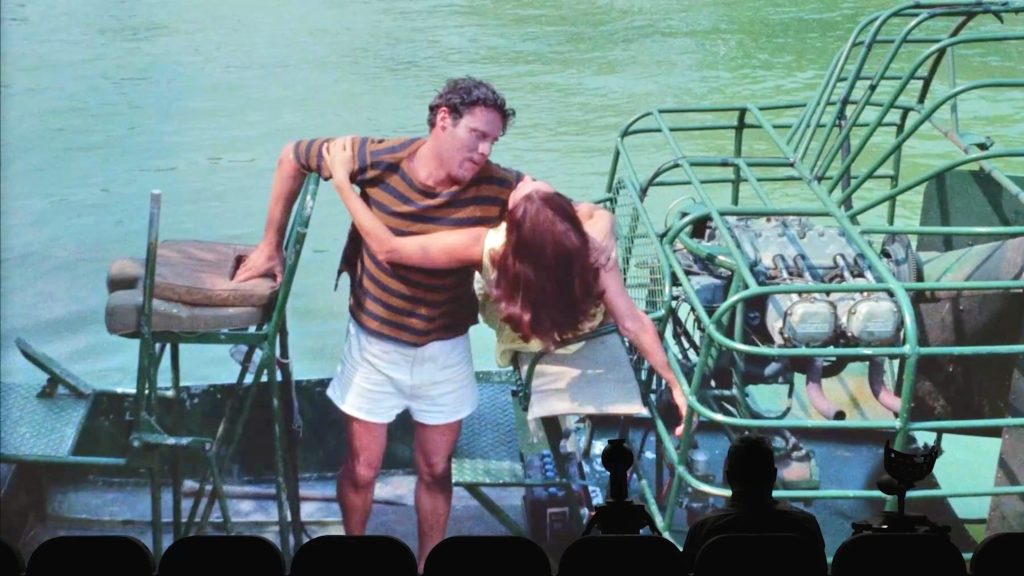
Meanwhile, the characters are sketched with all the depth of the instructions on a frozen dinner. The daughter’s girlfriends are interchangeable sorority girls. Good luck remembering their names. The handsome assistant wears striped shirts and periodically coordinates with the furnishings. The other assistant, Egon, is disfigured, unhappy, and treated with such immediate cruelty by the visiting students that the party briefly turns into Lord of the Flies with better access to hair products.
They do not simply make an insensitive remark. They surround the poor man and practically hold a pep rally celebrating his misery. You wonder whether the jellyfish killer might have a point.
The romance is no more convincing. People announce emotional attachments with the conviction of someone confirming a restaurant reservation. Egon’s feelings for the scientist’s daughter are considerably easier to detect, although she remains impressively uncertain about them. Honey, I am not suggesting you reciprocate. I am suggesting that you stop inadvertently leading on the psycho killer dressed like Freddy Krueger.
The Ugly
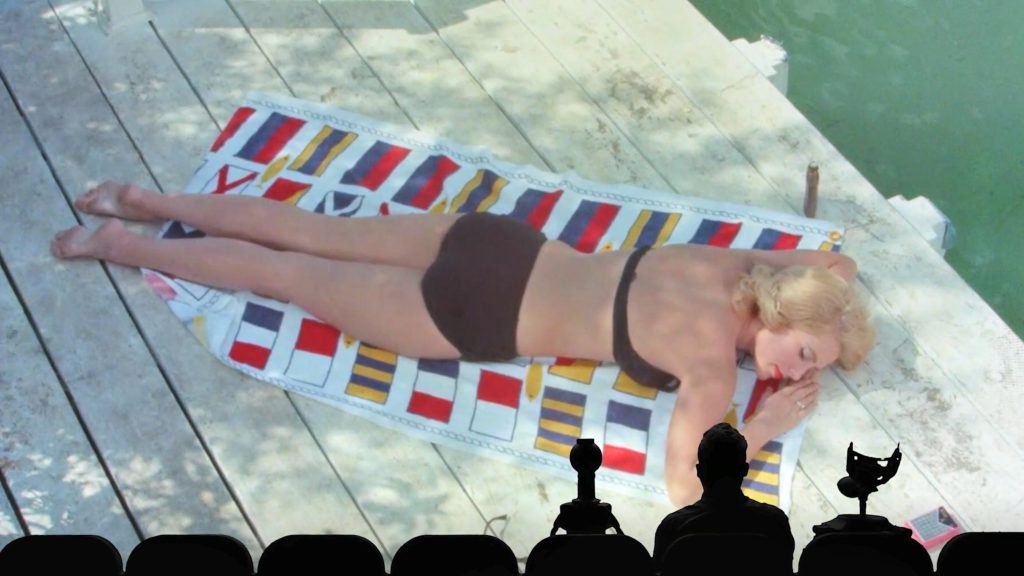
The Ugly: The director likes women’s bottoms. This is not an accusation based on a stray camera angle. This is a sustained artistic statement.
During the dancing scenes, the camera studies the available backsides with an attention to detail otherwise absent from the production. Some are more photogenic than others, but the man has made his choice. He is to the gluteus maximus as Tarantino is to a naked foot.

And the dancing goes on. Then it continues. Then someone presumably wonders whether they have enough footage, and the answer is apparently no. I have nothing against attractive women dancing in swimsuits, but eventually one begins hoping the monster will arrive simply to provide a change in composition.
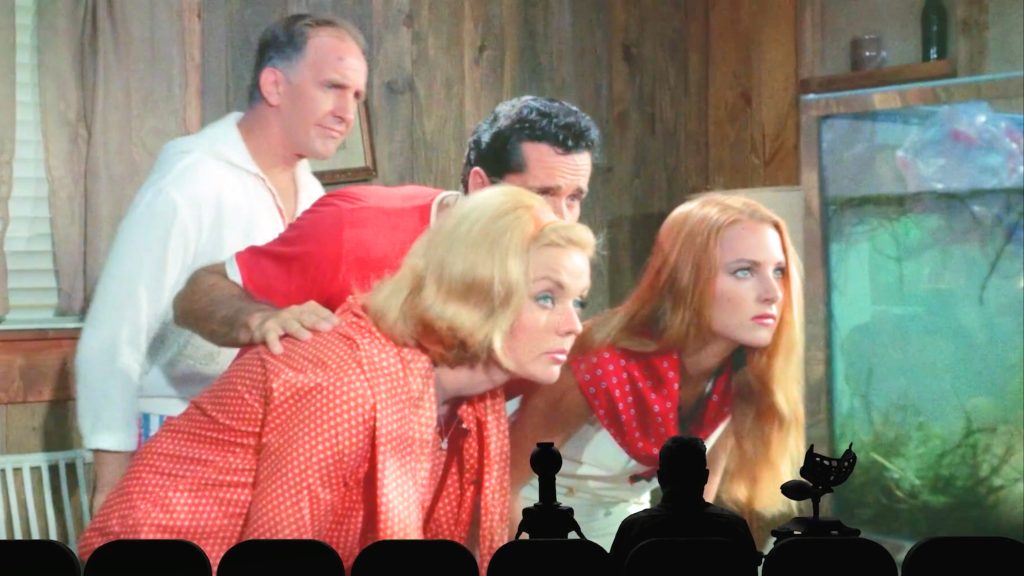
The fashions offer their own entertainment. The young women make some questionable decisions, but the scientist father operates on an entirely different plane. His tiny shorts and willingness to go shirtless suggest a level of confidence that should probably require a permit. Imagine Borat retiring to Fort Lauderdale and taking up marine biology.

His distracting forehead mole also seems to change appearance between scenes. When the supporting cast cannot hold your attention, you start tracking the continuity of a man’s skin.
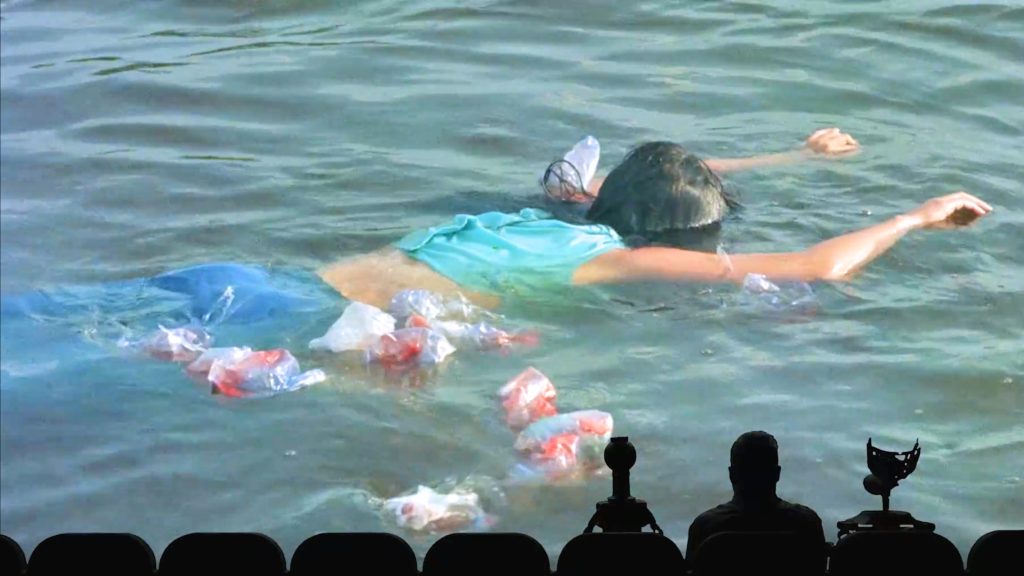
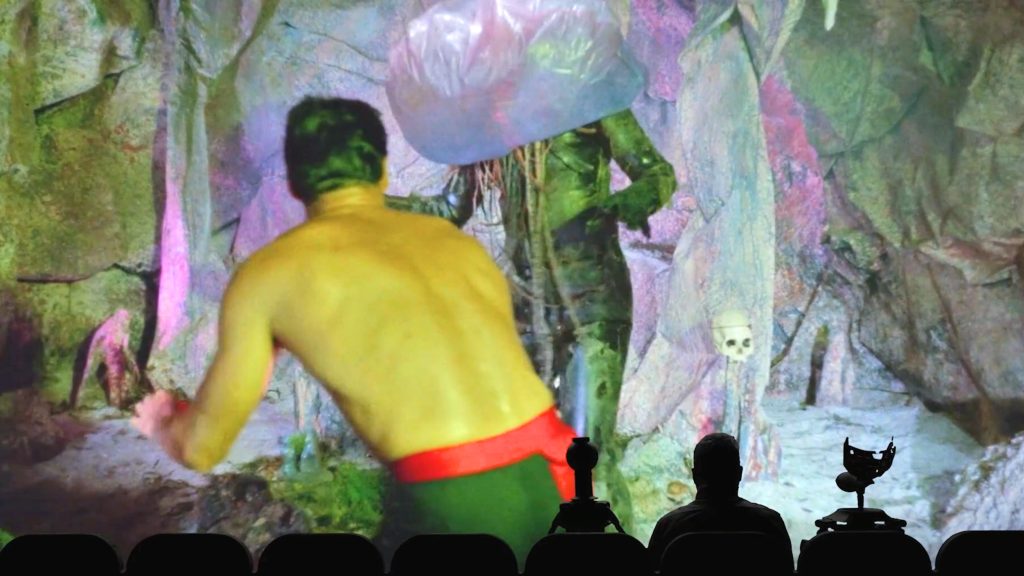
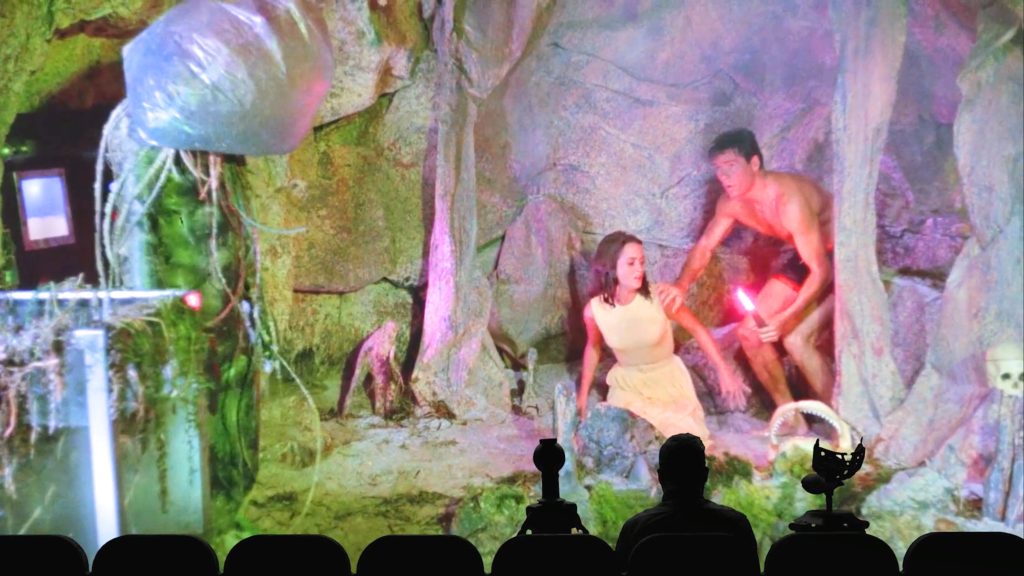
And then there is our monster: a fellow in a wetsuit with what looks like a plastic bag on his head. The accompanying jellyfish resemble more plastic bags filled with cotton candy or perhaps that weird popcorn Disney sells at Galaxy’s Edge.

Whatever else Sting of Death achieves, it makes a surprisingly persuasive case for keeping household rubbish out of Florida’s waterways.
I do not object to a cheap monster or a lecherous director on principle. Anyone who reads this site knows that. But have some pride. Give the monster a decent entrance. Give the women something to do between camera inspections. Learn the basic properties of the substance in which most of your movie takes place.
In Conclusion
In Conclusion: Sting of Death offers sunny Florida scenery, dreadful fashions, an enthusiastic body count, and a monster who appears to have been assembled during a brief visit to Dicks Sporting Goods. There is entertainment here, particularly for those who enjoy regional horror movies in which everyone involved seems to have been invited under false pretenses.
Unfortunately, the pacing drags, the characters barely register, and the aquatic nonsense becomes difficult to ignore in a film so thoroughly committed to getting everyone wet. It has some of the cheerful bad taste of Blood Feast without quite enough outrageousness to compensate for the stretches of very white people dancing.
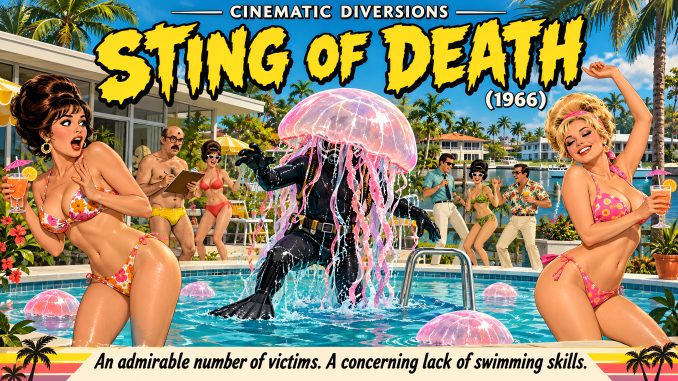
Sting of Death has an admirable number of victims, but a concerning lack of basic swimming skills.
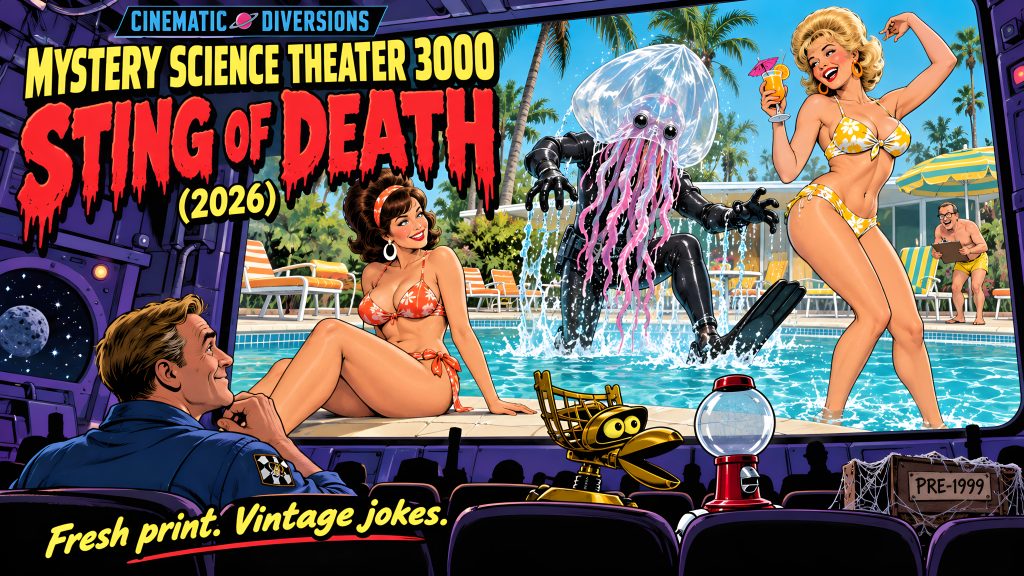
Mystery Science Theater 3000: The RiffTrax Experiments Episode #1 Sting of Death (2026): 7 out of 10: Let us get the praise and the disclosure out of the way first. Anyone who has read Cinematic Diversions knows that I am a fan of Mystery Science Theater 3000 and RiffTrax. This is very much my neighborhood. I supported the Kickstarter at the $100 level, and I have DVDs coming early next year, including Sting of Death. I arrived wanting to enjoy myself.
And I did enjoy myself. Seven out of ten is an honest score. It is not a gentleman’s seven. An eight would have been a gentleman’s eight, and I think we all deserve better than grading a comedy according to how happy we are that everyone showed up.

First, the print is beautiful. Sting of Death looks extremely sharp, colorful, and clean. This may sound like faint praise. Congratulations. Your motion picture is in focus. But as a longtime RiffTrax customer, I have occasionally paid ten dollars for a video that appeared to have been recorded from a theater seat with a camcorder in 1985. When a movie’s principal attractions include Florida sunshine, hideous furnishings, and questionable swimwear, being able to see them properly is a meaningful improvement.
The presentation also makes several welcome choices. We are back aboard the Satellite of Love, and the show seems content to let the theme song handle the necessary explanation. Whatever elaborate mythology has accumulated over the years can wait outside. A man and some robots have to watch a terrible movie. I understand the situation. Roll it.

They also get to the movie promptly, which I appreciate. I enjoy the host segments, but the film should not feel like a reward for successfully completing an orientation program. The segments here worked for me, particularly the robots pointing out that Mike looks horrible. That is the sort of affectionate welcome one expects from longtime companions who have no financial incentive to flatter you.
As for the riffing, it is decent. There are funny lines and good laughs. Sting of Death supplies plenty of material: a jellyfish monster wearing a plastic bag, a scientist dressed for a particularly troubling beach vacation, college students who cannot locate the shore, and underwater geography assembled from several incompatible ecosystems.

I did, however, find myself thinking that the writing staff might benefit from someone who cannot yet obtain a breakfast discount by showing an AARP card.
One of the pleasures of early Mystery Science Theater 3000 was its willingness to make obscure references. You would recognize some immediately, miss others entirely, and occasionally discover years later what a particular joke meant. That was part of the fun. The show assumed its audience could keep up, and it did not stop to explain itself.

I still like that. My issue is not that a reference is old or obscure. My issue is that the references here so often feel as though they were selected from the same aging cabinet.
There is a Natalie Wood reference, for God’s sake. Which can be fine. But eventually you begin wondering whether anything produced in the twenty-first century has reached the satellite.

RiffTrax generally feels more willing to mix things up. You can watch an old Gamera movie and still encounter a joke about Mitch McConnell. The film’s age does not establish a mandatory cutoff date for the commentary.
And no, I am not demanding that every sequence include a contemporary pop star whose name I will immediately have to look up. (Though if you have a movie that features an airboat, would a Lana del Rey reference really be that obscure?)

I simply observe that this is an aquatic monster movie involving jellyfish and an underwater lair, and they somehow get through it without mentioning SpongeBob SquarePants.
I do not even watch SpongeBob, and I was sitting there thinking, “Guys…”
When even I notice the missed opportunity, we may have a problem. SpongeBob is hardly an attempt to chase this morning’s youth trend, either. At this point, that reference could have children of its own.

As Conor Lastowka might point out, it reads like Grandpa Simpson was supervising the writers’ room.
The other limitation is the absence of a strong running gag. Some of the best episodes find a particular absurdity and keep returning to it until an otherwise unremarkable character, prop, or line becomes a reliable source of anticipation. Here, the jokes produce individual laughs without quite developing that additional momentum.
And there is so much available. The handsome assistant who keeps wearing stripes that compete with the décor. The scientist’s ever-shrinking shorts. The furniture looks as though everyone involved bought the first thing they saw and then became defensive about it.

I kept thinking about Bridget Nelson and Mary Jo Pehl and their ability to spend an extended stretch dismantling a movie’s wallpaper, upholstery, and wardrobe. Their riffs on domestic horrors can be as entertaining as anything the plot is doing. A few minutes of the ladies inspecting this household might have been worth the price of admission. Take the hatchet away from the jellyfish man and let them get to work on the furnishings.
None of this makes the episode a failure. I laughed. I liked the host segments, and I appreciated the uncomplicated return to watching a terrible movie with familiar company. The excellent presentation helps, and Sting of Death is an appropriate choice for the treatment.
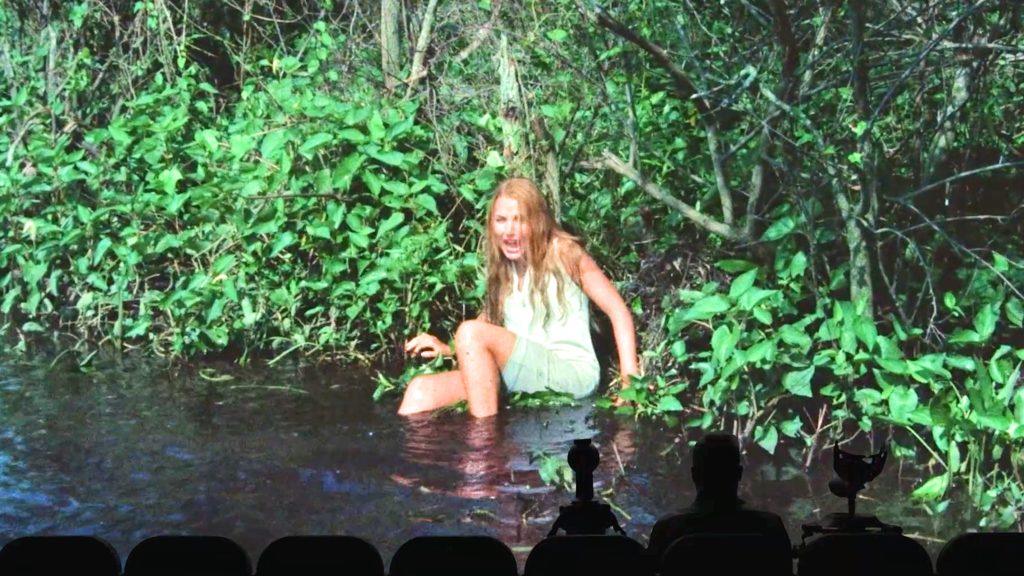
Perhaps I built it up too much. A return like this arrives carrying the weight of an event, while the actual experience is an enjoyable, middle-of-the-road episode of Mystery Science Theater 3000. That is a perfectly respectable evening. It simply is not automatically a classic because I paid for the DVDs.
I am glad they are back. Now somebody get the satellite a few channels that show programs made after 1999.