
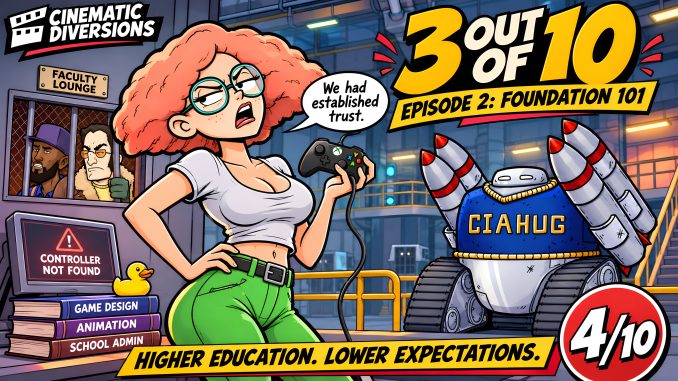
Higher Education. Lower Expectations. Full Sail Ahead.
3 out of 10, Episode 2: “Foundation 101” (2020): 4 out of 10: Having discovered that her new employer feeds interns to the engineers, Shovelworks’ newest animator proposes returning the surviving students to the school from which they came. This seems reasonable. Normally, when an internship goes badly, you leave with some résumé padding and an unfavorable opinion of management. Ideally, you also leave with all your limbs.
Unfortunately, the for-profit game development school has its own ideas about preparing students for the workforce. Some of those ideas involve furniture. Our collection of programmers and artists consequently finds itself investigating an educational establishment whose definition of student placement is somewhat more literal than advertised.
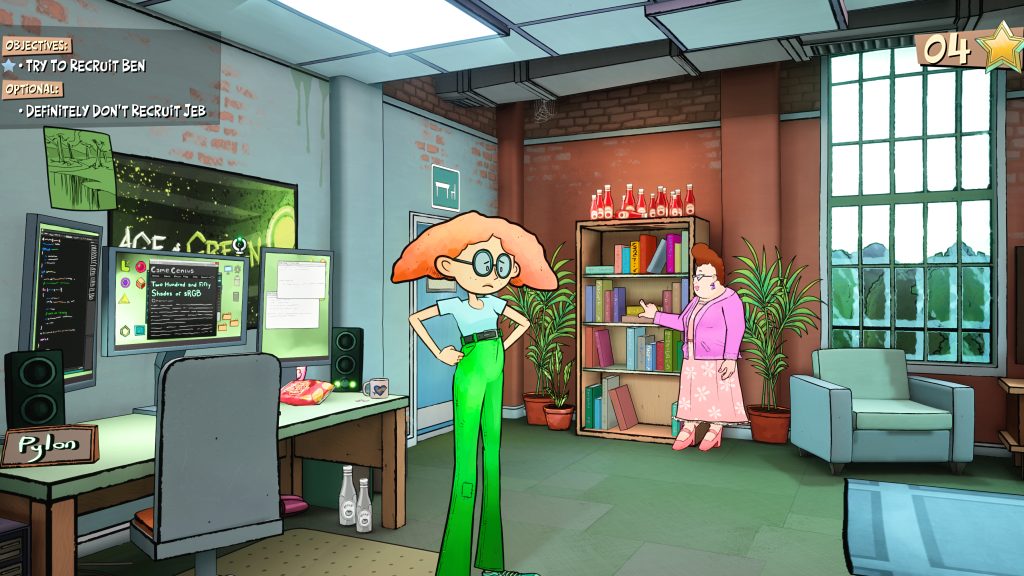
I enjoyed the first episode of 3 out of 10. Reading my review again, however; I discovered that I had already complained about nearly everything that bothered me in this one. The pedestrian mini-games. The limited interaction. The feeling that I was watching an animated comedy that occasionally required me to prove I was still holding a controller. Apparently, my tolerance for these things depends heavily on how much fun I am having between them.
And before we get any further, let us discuss that controller.
I played the first episode using a controller. In fact, I played it on my Steam Deck, streaming from my computer. This was a perfectly pleasant way to experience a colorful little workplace comedy. Episode Two also worked with my Steam Deck for approximately two-thirds of the game. Then, I reached a minigame that simply refused to cooperate with me .
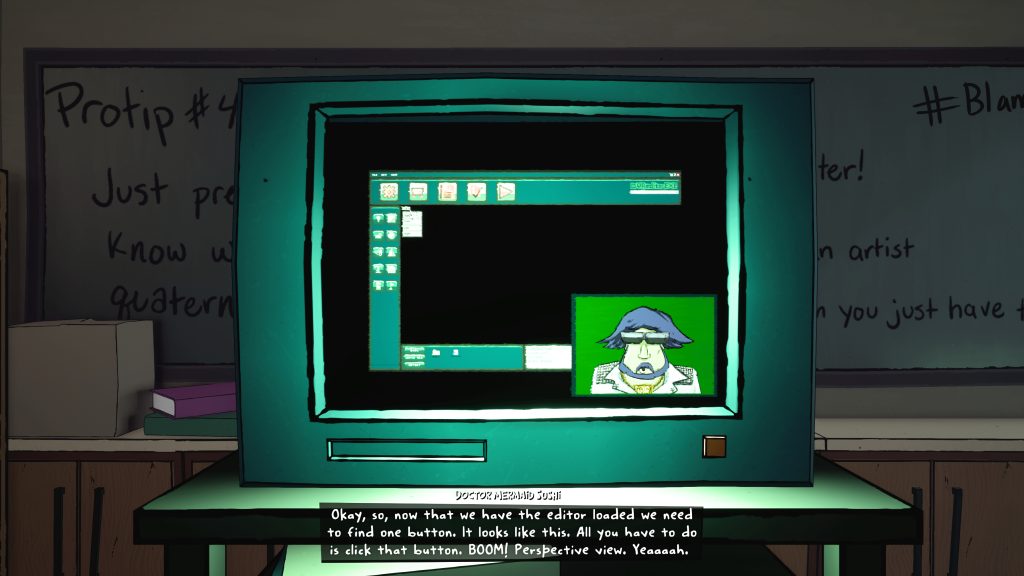
We are talking about what is essentially a glorified Flash game with simple directional controls. This thing should work on an Atari 2600 joystick, let alone a Steam Deck. Heck it would not even work with an Xbox Controller on the tele.
There is something particularly irritating about a game accepting your chosen method of input long enough for you to get comfortable and then deciding that the relationship is over. I had already demonstrated that I could move a character around and press buttons. We had established trust.
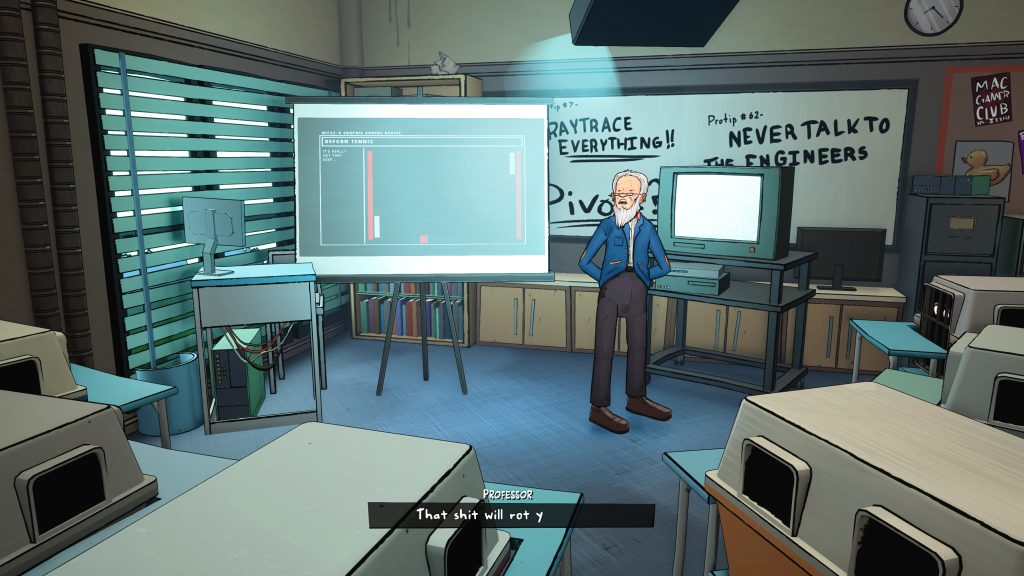
Playing through Epic also left me missing the Steam conveniences I ordinarily take for granted, particularly the screenshot button and the comfortable Big Picture experience. Those annoyances were already in the background when the controller trouble arrived. By that point, a game about incompetent game development was becoming rather more immersive than I had intended.
Which is unfortunate because the writers clearly understand their subject. The first episode demonstrated a working knowledge of the absurdities of game development, and Foundation 101 finds a promising adjacent target in the for-profit school selling admission to that industry. Think Full Sail, filtered through a cartoon universe where turning students into office supplies is an actionable business proposal.
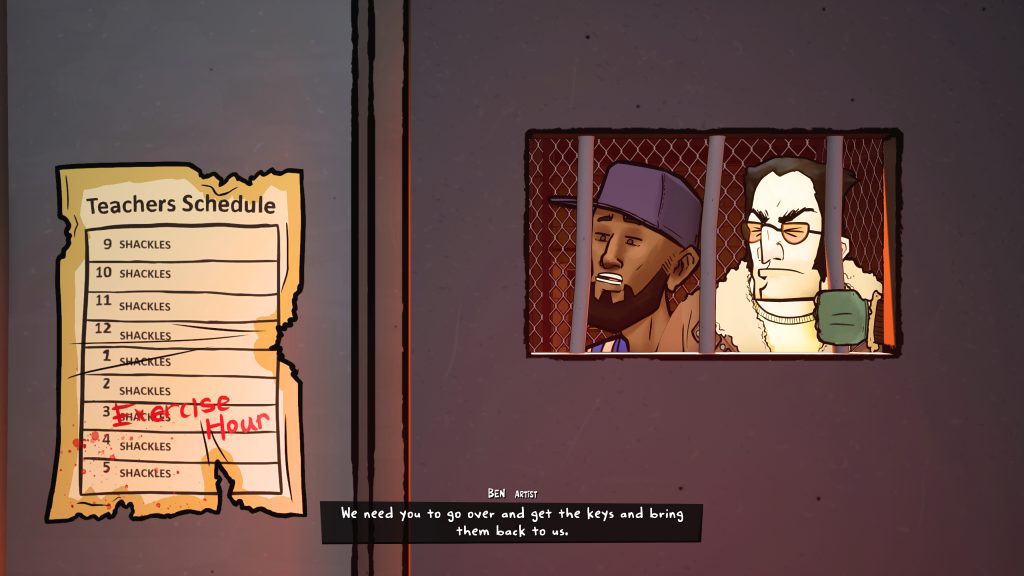
My favorite joke involves accredited teachers being kept in the basement. Their qualifications help the school’s numbers, while the teachers themselves are delighted that they do not actually have to teach anybody. Everyone is getting what they want except, presumably, the students. The students have already paid, so their involvement in the educational process is largely complete.
That is a good joke because the absurdity has an identifiable administrative logic. Somebody needs credentials on a form. Somebody else would prefer not to deal with a classroom. Put the qualified people downstairs, collect tuition upstairs, and congratulations: education has been streamlined.
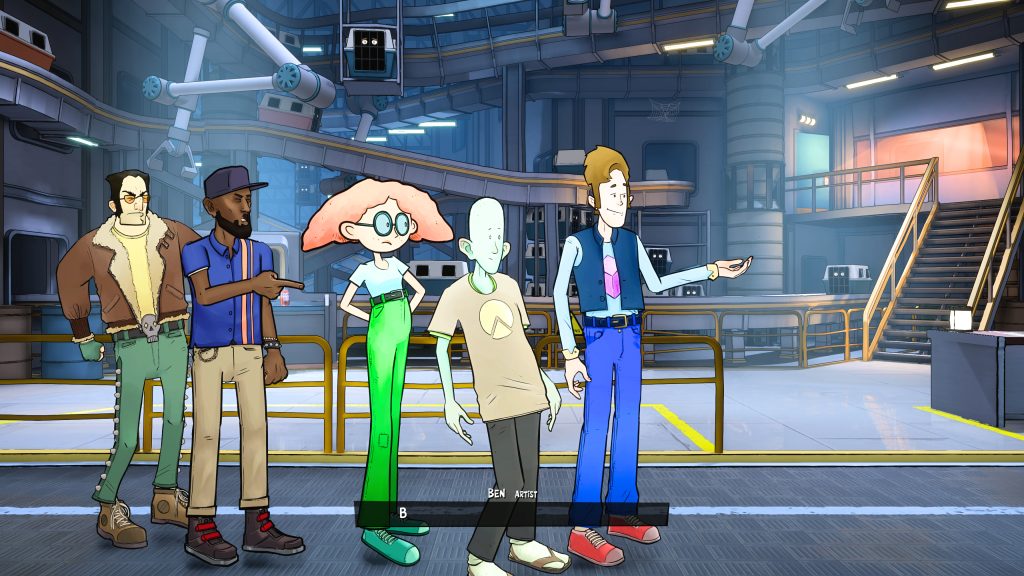
You can also sit through the classes the school offers, and I recommend doing so. They are reasonably entertaining. This creates the unfortunate situation where attending a lecture is one of the more enjoyable activities in your video game, but credit where credit is due.
The broader story worked for me, even if it did not work quite as well as the first episode did. Some of that is inevitably due to familiarity. Discovering that a game studio feeds interns to its engineers is surprising. Discovering that the school supplying those interns has similarly questionable policies is an expansion of an established joke. There are still laughs, but the world has already announced how ridiculous it intends to be.
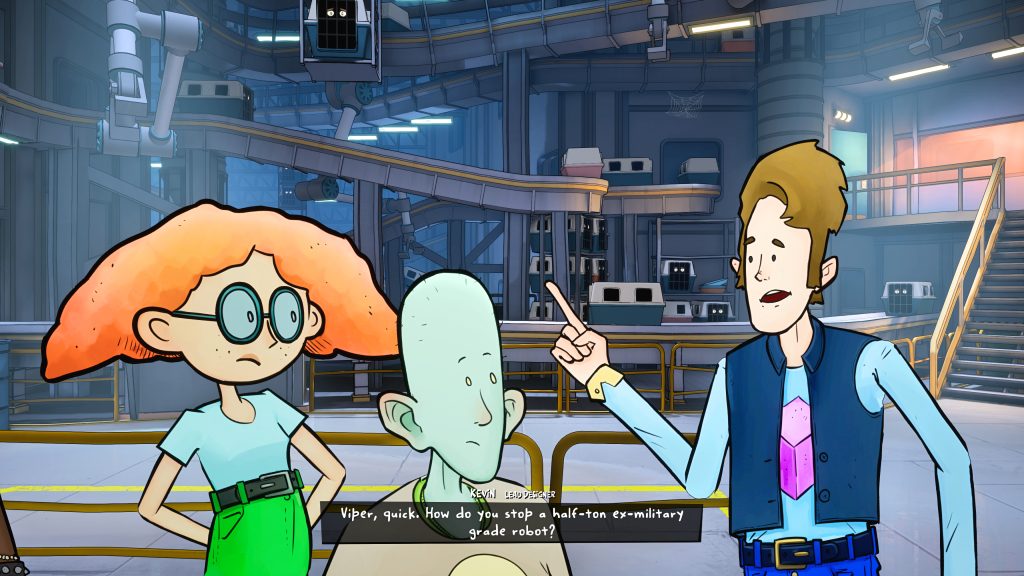
The first episode had the advantage of introducing that world. The second needs to do more with it. Instead, it repeatedly hands you another minigame.
I was unimpressed by the minigames in Episode One. I am even less impressed here. Most are extremely simple affairs involving movement in one of four directions while avoiding missiles or some other inconvenience. Simplicity itself is hardly a crime. There are plenty of wonderful games built around moving in four directions. The problem is that these particular activities offer very little reason to enjoy doing so.
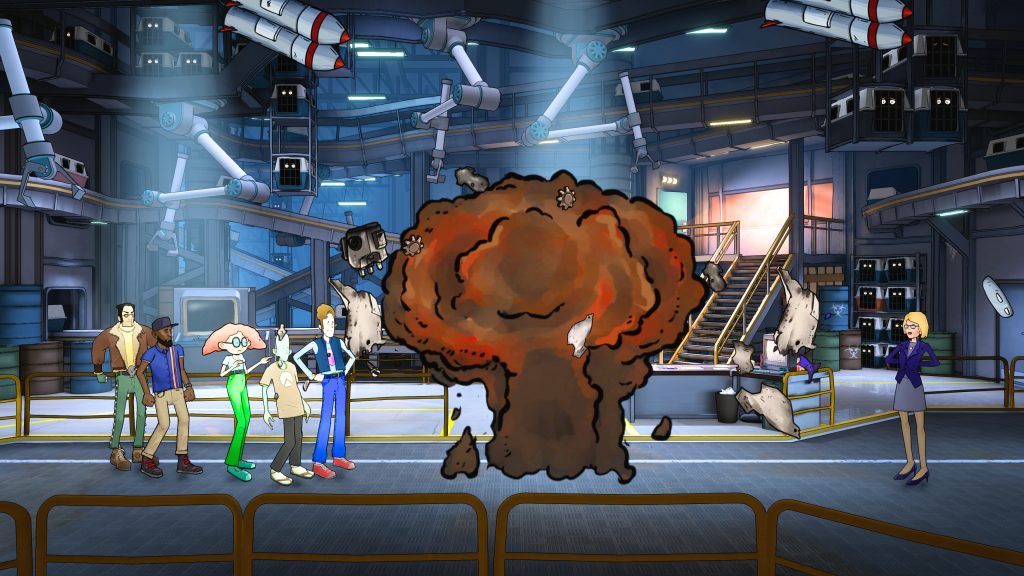
They are difficult to fail completely, which at least means that they rarely prevent you from reaching the next story segment. I appreciate that. But “unlikely to obstruct access to the entertaining part” is a fairly modest achievement for the gameplay portion of a video game.
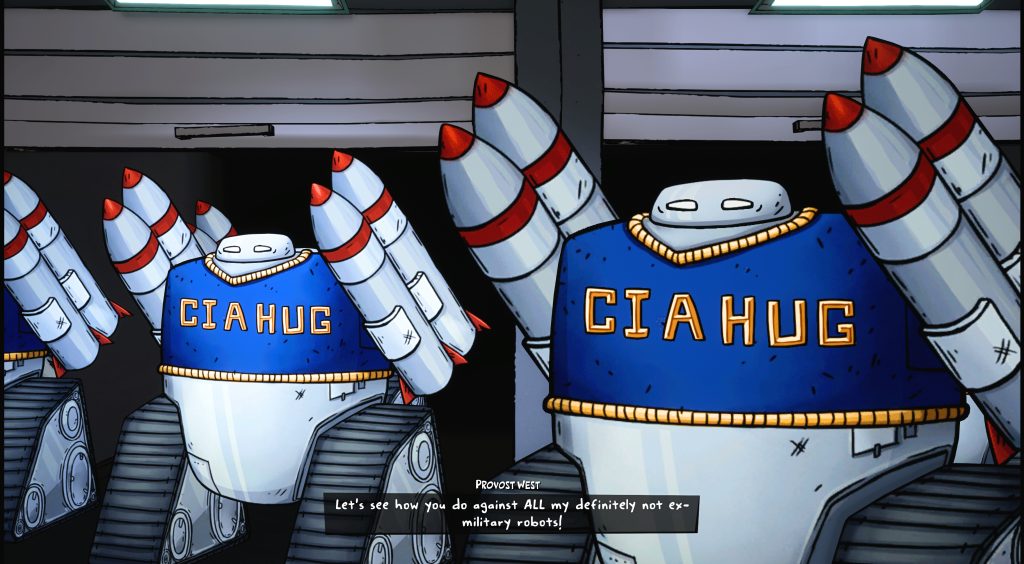
There is an ED209-style military robot involved in the proceedings, for reasons I remained somewhat unclear about. Perhaps the school has expanded into defense contracting. Given its other business practices, that would hardly be the most troubling item in the prospectus.
There is one mini-game I actually liked, involving throwing an intern around in a stealth situation. It was the only one I wanted to play more than once and the only one on which I earned five stars. Naturally, this was also the mini-game that would not work with my Xbox controller.
Of course, it was. The one activity that made me think, “There might be something here,” was also the one that made my preferred setup stop working.

Smaller irritations accumulate as well. Characters do not have helpful names floating above them. Ordinarily, I would not consider this a major issue, but if you are going to tell me to speak to particular people, it would help if I could reliably identify those people.
Tell me to talk to Bill and Sue, for example, and you are assuming that I remember which cartoon coworkers are Bill and Sue. These are not necessarily characters whose names have become permanently attached to their faces in my mind.

Even starting a conversation did not always provide the reassurance I wanted that I had found the correct person. I am trying to move the story along, and suddenly, I am at my spouse’s office Christmas party, pretending to remember everybody.
There are also little rubber ducks that supposedly offer hints. I never managed to get a hint out of one, although perhaps I was not sufficiently stuck when I consulted them. I will allow that possibility. My relationship with the ducks remained professionally inconclusive.

None of these individual complaints would sink an episode with a stronger comic rhythm. That is what happened the first time. I enjoyed the writing enough that the weak gameplay felt like a minor toll paid between scenes. Here, the story is slightly less engaging; the novelty has diminished, and the mini-games are considerably more irritating. The balance has shifted.
I still enjoyed parts of Foundation 101. The school satire has some bite. The lectures are worth sitting through, and the writers know enough about the industry to make their ridiculous ideas feel uncomfortably plausible. There is a funny cartoon here. Alas, I was playing a video game.