The Black Bird
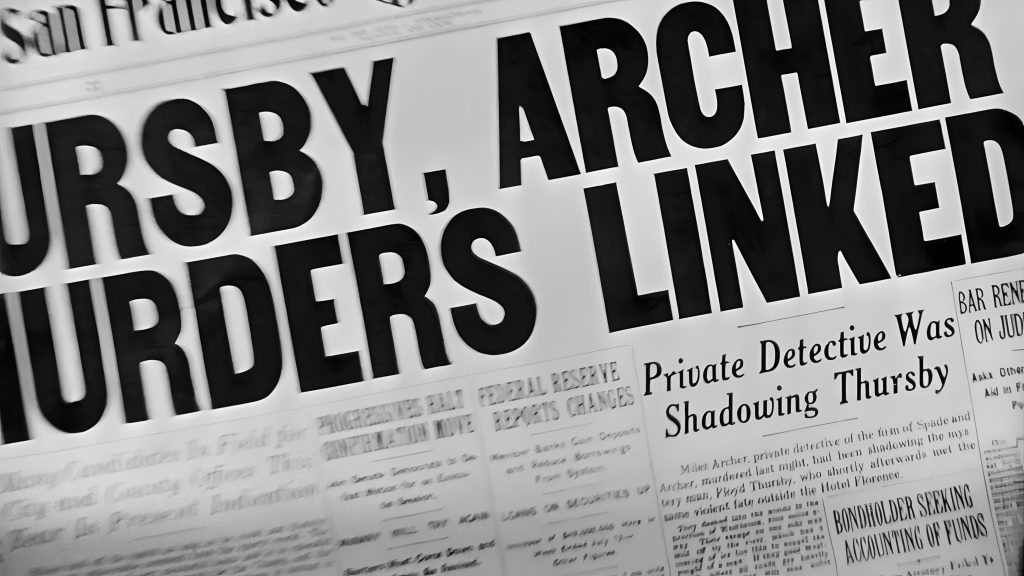
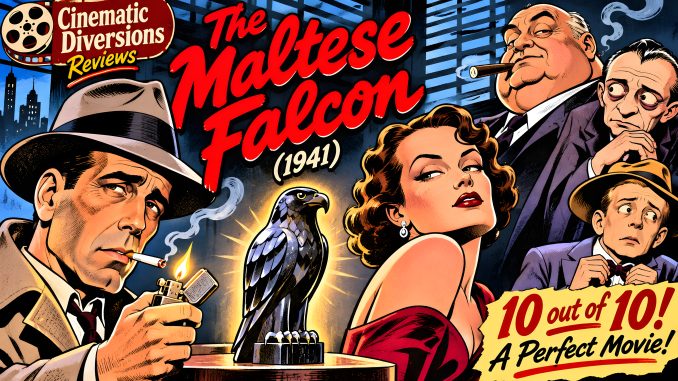
The Maltese Falcon (1941): 10 out of 10: Private detective Sam Spade (Humphrey Bogart) and his partner Miles Archer (Jerome Cowan) accept what appears to be a straightforward assignment from a beautiful and somewhat distressed woman (Mary Astor). Naturally, things go wrong almost immediately. Before long, Spade finds himself dealing with murder, suspicious policemen, a collection of increasingly eccentric criminals, and a mysterious black bird that everyone seems willing to kill for.
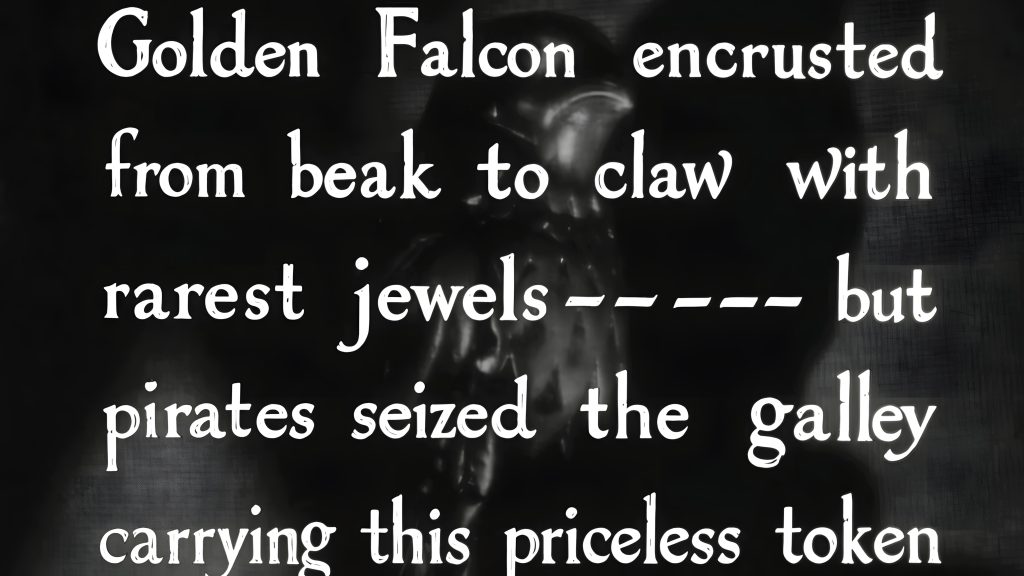
At the center of the intrigue is the legendary Maltese Falcon, a jewel-encrusted treasure with a history stretching back centuries. Unfortunately, locating the valuable bird proves considerably easier than finding anyone involved who is telling the truth. As the bodies and lies accumulate, Spade must navigate a conspiracy in which everyone has an agenda, nobody is particularly trustworthy, and even the people on his side seem uncertain which side that might be.
There is a particular problem with reviewing a perfect movie. What exactly am I supposed to complain about?
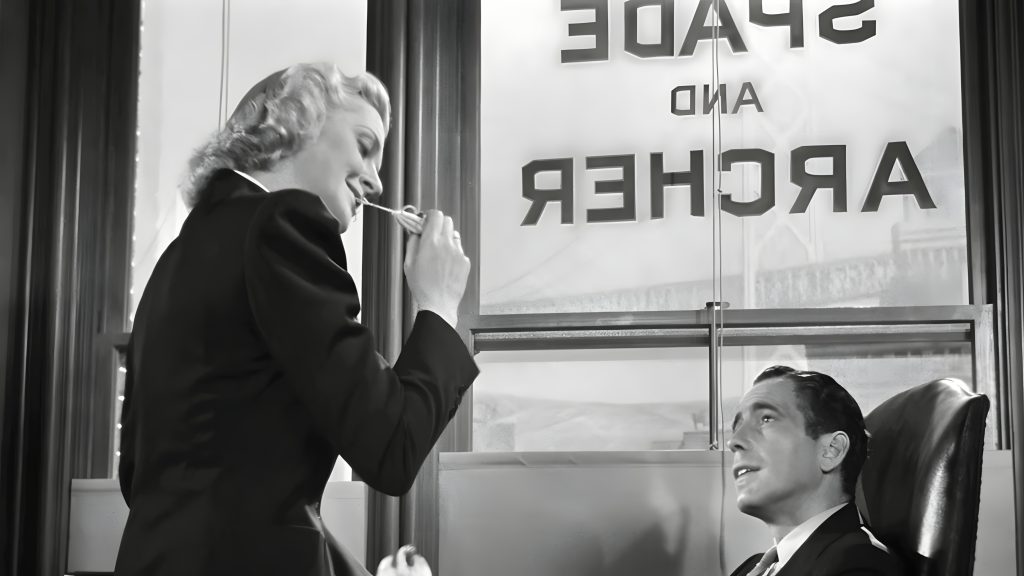
I can take a perfectly enjoyable motion picture and spend a thousand words explaining its various deficiencies. Give me something genuinely terrible, and I can write an entire essay on why the filmmakers should have considered alternative employment. But The Maltese Falcon presents an almost insurmountable challenge. It is perfect. There isn’t a wasted scene, a misplaced line of dialogue, or a moment when the director loses control of his material.
I believe there are two movies that represent the absolute pinnacle of motion picture direction. One is Martin Scorsese’s Goodfellas. The other is John Huston’s The Maltese Falcon. Different movies, different eras, different approaches to filmmaking, but they share something extraordinary. Not a false moment in either. Every scene builds on the previous scene, every character serves a purpose, and the audience is constantly discovering something new.
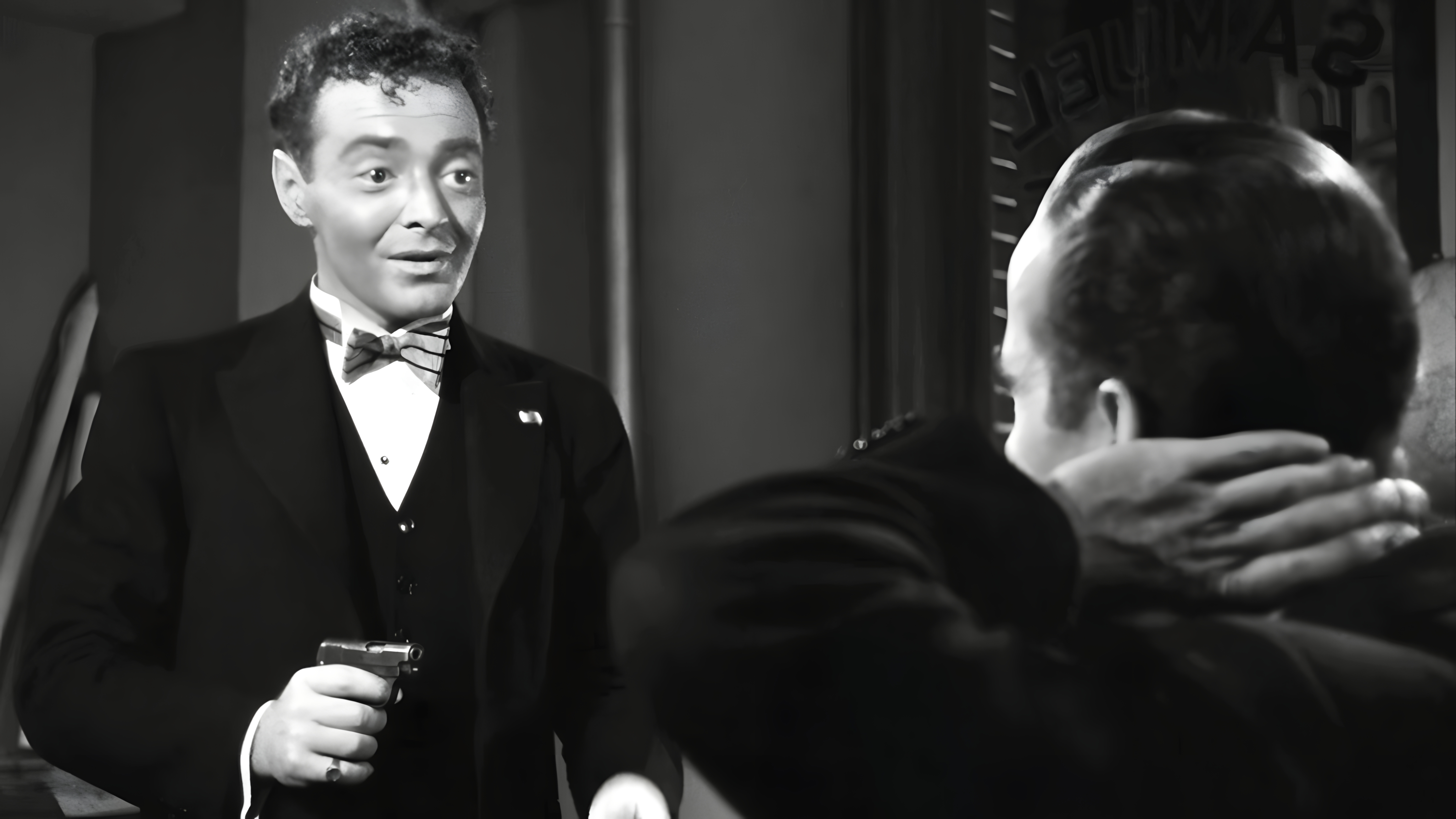
I have seen The Maltese Falcon at least half a dozen times. I know the story. I know the characters. I know how everything turns out. And yet, when Sam Spade finally confronts the person responsible for his partner’s murder, I am still surprised. Every single time. The scene still works on me as though I were seeing the movie for the first time. I cannot think of a greater compliment to pay a filmmaker.
One could argue that The Maltese Falcon essentially established the cinematic blueprint for film noir. No, it wasn’t literally the first noir. (It was even the third filming of this story making it a remake or reboot) but it certainly laid the foundational framework that others would build upon for decades to come. The morally ambiguous detective, the mysterious woman, the labyrinthine conspiracy, the colorful criminals, the cynical dialogue, and the glorious black-and-white photography are all here. Later filmmakers would take these ingredients and experiment with them, but Huston already had the recipe just about perfect.
And what can one possibly say about Humphrey Bogart? Well, he’s a little short. There. A criticism. I found one.
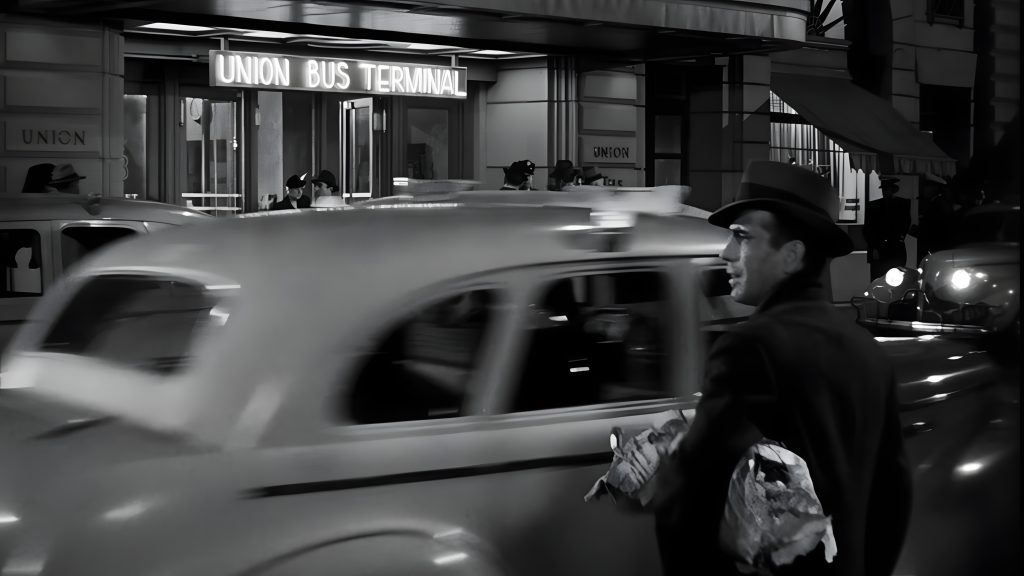
Of course, Sydney Greenstreet is a little fat, Peter Lorre is a little strange, and Elisha Cook Jr.’s Wilmer is a little, shall we say, delicate. I adore the fact that this vicious little gunsel is named Wilmer. I know Wilmer was a legitimate man’s name back in the day, much as Carol and Leslie were, but it fits the character so perfectly. Particularly when he’s standing around trying to look dangerous while Bogart casually treats him like an annoying schoolboy.
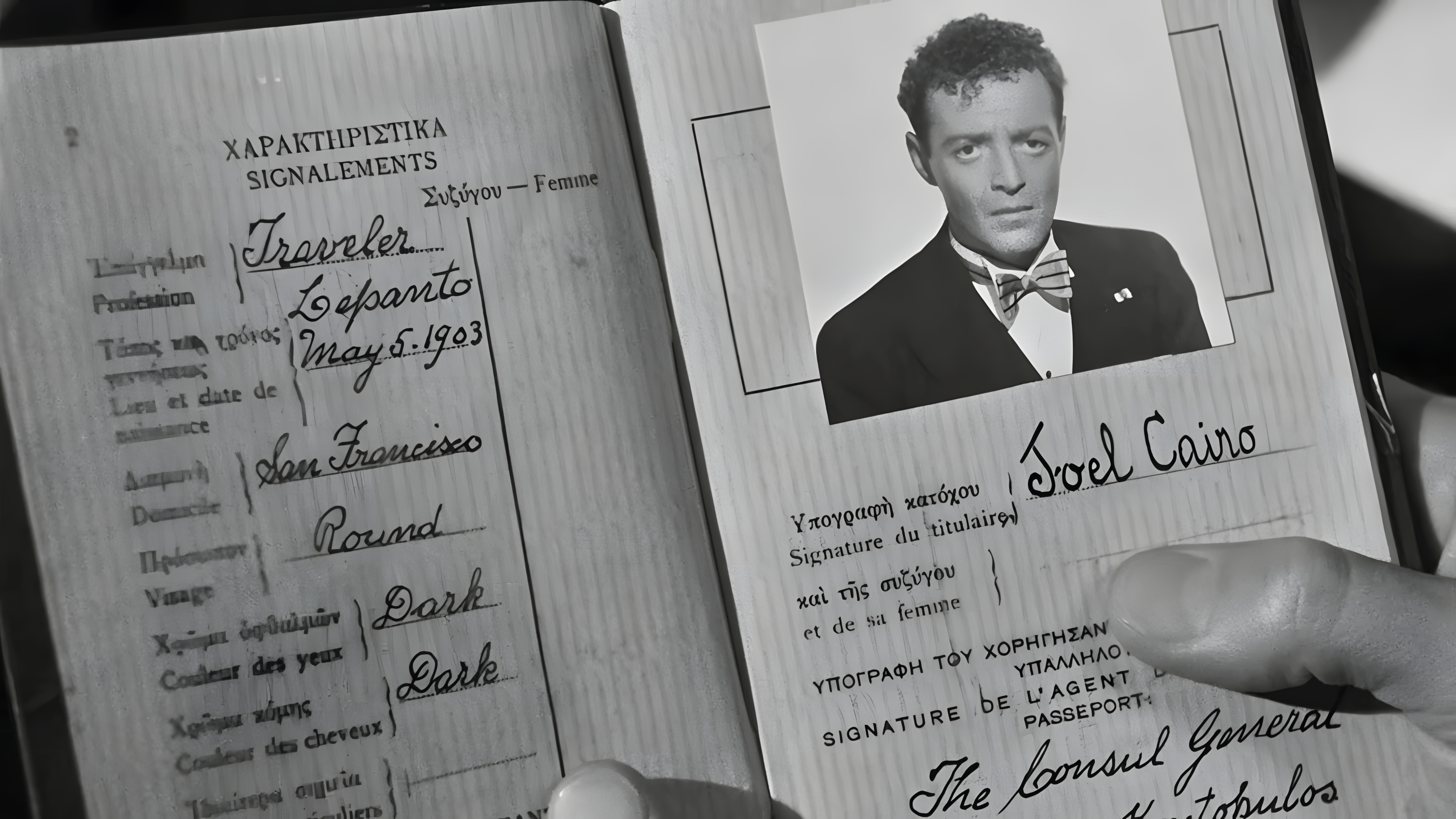
And what a supporting cast. Greenstreet’s Kasper Gutman is an absolute delight, a mountain of a man whose elaborate manners barely disguise his willingness to do absolutely anything to acquire the Falcon. Peter Lorre’s Joel Cairo is equally wonderful, a peculiar little gentleman who seems to occupy his own private universe. These are not interchangeable movie villains. They are fully realized personalities, each with his own peculiar mannerisms, motivations, and conversational style.
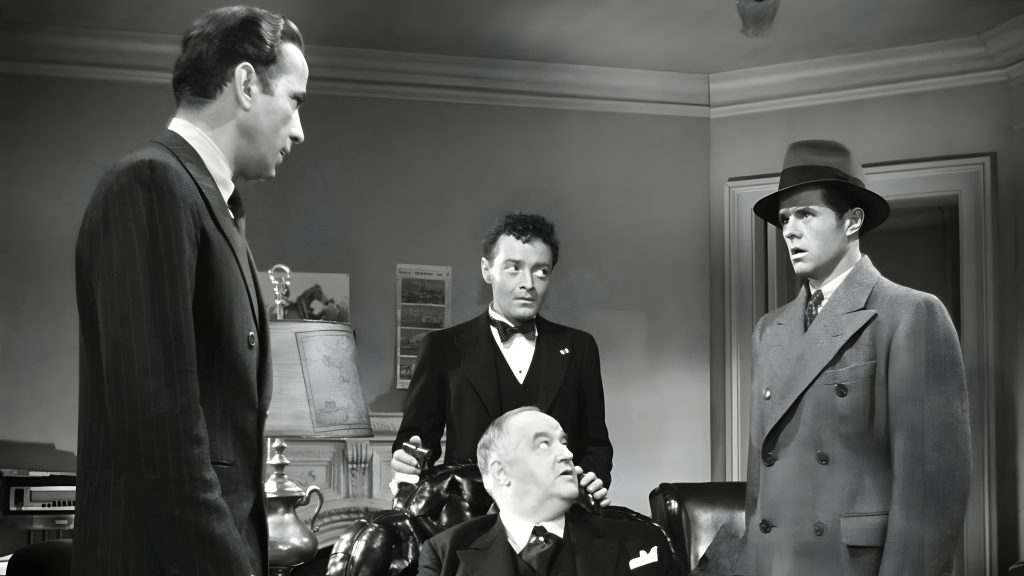
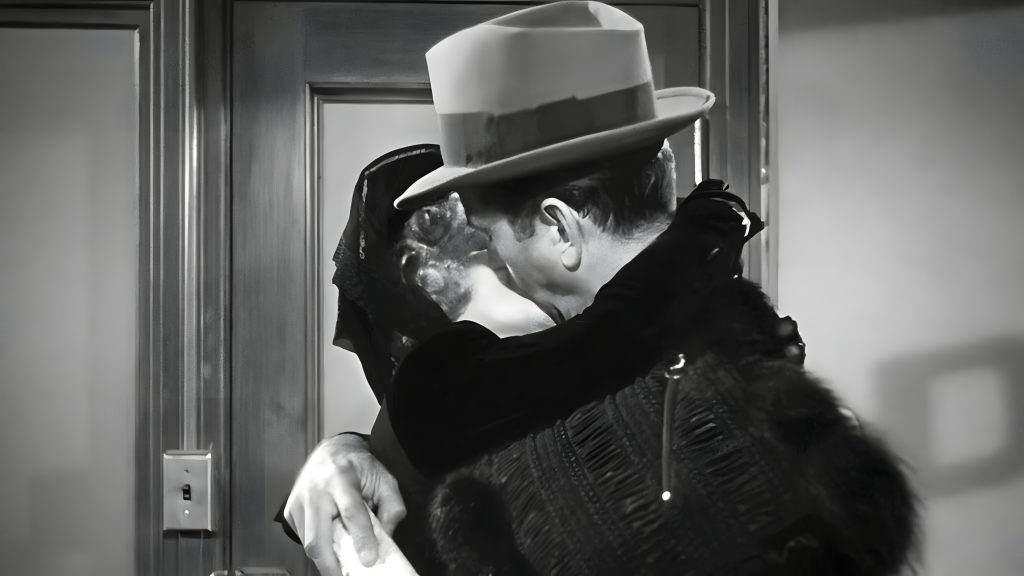
As for Mary Astor’s Brigid O’Shaughnessy, she isn’t quite the traditional femme fatale that later noir films would popularize. She’s certainly attractive, and she’s obviously bad news, but she doesn’t project the same icy, calculated sexuality that would become a staple of the genre. Instead, she seems almost emotionally unbalanced, veering between helplessness, affection, panic, and manipulation.
Of course, as the movie progresses, we discover that she is considerably worse news than she initially appears. Perhaps her apparent emotional instability is part of the performance. Perhaps that is precisely why she’s so effective. Either way, Spade has his hands full, and not necessarily in the entertaining manner one might hope.
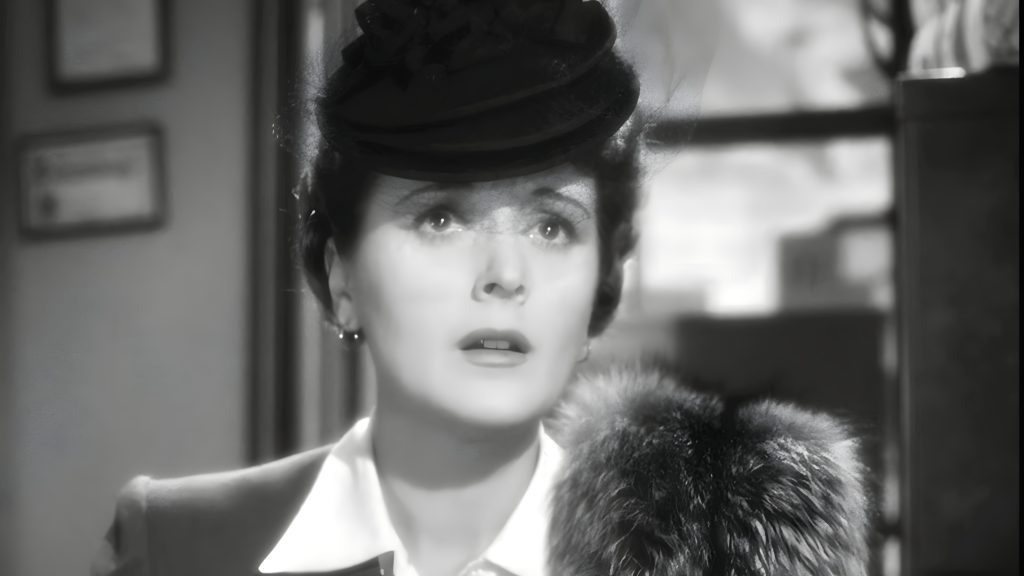
Speaking of Spade, one of the movie’s marvelous early twists is the revelation that he has been carrying on an affair with his partner’s wife. This is an extraordinary bit of characterization. In a lesser picture, our hero would be an upstanding detective whose only vice was occasionally forgetting to shave. Here, we’re introduced to a man who is perfectly willing to betray his business partner in the bedroom but who nevertheless possesses a professional code of honor that becomes enormously important by the end of the film.
Bogart makes this complicated individual completely believable. Spade is intelligent, sarcastic, cynical, occasionally cruel, and frequently hilarious. He gives the impression of being in complete control of every situation while simultaneously being in way over his head. Then again, everyone in this movie is in over their head. That’s half the fun.
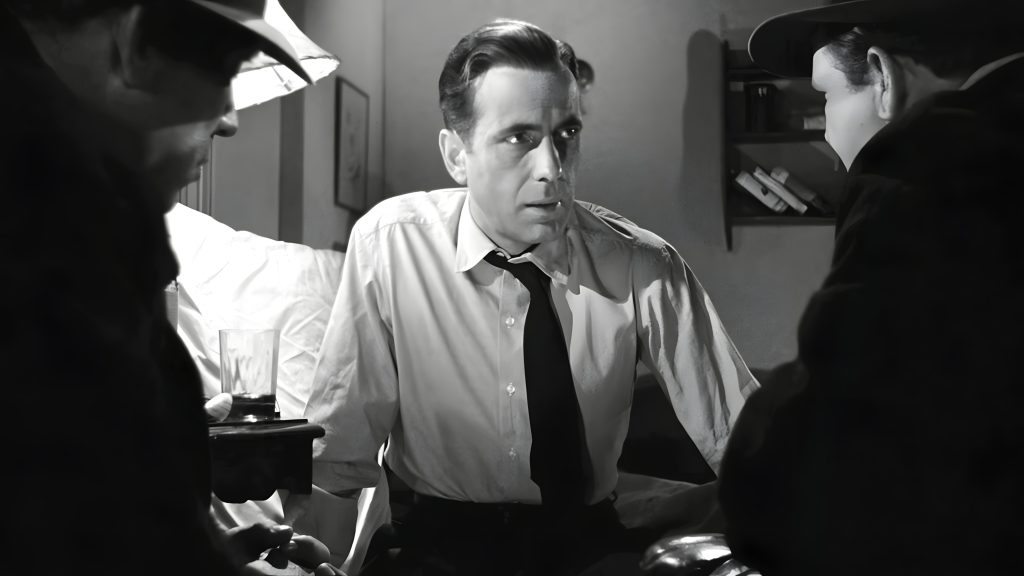
At one point, the police are questioning Spade about one murder, and he quickly realizes they’re asking him about a completely different murder he was unaware of and trying to determine whether he committed it.
Rather than becoming defensive, he essentially asks them how he supposedly killed the fellow. It’s a wonderful little exchange, tossed off with the casual confidence of a man who has absolutely no intention of making the police investigation any easier.
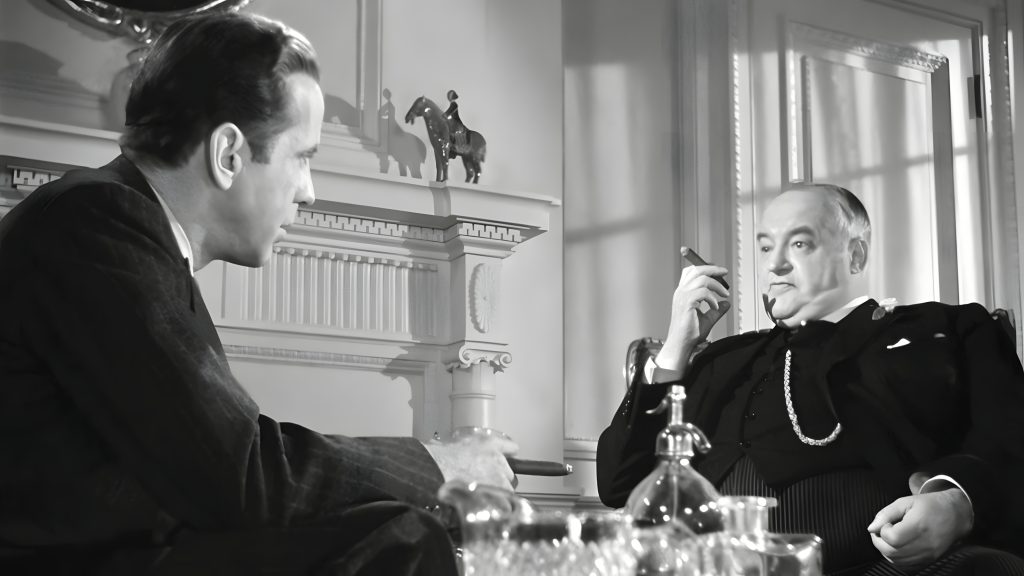
The entire film is like that. Quick. Smart. Funny. Even scenes that exist primarily to deliver exposition are wonderfully entertaining because the dialogue is so good.
And then there is Spade’s speech near the conclusion, explaining that when your partner gets killed, you’re supposed to do something about it. Whether you liked him or not. Whether you were particularly faithful to him or not. There are certain things a man is obliged to do.
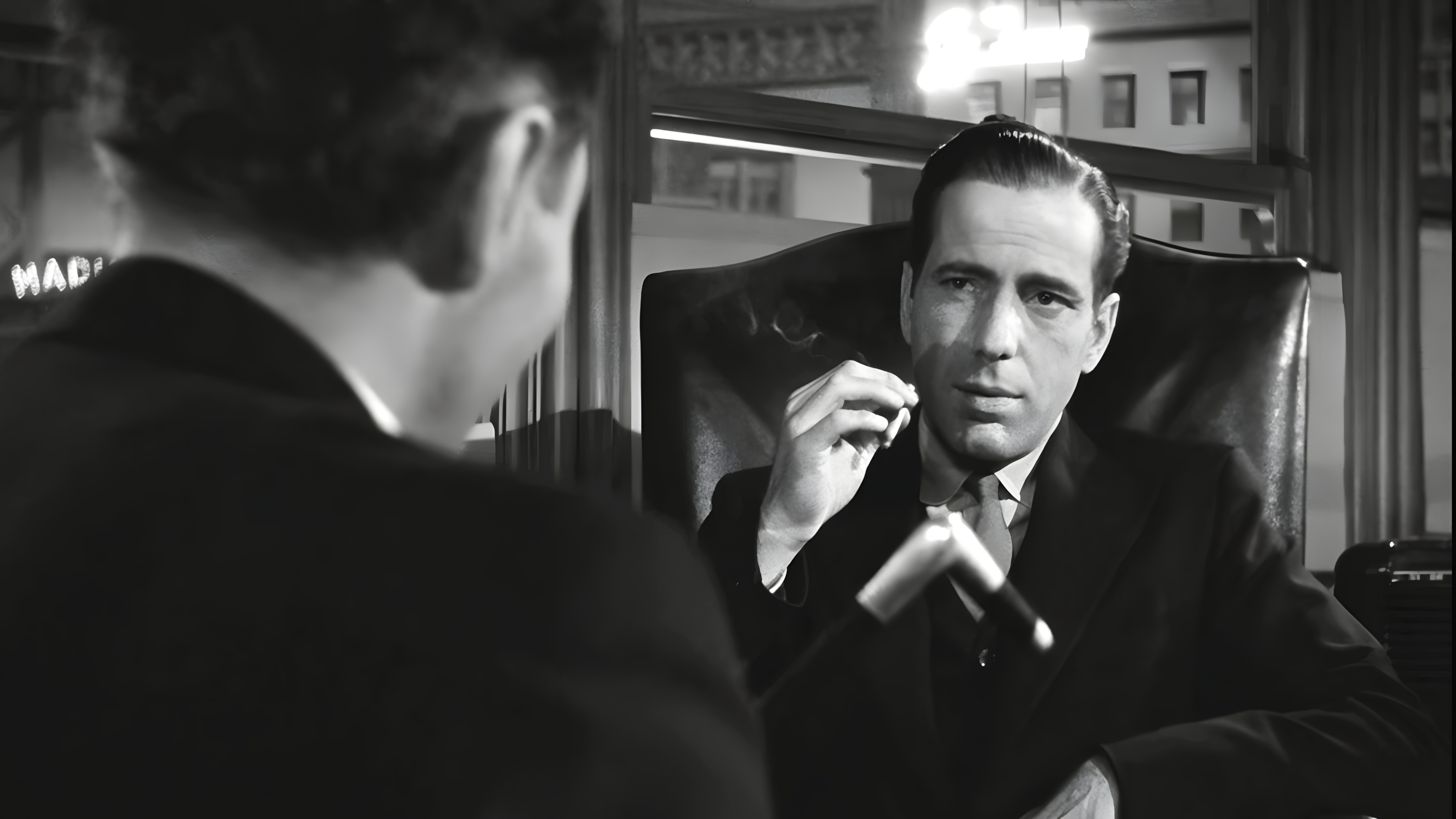
It’s an incredible speech, and one that retrospectively explains a great deal about Sam Spade. He isn’t a particularly virtuous man by conventional standards, but he has a code. And unlike most of the other people in this picture, he actually intends to live by it.
I haven’t even mentioned the cinematography, which is beyond fantastic. The lighting, the shadows, the camera angles, the composition of the interiors: everything is beautiful. Arthur Edeson’s black-and-white photography creates a world that seems simultaneously artificial and completely convincing.
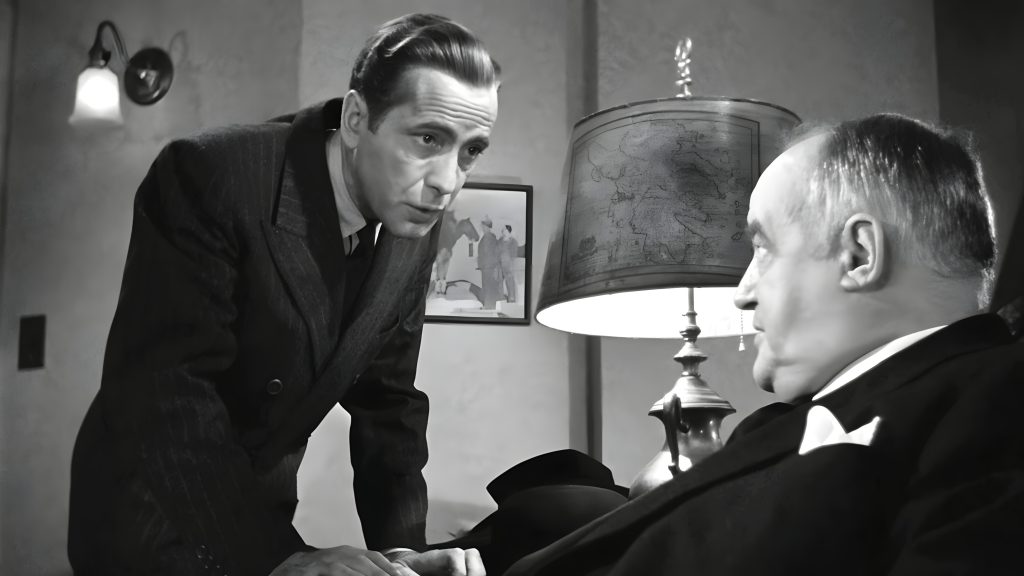
And this is largely a backlot picture! There aren’t many locations. There isn’t much action. People spend an extraordinary amount of time sitting in rooms talking to one another. Occasionally, someone enters, someone leaves, or someone produces a gun. That’s about it.
And it is absolutely riveting.
Modern filmmakers could learn a great deal from this. You do not need a car chase every fifteen minutes or an exploding building to keep an audience interested. Sometimes, you just need an excellent screenplay, an extraordinary cast, and a director who knows precisely where to put the camera.
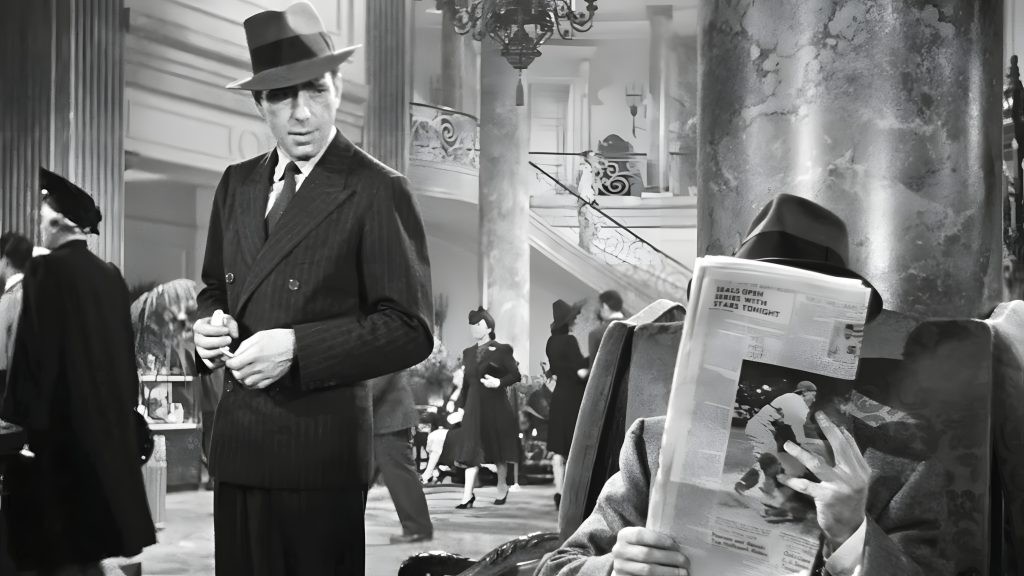
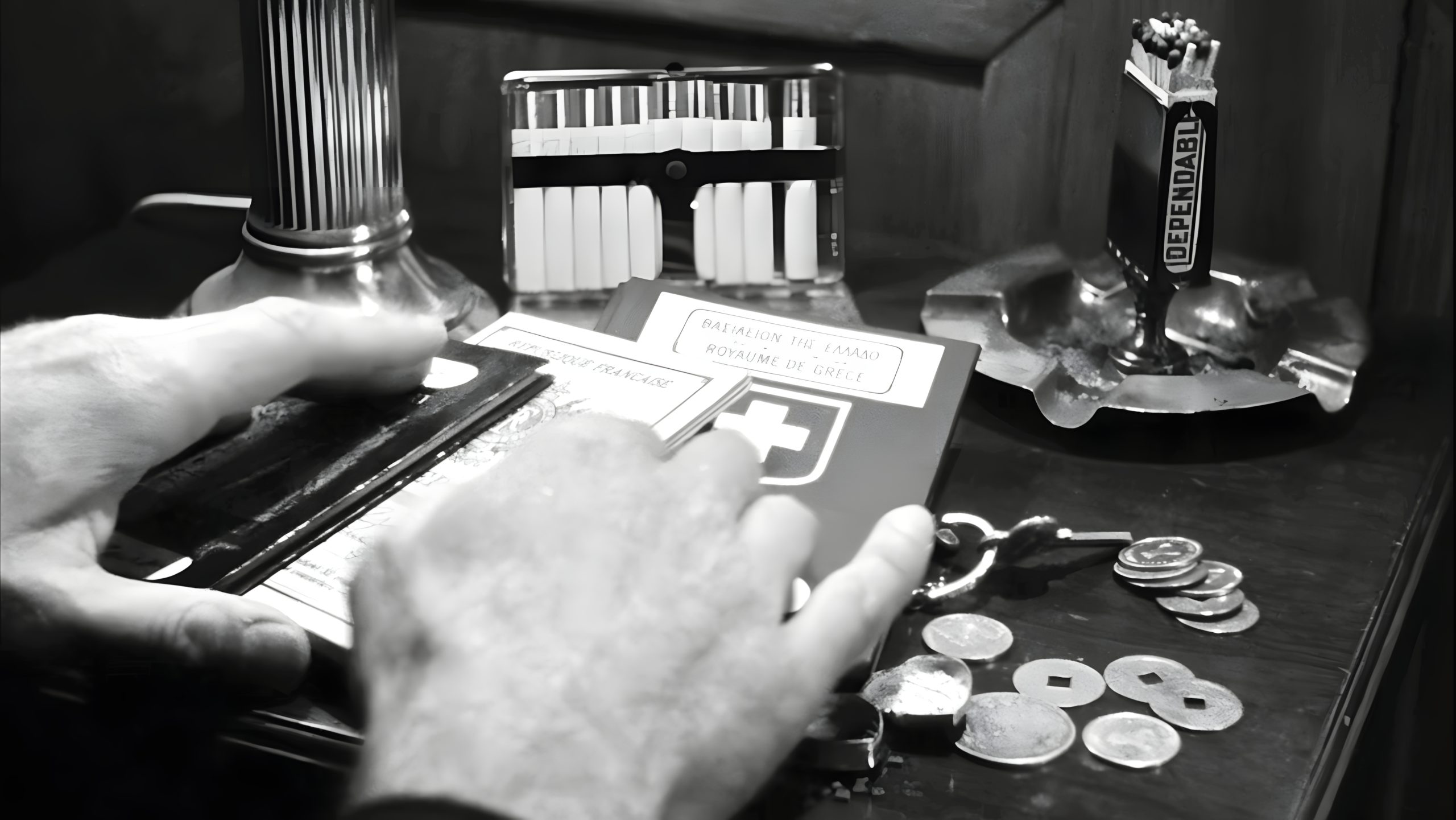
I also love the little period details, particularly those marvelous cigarette lighters everyone seems to have. You know the ones I mean. Those elegant little contraptions that make lighting a cigarette look like a sophisticated mechanical operation. They should bring those back.
They should bring cigarettes back, too. I haven’t smoked in ages, but watching The Maltese Falcon makes me want to light one up. This is a movie practically swimming in cigarette smoke. Bogart looks like he was born with one in his hand. I suspect that if you removed all the smoking from the picture, the running time would drop by twenty minutes.
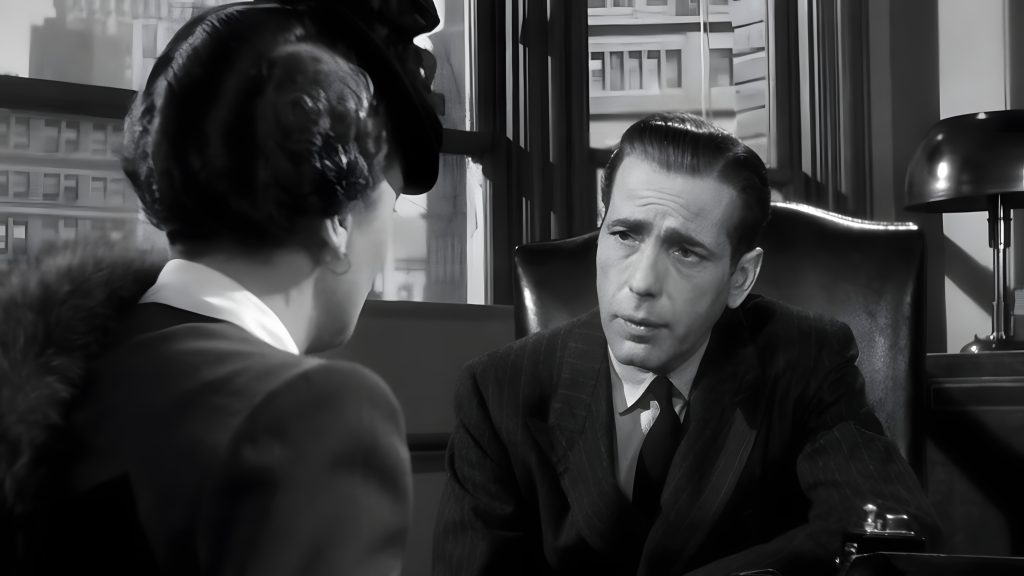
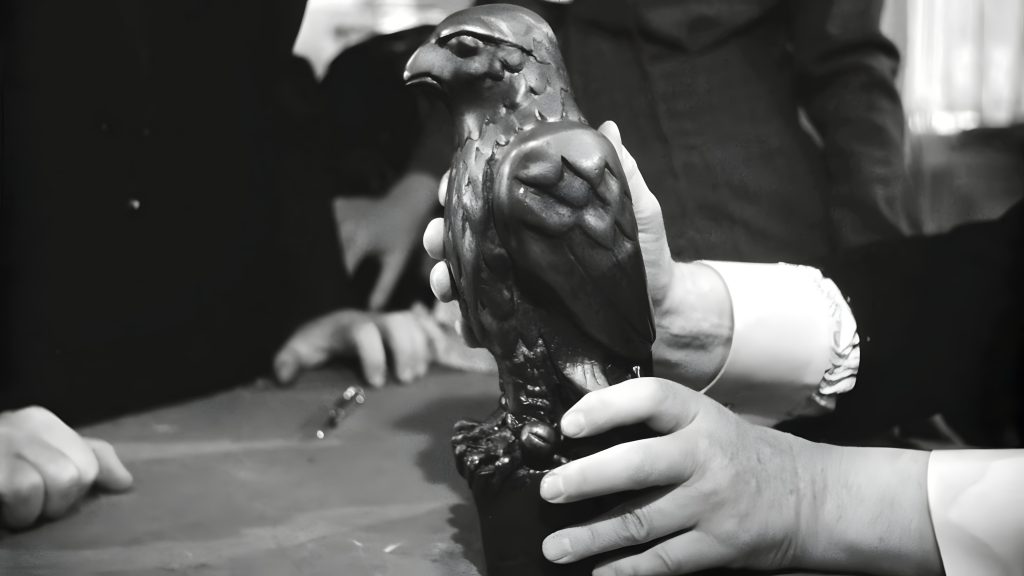
And then, of course, there is the Maltese Falcon itself. That magnificent black bird, supposedly concealing a fortune in gold and precious stones and originally intended as a gift to the king of Spain. Everyone wants it. Nobody seems entirely certain where it is, and the pursuit of this ridiculous object drives the entire plot.
I find it amusing to consider that an original prop from the film might now be worth more than the fictional treasure it represents. After all, there are plenty of gold objects in the world. There are considerably fewer authentic pieces of Hollywood history associated with one of the greatest motion pictures ever made.
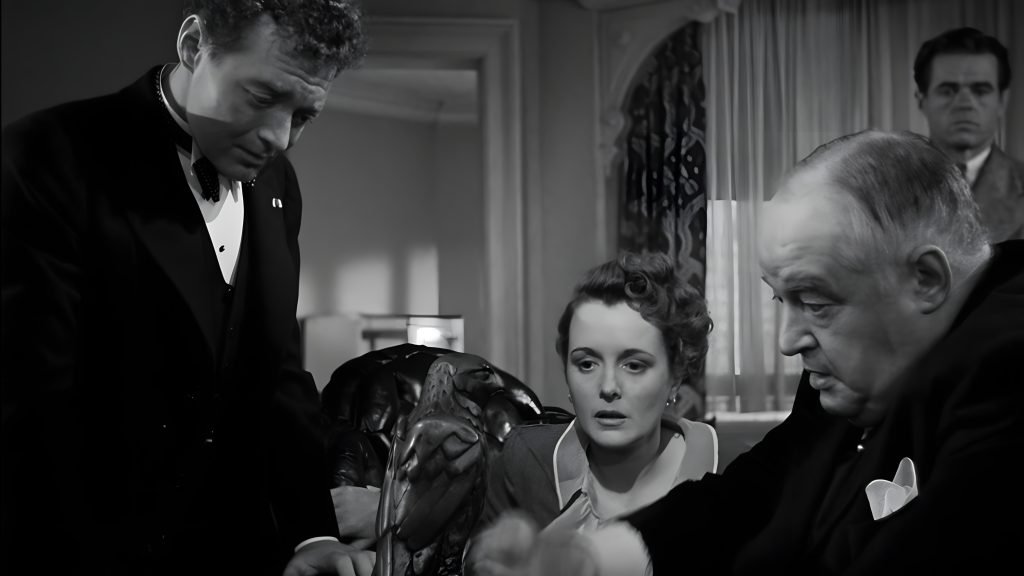
The Falcon is also the perfect centerpiece for a story about greed, deception, and the extraordinary lengths people will go to acquire something whose value exists largely in their own imaginations.
I could go on. I could spend another thousand words praising individual scenes, quoting dialogue, discussing Greenstreet’s extraordinary screen presence, or explaining why Bogart was the perfect actor for Sam Spade. But doing so would risk giving away some of the very surprises that make the movie so delightful.
And I refuse to do that. Even to a film released in 1941.
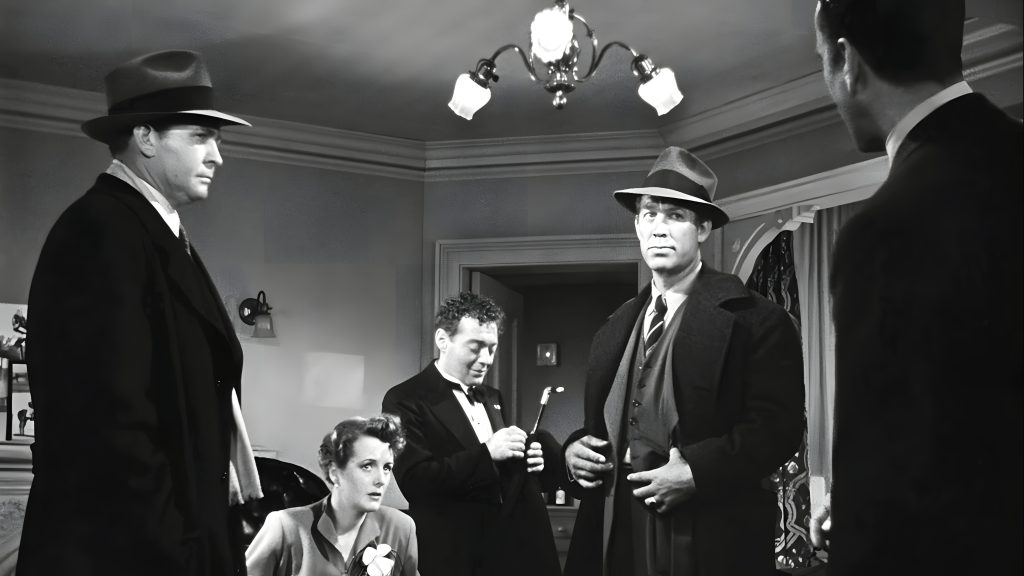
The Maltese Falcon is one of the greatest motion pictures ever made. It is brilliantly written, flawlessly directed, beautifully photographed, and populated with some of the most memorable characters in cinema history. It helped define an entire genre, and more than eight decades later, it remains as entertaining, surprising, and intelligent as ever.
There are plenty of films I love. There are plenty of films I consider masterpieces. But there are very few I would call perfect.
This is one of them.