Forecast: Beautiful, with a Chance of Disappointment
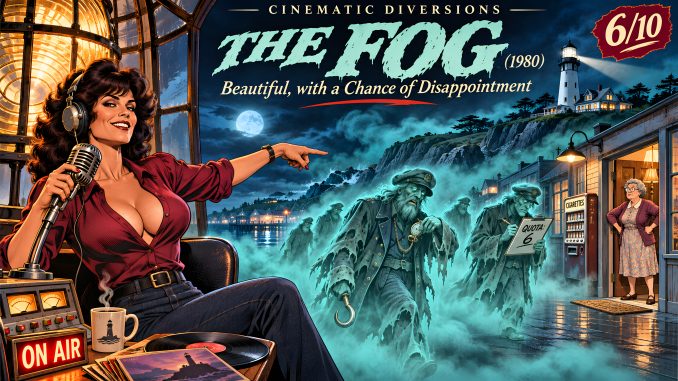
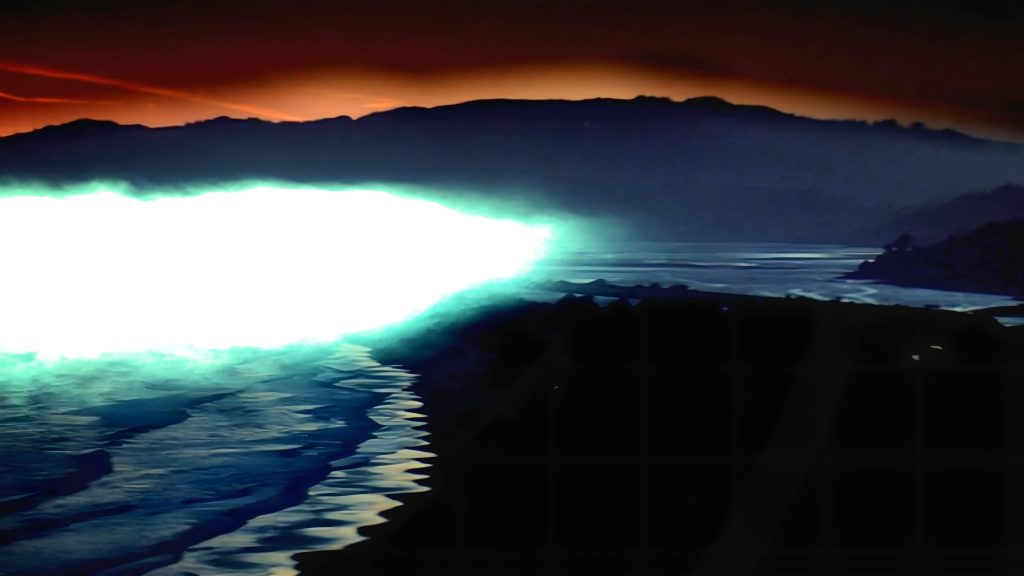
The Fog (1980): 6 out of 10: The coastal California town of Antonio Bay is preparing to celebrate its centennial, an occasion involving speeches, candles, and the usual assurances that the people who founded the place were wonderful human beings. Unfortunately, strange disturbances around town suggest that somebody would like to offer a dissenting opinion. Somewhere offshore, a glowing fog bank is moving against the wind, bringing considerably more trouble than reduced visibility.
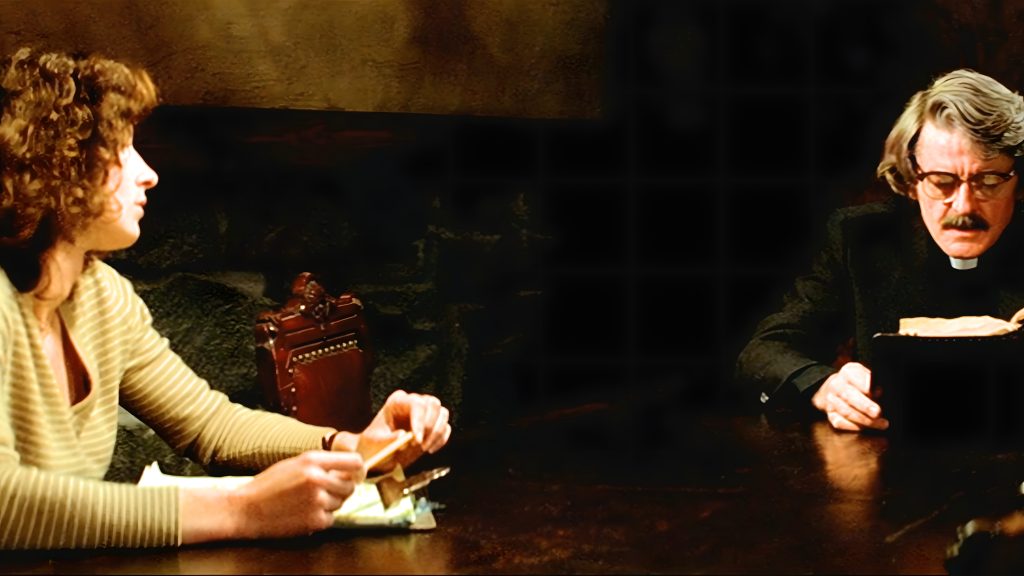
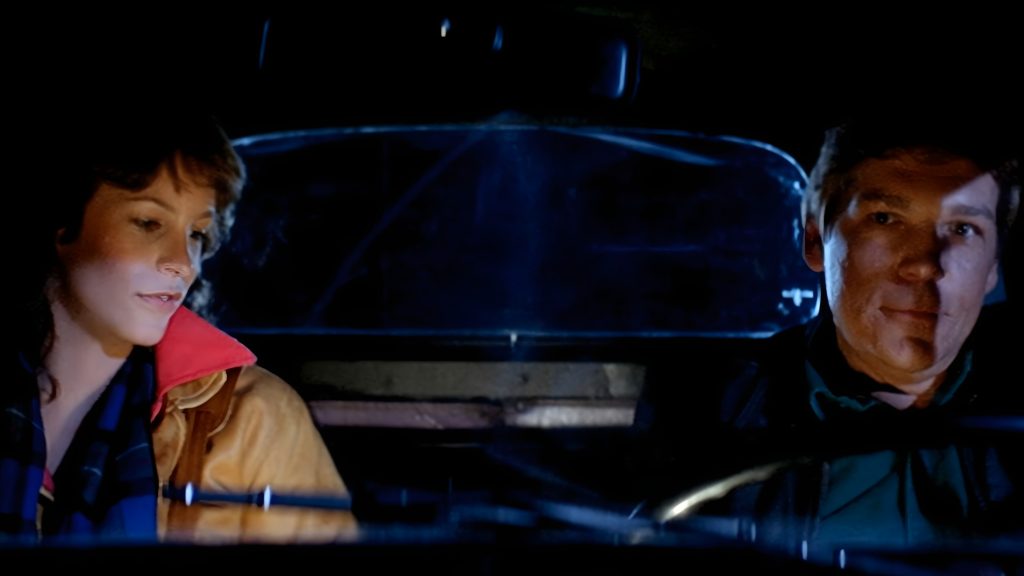
As radio host Stevie Wayne (Adrienne Barbeau) monitors the approaching weather from her lighthouse studio, local fisherman Nick Castle (Tom Atkins) and hitchhiker Elizabeth Solley (Jamie Lee Curtis) investigate a missing boat. Meanwhile, Father Malone (Hal Holbrook) discovers a journal suggesting that Antonio Bay’s founding fathers left a few things out of the commemorative brochure. The town is about to discover that some anniversaries are better left uncelebrated.
The Good
The Good: Some movies from your youth hold up remarkably well when you revisit them forty years later. I recently rewatched David Lynch’s Dune and probably enjoyed it more than I did when it originally came out.
You can tell I am setting something up here. This is that freaking Valentine’s Day movie all over again, isn’t it?
I was not particularly surprised to discover that My Bloody Valentine was mediocre when I revisited it decades later. It was always a B-class slasher, a cheap Canadian contribution to the business of discouraging young people from having sex near industrial equipment. The Fog, on the other hand, is John Carpenter’s celebrated theatrical follow-up to Halloween. This is supposed to be a classic from one of the great directors of my generation. IMDb even had my old rating conveniently waiting for me: eight out of ten.
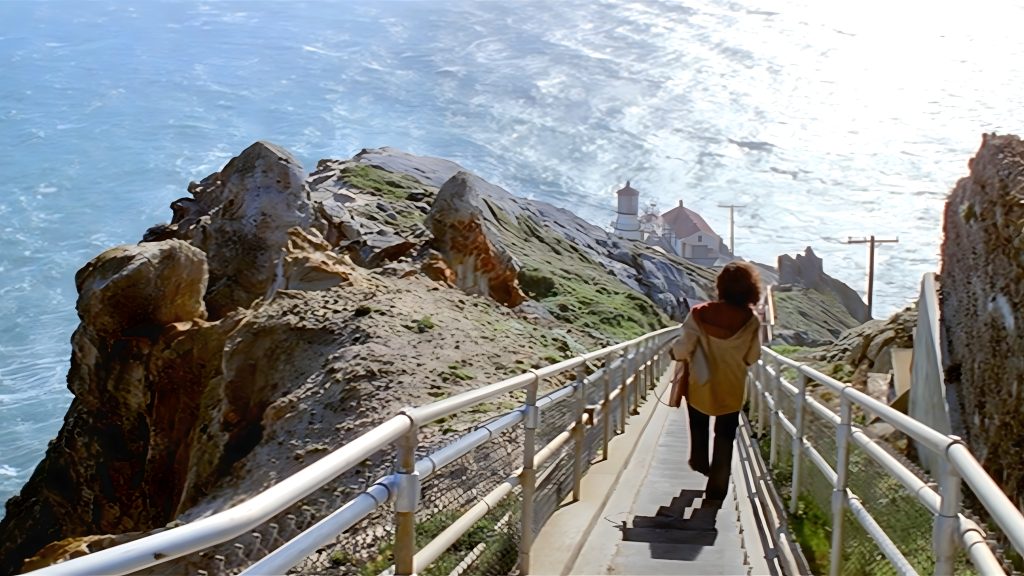
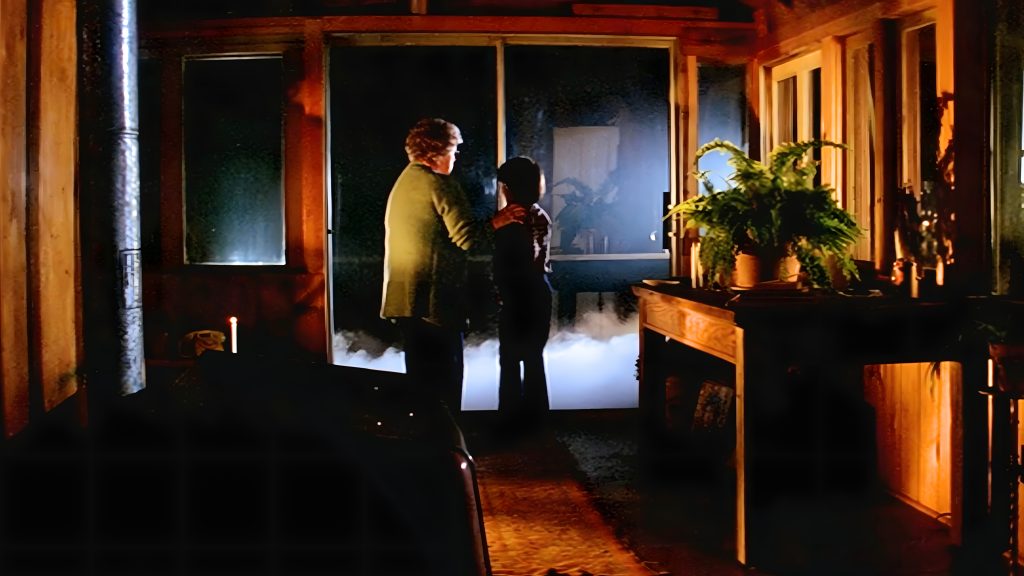
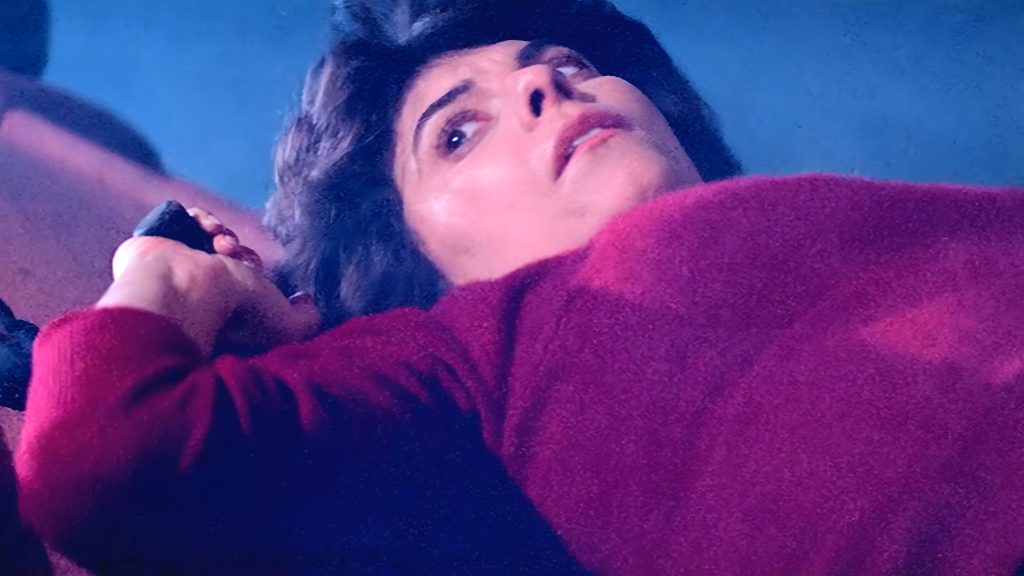
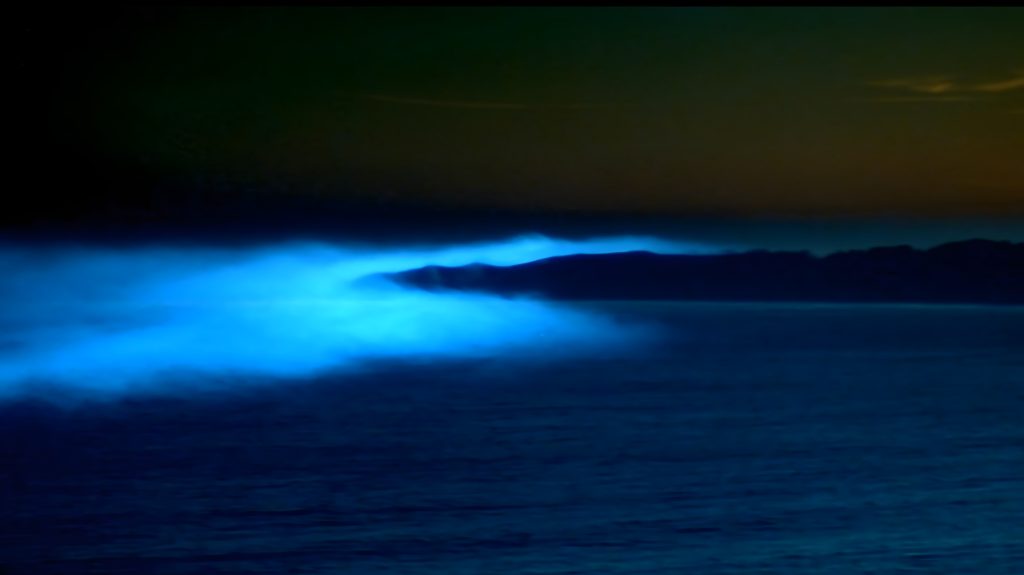
Oh dear. Before we get to the problems, however, let me emphasize something that almost single-handedly keeps this review from becoming an obituary. The Fog is a gorgeous film.
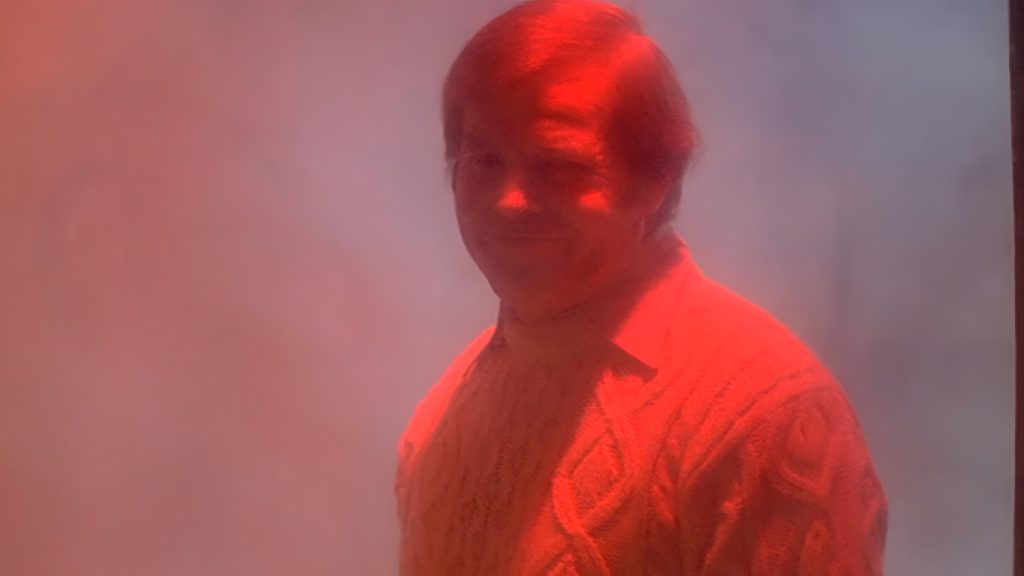
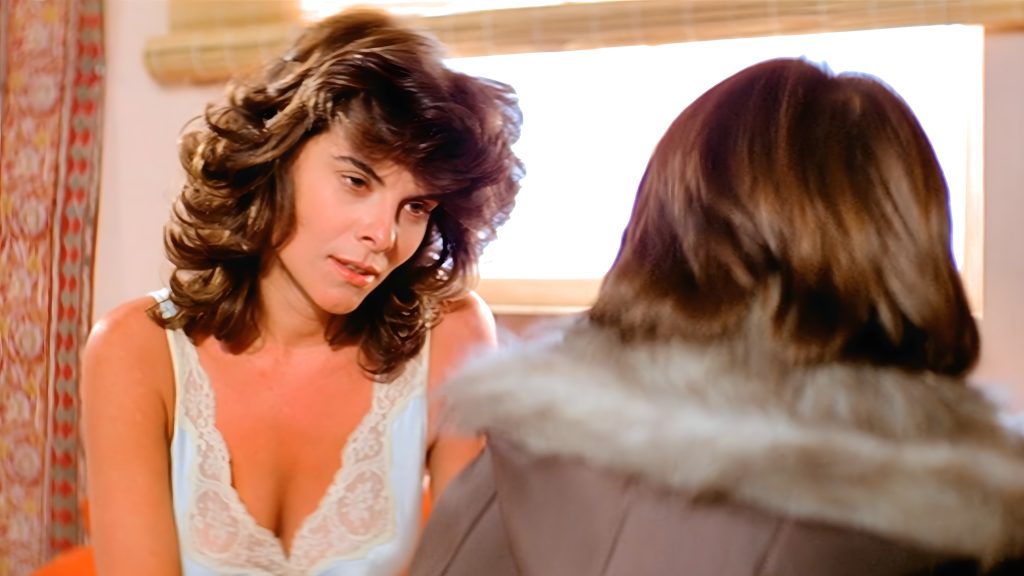
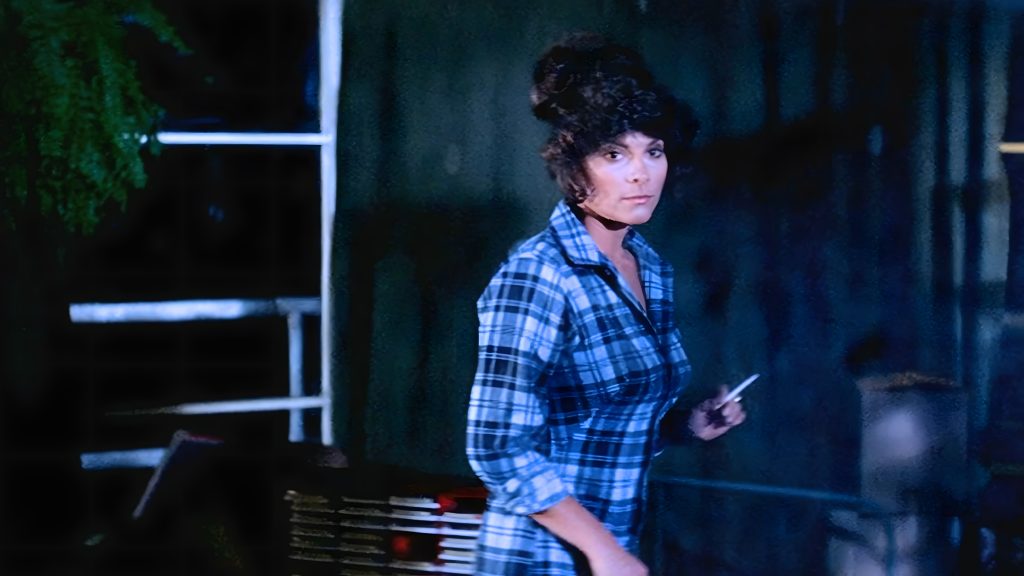
Carpenter and cinematographer Dean Cundey make the coastline, the lighthouse, and the nighttime streets look extraordinary. The lighting is particularly impressive. Darkness has texture and depth. You can actually see what you are supposed to be looking at while still getting the impression that something unpleasant might be standing just beyond it. There are moments when the sheer pleasure of looking at the film reminds me of watching Michael Mann.
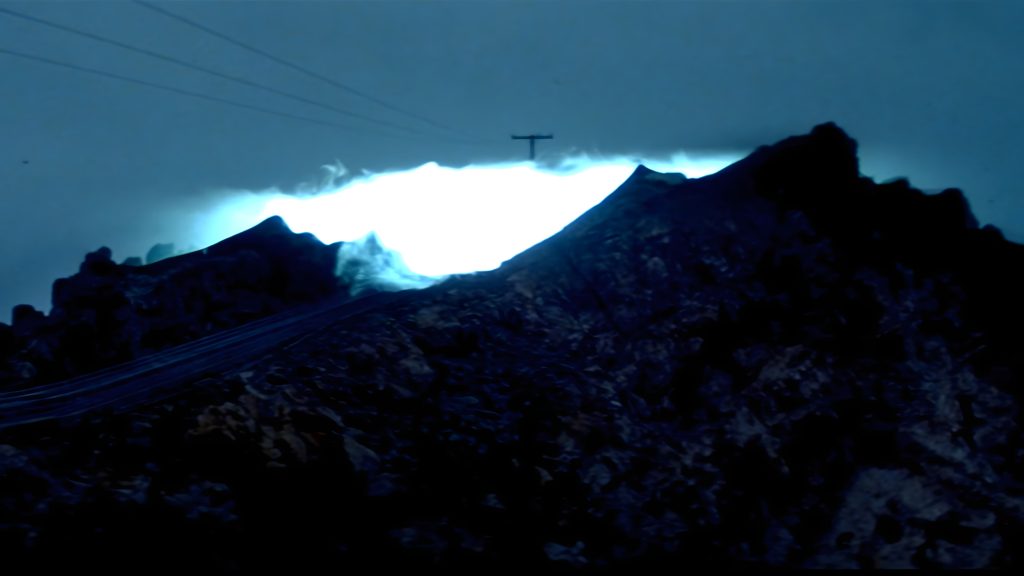
The presentation I watched certainly helped, but a nice transfer cannot invent compositions that were not there. Whatever else I am about to complain about, the people photographing this movie knew exactly what they were doing.
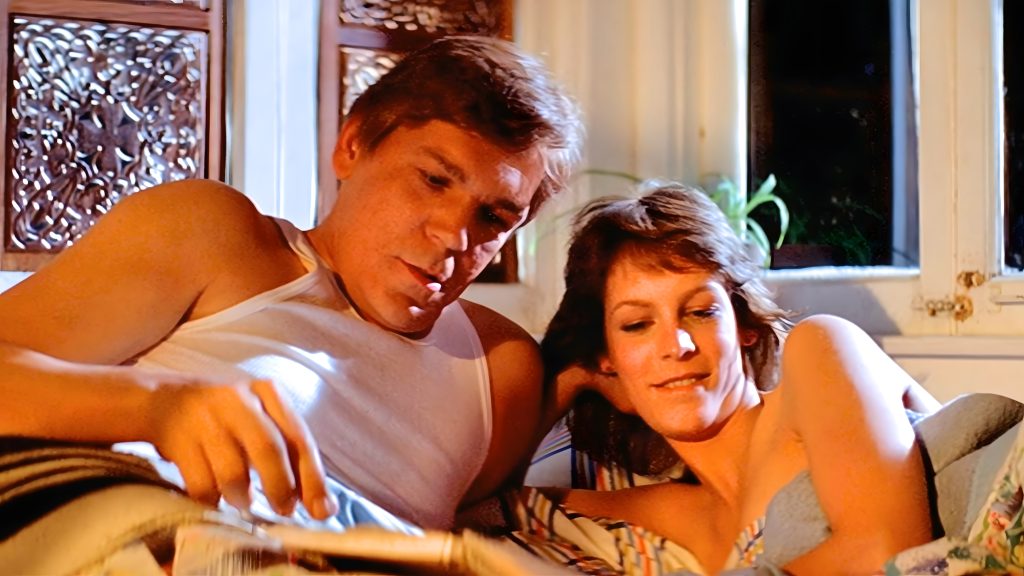
It is also magnificent nostalgia bait. Nobody thinks twice about picking up a young teen hitchhiker, sleeping with her, and adopting her as a sort of investigative gal Friday. There are cigarette machines. People drink and drive with the casual confidence of a generation that considers seat belts an optional philosophical position. A single mother can apparently afford a spacious home overlooking the California coastline. The early eighties were truly a magical time.
And then there is John Houseman, opening the movie with a fireside ghost story delivered in that unmistakable voice of his. Your immediate reaction is, “Oh my God, that’s John Houseman,” followed by a willingness to listen to whatever John Houseman wishes to tell you. He establishes the promise of an excellent campfire tale.
Unfortunately, the rest of the film has to tell it.
The Bad
The Bad: In reality, The Fog only has three problems: the story, the acting, and the fact that it isn’t scary.
Let us start with the story. A hundred years ago, there was a shipwreck, some gold, and a group of townspeople who did something terrible. Now the town is having a celebration, but the shipwreck victims have returned because some bullies picked on a leper, who drowned while the counselors were having sex..
Okay, let’s try this again. The actual movie involves a wealthy man with leprosy, a proposed colony, six conspirators, a deliberately wrecked ship, what turns out to be not actually stolen gold, and an ancestral diary conveniently stored inside a church wall which is only discovered because of a poltergeist earthquake.
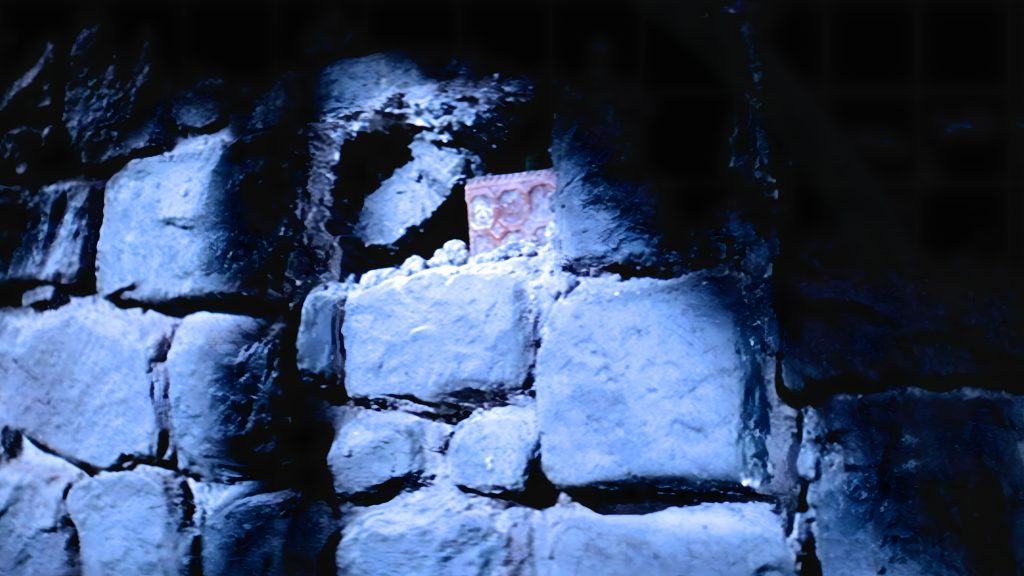
There is also a large gold cross, because apparently the municipal history was not already complicated enough without bringing ecclesiastical accounting into it. This is the not-stolen gold above. Apparently, some was spent building the church, and the remainder was hidden after being melted into the cross. Hidden from whom is unclear as the lepers were dead. Apparently the priest stole it from the fellow town founders seems to be the takeaway, and despite not having the gold, they were able to found the town anyway, which makes the whole revenge plot by the leper ghosts have more holes than the SS Minnow.
Despite all that explanation for what should be a simple John Houseman-narrated ghost story, I am still probably missing bits, and it is amazing how little dramatic satisfaction I got from any of it.
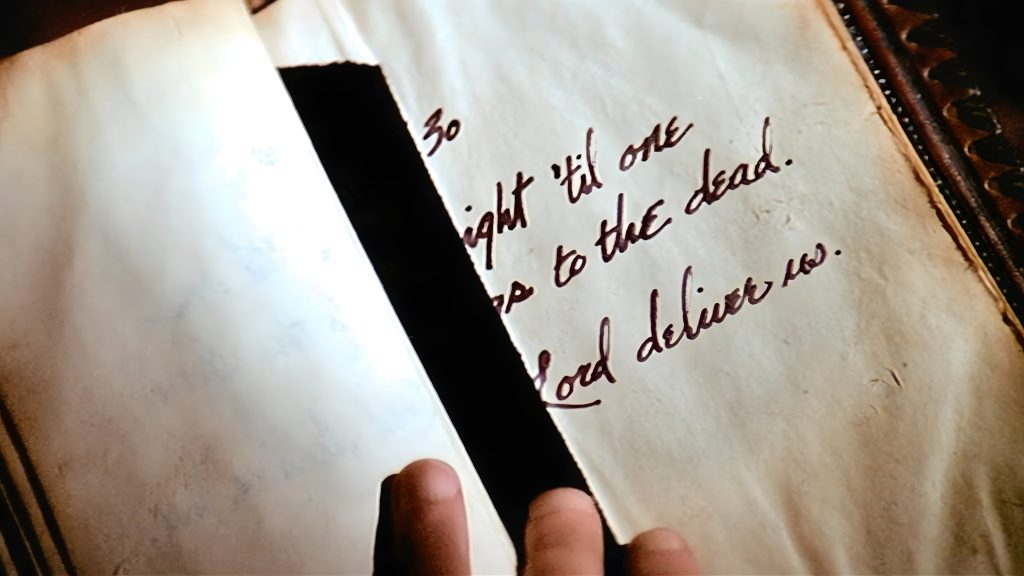
These people were murdered. They have returned for revenge. That should be a fairly efficient proposition. Instead, we keep stopping for another reading from the Big Book of Things Our Grandparents Shouldn’t Have Done. (Assuming any of the people reading the book are related to the people in the story, but we will get to that in a minute)
Then there is the question of the victims. The ghosts want six deaths to answer for the six conspirators. Hal Holbrook has a direct family connection to the crime, but the other targets feel considerably more interchangeable. Revenge becomes a numerical exercise. These are less avenging spirits than disgruntled employees trying to meet a quota.
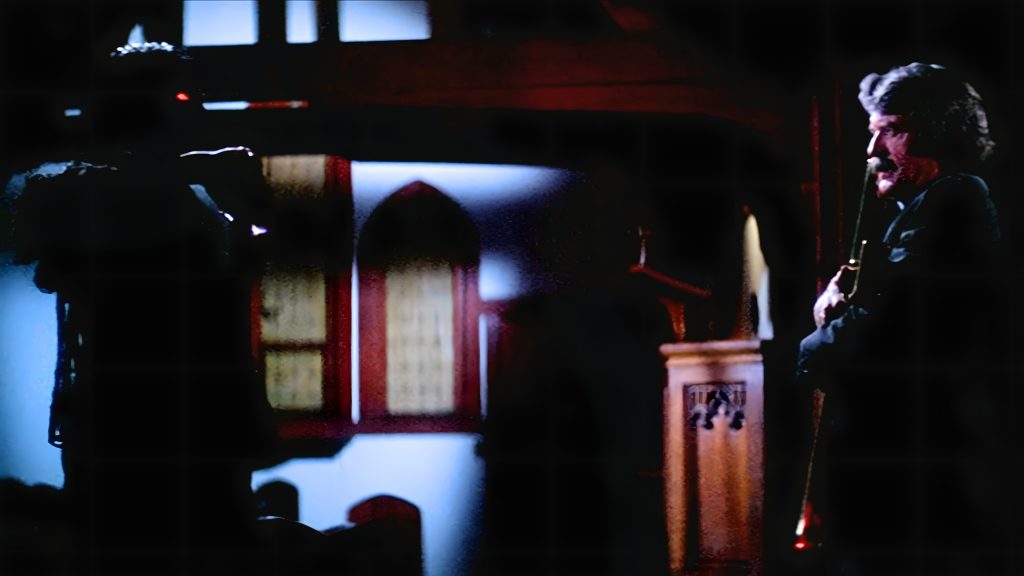
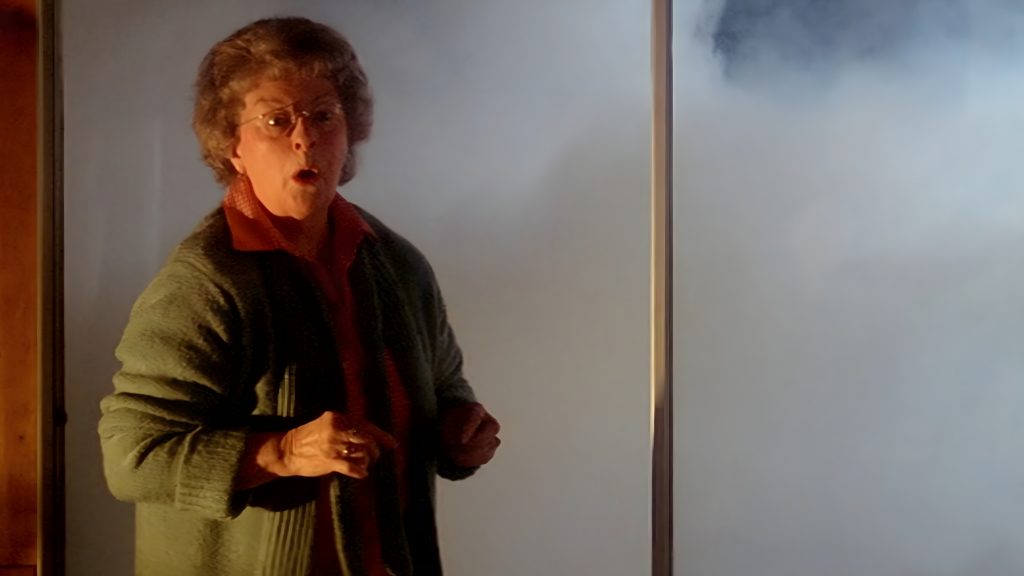
The elderly babysitter, in particular, seems an odd person upon whom to settle a century-old grievance. Admittedly, she looks as though she might have attended the original planning meeting, but I would like a little more evidence.
The first night’s haunting even observes a one o’clock cutoff. I appreciate punctuality, but there is something inherently deflating about a murderous apparition abandoning its work because its shift has ended.
Most slasher films eventually communicate their reason for the slaughter season in a more pithy and relatable way. (Dad likes my sister more than me in Happy Birthday to Me or Mom interrupted my puzzle time in Pieces.) You do not need an extended seminar to understand why the situation is bad. The Fog keeps explaining itself, yet the explanations never made the threat more interesting.
This was also my central problem with My Bloody Valentine: the deadly combination of a story that does not work for me, an awful lot of that story, and characters who will not shut up about said story.
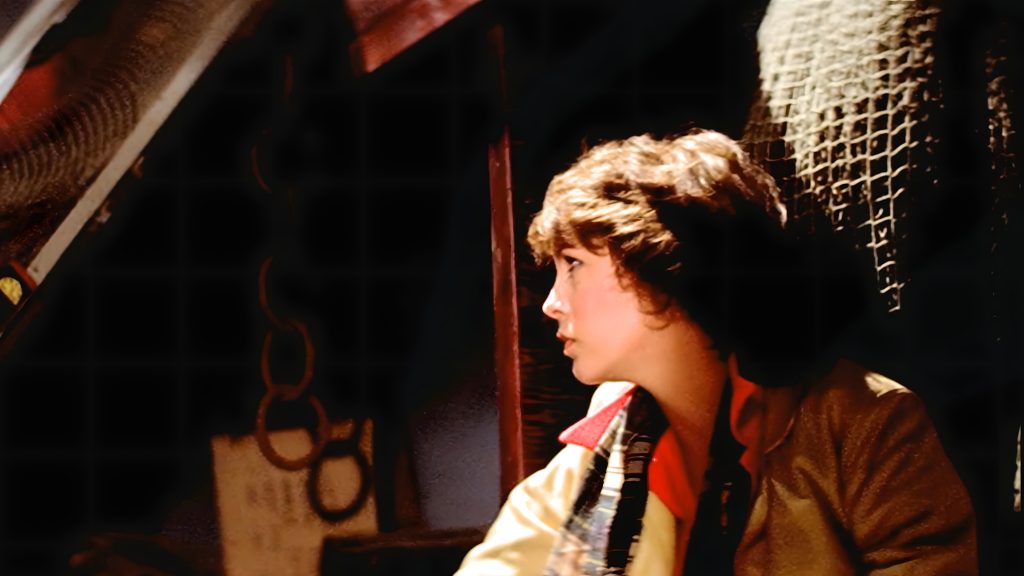
The acting is not disastrous, but it offers surprisingly little compensation. Jamie Lee Curtis plays Elizabeth as though she has spent the entire trip to Antonio Bay getting pleasantly stoned. Given the character’s willingness to attach herself to a middle-aged stranger and accompany him on increasingly alarming errands, perhaps that was a sensible interpretation.
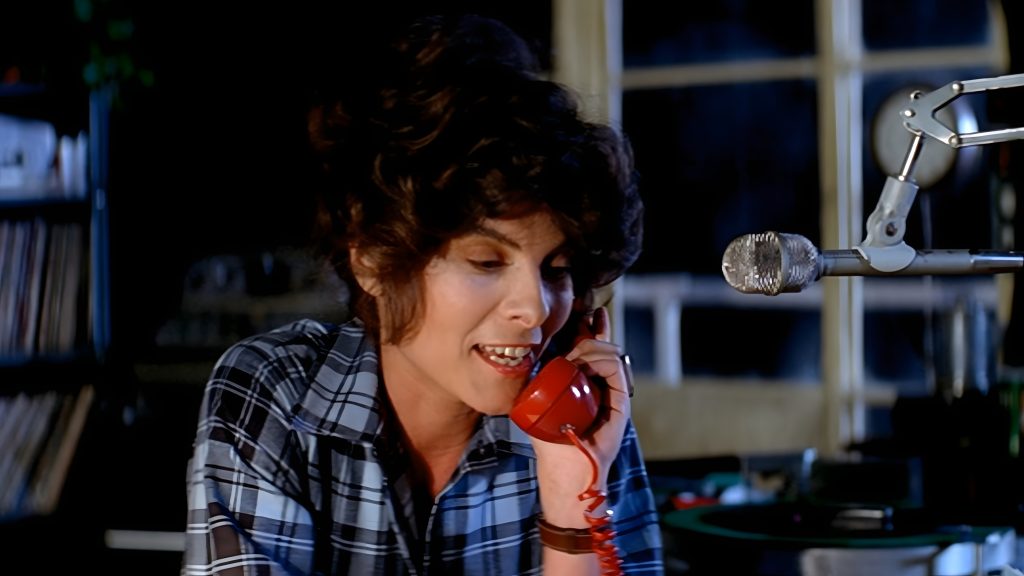
I like Adrienne Barbeau. I liked her in Escape from New York, and she is perfectly agreeable here as a sexy DJ broadcasting from a lighthouse. However, I do not think she quite carries the film, and nobody else steps forward to do the heavy lifting.
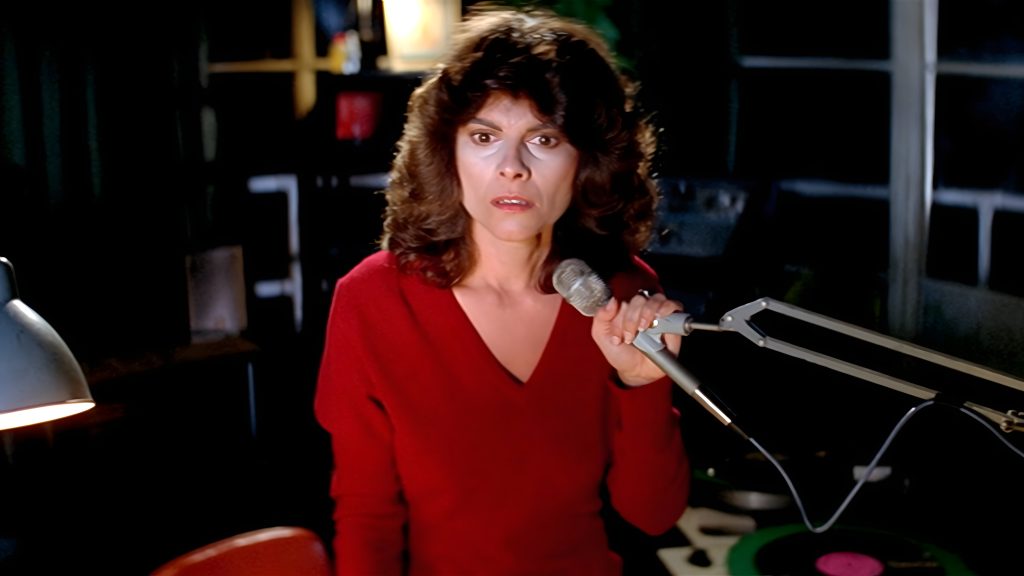
Her character’s financial arrangements are more intriguing than some of the supernatural material. A radio station, a beautiful coastal home, and childcare, all apparently supported by soft jazz and weather updates. Never mind the ghosts. I want to see her business plan.
Holbrook is not exactly bringing his A game, either. This is an impressive cast delivering a generally unremarkable collection of performances.
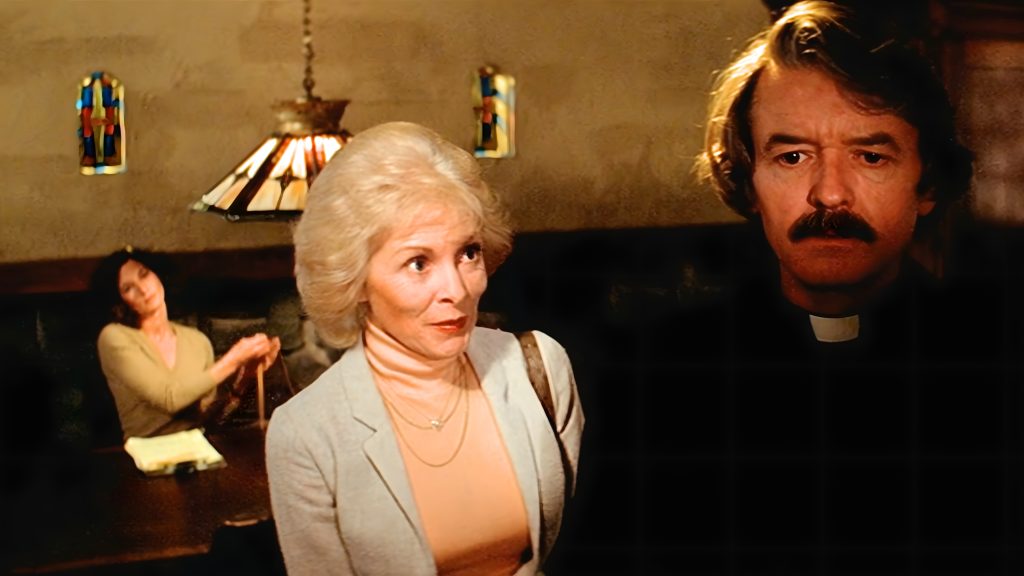
Now, a movie about ghost lepers does not require the Royal Shakespeare Company. Humanoids from the Deep, one of my favorites from around this period, has Doug McClure and Vic Morrow, and I would be lying if I claimed the acting was the principal attraction. I had to look up who starred in it.
A solid Murder, She Wrote level of performance should be sufficient. The Fog mostly reaches that level. Considering the people involved, “sufficient” is a little disappointing.
The Ugly
The Ugly: The real problem is that I did not find The Fog particularly frightening.
The first time I saw it, I was probably about twelve. I can absolutely understand why it worked better on that version of me. Returning to horror films from the late seventies and early eighties, you sometimes discover that your memory supplied considerably more blood than the filmmakers did. Considering the moral panic surrounding the genre, some of these films now seem positively restrained.
You never step into the same river twice. Sometimes, you also discover that the river was about eighteen inches deep.
There is violence in The Fog, but it is much less graphic than my memory suggested. That is not automatically a problem. A film does not need buckets of blood to frighten me. It does, however, need to generate something beyond the anticipation of a very slow man eventually reaching a doorway.
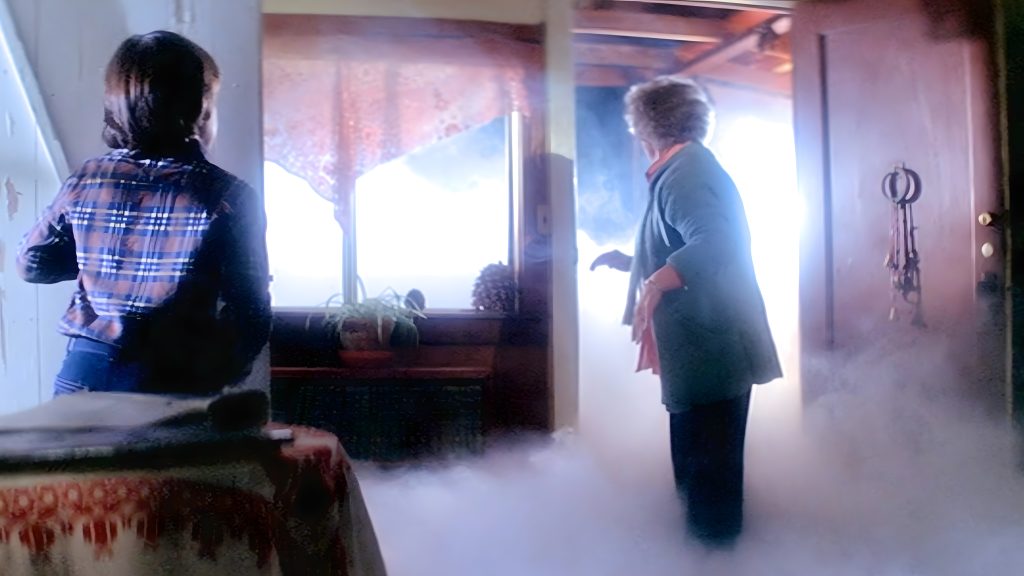
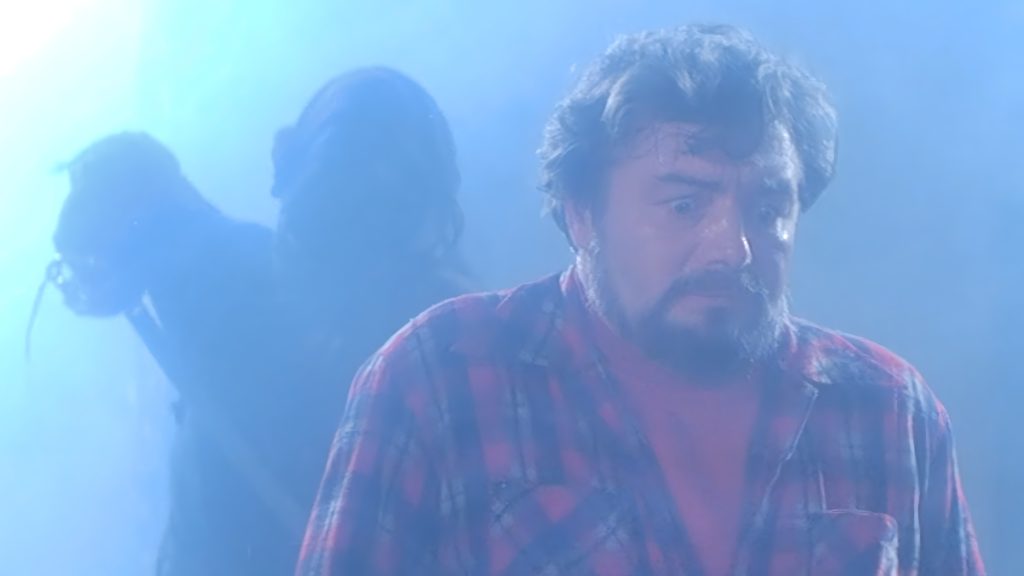
The fog arrives. Someone looks outside. A figure stands there. The potential victim waits. The figure continues standing there. Eventually, a hook becomes involved. These are remarkably sluggish monsters. Some scenes require such cooperation from the intended victims that I began wondering whether the ghosts were handing out candy.
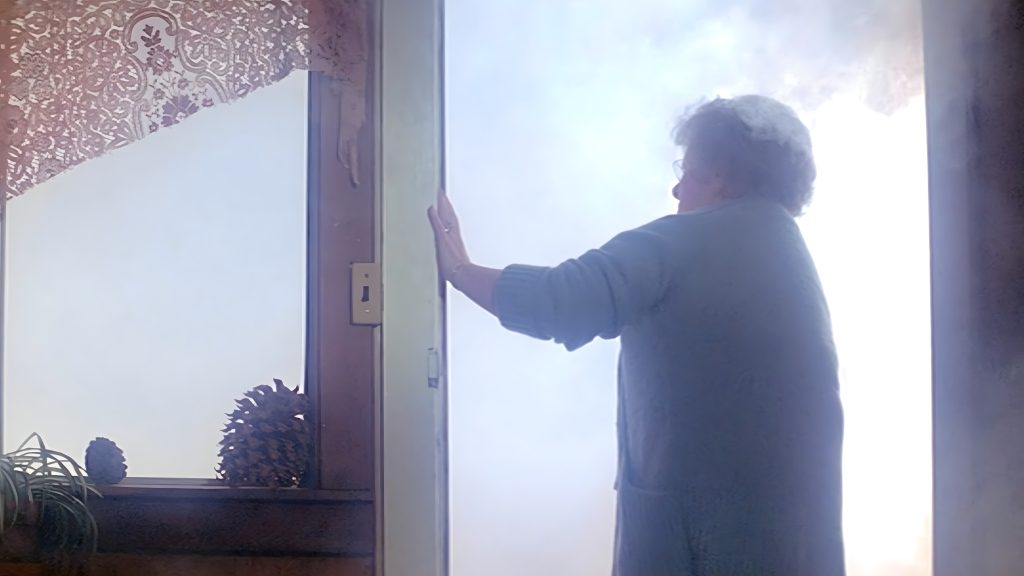
The elderly babysitter is the most exasperating example. Her response to the approaching threat seems designed to give it every possible advantage. There is not a door she will not open. A fog bank she will not turn her back to. She seems to be waiting for the murderous Leper Pirate Ghosts to find parking.
At a certain point, suspense becomes impatience. I am no longer worried that the monster will catch somebody. I am wondering why everybody is being so considerate of its limitations. Not since people fed themselves to the carpet monster in The Creeping Terror have the victims been so accommodating.
There is also a collection of supernatural disturbances that I had largely forgotten from my earlier viewing and almost forgot again while putting this review together. Electrical equipment misbehaves. Glass breaks. Objects move. The movie briefly seems to be auditioning for Poltergeist or Christine.
I understand that these incidents signal something unnatural, but they build little fear for me. They make the haunting feel capable of whatever miscellaneous trick the next scene requires. Apparently, the dead can interfere with the town’s electrical infrastructure, yet carrying out a straightforward murder still requires an elderly woman to wait patiently in the doorjamb.
In Conclusion
In Conclusion: The Fog is not an unpleasant watch. Its photography is outstanding, its coastal atmosphere remains appealing, and its time-capsule pleasures are substantial. I enjoyed visiting a world of cigarette machines, casual hitchhiking, and waterfront property within reach of a local radio personality.
But the eight out of ten I apparently awarded it years ago has become a six. The performances are mostly serviceable. The mythology receives more attention than it earns, and the scares rarely justify all the preparation.
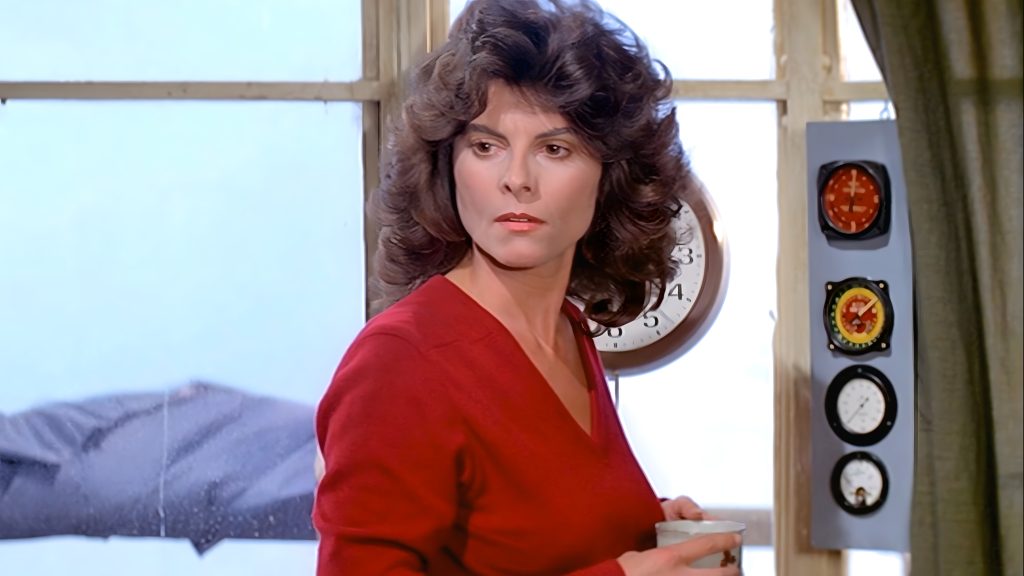
I cannot emphasize enough how beautifully filmed this movie is. I only wish I had spent less time admiring the lighting while waiting for a ghost to finish crossing the room.