Along for the Ride
The Mummy Theme Park (2000): 6 out of 10: An earthquake in Egypt reveals an ancient underground burial complex, complete with mummies, treasures, and the usual warnings about disturbing the dead. Naturally, wealthy Sheik El Sahid (Cyrus Elias) sees an opportunity to open a tourist attraction. Because when you discover an ancient Egyptian tomb protected by a potentially deadly curse, the obvious next step is to install a gift shop and start charging admission.
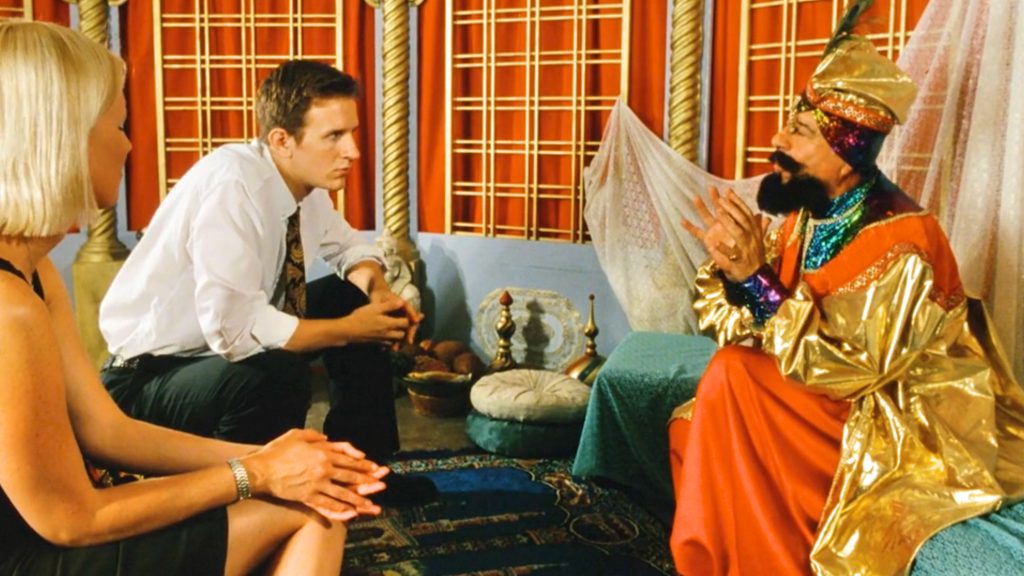
The resulting Mummy Theme Park features a collection of ancient corpses enhanced with modern technology, including computerized mummies that are supposed to provide visitors with a thrilling but reasonably nonfatal experience. American photographer Daniel Flynn (Adam O’Neil) and his assistant Julie (Holly Laningham) are invited to document the attraction, presumably because the sheik’s public relations department has already exhausted its supply of local photographers willing to enter a cursed tomb.
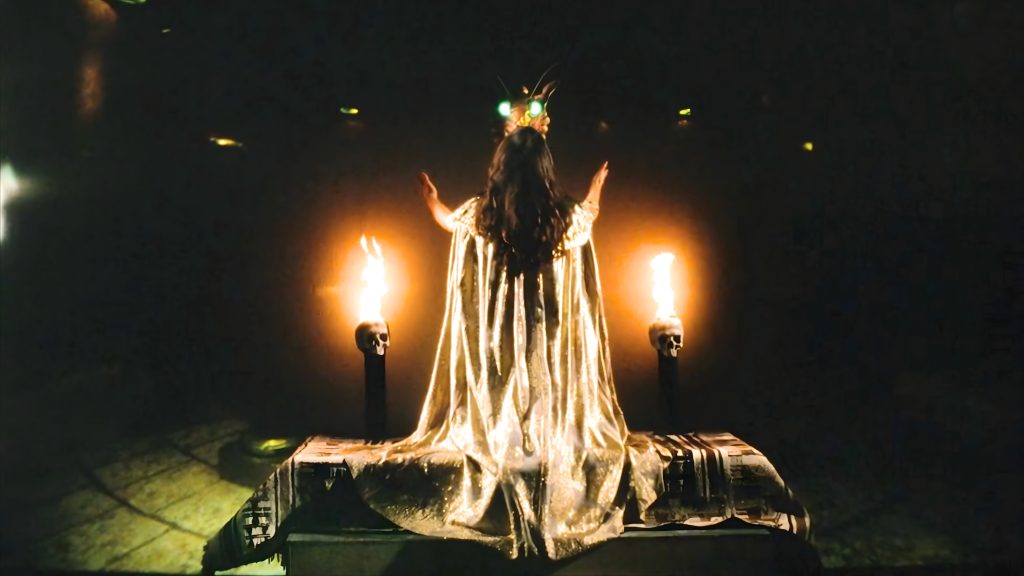
Unfortunately, the combination of ancient Egyptian magic, modern electronics, and questionable workplace safety standards proves less reliable than anticipated. With a mysterious woman named Nekhebet (Helen Preest) pursuing her own agenda, the mummies becoming increasingly uncooperative, and the sheik displaying considerably more interest in attractive women than employee safety, the visitors find themselves trapped in an attraction that makes Jurassic Park look like a model of responsible management.

The Good
The Good: I have a confession to make. The Mummy Theme Park is not a good movie. In fact, by almost any objective standard, it is a terrible movie. The acting is ridiculous; the story makes very little sense. The special effects range from impressively imaginative to something that looks like it was created on an Amiga in somebody’s basement, and entire plotlines disappear without explanation.
I had an absolutely wonderful time. This puts me in a familiar but uncomfortable position. Years ago, I reviewed Ulli Lommel’s Black Dahlia and gave it a 7 out of 10. That film had virtually no redeeming qualities whatsoever, yet something about its complete disregard for conventional filmmaking made it ridiculously entertaining. I spent a good portion of that review apologizing for enjoying myself.
The Mummy Theme Park presents a similar problem.
I first encountered the film through the third episode of the 2026 Mystery Science Theater 3000: The RiffTrax Experiments. And while Mike Nelson and the robots certainly enhanced the experience, I found myself wondering whether I was laughing at their commentary or simply enjoying the movie itself. So I decided to watch the original version without the benefit of professional comedians making jokes at its expense.
The answer, much to my surprise, is that the movie is genuinely entertaining all by itself. There is something almost magical about its relentless stupidity. Every few minutes, the filmmakers introduce another ridiculous character, bizarre subplot, or astonishing (in many different ways) special effect. The movie is constantly throwing something new at the audience, apparently operating under the assumption that if an idea is worth including, it is also worth including three more ideas that have absolutely nothing to do with it.
And unlike many low-budget horror movies, The Mummy Theme Park actually has some surprisingly entertaining special effects.
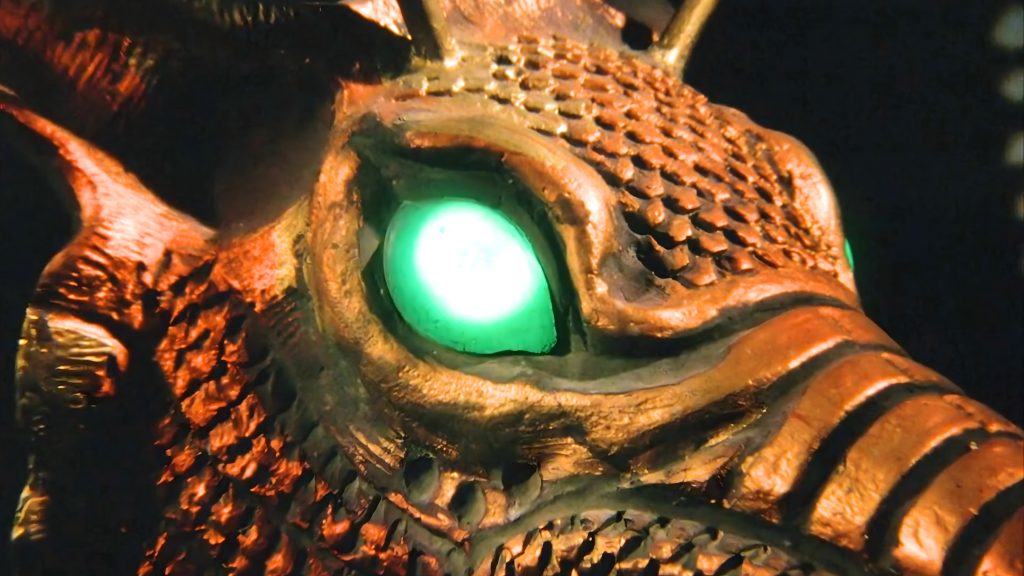
The CGI is an extraordinary mixed bag. Some of it looks terrible even by the standards of 2000. Yet there are moments of genuine creativity and even some remarkably convincing gore. People are sliced in half, limbs are severed, and one particularly revolting sequence involves a character apparently vomiting up his own tongue while turning into a snake. Or something. I am not entirely certain what I witnessed, but I am reasonably certain I didn’t want to see it again.
The film also has a number of genuinely amusing running subplots.
The sheik’s dancers are engaged in a particularly vicious competition, with their leader maintaining her position through intimidation, physical violence, and what appears to be an extremely aggressive interpretation of employee discipline. Knocking out a fellow dancer’s teeth is apparently an acceptable way to resolve scheduling disputes.
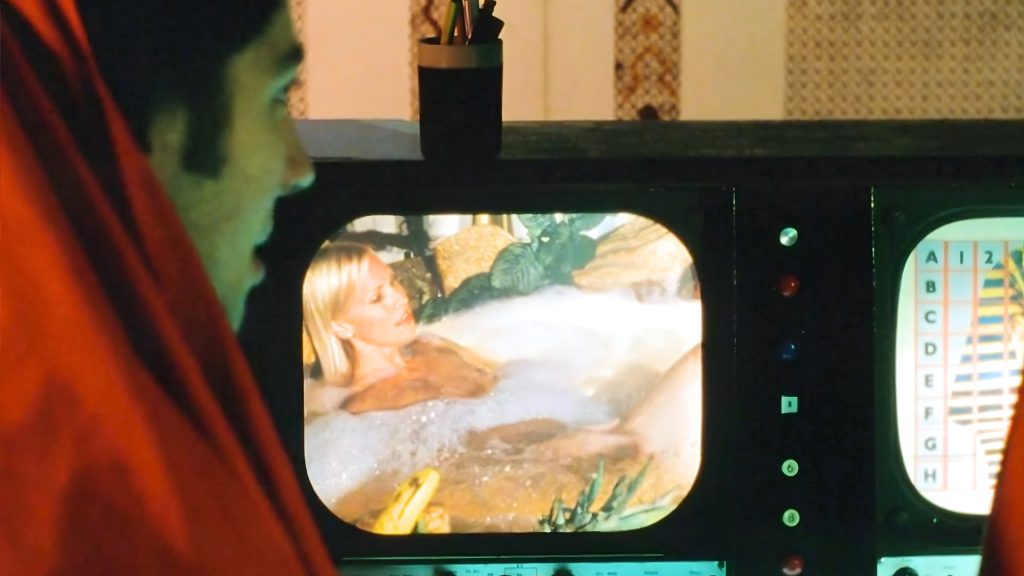
Meanwhile, the security guards watching the surveillance monitors provide their own ongoing comedy routine and commentary. Think 13 Cameras but funny.
These are the sort of incidental characters who might have been forgotten entirely in a more conventional movie. Here, they seem to be enjoying themselves almost as much as the audience.
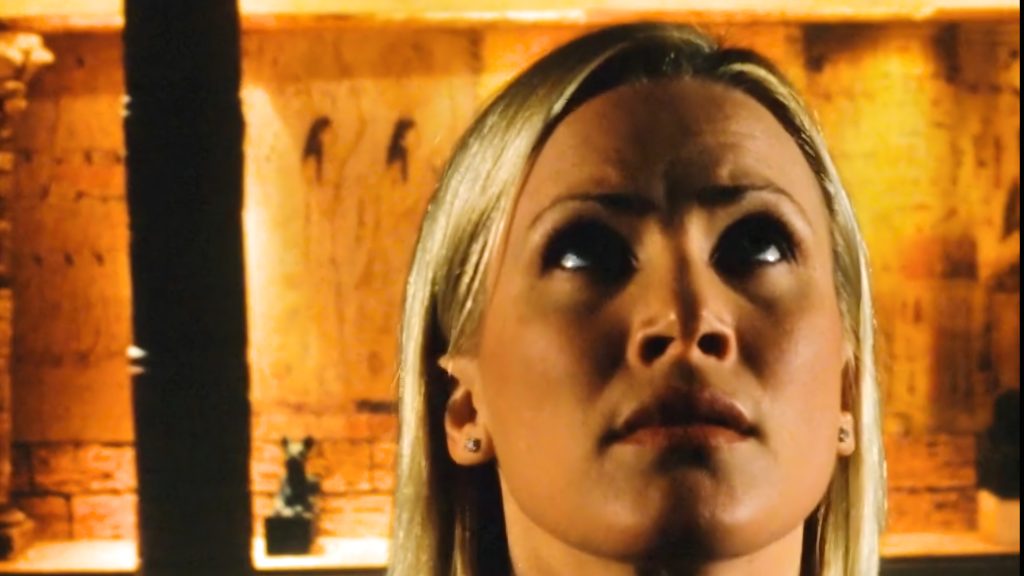
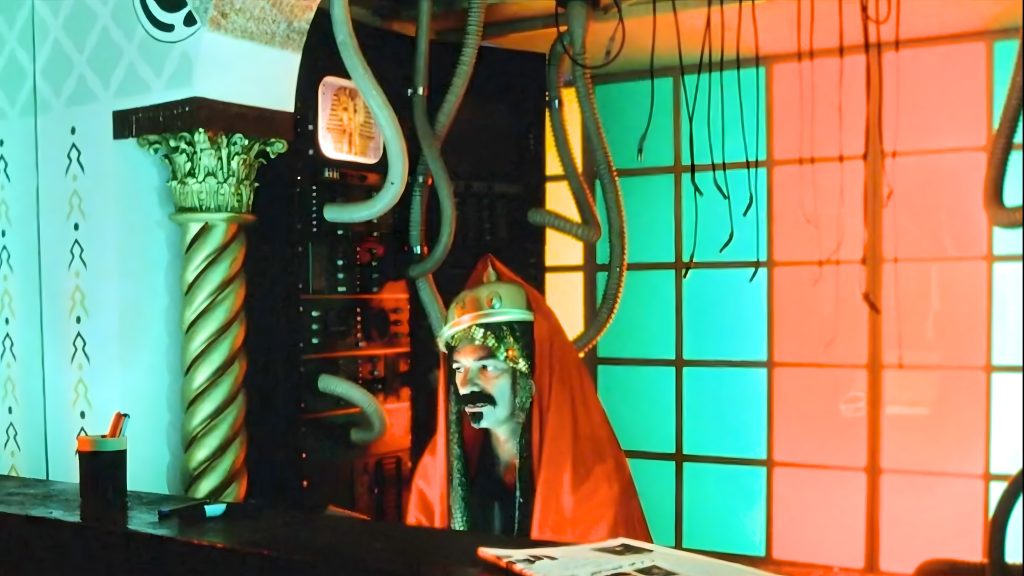
And that brings me to the acting. The performances are simultaneously awful and strangely perfect. The sheik is so exaggerated that he belongs in a Saturday morning cartoon, but Cyrus Elias plays him with exactly the sort of enthusiasm the role requires. Holly Laningham’s Julie is spectacularly naïve and frequently irritating, but the actress commits to that characterization so thoroughly that it becomes another source of entertainment.
It reminds me somewhat of The Pumaman, another film that Mystery Science Theater 3000 had enormous fun with. Both feature extraordinarily silly protagonists, ridiculous villains, and plots that would collapse under the weight of a single sensible question.
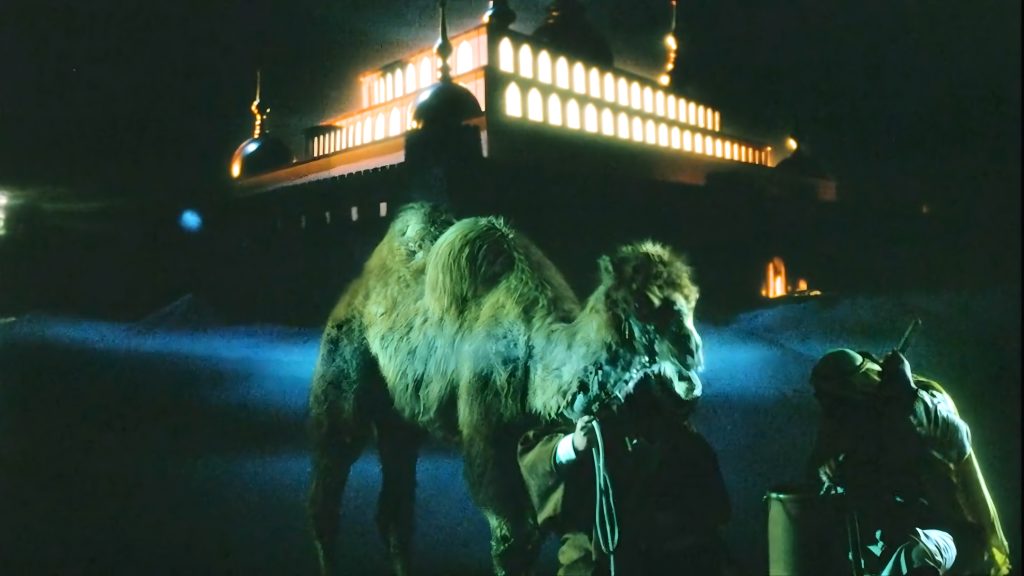
The Pumaman has the advantage of Donald Pleasence, who is considerably more entertaining than anyone in The Mummy Theme Park, and a more appealing leading lady in the delicious Sydne Rome.
But The Mummy Theme Park compensates with its imaginative gore, recurring comic subplots, and a considerably more generous allocation of attractive women in various states of undress.
In fact, for a movie theoretically classified as horror, The Mummy Theme Park is remarkably close to being an outright comedy. Some of the absurdity approaches Monty Python territory, although I hesitate to suggest that all of it was intentional.
The Bad
The Bad: Unfortunately, there is a difference between making a deliberately ridiculous comedy and making a movie that simply has no idea what it is doing.
The Mummy Theme Park frequently falls into the latter category. The plot is an absolute mess. Characters wander in and out of the story, important events occur without apparent consequences, and entire sequences seem to have been filmed without anyone consulting the previous day’s script.

At one point, a mummy escapes from inside the sheik’s castle or hotel or whatever the hell this enormous building is supposed to be. It begins murdering guards and apparently pursuing our heroes. This would seem to be an important development in a film about murderous mummies.
Then, we cut to the following morning. Everybody is going about their business as though nothing particularly interesting had happened. The mummy’s murderous rampage apparently ranks somewhere below a plumbing problem on the management’s list of priorities.
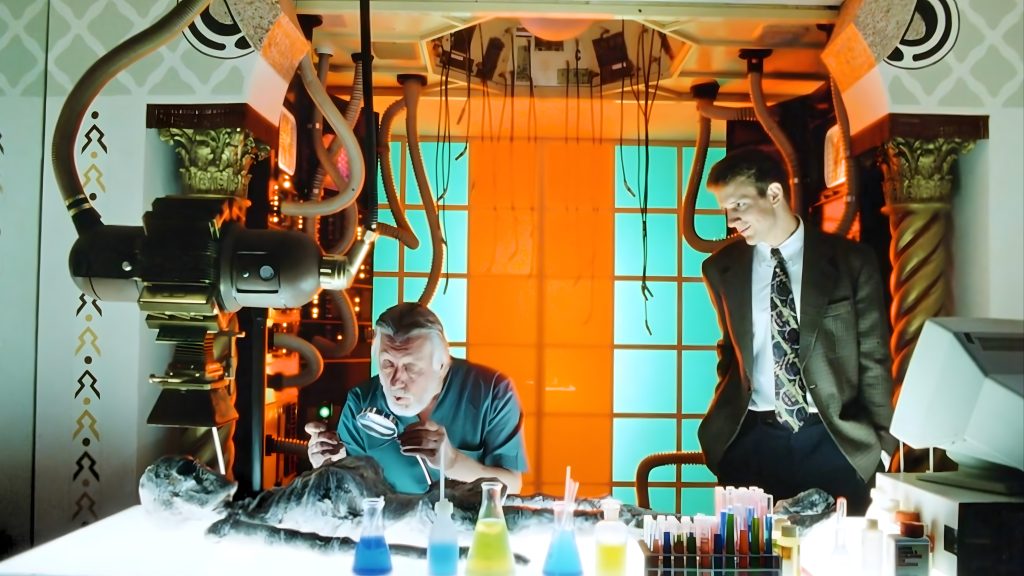
And before anyone suggests that Mystery Science Theater edited out the explanation, I watched the full version. The explanation is not there. Apparently, even the screenwriters lost interest.
The performances, despite being entertaining, are often spectacularly unconvincing. The dialogue is frequently atrocious; the characters behave like people who have never met another human being, and the romantic relationship between the leads generates about as much heat as Lily Tomlin and John Travolta in Moment by Moment.
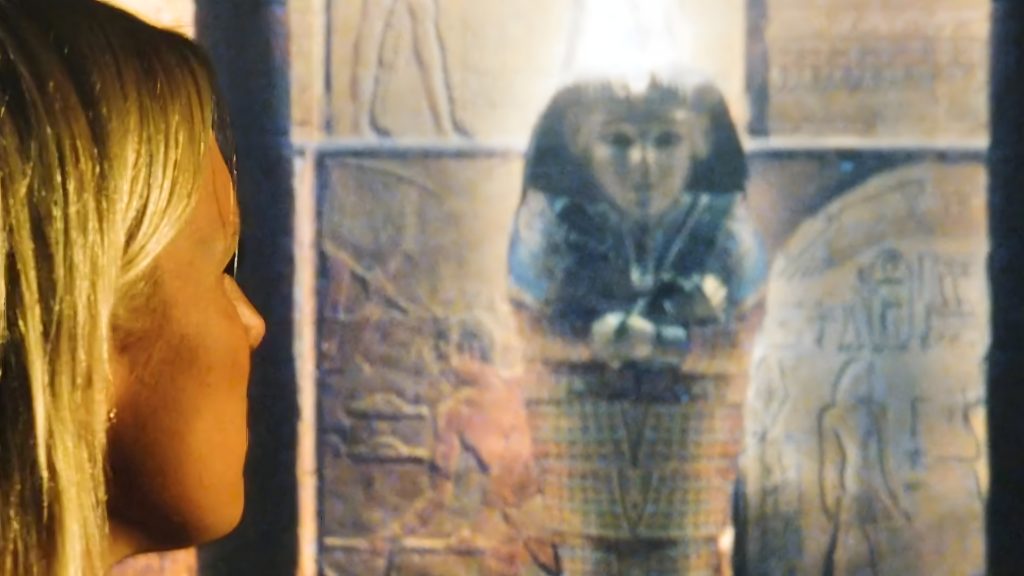
Then there is the matter of the special effects. For every surprisingly effective sequence, there are several that look like unfinished demonstrations from an introductory computer graphics course. The movie relies on weird perspective shots and fisheye lenses to such a degree I had to make sure Battlefield Earth’s director Roger Christian was not secretly at the helm.
The movie’s world also makes very little geographical or architectural sense. Rooms appear to exist in dimensions that could not possibly fit inside the buildings containing them, while the theme park itself seems to operate according to rules invented specifically for whichever scene is currently taking place.
Of course, much of this is also what makes the film so entertaining. Which makes writing a conventional list of its weaknesses rather difficult.
The Ugly
The Ugly: Let us talk about the hotel rooms. Our heroes arrive at the sheik’s enormous castle and are assigned separate accommodations. These are supposedly ordinary guest rooms, although each appears to be approximately the size of a school gymnasium.
The rooms contain gigantic stuffed animals. Not taxidermy. I mean enormous plush toys of the sort you might encounter at FAO Schwarz next to that floor piano from Big.
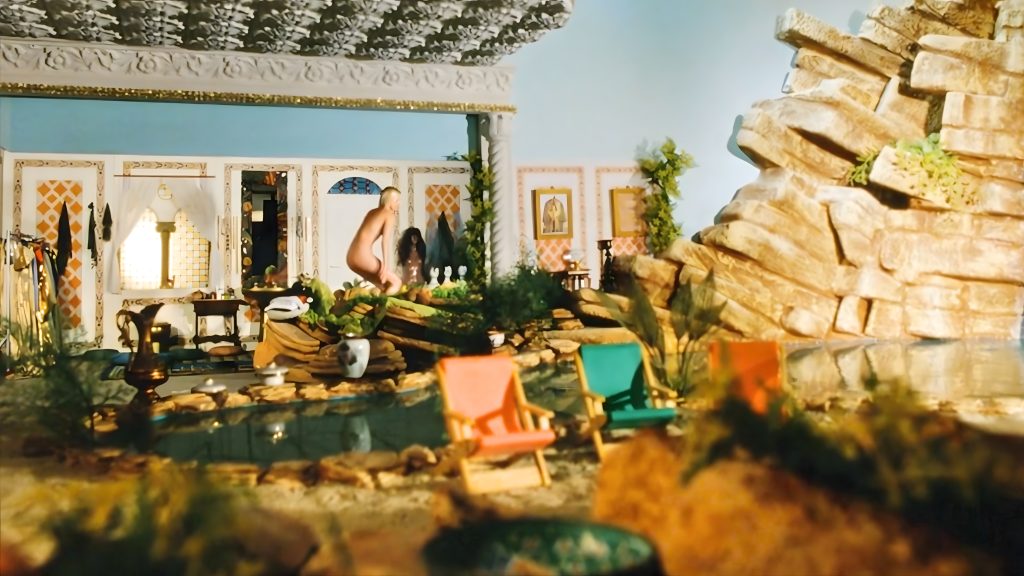
The women’s bathroom features an extravagant waterfall bath, because apparently the sheik has a plumbing budget larger than the entire Egyptian Ministry of Tourism.
And all of this is presented through a bizarre combination of fisheye lenses, green-screen photography, and visual effects that make it almost impossible to determine the actual dimensions of anything.
It is awful on three or four completely different levels. It is also wonderful.
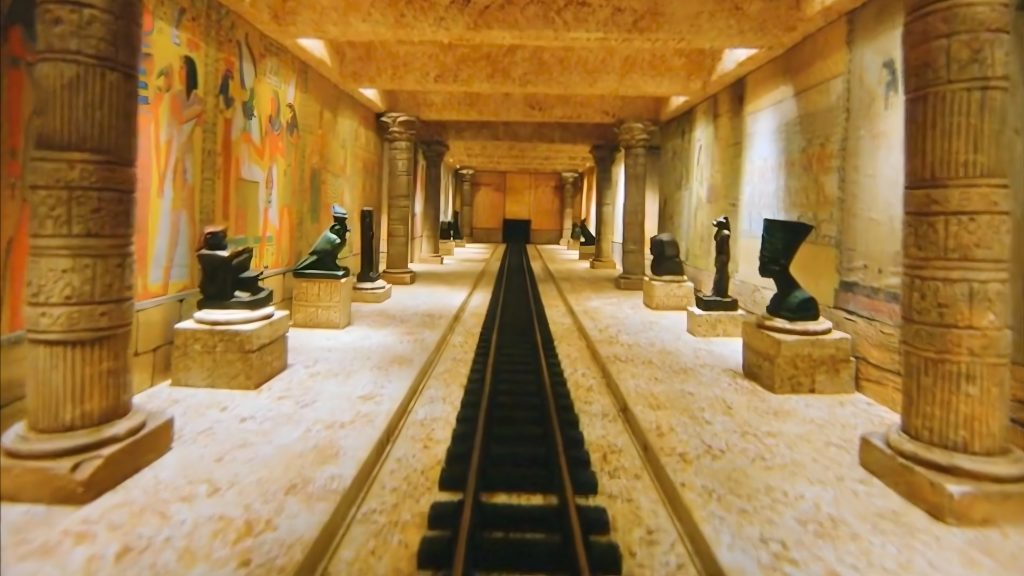
Then there are the model trains, the endless journeys through tunnels, and the elaborate miniature environments. Some of the tunnel sequences are so reminiscent of the opening credits of Mystery Science Theater 3000 that I half expected the movie characters to appear in the theater.
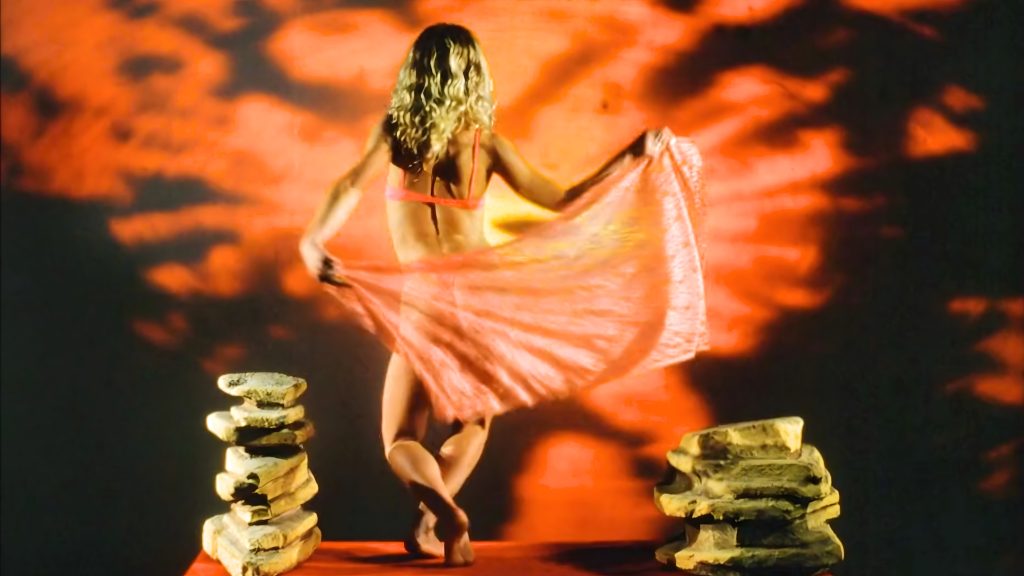
And we could go on costumes, incidental nudity as only the Italians can pull off, an outright parody of theme parks that I assume was on purpose? The Mummy Theme Park is many things. Boring is not one of them.

In Conclusion
In Conclusion: I am not entirely certain how to explain The Mummy Theme Park.
It is not as well made as the Tom Cruise version of The Mummy, which I recently reviewed. But it is considerably more entertaining than The Mummy turned out to be.
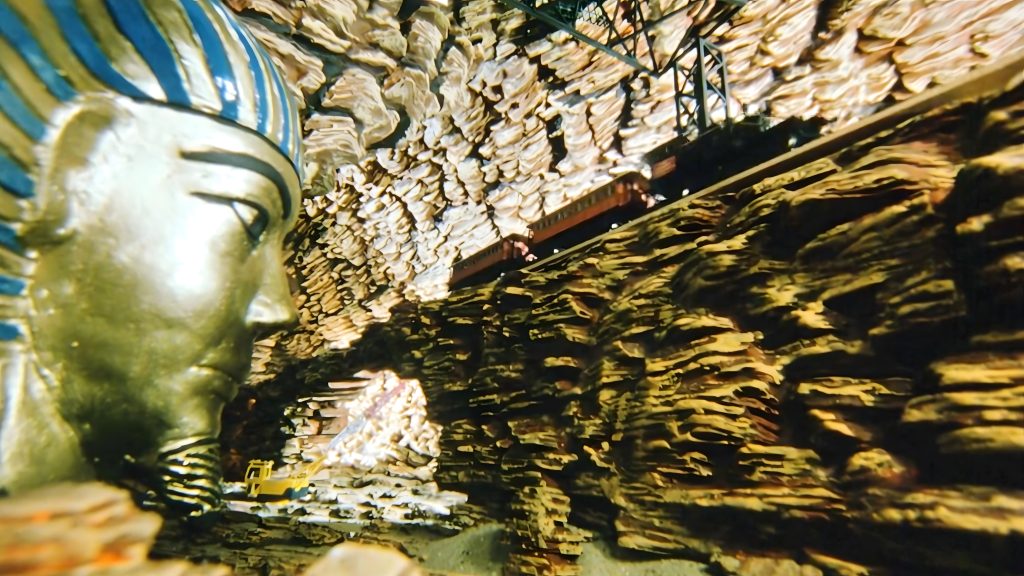
What makes it work is its sheer enthusiasm. The filmmakers seem completely unconcerned with whether their ideas make sense, whether the effects are convincing, or whether the audience has the slightest idea what is happening. They simply keep throwing more nonsense onto the screen until the entire enterprise becomes a celebration of cinematic lunacy.
I watched it once with Mike Nelson and the robots. And I watched it without Mike Nelson and the robots, and somehow, against all reason, I enjoyed the hell out of The Mummy Theme Park.
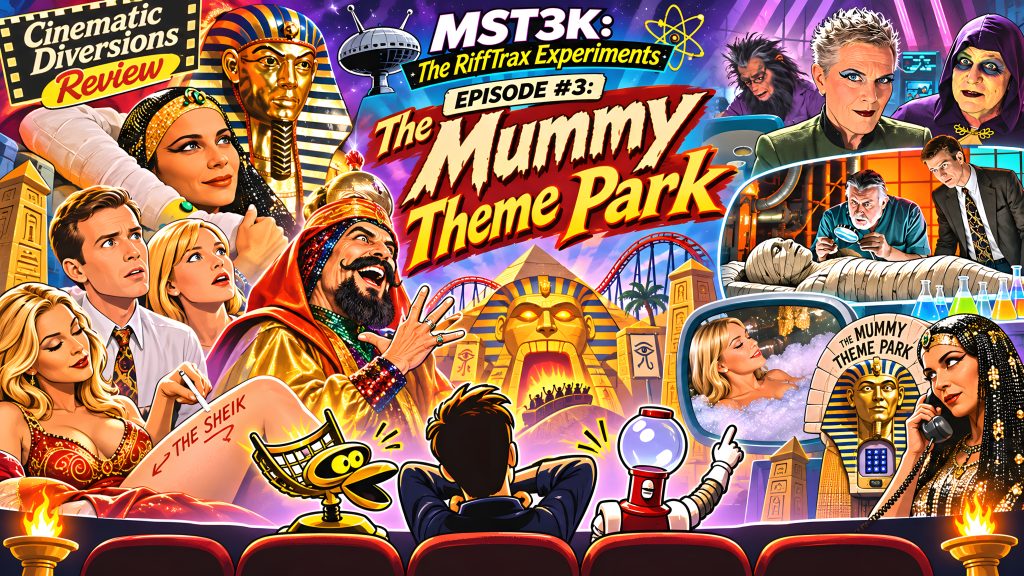
Mystery Science Theater 3000: The RiffTrax Experiments #3
Mystery Science Theater 3000: The RiffTrax Experiments #3 The Mummy Theme Park (2026): 8 out of 10: When RiffTrax launched its Kickstarter campaign for four new episodes of Mystery Science Theater 3000, three of the movies were announced in advance. One of the episodes, the third, was a mystery.
Not just a mystery in the usual marketing sense. This was a secret so important that subscribers to the RiffTrax Best Friends service would be allowed to see the episode a week early, provided they promised not to tell everyone else what the movie was.
Naturally, my imagination went into overdrive. Why all the secrecy? What could possibly justify such extraordinary precautions? Clearly, something special was happening. After all, the three announced movies were hardly celebrated examples of cinematic excellence. Perhaps RiffTrax had somehow acquired the rights to a genuinely respectable major studio production.
My first theory was that the secret movie would be something unexpectedly ambitious. Perhaps a 1970s disaster picture like Earthquake. Or, and follow my heart here, The Swarm. A movie featuring Michael Caine and Henry Fonda fighting killer bees would seem ideally suited to the Mystery Science Theater treatment.
Perhaps they had acquired the rights to an infamous Hollywood disaster like Glitter. Or a superhero movie that had gone spectacularly sideways. Imagine Mike, Crow, and Servo taking on one of the more embarrassing Marvel or DC releases.
The possibilities were endless. My second theory was that RiffTrax would return to the Mystery Science Theater 3000 vault and take another run at an old favorite. They have occasionally done this with RiffTrax, with mostly excellent results” , although their second live encounter with Space Mutiny was not exactly a triumph.
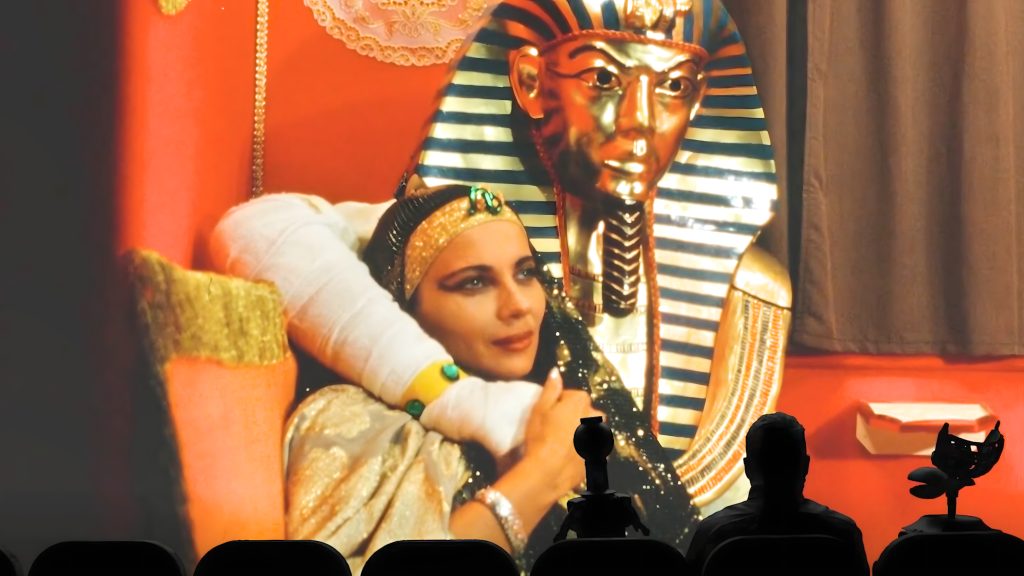
Or perhaps they had acquired The Happening, which would have been perfect. An entire movie featuring Mark Wahlberg looking confused by vegetation seems almost too good an opportunity to pass up.
What I did not anticipate was an obscure Italian film from 2000 called The Mummy Theme Park.
The Mummy Theme Park.
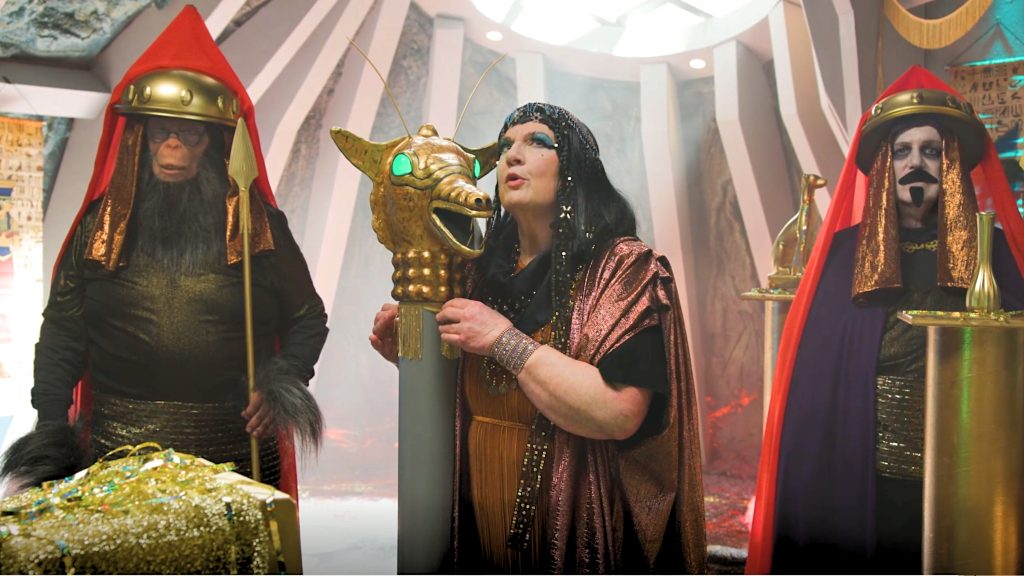
When I first heard the title, I was not entirely convinced it was an actual movie. (After seeing it, I am still not) It sounded like something somebody had invented as a joke while trying to come up with the cheapest possible production for the series.
And at first glance, that is exactly what it appeared to be. A bargain-basement Italian horror film that was considerably more obscure than the already obscure movies they had announced.
So much for my secret Hollywood blockbuster theory. As it turns out, RiffTrax may have known exactly what they were doing.
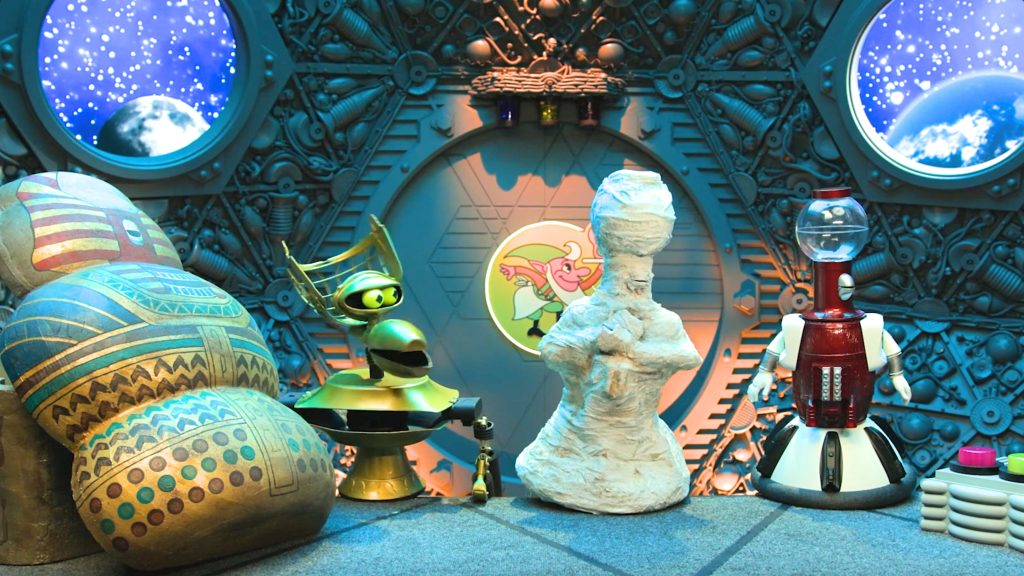
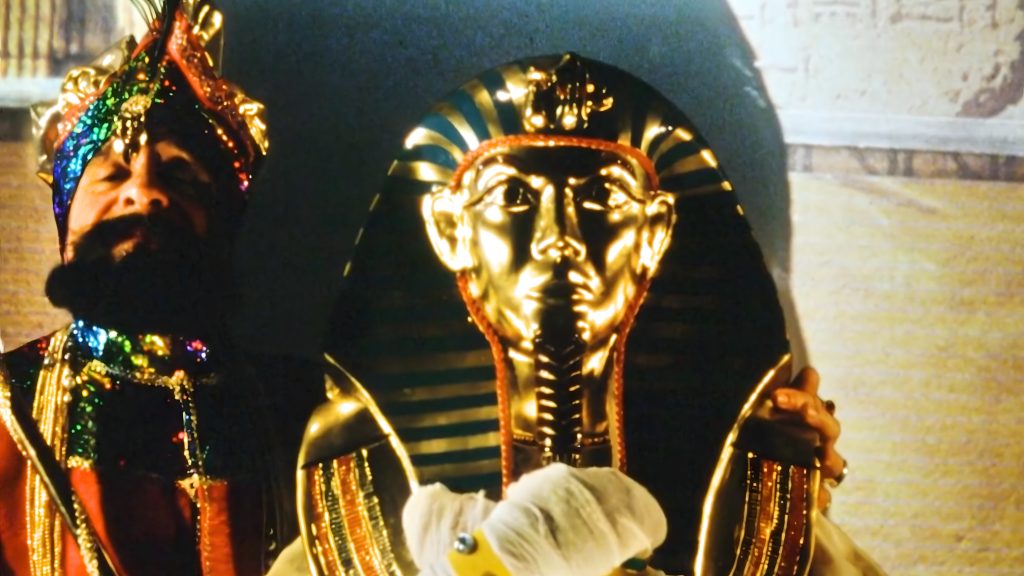
The Mummy Theme Park is an extraordinarily terrible movie. It features an Egyptian sheik who converts an ancient tomb into a tourist attraction, murderous computerized mummies, a heroic photographer and his irritating assistant, and an assortment of supporting characters who appear to have wandered in from several completely different productions.
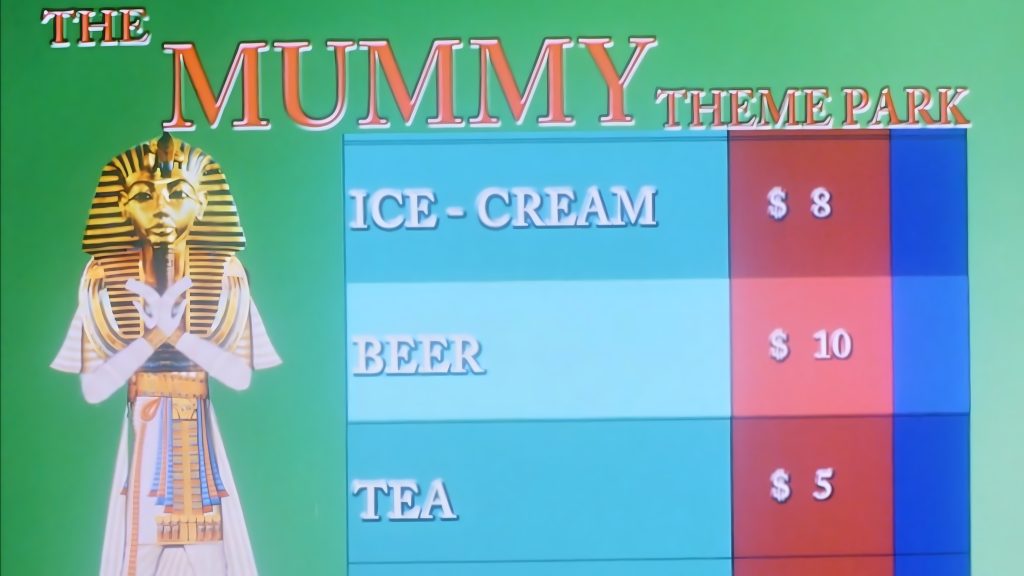
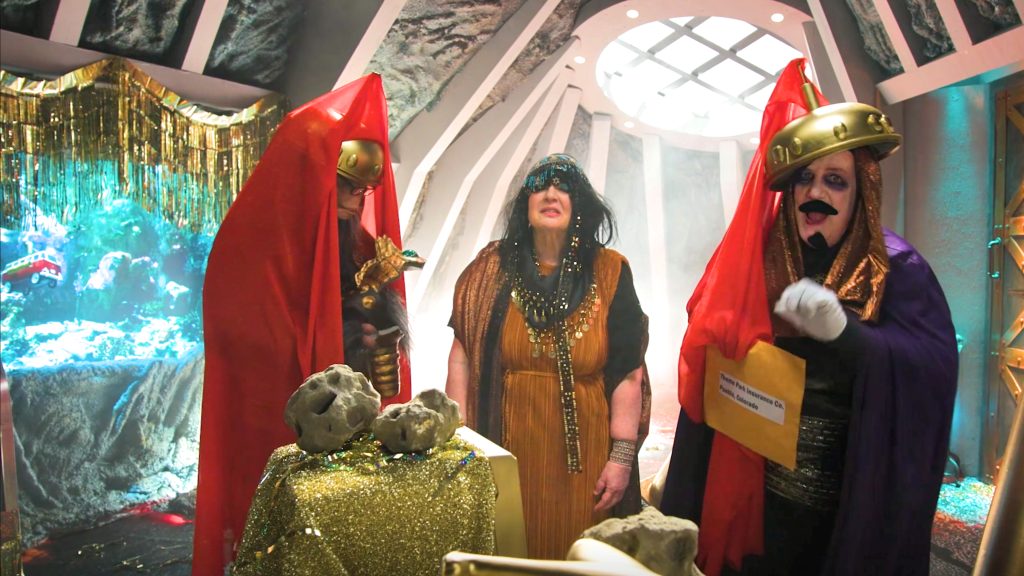
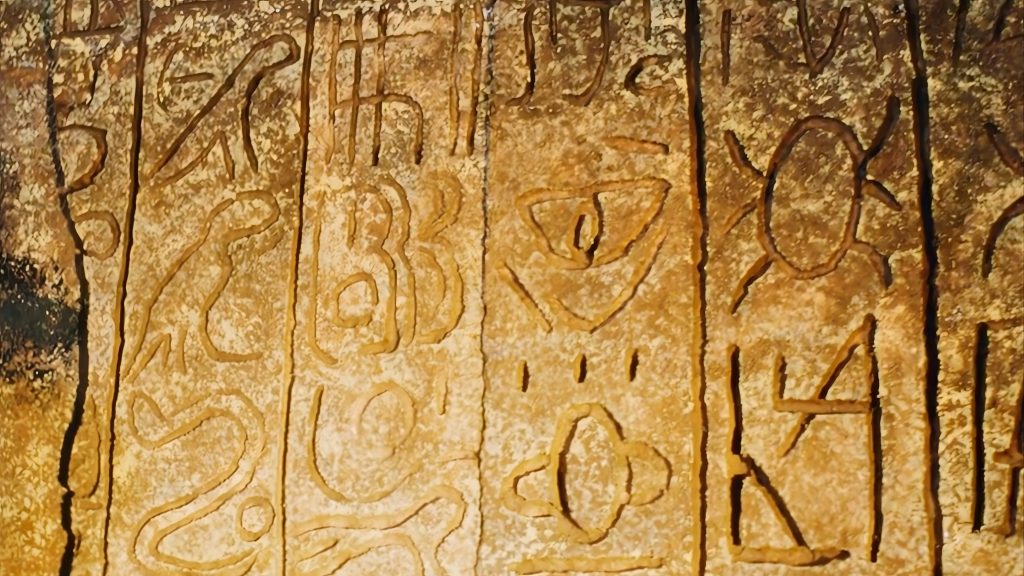
There are cheap sets, bizarre costumes, fake beards, fan service, astonishingly inconsistent CGI, and enough ridiculous plot developments to keep an entire writers’ room occupied for several seasons.
In other words, it is an ideal Mystery Science Theater 3000 movie. And yet, something interesting happens during the episode.
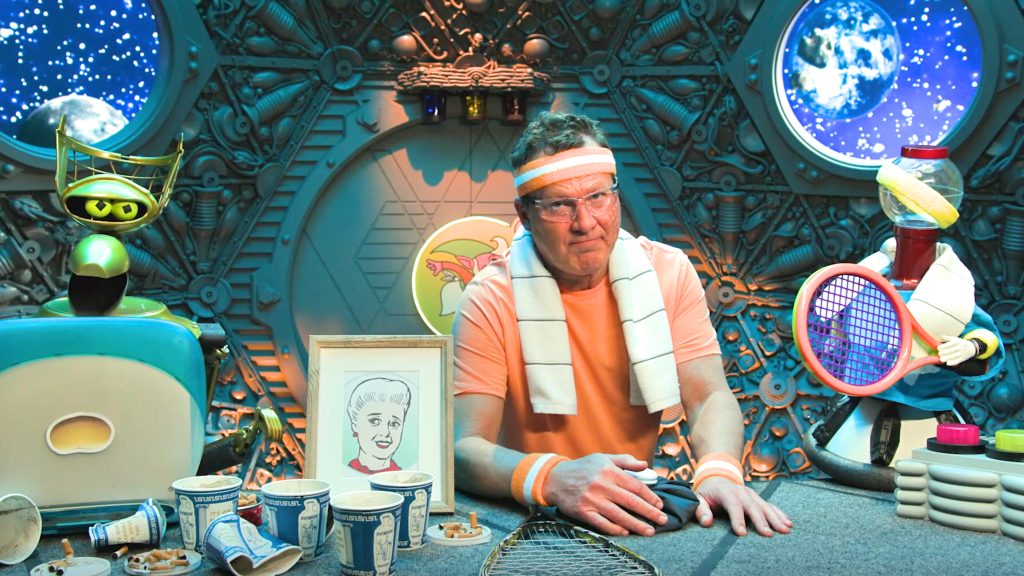
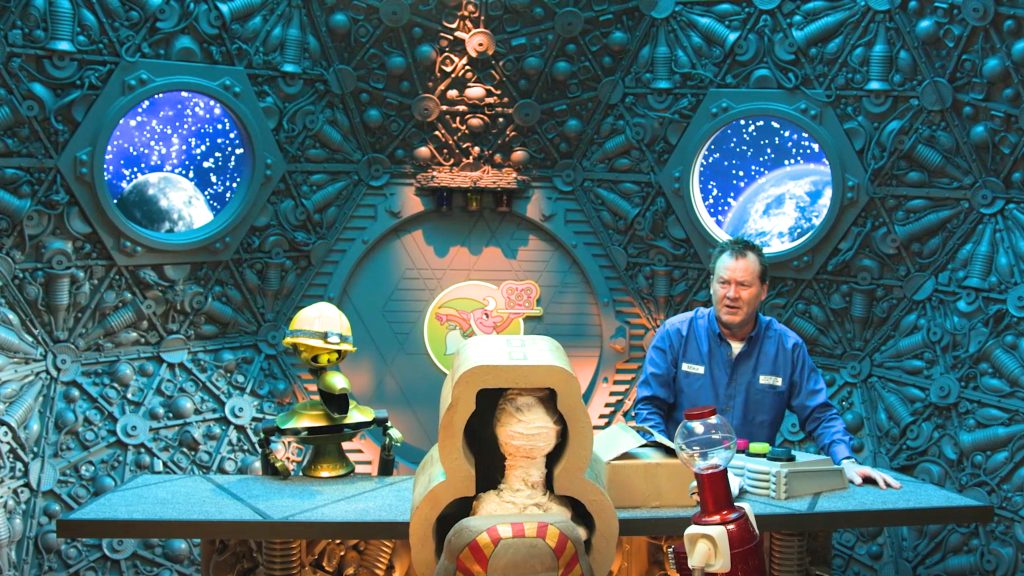
Mike Nelson, Tom Servo, and Crow T. Robot don’t seem particularly interested in overwhelming the movie with jokes. The riffing is considerably lighter than I expected. There are stretches where the film seems to be doing most of the work itself, with the guys offering occasional observations rather than their usual relentless barrage of wisecracks.
Now, this is not necessarily a criticism. What riffing there is tends to be funny, and the familiar chemistry between Mike, Kevin Murphy, and Bill Corbett remains one of the great pleasures of the series.
But there is surprisingly little that sticks in my memory. Compare this episode with the classic Mystery Science Theater presentation of The Pumaman. That film is almost equally ridiculous, and the riffing is absolutely wonderful. Mike’s observation that pumas aren’t exactly known for their flying remains one of my favorite jokes in the entire series.
There are dozens of memorable moments in The Pumaman. There is nothing in The Mummy Theme Park that approaches that particular level of brilliance.

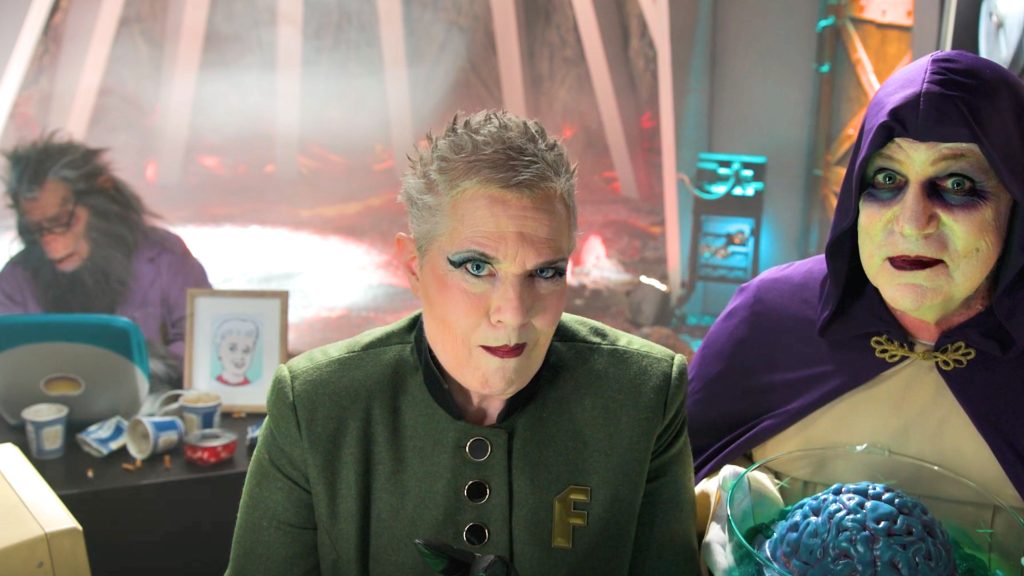
The host segments fare rather better. They are lively, inventive, and frequently quite sharp. There is a Muppet Show reference that I managed to anticipate before the guys got around to it, which either means I have watched far too much Mystery Science Theater 3000 or that my brain has finally begun operating on the same wavelength as theirs.
I suspect both explanations are correct. What makes this episode special, however, is not the individual jokes. It is the unmistakable impression that Mike and the robots are simply delighted by the movie they have discovered.
I don’t know how else to describe it. There is a particular pleasure in watching a truly ridiculous movie with people who appreciate its ridiculousness.

Anyone who has ever watched a bad movie with friends knows the feeling. Sometimes the most enjoyable part of the experience is not coming up with a clever joke but simply sitting there in stunned disbelief as the filmmakers introduce yet another completely insane development.
The Mummy Theme Park seems almost specifically engineered to produce that reaction.
Every time you think the movie has reached the limits of its stupidity, it finds another gear. A ridiculous subplot involving the sheik’s dancers develops into a violent workplace rivalry. Security guards provide their own running comedy by spying on guests and killing people with snakes. The special effects alternate between laughably primitive and surprisingly disgusting.

What exactly are you supposed to riff on something like that? Sometimes, the best response is simply to stare at the screen and wonder what the hell you just watched.
And that seems to be the attitude Mike and the robots have adopted. They aren’t so much attacking the movie as inviting us to share their astonishment that somebody actually made it.

This is a different sort of experience from the previous two RiffTrax Experiments. Sting of Death was an enjoyable return to the familiar format, and I gave it a 7 out of 10. But the riffing occasionally felt trapped in an earlier era, as though the writers had been sealed inside a television studio sometime in 1987 and only recently released.
Deathsport was a considerable improvement. The jokes were sharper, more contemporary, and more consistent. I gave that episode an 8 out of 10, largely because the guys managed to make David Carradine riding around on a motorcycle for what felt like several geological epochs genuinely entertaining.

But Deathsport presented a particular challenge. Underneath the riffing was a legitimately boring movie. A few attractive women, some impressive stunt work, and an endless supply of orange fireballs could not disguise the fact that very little of interest was happening.
The Mummy Theme Park is almost the exact opposite.
The movie itself is entertaining. I know this because, after watching the Mystery Science Theater version, I went back and watched the original film without Mike and the robots.

And I still enjoyed it. In fact, I enjoyed it enough to give the original film a 6 out of 10, a score that would almost certainly cause considerable distress to anyone who believes movies should be judged by conventional standards of filmmaking competence.
This presents an interesting question about what makes a successful Mystery Science Theater 3000 episode. Does the riffing have to be consistently brilliant? Does every scene require a collection of memorable jokes? Or is the ultimate goal simply to make watching a terrible movie an enjoyable experience?

Ideally, of course, you get both. The greatest episodes of Mystery Science Theater 3000 combine inspired commentary with movies that are fascinatingly awful in their own right.
The Mummy Theme Park falls somewhat short of that standard when it comes to the riffing. I cannot pretend that the jokes are as consistently sharp as those in Deathsport, or that the episode contains anything as memorable as the best moments of The Pumaman.
But I had a wonderful time watching it. There is something infectious about the enthusiasm of Mike and the robots. They seem genuinely pleased to have found this bizarre little Italian movie and even more pleased to have the opportunity to share it with an audience.
And after all the speculation about the secret third film, that may be the most satisfying surprise of all.
I wanted a major Hollywood disaster, a notorious cinematic embarrassment, or a triumphant return to an old Mystery Science Theater favorite.
Instead, I got an obscure Italian horror comedy featuring murderous mummies, ridiculous hotel rooms, bizarre CGI, and an Egyptian theme park that would probably be shut down by the local authorities before the ribbon-cutting ceremony.
And somehow, I couldn’t have been happier.
Mystery Science Theater 3000 has always been about more than making fun of bad movies. At its best, it celebrates the strange pleasure of discovering something gloriously incompetent and sharing that discovery with people who appreciate it. As much grief as I occasionally give the Netflix run of MST3K, the fact that it introduced me to 1983’s Carnival Magic is something for which I will always be grateful.

The Mummy Theme Park may not provide the most memorable riffing of the series. It certainly isn’t the funniest episode Mike, Kevin, and Bill have ever produced. But as an evening spent watching cinematic lunacy with three old friends, it is enormously entertaining.