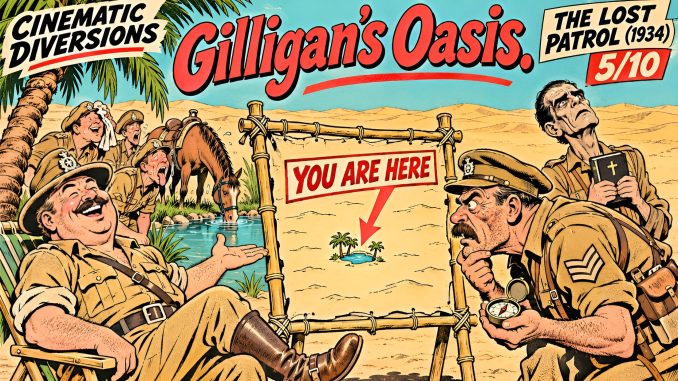
Gilligan’s Oasis.
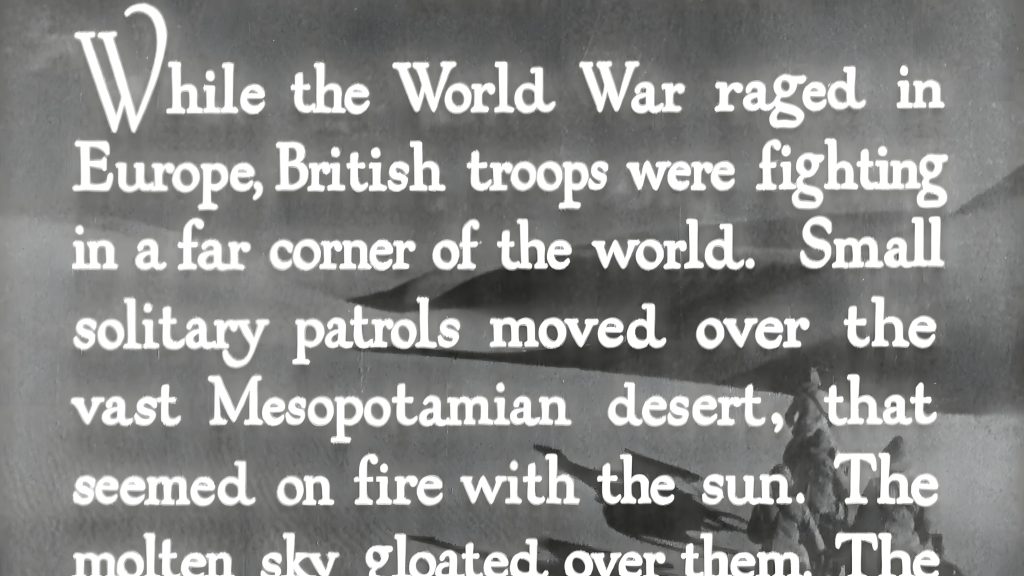
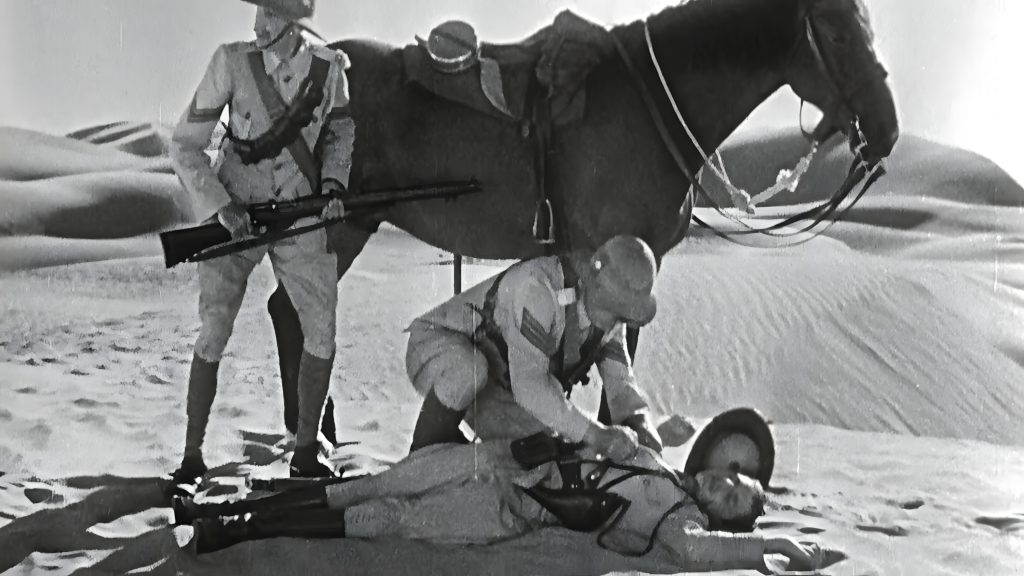
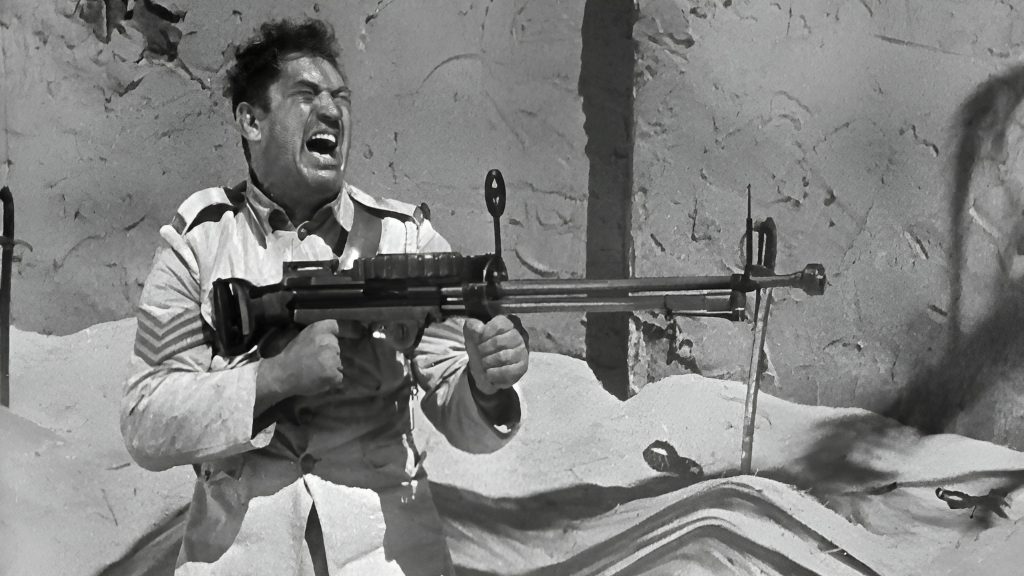
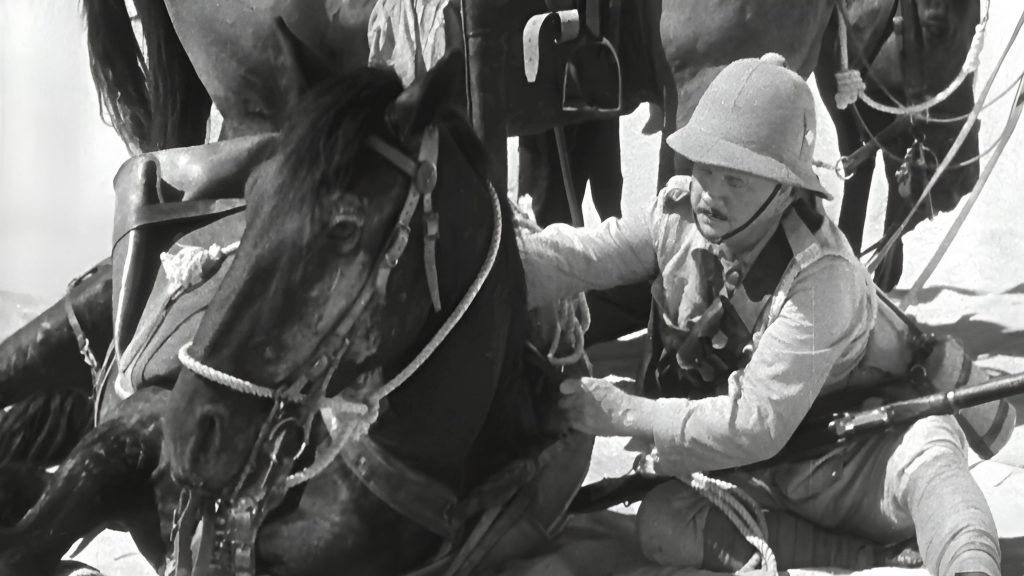
The Lost Patrol (1934): 5 out of 10: Somewhere in the Mesopotamian desert during the First World War, a British cavalry patrol loses its commanding officer to a shot from an unseen rifleman. It turns out the officer was the only man who knew where they were going or what they were supposed to do when they got there. Victor McLaglen plays the sergeant who has just received a field promotion. One imagines he would have appreciated a map.
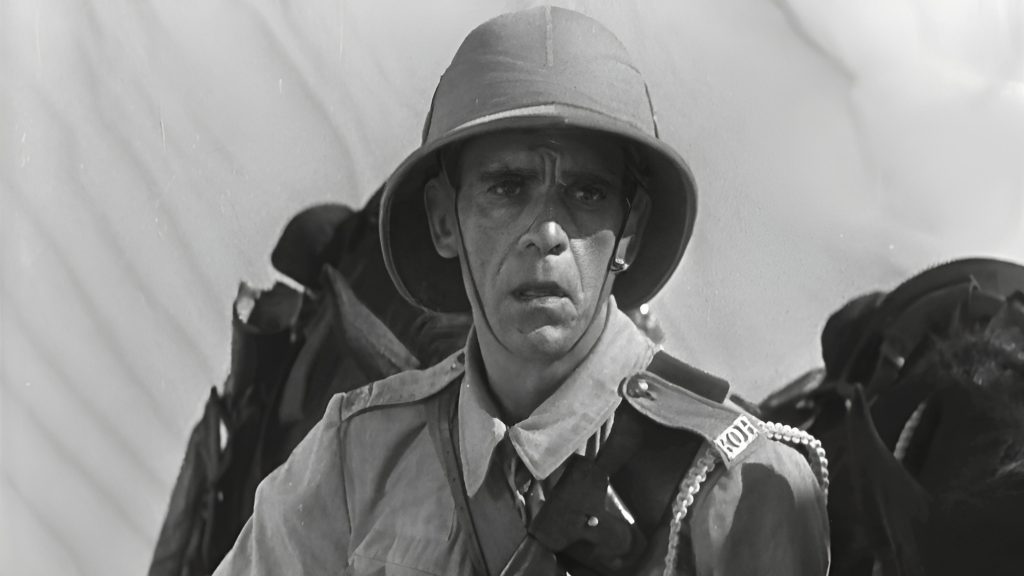
The men reach an oasis with palm trees, water, and enough shade to make staying the night look like a good idea. Unfortunately, the people shooting at them know where the oasis is, too. While the sergeant considers his options, the men swap stories, lose horses, and gradually misplace their minds in the Iraqi sun. Boris Karloff has some thoughts on where their souls are headed.
The Good
One advantage of making a war movie (particularly a pre-code one) between the world wars is that nobody seems to have asked John Ford to carry the patriotic flag. Give these soldiers a little shade and an audience, and pretty soon we’re hearing about prostitutes and local girls whose ages they probably should have left out of the story. I rather liked that about the film. You get the impression these fellows had lives before they joined the patrol, and several of them would be well advised to leave certain stories out of their memoirs.
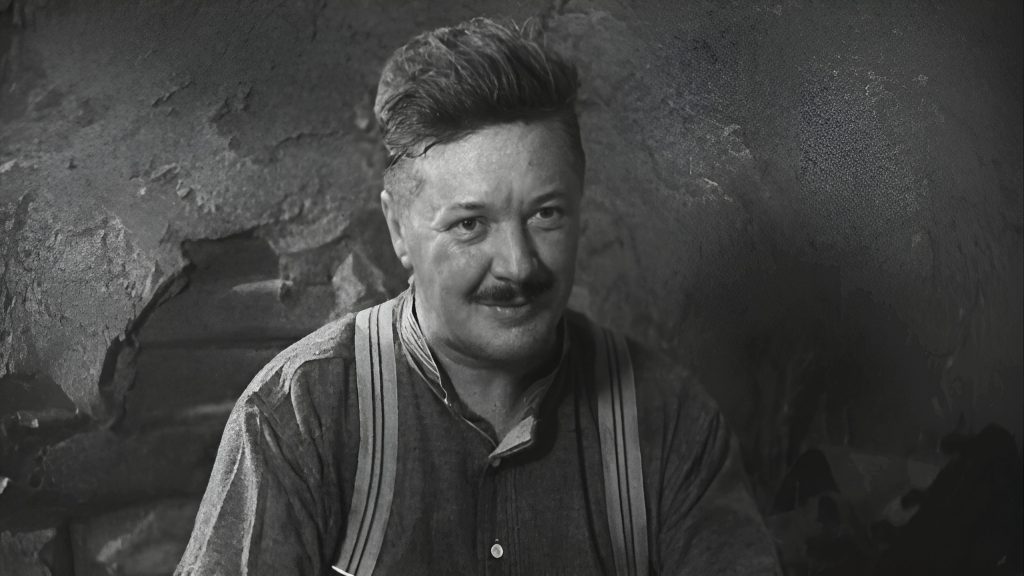
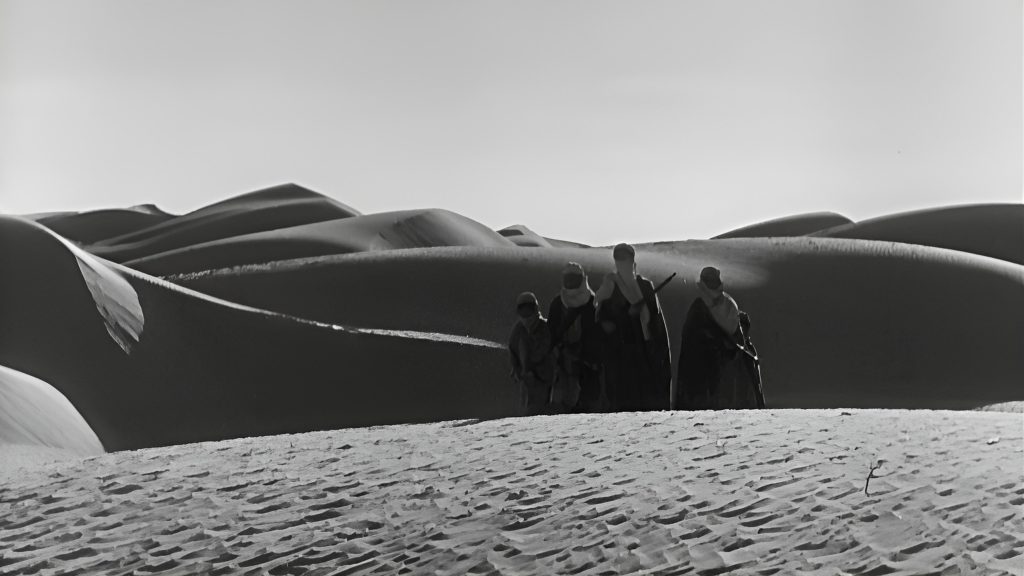
Ford also gets some mileage out of keeping the Arab riflemen out of sight. There’s an entire desert to look at, and the one thing you’d dearly love to see is the fellow who just took a shot at you. Having recently reviewed The Thing, I seem to be on a run of movies where a dozen men get stranded somewhere inhospitable and the craft services table gets a little less crowded every day. This one even has Alan Hale Sr., father of the Skipper on Gilligan’s Island. Getting stranded appears to run in the family.
Speaking of The Thing, that is not the only John Carpenter film that seems to crib from The Lost Patrol. Assault on Precinct 13 shows that influence even more. I have a feeling that The Lost Patrol is required viewing in film schools.
In addition to the Carpenter oeuvre, we have 1943’s Bataan and Sahara, which are basically World War Two remakes replacing desert with jungle in Bataan. Walter Hill’s somewhat forgotten Southern Comfort fits the mold as well. Hell, throw Predator in there as well.
Alas, there is a difference between influential and entertaining, as we will see below.
The Bad
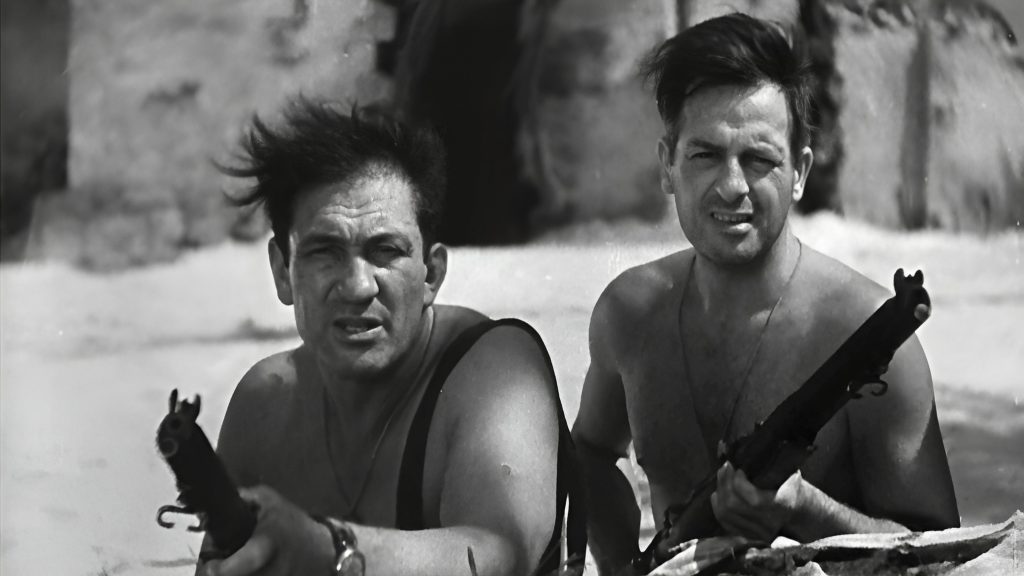
For a movie about men trying to figure out where a gunshot came from, The Lost Patrol spends an extraordinary amount of time making sure you can hear the orchestra. The music itself is perfectly decent. (I mean it was nominated for the very first Best Score Oscar.) I’d have liked it considerably more if I’d had a chance to miss it. What does it sound like when a dozen men suddenly stop talking because one of them thinks he heard something beyond the trees? I’d have liked to hear that, too.
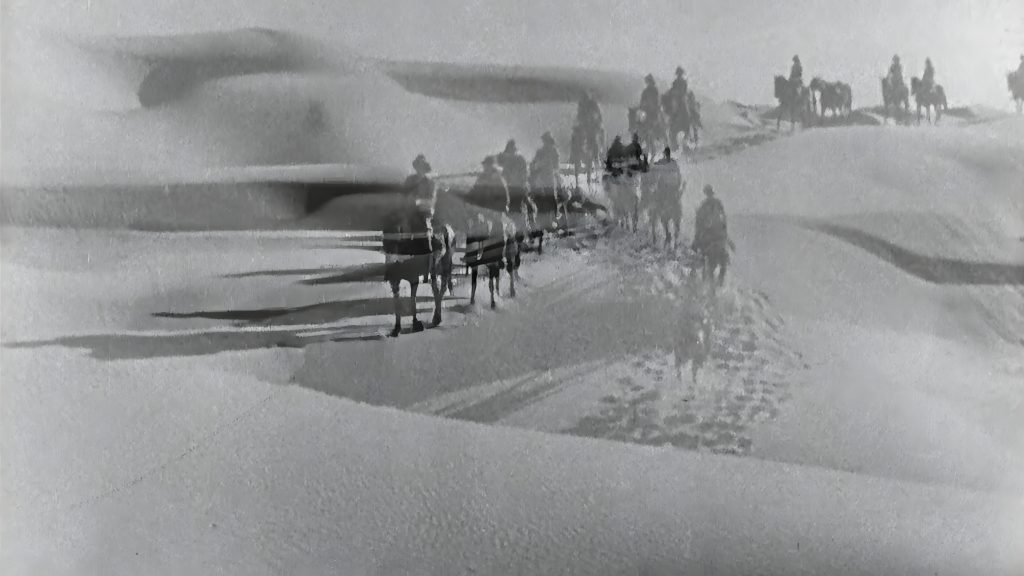
Then there’s the travelogue appeal. I’m generally happy to spend a few minutes looking at scenery with John Ford, but in the standard-definition black-and-white copy I watched, a distant stretch of sand looked much like the stretch of sand we’d just left. That puts a fair amount of pressure on the story. The story is, well… okay. I realize that the last sentence lacks enthusiasm. So did I.
The Ugly
Boris Karloff looks remarkably like Boris Karloff. Those Frankenstein makeup people had more of a head start than I realized. Here he plays Sanders, a religious zealot who listens to his fellow soldiers and concludes that the lot of them are going to hell. Having heard the story about the island girls, I’m willing to give him that one. Still, Boris, these are the men who have to sleep next to you. Keep a few things to yourself.
There’s room here for an interesting argument. What does a man who sincerely believes in damnation say to a friend who might very well be meeting his Maker this afternoon?
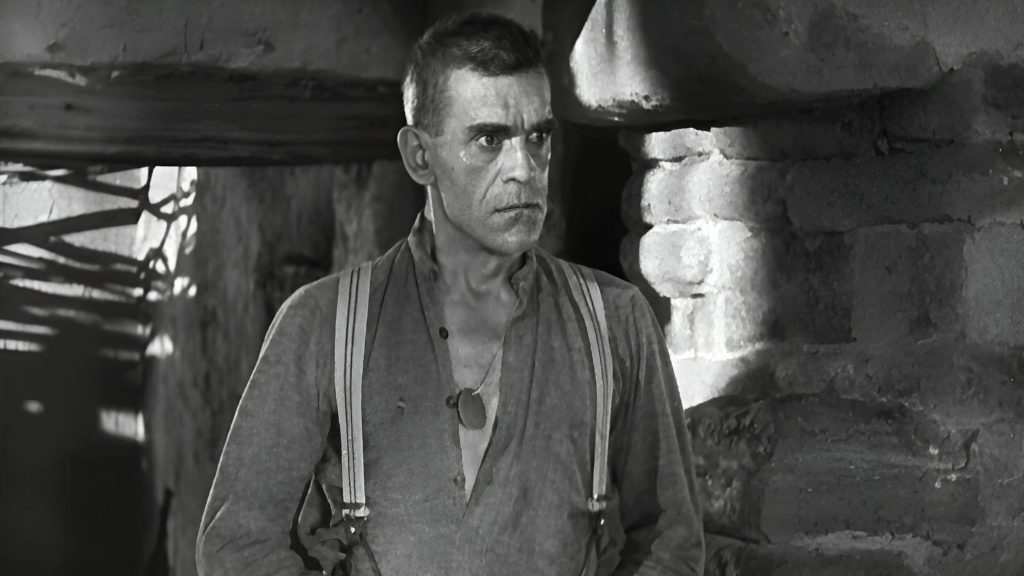
Unfortunately, Karloff plays Sanders as so thoroughly unhinged that a more immediate question presents itself. Is this guy going to kill us all in our sleep for Jesus? Come to think of it, they could have used him in The Thing. I’d have loved to see Kurt Russell try to get a blood sample out of that man.
In Conclusion
How do you judge a movie made by people who’ve been dead longer than some of your readers have been alive? Do you try to imagine what a paying customer thought in 1934? Do you compare it with what else was playing at the time? That second approach only gets The Lost Patrol so far. King Kong had come out the year before. I’ve never had to imagine myself in 1933 to enjoy watching that ape climb the Empire State Building.
In the end, I usually come down to two questions. Would I watch The Lost Patrol again? No. Would I recommend it to a friend? I mean, I know people who would sit through it out of curiosity about early John Ford. I also know people who would watch it for the same private credit you get for finishing a James Joyce novel. But that is why you spend the big bucks to go to film school. To sit in a room and watch movies you would otherwise not have watched. The same way English majors have to read Joyce.
What I’m having trouble picturing is recommending it to someone looking for something fun to watch. The Lost Patrol is interesting. Entertaining is a bit of a stretch.